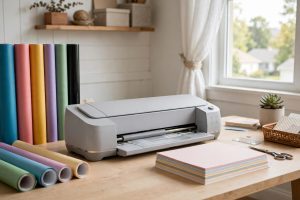

Every scrapbook page and every handmade card starts the same way. A sheet of paper must be cut straight, clean, and true. A dull pair of scissors can do the job, but the edge will show it. It will lean. It will tear a little at the end. That is why so many paper crafters search for the best paper cutter for scrapbooking and cards. A good trimmer saves time, saves paper, and makes every project look more professional.
This guide covers the types of paper cutters, what to look for, what they cost, blade care, and safety. It also answers common questions.
Why a Good Paper Cutter Matters
Scissors are fine for curves and detail work. For straight lines, they are slow. It is hard to cut a long, straight line with scissors. The paper shifts. The cut drifts. A paper cutter holds the paper still on a measured base. The blade moves in a fixed path. The result is a straight edge every time.
Speed is another reason. A scrapbooker may cut dozens of strips in one session. A card maker may trim one hundred card bases before a craft fair. A cutter does each cut in seconds. The work goes faster, and the hand does not tire.
Waste is the third reason. Paper costs money. Patterned paper costs more. When cuts are straight on the first try, fewer sheets end up in the trash. A cutter pays for itself in saved paper, especially if you buy paper in packs.
Types of Paper Cutters: Best Paper Cutter for Scrapbooking and Cards
Paper cutters for crafts come in a few basic styles. Each has strengths and weak points. The best choice depends on what you cut and how much you cut.
Guillotine Cutters
The guillotine style has a long blade hinged on one side of a base board. You lift the blade, place the paper under it, and press the blade down. It cuts with force, so it can handle several sheets at once. It also cuts thick card stock with ease.
The strength of the guillotine is power and speed. The weak point is safety. The open blade is sharp and heavy. Most models have a guard and a latch that holds the blade down when not in use. For a home craft room that cuts a lot of heavy card stock, a small guillotine is a fine tool.
Rotary Trimmers
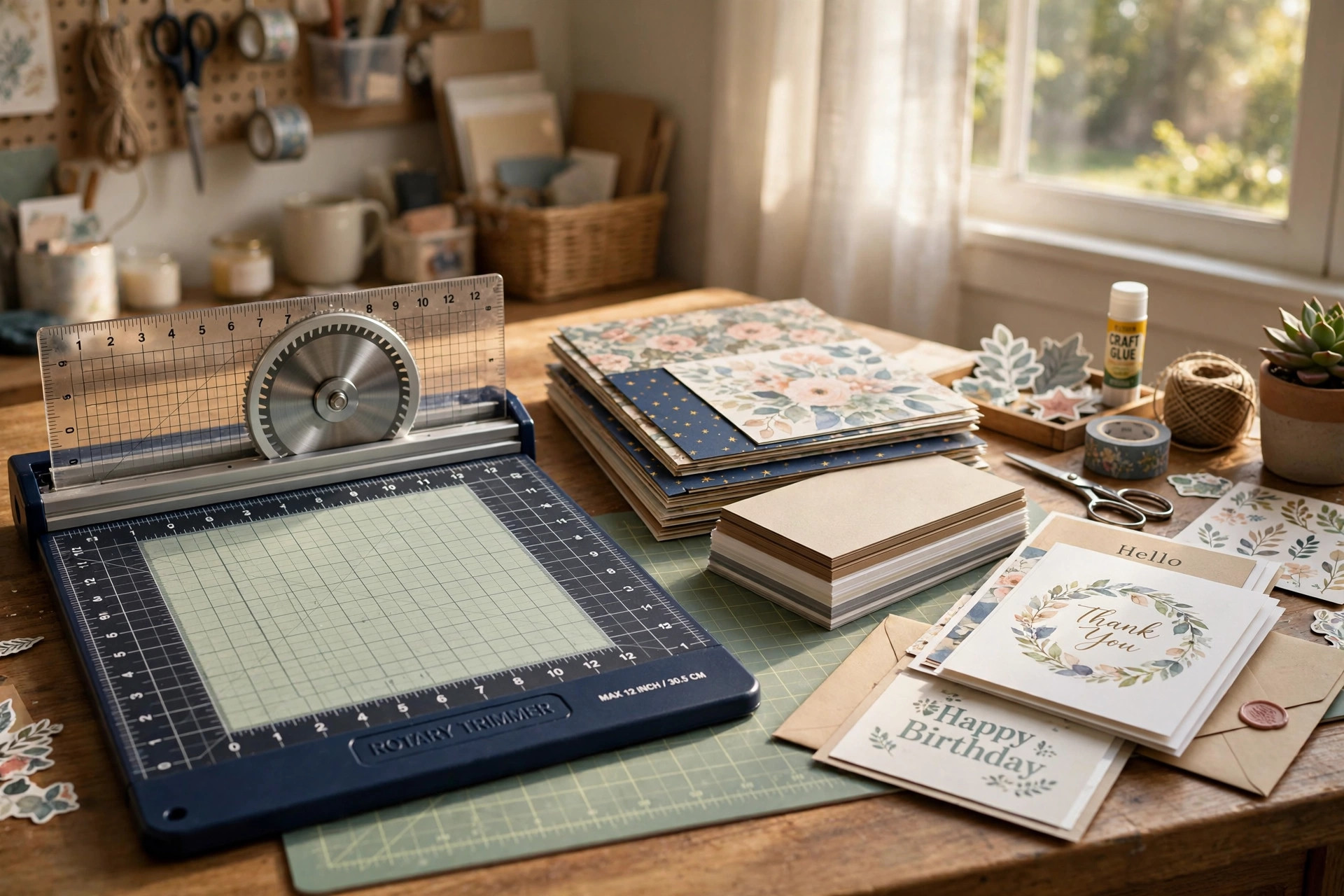
A rotary trimmer uses a small round blade that rolls along a track. You place the paper on the base and slide the blade head across. The cut is smooth and quiet. The blade stays in its housing, so it is safer than a guillotine.
Rotary trimmers are popular with scrapbookers for good reason. They give very clean cuts on light and medium paper. They also cut well along a measured grid printed on the base. Many models fold up small for storage. The weak point is thickness. Most rotary trimmers cut only one to three sheets at a time. For card makers who cut one card base at a time, that is enough.
Slide Trimmers
A slide trimmer is a small version of the rotary style. The base may be eight or nine inches long. The blade is often a small straight knife in a sliding head. These are cheap and portable. They fit in a tote bag for craft nights.
The strength is price and portability. The weak point is size. They cannot trim a twelve-inch scrapbook sheet in one pass. They also wear out faster than larger models. A slide trimmer is a good second cutter to take on the road, but most crafters want a full-size tool at home.
What to Look for When You Choose
Choosing the best paper cutter for scrapbooking and cards comes down to a few details. Keep these points in mind when you compare models at a craft store or online.
Cutting length. Scrapbook paper is usually twelve inches square. A cutter with a twelve-inch base can trim it in one pass. Card stock for cards is smaller, so a nine-inch base is enough for cards alone. If you do both crafts, choose a twelve-inch model. It handles both.
Blade type. Straight blades give a crisp cut on card stock. Rotary blades give a smooth cut on lighter paper. Some trimmers let you swap blade styles. Look for a model with a cutting mat or self-healing strip under the blade path. It protects the base and keeps cuts clean.
Measurement grid. A clear printed grid is one of the most useful features on a cutter. Lines every quarter inch, with inches numbered, make it easy to line up the paper. Some bases have a diagonal guide for cutting angles. A good grid should not wear off with use. This is a detail worth checking in reviews before you buy.
Paper alignment. Some cutters have a movable paper guide or a magnetic ruler. This holds the paper square while you cut. A firm guide matters more than it sounds. Even a small shift can ruin a twelve-inch cut. If you cut many pieces to the same size, a stop or guide saves a lot of checking and re-measuring.
Sheet capacity. Most craft trimmers cut one to five sheets at a time. Cutting too many sheets at once is a common mistake. The blade drags, and the bottom sheet tears. For clean work, cut fewer sheets than the maximum. A model rated for five sheets will cut three sheets beautifully.
Replacement blades. Blades dull with use. This is normal. Check that replacement blades are easy to buy and not expensive. Some brands sell blades in packs of two or three at a fair price. A trimmer with cheap, easy-to-find blades costs less to own over the years. Stores like the paper crafting section at Michaels and JOANN carry replacement blades for the most popular models.
Size and storage. Measure your table before you buy. A twelve-inch trimmer needs a clear space on the table while you work. Some models fold or stand on end for storage. If your craft area is small, a trimmer that folds flat is worth more than one that does not.
Brand reputation. Well-known craft tool brands have earned their place. Fiskars has made cutting tools for many years, and their paper trimmers are common in craft rooms. You can read about the brand’s tool line at Fiskars. Cricut is best known for electronic cutting machines, but the company also makes hand trimmers and blades; see Cricut for the full range. Art supply stores such as Blick also carry paper cutters from several makers, which makes it easy to compare brands side by side.
Cost and Price Ranges
Paper cutters for home crafts are not expensive compared to most craft tools. Prices fall into three groups.
Budget trimmers, about ten to twenty-five dollars. These are small slide trimmers and basic rotary models. They work well for light use. Beginners and children learning paper crafts can start here. Expect thinner bases and fewer features. The blades still cut well when new.
Mid-range trimmers, about twenty-five to fifty dollars. This is the sweet spot for most scrapbookers and card makers. These models have twelve-inch bases, clear grids, paper guides, and sturdy construction. Many come with extra features like a swing-out arm for measuring wider paper. This is where most home crafters find the best paper cutter for scrapbooking and cards.
Heavy-duty models, about fifty dollars and up. Guillotine cutters and stack cutters live in this range. They cut more sheets and thicker materials. Serious card makers who prepare stock for craft fairs may want one. So may anyone who cuts chipboard or thick backing board.
Remember to budget for replacement blades. A pack of blades may cost five to fifteen dollars depending on the brand. Blades are the ongoing cost of owning a cutter. A cheaper trimmer with expensive blades can cost more over time than a slightly better trimmer with cheap blades.
Care and Upkeep
A paper cutter needs little care, but what it needs is regular. Blades are the main item. Change the blade when cuts start to look rough. Buying guides at Bob Vila also remind crafters to check blade prices before buying the tool. Keep a spare pack of blades on hand so a dull blade never stops your work.
Store the cutter with the blade locked or covered. Most models have a latch, a guard, or a parked position for the blade head. Use it every time. A blade left exposed can nick the base, dull the edge, or cut a finger.
Keep the cutter out of damp places. A base with a printed grid can warp if it gets wet. Warping ruins the measurements. Store the cutter flat in a dry drawer or on a shelf. Workshop guides at Family Handyman and This Old House give the same advice for keeping cutting tools in good shape.
Do not use a paper cutter for materials it was not made to cut. Some crafters try to cut plastic sheets, thick chipboard, or fabric on a paper trimmer. These materials dull the blade fast and can break the track. If you work with fabric, use a tool made for fabric, such as a rotary cutter for quilting. If you cut vinyl for shirts, a vinyl cutter for t-shirt projects is the right machine for that job. Using the right tool for each material keeps every tool working longer.
Safety at Home
Paper cutters have sharp blades, and they deserve respect. These safety rules are simple and worth following.
Always keep fingers clear of the blade path. Hold the paper from the side, never under the blade line. Teach this rule to anyone who uses your cutter.
Use the blade guard and the latch. Every modern trimmer has a way to cover or lock the blade. Use it after every cutting session, not just when you put the cutter away for the week. Most nicks happen during quick breaks, when the cutter sits on the table with the blade exposed.
Store the cutter out of reach of small children. A paper trimmer is not a toy. If children craft with you, supervise them and choose a trimmer with a well-guarded blade.
Replace dull blades promptly. This may sound backward, but dull blades cause more injuries than sharp ones. A dull blade needs more force. More force means the hand slips more easily. A fresh blade cuts with light pressure and stays under control.
Keep your work area clear. Trimmings under the paper can shift it, and offcuts on the floor are a slipping hazard. Card making often goes hand in hand with stamping, and if you add stamp sets for card making to your shelf, keep inks and stamps apart from the cutter.
Frequently Asked Questions
What size paper cutter do I need for scrapbooking? Twelve inches is the standard answer. Scrapbook paper is twelve inches square, and a twelve-inch cutter trims it in one pass. If you also make cards, the same cutter handles card stock with ease. A smaller cutter works for cards alone, but it cannot trim a full scrapbook sheet.
How many sheets can a craft paper cutter cut at once? Most home trimmers cut one to five sheets of standard paper. Thick card stock cuts best one or two sheets at a time. Heavy-duty guillotine and stack models cut ten to twenty sheets. Always cut fewer sheets than the rated maximum for the cleanest edge.
How often should I replace the blade? It depends on use. A crafter who cuts every day may need a new blade every few weeks. Occasional crafters may get months from one blade. The sign is the cut itself. When edges look fuzzy or the paper tears instead of slicing, change the blade. Keeping spares on hand avoids delays.
Can I cut card stock with a rotary trimmer? Yes, in small amounts. Most rotary trimmers handle one to three sheets of card stock well. For thick, heavy card stock or many sheets, a guillotine or a stack cutter does a better job. Cut a test piece first to check the edge.
Is a guillotine cutter safe for home use? Yes, if you use the guard and the latch. Modern guillotine cutters have safety features that hold the blade down when not in use. Always keep fingers clear, lock the blade after each session, and store it where children cannot reach it. With these habits, it is a safe and useful tool.
What is the difference between a trimmer and a die-cutting machine? A trimmer cuts straight lines by hand. A die-cutting machine uses shaped dies or a computer to cut shapes, letters, and designs. Many crafters own both. The trimmer handles the straight cuts for page bases and card blanks. The machine handles the decorative shapes. They are partners, not rivals.
A Short Final Word
The best paper cutter for scrapbooking and cards is not the most expensive one. It is the one that fits your work. For most home crafters, a twelve-inch rotary trimmer in the mid-price range does everything needed. It cuts straight, it is safe, and it stores easily. Add fresh blades, a clear grid, and good habits, and every page and card will show the difference.
References
Blick Art Materials. (n.d.). Art and craft supplies. https://www.dickblick.com Bob Vila. (n.d.). Home improvement advice. https://www.bobvila.com Cricut. (n.d.). Cutting machines and craft supplies. https://www.cricut.com Family Handyman. (n.d.). DIY home repair and maintenance. https://www.familyhandyman.com Fiskars. (n.d.). Garden and cutting tools. https://www.fiskars.com JOANN. (n.d.). Fabric and craft supplies. https://www.joann.com Michaels. (n.d.). Arts and crafts supplies. https://www.michaels.com This Old House. (n.d.). Home renovation guidance. https://www.thisoldhouse.com
Was this guide helpful?

About Sarah Mitchell
The My Garden US editorial team writes practical, in-depth home and garden guides for American homeowners — tested advice, no fluff.
You May Also Like

Best Acrylic Pouring Kit for Fluid Art Home
June 3, 2026 0 views
Best Heat Transfer Vinyl for Shirts Cricut: A Plain Guide to Choosing the Right Cut
February 7, 2026 0 views
A DIY Coasters Kit for Resin Art Beginners Is the Easiest Way to Start Crafting
January 27, 2026 0 views