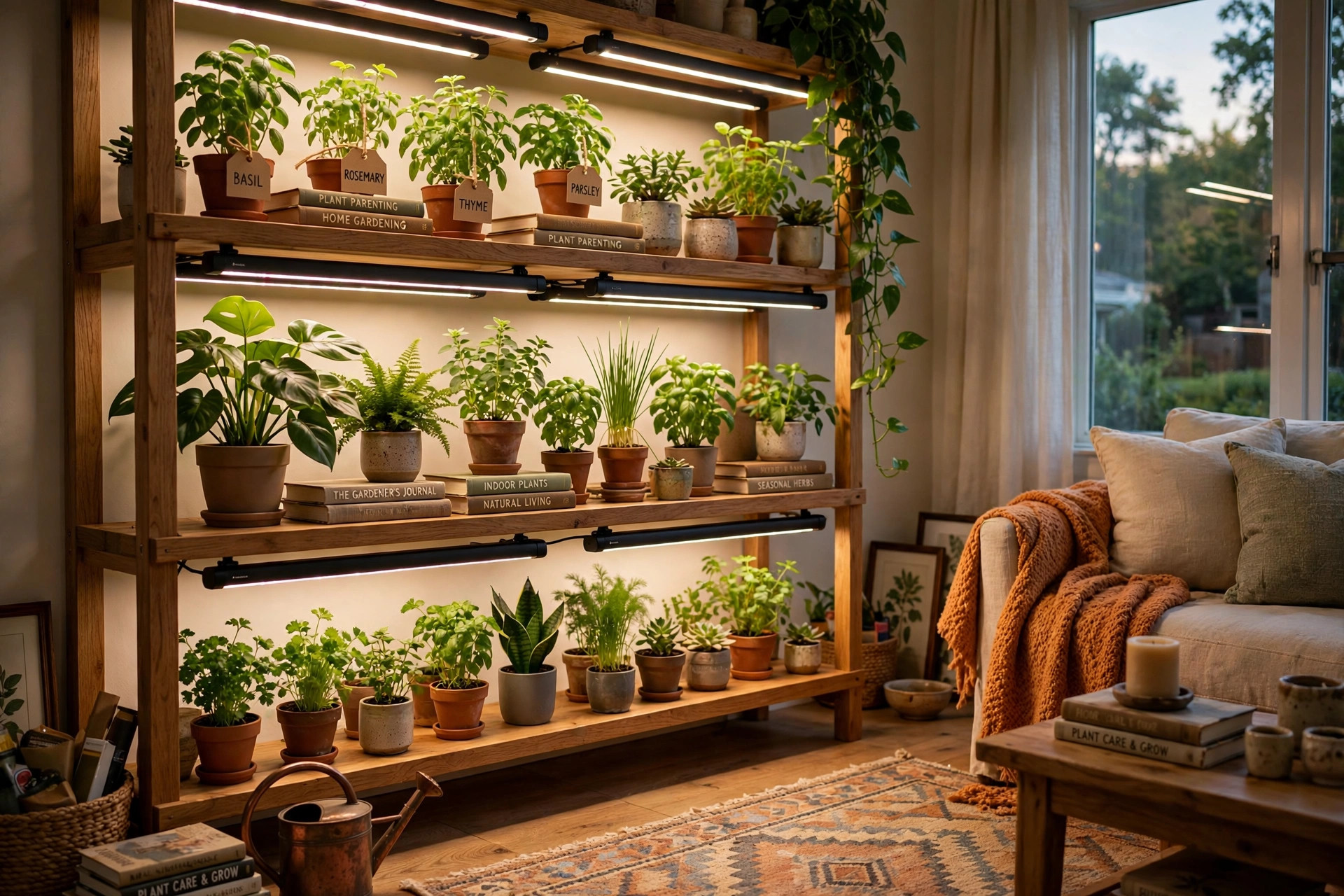

When you search for indoor grow lights for sale usa, you meet a wide field of choices. Bulbs, bars, panels, and stands fill the shelves of stores and the pages of web shops. This guide explains what these lights do, how to pick the right one, and what they cost. It is written for the home grower. You may want a few green plants on a shelf. You may want to start seed trays in February. You may want fresh herbs all winter. In each case the right light makes the work simple.
Why Indoor Grow Lights Matter
Plants need light to make food. The process has an old name: photosynthesis. Leaves take in light and turn it into energy for growth. A window often gives too little. Most houseplants get weak light indoors. Days are short in winter. North windows give little sun. Plants stretch toward the glass. Stems grow long and thin. Leaves turn pale and drop.
A grow light adds what the window cannot give. It feeds the plant light on a set plan. It lets you grow in a basement or an office with no sun at all. It lets seed trays grow stocky and green instead of tall and weak. Reviews on Consumer Reports often note that steady, bright light is the single best cure for leggy indoor plants.
Grow lights also stretch the growing year. You can start tomatoes and peppers eight weeks before the last frost. You can keep basil and parsley alive through January. For people in cold states, that is a real gain. A U.S. Department of Energy guide on indoor lighting points out that modern LEDs give high light for low power, which makes year-round growing cheap to run.
What to Look for When You Buy: Indoor Grow Lights for Sale Usa
The shops sell many styles. The facts below help you judge them one by one.
Light Spectrum
Look for the words “full spectrum.” These lights mix blue and red light with other bands. Blue light helps leaves and stems grow tight. Red light helps buds and fruit form. Old purple “blurple” panels still sell, but most gardeners now pick white full-spectrum LEDs. They look like normal light to the eye. That matters in a living room. The soft white glow suits the home, and guides from The Spruce suggest full-spectrum white light as the best default for mixed houseplants.
Wattage and Light Strength
Ignore bold claims about wattage. What matters is how much usable light reaches the leaves. Honest brands print PPFD numbers or coverage area. A small bar of 20 to 40 real watts suits one shelf of houseplants. A 2 by 4 foot panel of 100 to 200 watts suits a seed rack or a small tent. For seed starting, garden how-to pages on HGTV advise 12 to 16 hours of bright light a day.
Height and Coverage
Light grows weaker with distance. Hang the light 6 to 12 inches above seed trays and small plants. Hang it 12 to 24 inches above tall plants. Bars with daisy-chain cords let you link four or six units from one plug. Panels give a square zone of strong light. Spot bulbs in clamp lamps suit one big plant. Retailers like Lamps Plus list the coverage area of each model, which makes matching a light to a shelf easy.
Timers and Controls
Plants need dark rest too. Most do best with 12 to 16 hours of light and 8 to 12 hours of dark. A simple outlet timer costs little and runs the plan on its own. Many new lights build the timer in. Dimmers let you turn the light down for young seedlings and up for full growth. Specialty shops such as Lumens carry a range of dimmable LED fixtures that work well for this task.
Heat and Noise
LED grow lights run much cooler than old high-pressure sodium lamps. Small bars stay cool to the touch. Large panels give off some warmth at the heat sink but need no fan in most cases. Units with built-in fans cool the diodes and can add a low hum. For a bedroom or living room, pick fanless models. Keep every fixture a few inches clear of shelves and walls so air can move. Good air flow adds years to the life of the diodes.
Types of Indoor Grow Lights
LED bars and strips. Long slim tubes that mount under shelves. They are the most common pick for houseplants and seed trays. They run cool, use little power, and link together. A set of four bars covers a standard wire shelf. Brands sold by Home Depot and Lowe’s give clear watt and length ratings.
LED panels. Flat square or round fixtures with many diodes. They suit a tent or a corner of a room. Panels give strong, even light over a 2 by 2 or 4 by 4 foot area. Many include built-in timers and dimmers. Philips sells panel and bulb options in the plant-light class with published spectrum charts.
Grow bulbs. Screw-in bulbs that fit desk lamps and clamp lights. They are the cheapest way to light one plant. Look for A19 or PAR38 bulbs labeled full spectrum with 9 to 36 watts of real draw. They run warm, so give the leaves a few inches of space.
Stand and tripod lights. Lights on legs that sit on the floor or a table. They suit big floor plants like fiddle-leaf figs and citrus trees. The head tilts so you can aim light down the whole plant. They also light a small rack without any mounting work.
High-output fixtures for tents. Panels of 200 watts and more for serious indoor growing. They need more care with height and heat. They suit growers who keep a dedicated tent with fans.
Clip-on and desk kits. Small gooseneck lamps with a grow bulb at the end. They clip to a shelf or a table edge. They suit a student or an office worker with one or two plants. They cost little and move in seconds.
Cost and Price
Small screw-in grow bulbs cost about ten to twenty-five dollars each. Four-foot bar sets cost thirty to eighty dollars for two, four, or six bars. Quality LED panels of 100 watts cost sixty to one hundred fifty dollars. Large tent panels run two hundred dollars and more. Stand lights cost forty to one hundred dollars.
Power cost stays low. A 40-watt bar run sixteen hours a day uses about two-thirds of a kilowatt-hour daily. At a typical rate that is under ten cents a day. Energy Star certified fixtures use the least power for the light they give, so check for that label when you compare models.
Where to shop matters too. Big stores let you see the fixture in hand and ask staff questions. Online shops give more choice and lower prices on panels. Either way, read the fine print on real wattage, coverage, and warranty before you buy.
Care and Upkeep
Grow lights need little care. Dust the diodes and lenses once a month. Dust cuts light by a surprising amount. Check hanging cords and clips twice a year. LED diodes last a long time, often 25,000 to 50,000 hours. At sixteen hours a day that is four to eight years. Replace a unit when the light looks dim or plants start to stretch again.
Keep the plan steady. Move seedlings closer as they grow or lower the light to keep the same gap. Give plants a dark period each night; timers make this automatic. Water needs change under strong light. Soil dries faster. Check the top inch of soil with a finger before you water.
If you use the lights near the kitchen, note that kitchen island pendants and other decorative fixtures serve a different task. They please the eye. Grow lights feed the plant. You can mix the two in one room: warm pendants for people, white bars over the plants. Likewise, under cabinet lighting can double as a soft glow for a counter herb pot, but it rarely gives the strength a plant needs on its own.
Safety
Electricity and water do not mix. Keep power cords off wet trays. Use a GFCI outlet near sinks and seed stations. Do not hang heavy panels from drywall with bare hooks; anchor into a stud or use a sturdy shelf. Give hot-running bulbs space from dry leaves and curtains. Turn lights off when you leave for many days unless a timer runs them. Read the manual for the max daisy-chain count; linking too many bars can overload a cord.
Grow lights are bright. Do not stare straight into a panel. If the lights sit in a living room, a small screen or shade keeps the glare out of your eyes in the evening. The Consumer Product Safety Commission reminds buyers to look for UL or ETL marks on any plug-in light, grow light or not.
Frequently Asked Questions
How many hours a day should grow lights run? Most houseplants do well with 12 to 16 hours of light. Seedlings like 14 to 16 hours. Give every plant a dark rest of 8 hours or more each night. A timer keeps the plan exact.
Can grow lights replace a window? Yes, for most common plants. A full-spectrum LED gives the red and blue bands plants use most. Many growers keep plants in rooms with no windows at all. Slow-growing plants like snake plants and pothos thrive under bars alone.
Do LED grow lights use much power? No. Small bars draw 20 to 40 watts. Even a 100-watt panel costs only a few dollars a month to run. LED models waste little heat, so the room stays cool.
Will grow lights harm my eyes? Normal use is safe. The light is bright, like a strong desk lamp. Avoid staring straight into the diodes. Place living-room lights so the bars face the plants, not your chair.
What is the difference between full spectrum and blurple lights? Blurple lights glow purple and give mostly red and blue bands. They work, but the color hurts the eye and makes it hard to see plant health. Full-spectrum white LEDs give a broad band that looks natural and grows plants just as well.
Can I use a regular LED bulb for plants? A bright daylight LED bulb helps a little. But it gives less of the red and blue bands that drive growth. A true grow bulb of the same wattage does far more. The price gap is small.
How far should the light hang from the plants? Hold small bars 6 to 12 inches above the leaves. Hang strong panels 12 to 24 inches up. Watch the plants for a week. Pale, stretched stems mean the light is too far. Brown spots on leaves mean it is too close.
A Short Final Word
A good grow light is a quiet tool. It hangs out of sight and does its work for years. Pick a full-spectrum LED sized to your shelf, hang it at the right height, and set a timer. Your plants will stay short, green, and strong through the darkest months. Whether you keep a few pots or a full seed rack, the indoor grow lights for sale usa market has a model that fits the task and the budget. And once the plants are thriving indoors, you can turn your eye to the yard, where solar path lights give the same kind of set-and-forget ease outside.
References
Consumer Reports. (n.d.). Product reviews and ratings. https://www.consumerreports.org ENERGY STAR. (n.d.). Energy efficient products. https://www.energystar.gov HGTV. (n.d.). Home and garden ideas. https://www.hgtv.com Lamps Plus. (n.d.). Lighting and home decor. https://www.lampsplus.com Lowe’s. (n.d.). Home improvement products. https://www.lowes.com Lumens. (n.d.). Lighting and ceiling fans. https://www.lumens.com Philips. (n.d.). Lighting products. https://www.philips.com The Home Depot. (n.d.). Home improvement products. https://www.homedepot.com The Spruce. (n.d.). Home and garden advice. https://www.thespruce.com U.S. Consumer Product Safety Commission. (n.d.). Product safety information. https://www.cpsc.gov U.S. Department of Energy. (n.d.). Energy efficiency and renewable energy. https://www.energy.gov
Was this guide helpful?

About Michael Thompson
The My Garden US editorial team writes practical, in-depth home and garden guides for American homeowners — tested advice, no fluff.
You May Also Like
Indoor Wall Sconces: An American Homes Guide
January 1, 2026 0 views
WiFi Smart Bulbs for Florida Homes: A Practical Guide
March 14, 2026 0 views
Motion Flood Lights for Sale USA: How to Choose the Right One
July 31, 2026 0 views