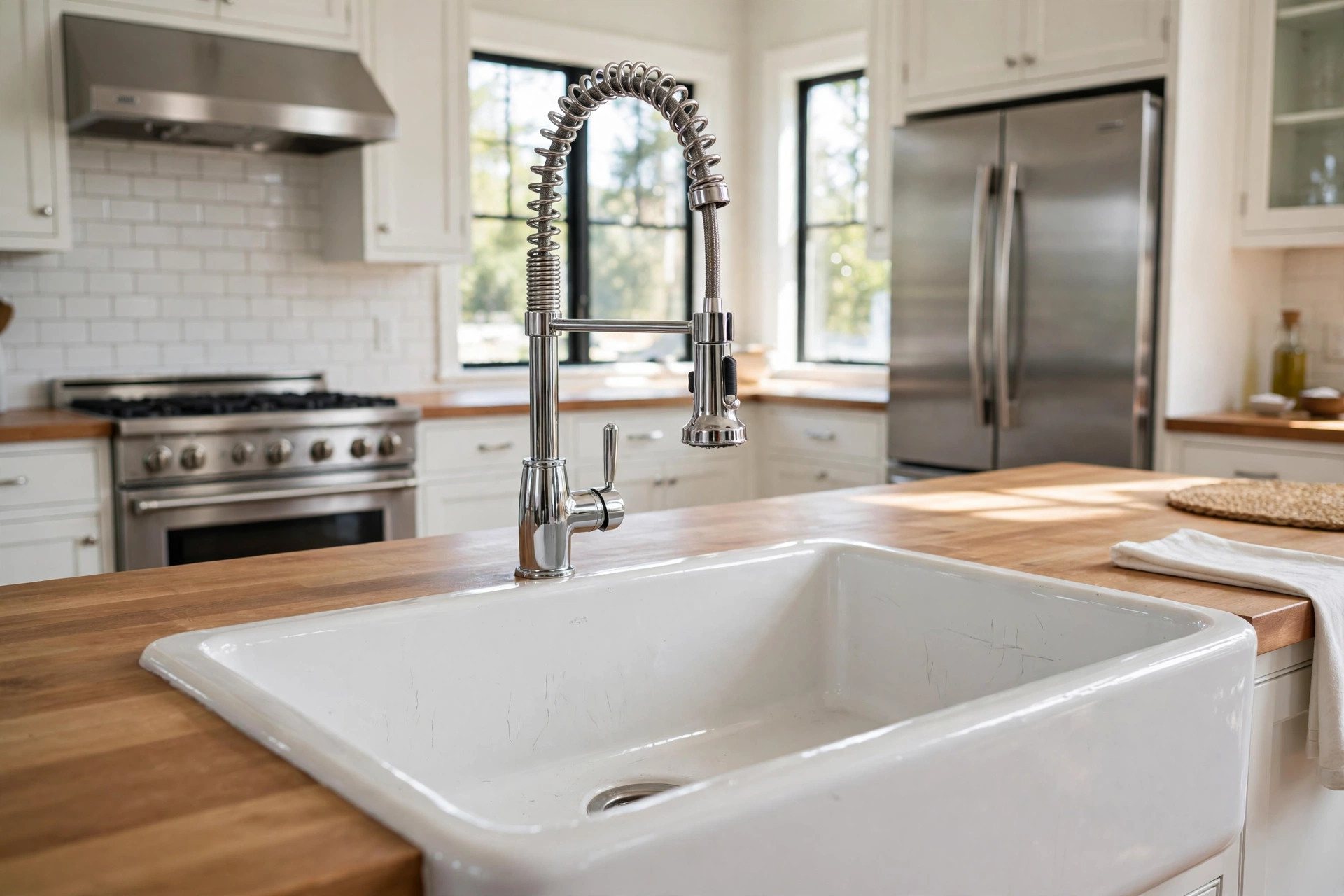

Homeowners who want a kitchen with a bold, professional look often turn to one fixture. The commercial style kitchen faucet. It looks like the faucets used in restaurant kitchens. A tall arched neck. A coiled spring. A spray head that pulls down on a hose. This guide gathers commercial style kitchen faucet reviews usa shoppers can trust. It explains what these faucets are, which features matter most, what they cost, and how to keep them working for years.
Why a Commercial Style Faucet
A standard kitchen faucet is short and plain. A commercial style faucet is tall and strong. The high arc gives room to fill tall pots. The spring neck moves with you. The spray head reaches every corner of the sink. Cooks who spend time at the stove enjoy this freedom. It feels like real kitchen equipment, not just a tap.
The look is a big part of the appeal. Many home kitchens now have a chef-inspired style. Stainless steel appliances. Butcher block counters. A commercial faucet fits right in. It becomes a focal point over the sink. Guests notice it. It says the owner takes cooking seriously.
Function matters as much as form. These faucets often carry a higher flow rate than plain models. They switch between a steady stream and a strong spray with a button on the head. The spray cuts through grease and food stuck to dishes. Rinsing vegetables is faster. Filling a stockpot takes less time.
What to Look for When You Buy: Commercial Style Kitchen Faucet Reviews Usa
Not all commercial style faucets are built the same. The differences show up in daily use. Review these points before you spend your money.
Build Material
Brass is the best body material. It lasts long and resists rust. Stainless steel is also fine and matches many kitchens. Avoid faucets made mostly of plastic. They feel light and wear out fast. Check the product details for the word solid brass.
Finish
Chrome is the classic choice. It shines and cleans with a quick wipe. Stainless steel finish hides fingerprints better. Matte black and brushed nickel are popular in modern kitchens. Pick a finish that matches your other fixtures. A mixed look can clash.
The Spring and Hose
The coiled spring should feel firm but smooth. Cheap springs feel loose. The pull-down hose should be long enough to reach the full sink. Nylon braided hoses last longer than plain plastic ones. They also weigh less, so the head drops back into place with ease.
Spray Functions
Most models offer two or three modes. A gentle aerated stream for filling glasses. A strong spray for rinsing. Some add a pause button. The pause button is handy when you move a pot with one hand. It is a small feature that users praise often.
Valve and Cartridge
The cartridge is the heart of the faucet. Ceramic disc cartridges are the standard today. They turn on and off with little effort and can last for decades. A good faucet should turn with one finger.
Installation Type
Check your sink or counter holes. Most commercial style faucets need one hole. Some models come with a deck plate for three-hole sinks. If your sink has three holes and the faucet covers only one, you will need soap dispenser caps or a plate.
Many buyers also compare this style with other modern options. If you want hands-free use, read our notes on the best touchless kitchen faucet before you decide. Those who prefer a lower profile may like the best pull down kitchen faucet 2026 guide. And if finish is your first concern, the matte black kitchen faucet pros and cons may help.
Types and Options
Commercial style faucets fall into a few groups. Knowing them helps you narrow the field.
Two-handle models. These have separate hot and cold handles. They look traditional. They suit farmhouse kitchens. The downside is that you need two hands to set the water temperature.
Single-handle models. One lever controls both flow and temperature. This is the most common type in reviews. It is fast and simple. Cooks with dirty hands can nudge the lever with a wrist.
Pot filler style. A few models add a second swing arm for filling pots on the stove. This is rare in home faucets but growing in demand.
Pre-rinse height versus standard height. True pre-rinse faucets stand very tall, sometimes over twenty inches. Make sure you have room. Measure from the counter to the bottom of your wall cabinet. You need at least an inch of clearance above the tallest point.
Cost and Price in the USA
Prices vary widely. A budget commercial style faucet sells for around eighty to one hundred fifty dollars. These often use thinner metal and basic cartridges. They can work fine for light use.
The middle range runs from about one hundred fifty to four hundred dollars. Most of the well-reviewed models sit here. You get solid brass bodies, ceramic cartridges, and good finishes. For most homes, this is the sweet spot.
Premium models cost four hundred dollars or more, sometimes over one thousand. Names like Delta Faucet and Kohler sell top lines in this range. You pay for better engineering, quieter hoses, and longer warranties. Many carry a limited lifetime warranty.
Remember to budget for installation if you hire a plumber. A simple swap of an old faucet costs far less than a job that needs new supply lines. If your shut-off valves are old, ask the plumber to replace them at the same time.
How to Install It
A handy homeowner can install a commercial style faucet in an afternoon. The basic steps are simple. Turn off the water at the shut-off valves under the sink. Disconnect the old supply lines. Remove the old faucet. Clean the mounting surface. Set the new faucet through the hole. Tighten the mounting nut from below. Connect the supply lines. Turn the water back on and check for leaks.
Tape the threads with plumber’s tape. Do not overtighten plastic nuts. Run the water for a minute to flush out debris. Check the spray head for a clogged screen. Keep the instruction sheet in a drawer. You may need the model number years later when you order a part.
Care and Upkeep
A good faucet needs little care. Wipe the body with a soft cloth after heavy use. Water spots wash off with mild soap. Avoid harsh cleaners. Bleach and strong acids can damage the finish. Never use steel wool.
The spray head screen can clog over time. Hard water leaves mineral deposits. Soak the head in white vinegar for an hour to clear the buildup. Most heads unscrew by hand. If the water pressure drops, this is the first place to look.
Check under the sink twice a year. Feel the supply lines and connections for dampness. A slow drip can rot a cabinet floor before you notice it. Replace old rubber supply lines with braided stainless steel lines. They last much longer.
Safety Notes
Hot water burns are the main risk. A tall commercial faucet can deliver a strong stream of hot water fast. Teach children to test the water first. Consider a faucet with a temperature limit stop. This small device caps how far the handle turns toward hot.
Weight is another point. These faucets are heavier than standard models. Make sure your sink or counter can hold the weight. Thin stainless steel sinks may need a support bracket. Ask the manufacturer if you are unsure.
Check local rules on lead content. In the USA, faucets must meet low-lead standards. The EPA publishes guidance on safe drinking water at home. Buy from known brands to be safe. Off-brand imports sometimes skip the tests.
Buying Tips from the Reviews
Reading commercial style kitchen faucet reviews usa shoppers post can save you trouble. Look past the star rating. Read the written comments. Buyers often note the same few things.
Noise. Some spray heads are loud on full spray. If your kitchen is open to the living room, this matters. Reviewers often mention noise.
Splash. A tall faucet can splash more than a short one. A deep sink helps. So does a faucet with a gentle first stream mode.
Hose weight. A heavy hose may not retract smoothly. Reviewers test this in the first week. Good models snap back every time.
Finish wear. Cheap finishes chip near the handle. Photos in reviews show this clearly. Look for photos from buyers who have owned the faucet for months.
Customer service. When a part breaks, the maker’s service matters. Brands like Moen, Kohler, and Delta Faucet have parts programs that ship small parts free or cheap. Smaller sellers may not.
For hands-on repair guides, sites like This Old House and Family Handyman show step-by-step faucet work. Retailers such as Lowe’s also post buyer guides that compare features side by side. For water-saving models, Aqua Sana and similar filtration brands note which faucets pair well with filters.
Brands That Lead the Reviews
A few names appear again and again in commercial style kitchen faucet reviews usa buyers trust. Knowing who makes what helps you shop with more care.
Delta Faucet is a long-standing American brand. Its commercial style models often carry strong spray power and solid brass bodies. Many come with a lifetime warranty on parts. Buyers praise the smooth pull-down action. Prices sit in the middle to upper range.
Kohler is another well-known name. Its faucets lean toward design, but the build is serious. Kohler offers many finishes, from polished chrome to bold matte black. Reviewers note the quiet hoses and clean lines. The cost runs a bit higher than Delta on average.
Moen focuses on ease of use. Its commercial style faucets often include spot-resistant finishes. This is a real help in homes with hard water. Moen backs most models with a limited lifetime warranty. Customer service earns high marks in reviews.
Kraus is a newer brand that wins praise for value. Its commercial style faucets look expensive but cost less. Many models use solid brass and lead-free parts. Buyers like the thick feel of the spray head. Warranty terms are shorter than the big three, but still fair.
Smaller online brands sell for far less. Some are fine. Many are not. Read the one-star reviews first. If buyers report leaks in the first month, move on. A faucet is not a good place to gamble.
Common Problems and Fixes
Even a good faucet can develop small faults. Most have simple fixes.
Low water pressure. Unscrew the spray head. Rinse the screen under running water. Soak the head in white vinegar for one hour if minerals have built up. This fixes the problem nine times out of ten.
Leaking at the base. The mounting nut may have loosened. Tighten it from under the sink. Do not use too much force. Check the rubber gasket for cracks and replace it if needed.
Hose will not retract. The hose may be tangled with the supply lines. Clear the space under the sink. Add the counterweight that came in the box. Make sure it hangs free and does not hit the pipes.
Dripping after shutoff. The cartridge is likely worn. Order a replacement cartridge for your model number. The swap takes about fifteen minutes with basic tools. Turn off the water first.
Loose handle. Tighten the small set screw at the base of the handle. A hex wrench usually does the job. Keep the wrench in your junk drawer for next time.
What the Warranty Really Covers
The warranty matters more with faucets than with most fixtures. Read it before you buy. A limited lifetime warranty from a big brand usually covers parts and finish for as long as you own the home. If the cartridge fails in year ten, the maker ships a free replacement. Labor is almost never covered.
Budget brands often offer one to five years. After that, you pay for parts. Some brands ask you to ship the old faucet back. This costs time and money. Check whether the warranty moves with the home if you sell. Most do not transfer.
Keep your receipt. Take a photo of the model number under the sink. When you call for a part, give the model number first. This saves a long wait. Good brands keep parts in stock for decades. Cheap brands may not stock parts at all.
FAQ
Are commercial style kitchen faucets worth it?
For many cooks, yes. The tall neck and strong spray make daily tasks easier. The price is fair for the build quality. If you rarely cook, a simpler faucet may serve you just as well.
Do they use more water?
They can, because the flow rate is often higher. Look for models marked with the WaterSense label. These use less water without a weak stream. Running the spray only when needed keeps use low.
Can I install one myself?
Yes, if you are comfortable with basic tools. The job takes one to two hours. Turn off the water first. If the old shut-off valves stick, call a plumber rather than forcing them.
What is the best finish for hard water?
Chrome and stainless steel hide spots best. Matte black shows mineral spots more. Wipe the faucet dry after use if your water is very hard.
How long do these faucets last?
A well-made brass faucet with a ceramic cartridge can last fifteen to twenty years. Cheap models may last five. The warranty is a good clue. A lifetime warranty signals maker confidence.
Will it fit my sink?
Most models fit a standard single hole or a three-hole sink with a deck plate. Measure your hole spacing and your cabinet clearance before you order. Tall models need open space above the sink.
A Short Final Word
The commercial style kitchen faucet is more than a fashion piece. It is a working tool. Pick solid brass, a ceramic cartridge, and a finish you can live with. Read real buyer reviews. Measure twice. Take care of it with mild soap and an annual check under the sink. Done right, this one fixture will serve your kitchen for many years.
References
Aquasana. (n.d.). Water filtration systems. https://www.aquasana.com Delta Faucet. (n.d.). Kitchen and bathroom faucets. https://www.deltafaucet.com Family Handyman. (n.d.). DIY home repair and maintenance. https://www.familyhandyman.com Kohler. (n.d.). Bathroom and kitchen fixtures. https://www.kohler.com Lowe’s. (n.d.). Home improvement products. https://www.lowes.com Moen. (n.d.). Faucets and plumbing fixtures. https://www.moen.com The Home Depot. (n.d.). Home improvement products. https://www.homedepot.com This Old House. (n.d.). Home renovation guidance. https://www.thisoldhouse.com U.S. Environmental Protection Agency. (n.d.). Protecting human health and the environment. https://www.epa.gov
Was this guide helpful?

About Robert Taylor
The My Garden US editorial team writes practical, in-depth home and garden guides for American homeowners — tested advice, no fluff.
You May Also Like

Hard Water Stains on Fixtures Solutions USA
June 30, 2026 0 views
Lead in Drinking Water Filter Reviews USA: What Tests, Types, and Brands to Trust
February 25, 2026 0 views
Best Instant Hot Water Tank Reviews USA
September 17, 2026 0 views