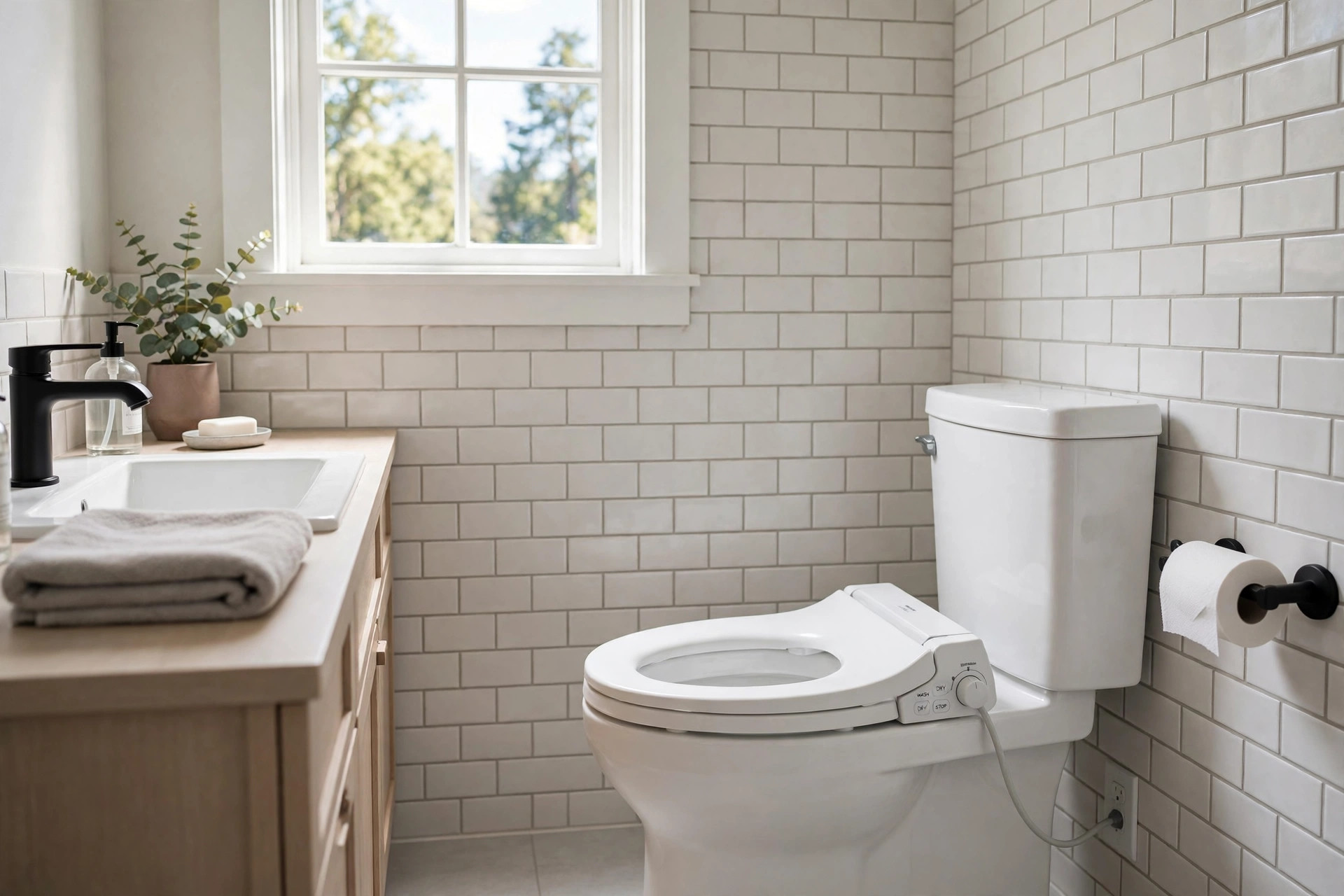

More American homes now add a bidet to the bathroom. A bidet cleans with water after you use the toilet. It feels fresh. It cuts down on toilet paper. But two choices fill most store shelves in the United States. One is the simple bidet attachment. The other is the full bidet seat. This bidet attachment vs bidet seat comparison USA guide walks through both. You will learn how each one works, what it costs, and which one suits your toilet and your budget. By the end, you can pick the right path for your own bathroom.
Why This Comparison Matters
The bidet has a long past in Europe, Asia, and the Middle East. In the United States it stayed rare for decades. That changed in recent years. Shortages of toilet paper made people look for a better way. Online stores made bidets easy to buy. Today you can order one in minutes and install it the same day.
Not all bidets are the same. The bidet attachment is the small, low-cost way in. It bolts under your current seat. It adds a wash with few parts. The bidet seat replaces your whole seat. It brings more comfort features. It also costs much more.
Picking the wrong one wastes money or leads to a poor fit. An attachment may not suit an oddly shaped toilet. A fancy seat may need a power outlet you do not have. A fair bidet attachment vs bidet seat comparison USA readers can trust must weigh price, features, install, and daily use.
What Is a Bidet Attachment?: Bidet Attachment vs Bidet Seat Comparison Usa
A bidet attachment is a thin plate or nozzle unit. It mounts between your toilet and your current toilet seat. The nozzle sits at the back of the bowl. When you turn a knob or press a lever, the nozzle swings down and sprays water up. That is the whole idea. Most models need no power. Cold water feeds the spray.
How It Fits Your Toilet
Almost every standard two-piece toilet accepts an attachment. You lift the seat, set the plate in place, and lower the seat back down. The plate is slim, so the seat still closes. A T-shaped valve at the toilet tank supply splits water to the nozzle. The work needs only a wrench and a screwdriver. Many buyers finish in under twenty minutes. Our handheld bidet sprayer installation guide walks through a similar supply-line hookup if you want more detail on that part.
What It Does and Does Not Do
A basic bidet attachment gives one cold-water wash. Some models add a dial for water pressure. A few let you aim the nozzle. Dual-temperature versions can mix hot water, but they need a hot supply line near the toilet. Most bathrooms lack that line. So most users wash with cool water.
The attachment does not heat the seat. It does not dry you with air. It does not offer a night light or a remote. It is plain and honest. That plainness is why it costs so little.
What Is a Bidet Seat?
A bidet seat is a full replacement toilet seat. It includes the wash system built into its body. You remove your old seat and set the bidet seat on the bowl. Then you connect water and plug in a power cord. A bidet seat needs a GFCI outlet near the toilet. Many US bathrooms have one near the sink. Some do not, and that can add cost.
The Features You Gain
Bidet seats bring warm water on demand. A heater inside warms the water or stores it warm. You can set the spray to gentle or strong. Many seats offer a pulsing spray and an adjustable nozzle position. A heated seat keeps you warm on winter mornings. Warm air drying cuts paper use to near zero. Some seats add a soft night light and a deodorizer. A remote or side panel controls it all.
Brands that make fixtures, like Kohler and TOTO, sell bidet seats with these comfort features. Brondell also makes popular mid-range seats. If you want to see how buyers rate the top options, read our best bidet toilet seat reviews.
What the Seat Demands
A bidet seat costs more to buy and more to run. It uses power each day. The unit is taller than a normal seat, so it changes how the toilet feels. Some people love the high seat. Some do not. The electronics add parts that can fail over the years. Still, for many buyers the daily comfort is worth the price.
Key Differences at a Glance
The two products solve the same task in different ways.
Price
A bidet attachment usually sells for twenty-five to eighty dollars in the US. Name brands cost a bit more. A bidet seat usually sells for two hundred to seven hundred dollars. High-end seats can pass one thousand dollars. On price alone, the attachment wins by a wide margin.
Features
The attachment washes with cold water and little else. The seat washes with warm water, dries with warm air, and heats the seat. If comfort features matter to you, the seat wins. If you only want a clean wash, the attachment does the job.
Installation
Both install without a plumber for most people. The attachment takes about fifteen to twenty minutes and needs no power. The seat takes thirty to sixty minutes and needs a nearby outlet. If your bathroom lacks an outlet by the toilet, the seat may need an electrician. That adds real cost. Retailers like Home Depot and Lowe’s carry both types, and their product pages list the outlet requirement in plain terms.
Water Temperature
Cold-water washing surprises some first-time users, but in a cold house in January a cold spray feels harsh. A bidet seat warms the water and removes that issue. This is one of the strongest reasons buyers upgrade from an attachment to a seat.
Look and Fit
An attachment hides under your seat. Your toilet looks almost the same. A bidet seat is bulkier and clearly visible. It also comes in two main shapes: round and elongated. You must match the shape to your bowl. Measure your bowl from the bolts to the front rim. Round bowls run about sixteen and a half inches. Elongated bowls run about eighteen and a half inches. Buy the wrong shape and the seat will not fit.
How to Choose the Right One
Start with your toilet. Check its shape and measure the bolt spread. Standard spreads are five and a half inches in the US. Also check for French curve or odd tank shapes that can block an attachment plate. If your toilet is very old or unusual, check fit carefully before you buy.
Next, check your outlets. Look at the wall near your toilet. Is there a GFCI outlet within three to four feet? If yes, a bidet seat is an easy choice. If no, weigh the cost of adding one. An electrician may charge one hundred fifty to three hundred dollars for a new outlet. That can double the cost of a mid-range seat.
Think about who uses the bathroom. Older adults and people with limited reach often prefer a seat. The warm water and air drying help them stay independent. Renters often prefer an attachment. It installs fast and comes off fast at move-out with no holes in the wall.
Consider your budget as a total. Add the product price, any parts, and any electrical work. A fifty-dollar attachment with a ten-dollar valve set is a true low-cost upgrade. A four-hundred-dollar seat plus an outlet can reach seven hundred dollars.
Cost and Price
Let us put real numbers beside each option.
A bidet attachment costs twenty-five to eighty dollars at most US stores. You may add a small T-valve or new supply line for ten to twenty dollars. Total cost of ownership stays low because it uses no power. Over ten years, the cost is little more than the purchase price.
A bidet seat costs two hundred to seven hundred dollars for most quality models. Luxury models run higher. Power use is small, roughly a few dollars a month, but it is not zero. If you need a new outlet, add one hundred fifty to three hundred dollars for the electrician. Over ten years, a seat may cost five to ten times more than an attachment.
Both cut toilet paper use. The EPA notes that reducing paper and water waste helps homes lower their footprint. Cutting paper use by half can save one hundred to two hundred dollars a year on paper. That saving helps both options pay for themselves over time. The seat pays back slower because it costs more up front.
Installation Basics
You can install either one on a Saturday morning. Still, a few steps deserve care.
Attachment Steps
First, shut off the water valve behind the toilet. Flush to drain the tank. Place a towel under the tank to catch drips. Loosen the seat bolts, lift the seat, and set the attachment plate on the bowl. Set the seat back down and tighten the bolts. Then add the T-valve to the tank supply line. Connect the hose from the valve to the attachment. Turn the water back on, check for leaks, and test the spray with the seat up before you sit down.
Seat Steps
First, shut off the water and remove the old seat. Set the bidet seat mounting plate on the bowl and lock the seat into it. Add the T-valve at the tank supply and connect the hose. Then plug the cord into a GFCI outlet. Run the seat’s test mode to check the spray aim. Wipe the nozzle and sit test the seat for comfort. Guides from This Old House and Family Handyman cover toilet seat work in clear step-by-step form if you want a second source.
One warning fits both jobs. Do not overtighten plastic nuts on the supply line. Hand tight plus a quarter turn with a wrench is enough. Overtightening cracks the nut and causes a slow leak.
Care and Upkeep
A bidet lasts longer with small habits.
Wipe the seat and nozzle area each week with a soft cloth and mild soap. Skip bleach and harsh scrub pads. They cloud plastic and wear seals. Pull the nozzle out once a month and wipe it. Check the filter screen at the T-valve twice a year. Hard water can clog it and weaken the spray.
For homes on septic systems, both options are safe. A bidet only uses water, and it sends less paper into the tank. Less paper means fewer clogs. Using septic safe toilet paper for what little paper remains keeps the system healthy.
If water pressure drops, make sure the supply valve is fully open. Then clean the nozzle holes with a soft brush. For a seat that loses warm water, check that it is plugged in and the energy saver mode is off. Most fixes are this simple.
Safety Notes
Water and power mix in every bathroom, so a few rules matter.
Use a GFCI outlet for any electric bidet seat. The GFCI cuts power fast if water touches the circuit. Never run an extension cord across the bathroom floor for a permanent install. Keep the cord dry and off the floor.
For attachments, watch the water supply line. A slow drip at the T-valve can rot a floor over months. Check the connection in the first week and again after a month. If you travel, shut the toilet valve off. A failed hose floods a home fast.
Set spray pressure low on first use, since high pressure can hurt soft skin. Children and older users should start at the lowest setting. Makers like Moen and Delta Faucet stress gentle water pressure in their bathroom product guides, and the same care applies to any bidet spray.
Frequently Asked Questions
Does a bidet attachment need electricity?
No. Most attachments run on water pressure alone. You turn a knob and the spray starts. If you want warm water from an attachment, you need a hot water line near the toilet, which most US bathrooms lack.
Does a bidet seat need electricity?
Yes. A bidet seat needs a standard GFCI outlet near the toilet. The power runs the water heater, the heated seat, and the warm air dryer. Without an outlet, you cannot use a full-feature seat.
Which one cleans better?
Both clean well when set up right. A seat gives more control over water temperature, spray width, and pressure. An attachment with good pressure cleans just as well for most people.
Will a bidet fit my toilet?
Most do. Check three things: bowl shape (round or elongated), bolt spread (usually five and a half inches), and tank clearance. Attachments fit more odd shapes because they are thin. Seats need the right shape match, so measure before you buy.
Is a bidet sanitary to share?
Yes. The nozzle rinses itself before and after use on most models. The spray touches only the user. Wipe it weekly and the unit stays fresh.
Can renters use a bidet?
Yes. An attachment is renter friendly. It adds no holes and removes in minutes. Keep the old parts so you can restore the toilet at move-out. A seat also removes cleanly, but check your lease before adding an outlet.
Final Word
There is no single winner in the bidet attachment vs bidet seat comparison USA shoppers face. The attachment is the smart low-cost start. It washes well, installs in minutes, and needs no power. The bidet seat is the comfort upgrade. Warm water, a heated seat, and air drying turn the toilet into a small luxury. Match the choice to your toilet, your outlets, and your budget. Either way, you use less paper and feel cleaner each day.
References
Brondell. (n.d.). Bidets and healthy home products. https://www.brondell.com Delta Faucet. (n.d.). Kitchen and bathroom faucets. https://www.deltafaucet.com Family Handyman. (n.d.). DIY home repair and maintenance. https://www.familyhandyman.com Kohler. (n.d.). Bathroom and kitchen fixtures. https://www.kohler.com Lowe’s. (n.d.). Home improvement products. https://www.lowes.com Moen. (n.d.). Faucets and plumbing fixtures. https://www.moen.com The Home Depot. (n.d.). Home improvement products. https://www.homedepot.com This Old House. (n.d.). Home renovation guidance. https://www.thisoldhouse.com TOTO. (n.d.). Bidet toilet seats and bathroom fixtures. https://www.toto.com U.S. Environmental Protection Agency. (n.d.). Protecting human health and the environment. https://www.epa.gov
Was this guide helpful?

About David Wilson
The My Garden US editorial team writes practical, in-depth home and garden guides for American homeowners — tested advice, no fluff.
You May Also Like
Dual Flush Toilet Pros and Cons Reviews USA: What American Homes Need to Know
April 20, 2026 0 views
Lead in Drinking Water Filter Reviews USA: What Tests, Types, and Brands to Trust
February 25, 2026 0 views
Water Softener for Florida Homes Reviews USA: What Buyers Need to Know
February 23, 2026 0 views