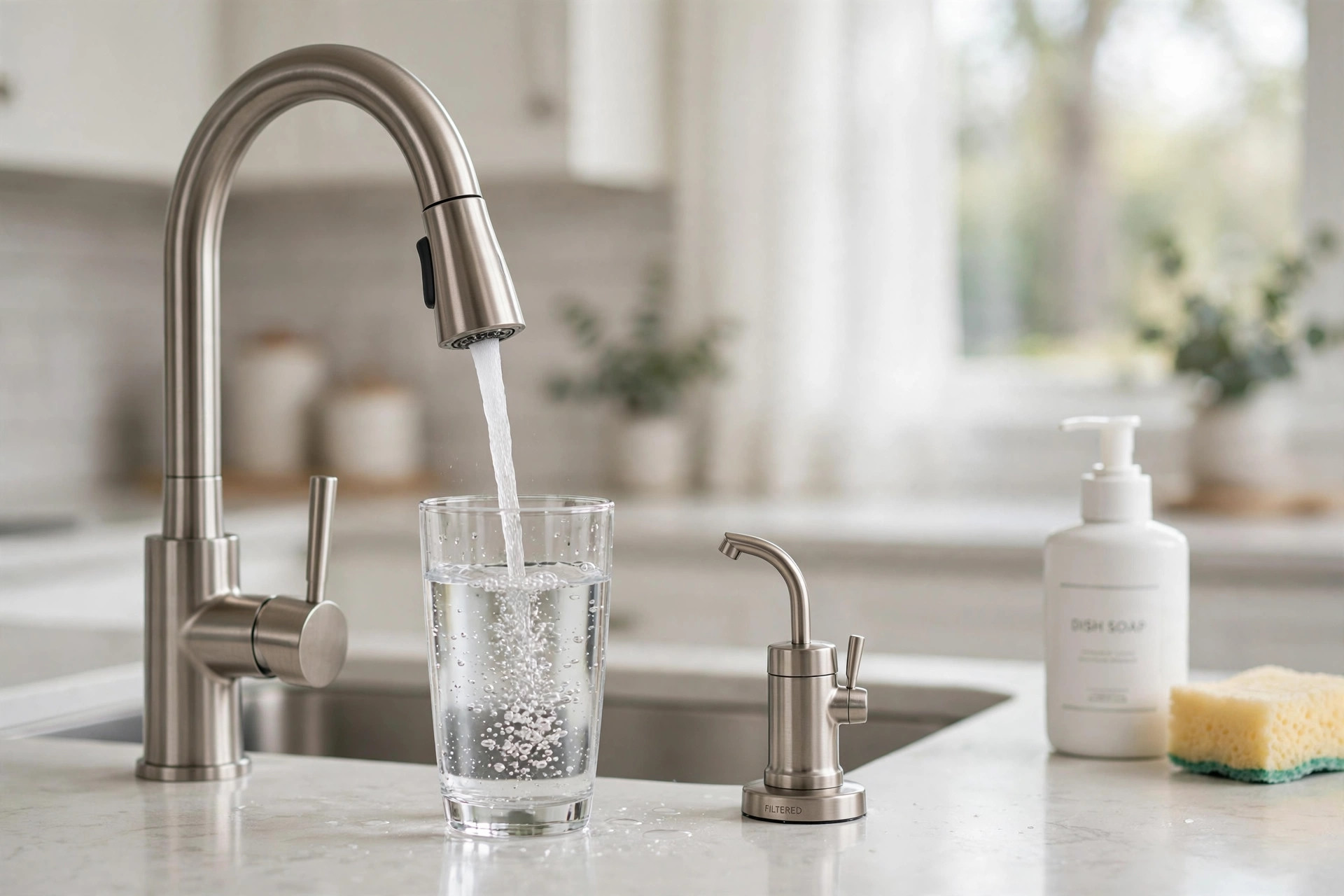

Many homes now want cleaner water from their own tap. Bottled water costs a lot of money over a year. It also fills the trash with plastic. A search for the best under sink water filter 2026 usa is a good first step toward a better answer. An under sink filter sits inside the kitchen cabinet. It connects to the cold water line under the sink. It sends filtered water to a small tap on the counter, or to the main faucet. The result is fresh water any time you turn the tap. This guide explains why these filters matter. It shows what to look for when you shop. It lists the main types and their price. It covers care, upkeep, and safety in plain words. By the end, you will know how to choose with care and set it up with ease.
Why an Under Sink Filter Matters
Tap water in the United States is tested by law. Most city water is safe to drink. But water can pick up problems on the way to your glass. Old pipes can add lead and copper. Rust can flake off from old mains. Chlorine is added to kill germs, but it leaves a taste and a smell that many homes dislike. Wells can add iron, sulfur, and fine dirt. The Environmental Protection Agency sets the rules for public water, yet it cannot control the pipes inside your home.
An under sink filter treats water at the point of use. Only the water you drink and cook with passes through the filter. This is smart for two reasons. First, the filter lasts longer because it treats less water. Second, you do not waste filter life on water for the lawn or the shower. Many homes find that filtered water tastes better right away. Tea and coffee taste cleaner. Ice cubes look clear. Many families stop buying bottled water. That can save hundreds of dollars each year. It also cuts down on plastic waste. For renters and owners alike, the change is small but the gain is real.
What to Look For When You Choose: Best under Sink Water Filter 2026 Usa
Not every filter fits every home. A wise buyer checks a few points before paying.
Know Your Water
Start with a simple water test. A test kit from a hardware store shows the basics. A lab test gives a full report. The Environmental Protection Agency offers guidance on testing, and your local water office can point you to a certified lab. If your water has lead, you need a filter that is rated to remove lead. If the problem is only taste and odor, a plain carbon filter may be enough. Do not guess. Test first, then shop.
Check for Real Certification
Look for a mark from NSF International. NSF is an independent body that tests water filters. A filter that is certified to NSF/ANSI 42 is proven to cut chlorine, taste, and odor. A filter certified to NSF/ANSI 53 is proven to reduce lead and other health risks. A filter certified to NSF/ANSI 58 is a reverse osmosis unit. These marks matter. They show that the claims on the box were checked by a third party. Avoid units with no certification at all.
Think About Flow and Space
Flow rate tells you how fast the filtered water comes out. A slow drip will annoy a busy cook. Most good units fill a glass in a few seconds. Also look under your sink. Measure the space. Some units are tall and need room for the tanks. Some need room below the housing to twist off the old cartridge. A unit that does not fit is a unit you cannot use.
Look at the Tap
Some systems come with their own small tap for the sink deck. Others tie into the main faucet. Faucet makers such as Moen and Delta Faucet offer taps that pair well with filtered water lines. If your sink has an extra hole from an old sprayer or soap pump, a dedicated tap drops right in. If not, you may need to drill a hole in the counter. That job is best left to a plumber if you are not sure.
Count the Cost of Cartridges
The box price is only the start. Every filter needs new cartridges. Check how long each cartridge lasts and what it costs. A cheap unit with costly cartridges can cost more over five years than a dearer unit with cheap cartridges. Write the yearly cost down. Compare it with what you now spend on bottled water. Most homes come out ahead.
Types of Under Sink Water Filters
Carbon Block Filters
A carbon block filter is the simplest type. Water passes through a solid block of pressed carbon. The carbon grabs chlorine, bad taste, and bad odor. It also catches fine dirt and rust. These units are small and low in cost. They are easy to install. They do not waste water. They are a fine pick when your water is already safe but tastes poor. They do not remove dissolved salts or most heavy metals on their own.
Reverse Osmosis Systems
A reverse osmosis system pushes water through a very fine membrane. The membrane holds back lead, fluoride, nitrates, arsenic, and dissolved salts. Most units add carbon stages before and after the membrane. Read our guide to reverse osmosis systems installed under the sink for a full review of this type. These systems give very pure water. They cost more than carbon units. They also send some water to the drain during the process. Newer units waste less than old ones. Brands such as APEC Water Systems have sold these units to American homes for many years. A reverse osmosis unit is the top pick when the water test shows real health risks.
Multi-Stage Filtration Units
A multi-stage unit stacks two or three filters in one housing. The first stage catches dirt and rust. The second stage is carbon for taste and odor. The third stage may target lead or cysts. These units sit between simple carbon filters and full reverse osmosis in both price and power. They waste no water. They suit homes with a mix of small problems rather than one big one.
Alkaline and Specialty Filters
Some units add minerals back to the water after filtration. They raise the pH and claim a smoother taste. Others target one problem, such as chloramine or iron. Buy these only if your test shows the exact problem they fix. A specialty filter that does not match your water is money lost.
Cost and Price
Prices in 2026 run in clear bands. A simple carbon block unit costs between 80 and 200 dollars. A multi-stage unit costs between 150 and 350 dollars. A reverse osmosis system costs between 150 and 500 dollars. Big-box stores such as Lowe’s carry all three types, often with the cartridges on the next shelf.
If you hire a plumber, add 150 to 300 dollars for labor. The job takes one to two hours. A handy owner can do it with basic tools in an afternoon. Guides from This Old House walk through the steps in plain detail.
The running cost is the cartridge bill. Carbon cartridges cost 20 to 60 dollars and last six to twelve months. Reverse osmosis sets cost 50 to 120 dollars a year for all stages, with the membrane lasting two to three years. Write these numbers down before you buy. A filter that is cheap to buy but dear to feed is no bargain.
Care and Upkeep
A filter only works when it is cared for. Mark the change date on the calendar or on the housing with a grease pencil. Change cartridges on time. A used-up cartridge can dump what it caught back into the water. That is worse than no filter at all.
Once a year, wipe down the housing and check every joint for drips. Put a small tray or a leak alarm under the unit. A slow drip under a dark cabinet can rot the wood before you see it. Repair guides from Family Handyman show how to fix small leaks with common tools.
For reverse osmosis units, check the storage tank now and then. Drain it fully once or twice a year to keep the air charge right. If the flow slows down, the pre-filters are likely full. Change them first before you blame the membrane. Keep spare cartridges on hand so a change takes minutes, not days.
Safety
Safety starts with honest claims. Buy only units certified by NSF International or a like body. If lead is your worry, read our notes on filters that remove lead before you choose. The box must state the exact percent of lead it removes, not just the word “lead.”
Flush a new filter as the manual says. The first gallons wash out fine carbon dust. They are not for drinking. Use only cold water through the filter. Hot water can ruin the media and release what it caught.
Never use a standard filter on water that is not safe from germs unless the unit is rated for it. A filter that removes taste cannot make pond water safe. If your well test shows bacteria, fix that first with proper treatment. The Environmental Protection Agency keeps clear rules on safe drinking water, and your county health office can help with well problems.
Fixture makers such as Kohler note that filtered water lines must meet local plumbing codes. Keep the air gap at the drain line for reverse osmosis units. This stops dirty drain water from flowing back into the clean side. It is a small part that does a big job.
Frequently Asked Questions
Do under sink filters remove lead?
Some do, and some do not. A plain carbon filter may cut a little lead but is not rated for it. A unit certified to NSF/ANSI 53 for lead, or a reverse osmosis unit certified to NSF/ANSI 58, is proven to remove it. Makers such as Aquasana sell units with stated lead-removal ratings. Always check the test data sheet, not just the front of the box.
Is reverse osmosis better than a simple carbon filter?
It depends on your water. Reverse osmosis removes far more, including dissolved salts, fluoride, and nitrates. But it costs more, needs more space, and sends some water to the drain. If your only problem is chlorine taste, a carbon filter is enough and is cheaper to run. Test first, then match the tool to the job.
How often must I change the cartridge?
Most carbon cartridges last six to twelve months. Pre-filters on reverse osmosis units last six to twelve months. The membrane lasts two to three years. Homes with heavy use or dirty water will change them sooner. When the flow slows or the taste returns, the time has come.
Can I install one myself?
Many owners do. The job needs a wrench, a drill for the tap hole, and care with the water shut-off. If you have never cut a water line, hire a plumber. A bad joint under the sink can cause real damage. Either way, the job takes about one to two hours.
Will it work with my garbage disposal and dishwasher?
Yes, in most kitchens. The filter ties into the cold water line before the faucet. It does not touch the drain side where the disposal sits. Just keep the filter housing clear of the disposal body so you can reach the cartridges.
How does this compare with a faucet-mounted filter?
A faucet-mounted filter screws onto the tap and is easy to fit. But it holds a small cartridge with a short life. An under sink unit holds larger cartridges that last longer and filter more. If you want the best long-term value, the under sink unit wins.
A Final Word
Clean water should not be a luxury. An under sink filter is a small box that does a steady job, day after day. Test your water. Pick a certified unit that fits your need and your budget. Change the cartridges on time. Do these three things, and your tap will give you water you can trust.
References
APEC Water Systems. (n.d.). Reverse osmosis drinking water systems. https://www.apecwater.com Aquasana. (n.d.). Water filtration systems. https://www.aquasana.com Delta Faucet. (n.d.). Kitchen and bathroom faucets. https://www.deltafaucet.com Family Handyman. (n.d.). DIY home repair and maintenance. https://www.familyhandyman.com Kohler. (n.d.). Bathroom and kitchen fixtures. https://www.kohler.com Lowe’s. (n.d.). Home improvement products. https://www.lowes.com Moen. (n.d.). Faucets and plumbing fixtures. https://www.moen.com NSF International. (n.d.). Product certification standards. https://www.nsf.org This Old House. (n.d.). Home renovation guidance. https://www.thisoldhouse.com U.S. Environmental Protection Agency. (n.d.). Protecting human health and the environment. https://www.epa.gov
Was this guide helpful?

About David Wilson
The My Garden US editorial team writes practical, in-depth home and garden guides for American homeowners — tested advice, no fluff.
You May Also Like
Best Sump Pump for Basement Reviews USA: A Plain Buyer’s Guide
February 23, 2026 0 views
Bidet Attachment vs Bidet Seat Comparison USA: A Simple Guide
February 22, 2026 0 views
Upflush Toilet System Reviews for Basement Bathrooms
July 17, 2026 0 views