
This affordable bamboo roman shades buying guide will help you choose natural window coverings without paying more than you should. Bamboo roman shades have a warm, woven look. They suit farmhouse rooms, coastal rooms, and modern rooms alike. They let soft light pass through while they give you privacy. Best of all, many styles cost far less than custom wood blinds or drapes. You only need to know what to look for. You need to measure your windows with care. And you need to know where the good deals hide. This guide covers all three.
Why Bamboo Roman Shades Are Worth a Look
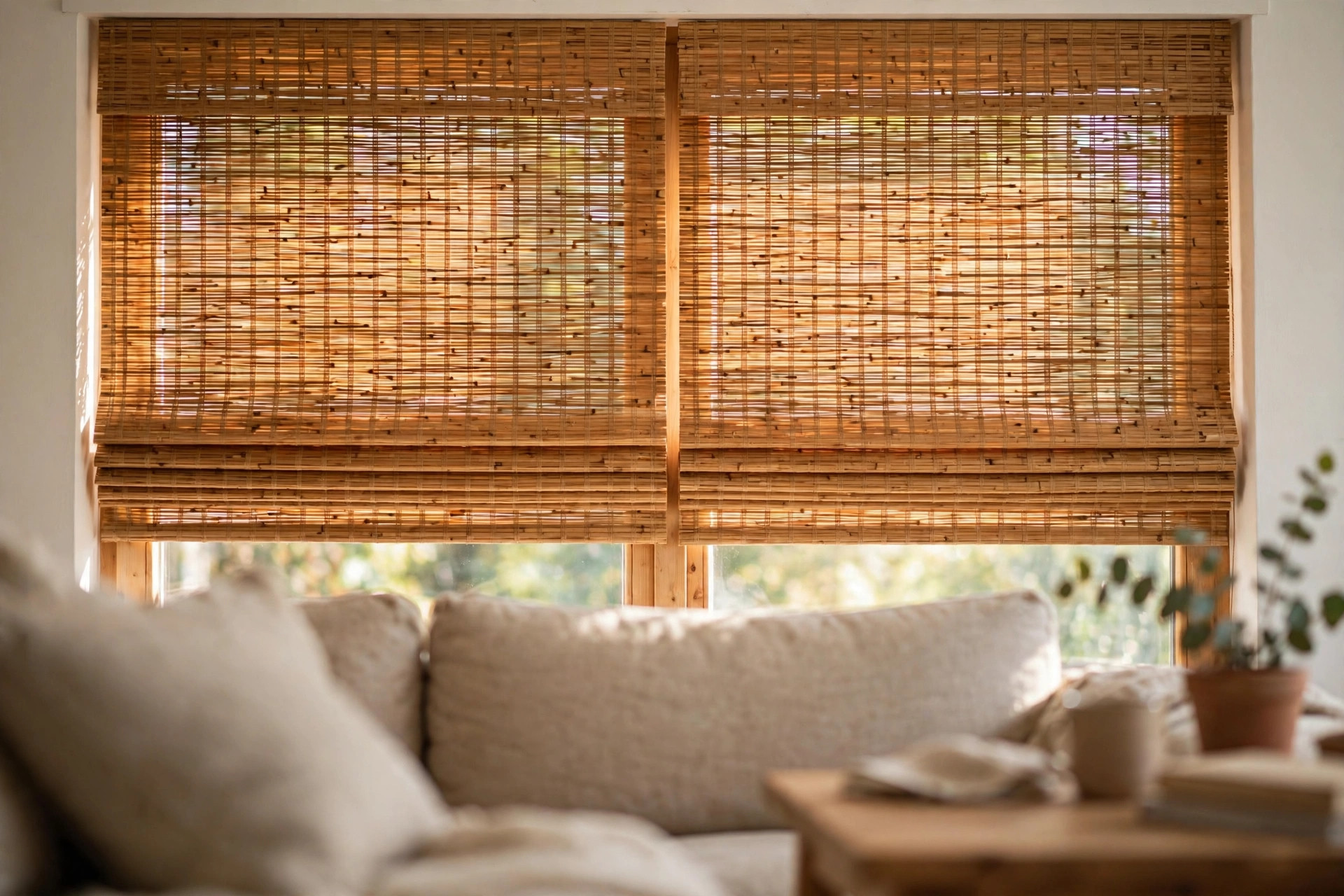
Bamboo shades bring nature inside the house. The reeds and grasses come in shades of honey, amber, and dark walnut. Each shade has its own grain and pattern. No two look exactly alike. That natural change is part of their charm.
They also work well in many budgets. Basic bamboo roman shades often cost less than fabric roman shades. They are sold as ready made panels in common window sizes. Ready made sizes keep the price low. You do not pay for custom work.
Light control is another strong point. The weave filters daylight into a soft glow. The room feels bright but not harsh. Glare on a television or a computer screen goes down. At night the weave gives real privacy, though it does not block light like blackout fabric.
Many shoppers also like that bamboo is a fast growing plant. It needs less water and fewer chemicals than cotton. That makes it an earth friendly choice for the home.
What to Look for When You Choose: Affordable Bamboo Roman Shades Buying Guide
Weave Density
The weave decides how much light comes through. A tight weave blocks more light and gives more privacy. A loose weave shows a bit of the outdoors and feels airy. Hold a sample up to a window if you can. See how it looks in daylight before you buy.
Color and Tone
Natural shades run from pale tan to deep espresso. Light tones make small rooms feel larger. Dark tones add drama to large rooms with high ceilings. Try to match the tone to your wood floors or your furniture. A major window covering retailer shows color samples for many styles.
Fold Style
Roman shades rise in soft, flat folds. Some bamboo shades fold in a relaxed way with a gentle curve at the bottom. Others fold flat like a crisp stack. Flat folds look neat and modern. Relaxed folds look soft and casual. Pick the style that matches the rest of the room.
Lining
Many low cost bamboo shades are unlined. Lining adds privacy and blocks more light. It also protects the bamboo from sun damage. A lined shade costs more, but it lasts longer in sunny windows. If the window faces south or west, lining is worth the extra money.
Lift System
Corded shades are the most common and the cheapest. Cordless shades lift with a light push. They cost more, but they look cleaner and they are safer for homes with children. Motorized shades open with a remote. They are the priciest option but they add real comfort to hard to reach windows.
Mount Type
Inside mount shades sit within the window frame. They show off the trim around the window. They need a frame at least two inches deep. Outside mount shades hang on the wall above the window. They make small windows look bigger. Measure both ways before you order.
Types and Options on the Market
Classic Bamboo Roman Shades
These are the basic style. Thin bamboo reeds are woven with thread into a flat sheet. They fold up in even pleats. Prices start low. They suit living rooms, dining rooms, and offices. For a deeper look at similar styles, see our notes on woven wood shades reviews.
Matchstick Shades
Matchstick shades use small round sticks instead of flat reeds. The texture is finer and more even. They roll or fold up. Many are sold at very low prices in home stores. They give a clean, simple look.
Woven Wood Shades
Woven wood shades mix bamboo with grasses, jute, and reeds. The weave is often thicker and more textured. They cost a bit more than plain bamboo, but they look rich. Many come with decorative edge banding in fabric.
Thermal Lined Bamboo Shades
These shades have a back lining that slows heat loss in winter and heat gain in summer. They help lower energy bills. Shoppers interested in this feature can read our guide to thermal bamboo roman shades.
Noise Reducing Styles
Some thicker woven shades also soften outside noise a little. They will not soundproof a room. But the heavy weave takes the edge off street noise. Our article on noise reducing bamboo roman shades explains what to expect.
Outdoor Bamboo Shades
Outdoor versions hang on porches and patios. They block sun and give shade. They are treated to resist moisture. Do not use indoor shades outside. They will warp and fade fast.
Cost and Price: What You Should Pay
Prices for bamboo roman shades run wide. A small ready made shade can cost under twenty dollars. A large lined shade with cordless lift can cost over one hundred dollars. Most shoppers pay between thirty and seventy dollars per window.
Size is the biggest price driver. Wide windows need more material. Tall windows need more material too. A shade for a small bedroom window will cost much less than one for a sliding glass door.
Lining adds ten to thirty dollars per shade. Cordless lift adds about the same. Valances and decorative trims also raise the price. Keep the design simple if the budget is tight.
Sales make a real difference. Many stores cut prices on window coverings in spring and fall. Watch for holiday sales too. A large home improvement retailer and a budget home goods store both run regular markdowns on shades. An online home marketplace often lists coupon codes at checkout.
Custom sizes cost the most. If your windows are odd sizes, consider an outside mount. A standard shade hung outside the frame can cover a non standard window. This trick saves the cost of custom work.
Do not forget the small extras. Brackets and screws come with most shades. But very wide shades may need a center support bracket. Valances to hide the headrail cost extra. So do hold down brackets for doors. Add these to your math before you buy.
Compare the price per window, not the price per shade. A cheap shade that fails in two years costs more than a mid priced shade that lasts seven. Read buyer reviews for notes on cords, brackets, and color match. A shade that looks pale yellow in photos may arrive in a deep amber tone. Reviews with real photos help you avoid returns.
How to Measure Your Windows
Good measuring is the key to a clean result. Use a steel tape measure. Measure twice. Write down each number.
For an inside mount, measure the width in three spots: top, middle, and bottom. Use the smallest number. Measure the height in three spots too: left, center, and right. Use the longest number for height. The maker will cut the shade slightly narrow so it fits.
For an outside mount, measure the window opening. Add three to four inches to the width. Add three to four inches to the height. This overlap blocks light gaps at the edges.
Check the depth of the frame for an inside mount. You need at least two inches for the brackets. Shallow frames need an outside mount.
A home design publication offers clear measuring diagrams for both mount types. A home renovation media brand also walks through the steps in plain language.
Care and Upkeep
Bamboo shades are easy to keep clean. Dust them once a week with a soft cloth or a vacuum brush. This stops dust from settling into the weave.
For spots, wipe with a damp cloth and mild soap. Do not soak the shade. Too much water can warp the reeds. Let the shade dry in the open position.
Keep shades out of high humidity rooms unless they are rated for it. Bathrooms and kitchens can warp untreated bamboo. Outdoor rated shades handle moisture better.
Check the cords once a year. Look for fraying or knots. Replace worn cords before they snap. Many makers sell repair kits at low cost.
Sun will fade any natural material over time. Rotate shades between windows if one side of the house gets more sun. Lined shades resist fading much longer.
Watch for loose threads in the weave. The horizontal threads hold the reeds together. If one breaks, tie it off with a small knot. Do not pull a loose thread. Pulling can unravel a whole row. A drop of clear fabric glue on the knot keeps it in place.
In dry climates the reeds can grow brittle. A light wipe with a barely damp cloth once a month adds a touch of moisture. In damp climates run a fan or a dehumidifier near the windows. Good air flow stops mildew from forming in the weave.
Safety for Children and Pets
Window cords are a real hazard for small children. Strangulation can happen fast and silently. The safest choice is a cordless shade. Push up to raise, pull down to lower. No cords hang within reach.
If you already own corded shades, make them safer. Cut looped cords and add tassels. Use cleats to wrap cords high on the wall. Keep cribs and beds away from windows with cords.
Federal safety guidance urges parents to use only cordless window coverings in homes with young children. The guidance also lists free retrofit kits for older corded blinds and shades. Take this advice seriously. It costs little and it can save a life.
Pets can chew cords too. Cordless shades remove that risk as well. Cats may scratch woven shades, so keep scratching posts near windows to draw them away.
Frequently Asked Questions
Do bamboo roman shades give enough privacy?
Yes, for most rooms. The weave blocks the view from outside during the day. At night with lights on, a tight weave still gives good privacy. For bedrooms, add a lining or a blackout liner for full privacy.
Can I cut a bamboo shade to fit?
Some matchstick roll up shades can be trimmed with a saw. Most roman shades cannot be cut at home. The fold cords and hem make trimming risky. It is safer to order the right size or use an outside mount.
Do they work on sliding glass doors?
Yes. Use one wide shade or two side by side shades. A cordless or motorized lift is best for doors because the shade moves often. Make sure the shade clears the door handle.
How long do bamboo shades last?
With normal care, five to eight years. Lined shades in mild sun last longer. Unlined shades in strong sun wear faster. Dusting and gentle cleaning add years to their life.
Are they hard to install?
No. Most shades come with brackets and screws. A drill, a screwdriver, and a level are all you need. Most installs take under thirty minutes per window. An online marketplace sells simple install kits if yours are missing parts.
Where can I read test results before buying?
A product review nonprofit tests window coverings for quality and safety. Another large home improvement retailer posts thousands of buyer reviews with photos. Real photos from buyers show the true color better than studio shots.
A Short Final Word
Bamboo roman shades give a lot for the money. They bring natural texture, soft light, and real style to any room. Measure with care. Choose the right weave and lift for your home. Watch for sales. Keep children safe with cordless lifts. Follow this guide and you will find shades that look far more costly than they are.
References
Amazon. (n.d.). Online shopping. https://www.amazon.com Blinds.com. (n.d.). Window blinds, shades, and shutters. https://www.blinds.com Consumer Reports. (n.d.). Product reviews and ratings. https://www.consumerreports.org HGTV. (n.d.). Home and garden ideas. https://www.hgtv.com IKEA. (n.d.). Home furnishings. https://www.ikea.com Lowe’s. (n.d.). Home improvement products. https://www.lowes.com The Home Depot. (n.d.). Home improvement products. https://www.homedepot.com The Spruce. (n.d.). Home and garden advice. https://www.thespruce.com U.S. Consumer Product Safety Commission. (n.d.). Product safety information. https://www.cpsc.gov Wayfair. (n.d.). Furniture and home goods. https://www.wayfair.com
Was this guide helpful?

About Emily Rodriguez
The My Garden US editorial team writes practical, in-depth home and garden guides for American homeowners — tested advice, no fluff.
You May Also Like
Best Outdoor Patio Curtains for Sale: A Plain Buyer’s Guide
January 2, 2026 0 views
Best Bamboo Roman Shades With Free Shipping: A Practical Buying Guide
January 27, 2026 0 views
Best Pet Friendly Curtains for Texas Homes
March 12, 2026 0 views