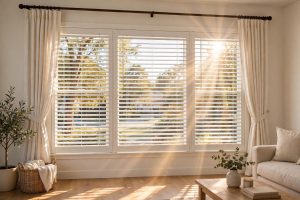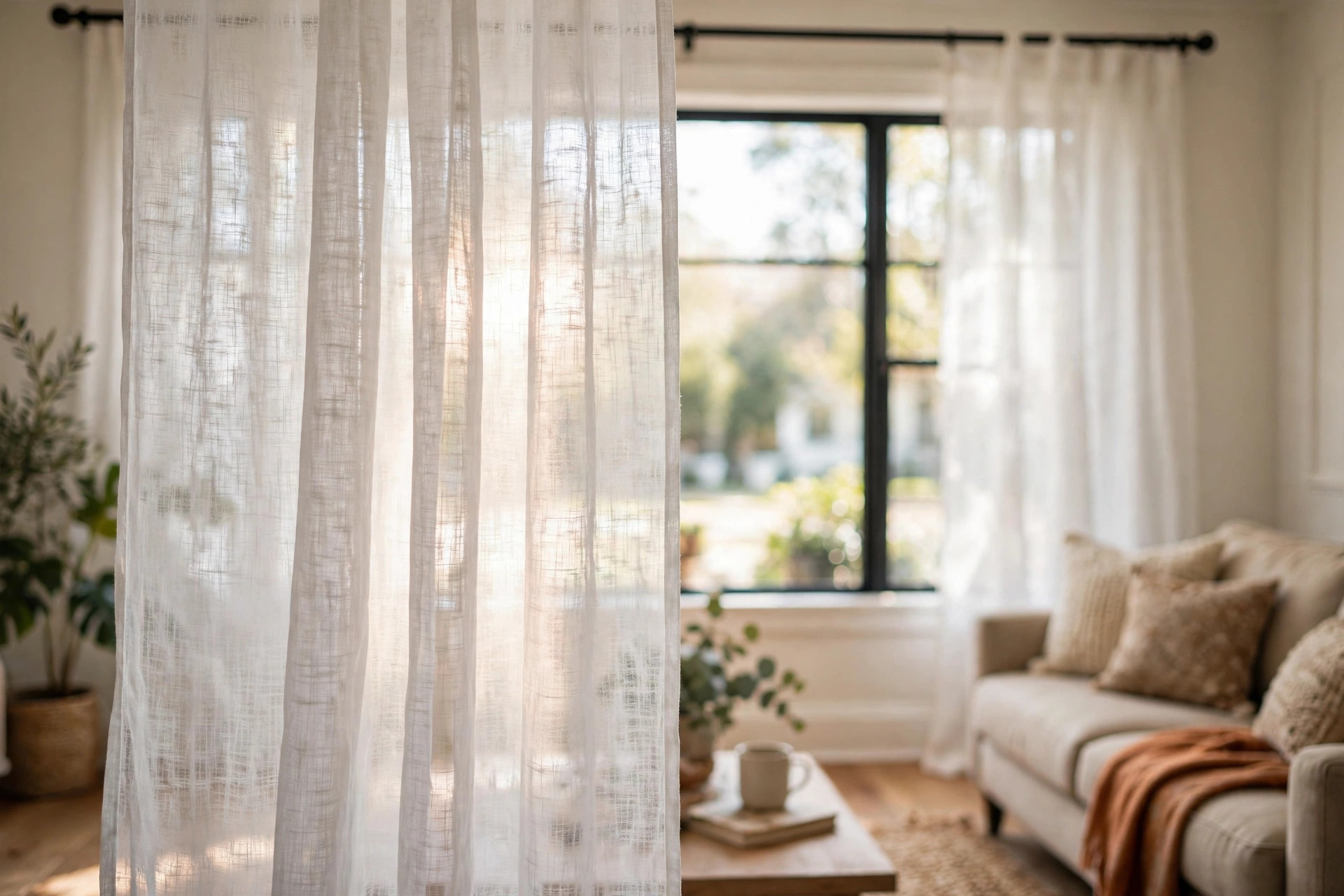

This energy efficient sheer linen curtains buying guide will help you choose window coverings that look light and airy while still doing real work for your home. Sheer linen curtains are thin, plain-woven panels that let daylight pass through. They soften the glare of the sun and give a room a calm, natural feel. The question many buyers ask is simple. Can such a thin fabric help with energy use at all. The answer is yes, when you choose the right panels and hang them the right way. This guide explains why sheer linen matters for energy use, what to look for when you shop, the types you can buy, what they cost, how to care for them, and how to stay safe with cords and hardware. By the end you will know exactly which panels suit your home.
Why Energy Efficient Sheer Curtains Matter
Windows are one of the weakest spots in any home. Heat moves through glass far faster than it moves through a wall. In winter, warm air escapes through windowpanes. In summer, sunlight pours in and heats the room. The U.S. Department of Energy notes that well-chosen window treatments can cut heat loss and reduce cooling loads. Sheer linen curtains play a small but real part in this work.
A sheer panel does not block heat the way a heavy drape does. What it does is slow the flow of air near the glass. Warm air rises and cool air sinks, and this loop carries heat away from the window. A fabric layer breaks up that loop. The linen weave also scatters direct sunlight. Sunlight that hits the fabric is spread into a softer, less intense light. This cuts the heat gain that makes rooms near windows feel too hot on sunny afternoons.
Linen has a special place among sheer fabrics. It is made from flax, a plant fiber that is strong, long-lasting, and breathable. Linen lets air pass through it, which keeps the room from feeling stuffy behind closed panels. It also resists stretching, so panels hang true year after year. Programs like ENERGY STAR promote window attachments as part of a whole-home energy plan, and independent testers such as Consumer Reports review window coverings for value and performance. For buyers who want both style and lower bills, sheer linen is a smart middle path.
What to Look for When You Shop: Energy Efficient Sheer Linen Curtains Buying Guide
Not all sheer panels are equal. Fabric weight, weave, and lining all change how much energy a curtain can save.
Fabric weight. Sheer linen comes in very light voile-like weaves and in slightly heavier open weaves. The heavier panel will trap more still air near the glass. Hold the fabric up to a light. If you can see the lamp bulb clearly through it, the panel is very light. If you see only a soft glow, it is a heavier sheer with better insulating value.
Weave density. A tighter weave blocks more glare and more heat. It also gives more privacy. A looser weave lets more light in but saves less energy. For a south-facing window that gets harsh sun, choose a tighter weave.
Color. Light colors reflect sunlight back out through the glass. White, ivory, and pale natural linen shades are best for summer cooling. Dark colors absorb heat and can warm the air near the window. In a cold climate, a medium tone can help a little with winter warmth.
Lining. Some sheer linen panels come with a light backing or can be paired with a separate lining. A lining turns a sheer panel into a two-layer system. It adds a real boost in both winter heat retention and summer heat blocking. The linen face still gives the soft look you want.
Size and fit. A panel that is too narrow or too short leaves gaps. Air flows through the gaps, and the energy benefit drops. For the best result, mount the rod wide enough that the panels stack to the sides of the glass, and choose panels long enough to reach the sill or the floor. You can find rod and panel options at retailers like The Home Depot and Lowe’s, and design ideas at The Spruce.
Hardware. Heavy linen needs a sturdy rod. A rod that sags pulls the panel away from the wall and lets air in behind it. Look for metal rods with brackets that sit a few inches above the window frame. For a layered look, you can also pair sheer linen panels with thermal energy efficient window treatments such as cellular shades on a double rod.
Types and Options
Sheer linen curtains come in several styles. Each style suits a different window and a different taste.
Rod pocket panels. The top of the panel has a sewn pocket that slides over the rod. The gathers stay in place, which gives a soft, classic look. Rod pocket panels are the most common and usually the least costly.
Back tab panels. Fabric tabs sewn to the back of the panel loop over the rod. From the front, the panel looks like a flat sheet with gentle folds. This style gives a clean, modern line.
Grommet top panels. Metal rings punched through the top let the rod pass through. The folds are deep and even. Grommet panels open and close smoothly, which is useful on doors and sliding glass.
Pinch pleat panels. Small groups of pleats are sewn or pinched at the top. This is a formal, tailored style. Pinch pleats hang in neat folds and look right in living rooms and dining rooms. Shoppers looking at formal styles may also read our noise reducing pinch pleat drapes buying guide for a related option.
Layered and double-panel sets. Some sets pair a sheer linen outer panel with a light inner liner. Others are sold as two sheer layers in different tones. Double panels give a fuller look and add one more air pocket for insulation.
Custom versus ready made. Ready-made panels come in standard widths and lengths and cost less. Custom panels are made to your exact window size. Custom work makes sense for wide windows, tall ceilings, and arched tops. You can compare styles at home with guides from HGTV and browse made-to-measure options at IKEA, Wayfair, or a specialist like Blinds.com.
Cost and Price
Prices for sheer linen curtains vary by size, weave, and maker. In the USA, expect these ranges.
– Ready-made sheer linen panels: about $25 to $60 per panel for common sizes. – Heavier open-weave linen panels: about $45 to $90 per panel. – Lined or double-layer sets: about $70 to $140 per pair. – Custom-made sheer linen panels: about $150 to $400 per panel, based on size and fabric grade.
Hardware adds to the total. A basic metal rod costs $20 to $40. A wide double rod for layered panels costs $40 to $80. Finials, brackets, and holdbacks add $10 to $30.
Buyers on a budget can start with ready-made panels and add a separate light liner later. This gives most of the energy benefit at a lower first cost. Those who want the fullest coverage can look at our guide to custom thermal insulated curtains for small apartments for ideas on pairing sheers with insulating layers.
Care and Upkeep
Linen is strong, but it needs the right care to stay bright and hang well.
Washing. Most sheer linen panels can be machine washed on a gentle cycle in cold water. Use a mild soap. Harsh bleach weakens the fiber and yellows the fabric over time. If the label says dry clean only, follow the label.
Drying. Shake the panel out and hang it while damp, or tumble dry on low heat and remove it while still slightly damp. High heat can shrink linen. Hanging damp panels lets the weight of the fabric pull out wrinkles.
Ironing. Iron linen while it is still damp, on a medium heat setting. Use the linen setting if your iron has one. A light press along the hem keeps panels looking crisp.
Sun exposure. Linen stands up to sunlight better than many fabrics, but years of strong sun will fade any color. Rotate panels from window to window once a year if some windows get much more sun than others.
Dusting. A weekly shake or a pass with a soft brush keeps dust from settling into the weave. For a deeper clean, take the panels down and wash them twice a year. Clean panels reflect more light and look brighter, which keeps the room feeling fresh.
Related style guides, such as our review of the top rated sheer linen curtains for usa homes, can help you compare fabric grades before you buy.
Safety
Window coverings carry a few safety risks that every buyer should know.
Cords. Loose cords on blinds and shades can strangle small children and pets. Sheer linen panels on a simple rod have no cords, which makes them one of the safest choices for homes with children. If you pair them with a corded shade or blind, follow the guidance of the U.S. Consumer Product Safety Commission and choose cordless products or keep cords out of reach.
Rod weight. A rod with heavy panels can pull free from the wall if the brackets are not anchored well. Mount brackets into studs or use the right wall anchors for your wall type. This is most important for wide windows and heavy grommet panels.
Fire. Keep fabric at a safe distance from heaters, radiators, and fireplaces. Linen is a natural fiber and will burn if it touches a flame or a hot surface. Leave a few inches of space between the panel hem and any heat source.
Sliding doors. Panels on sliding glass doors should glide freely. A panel that drags on the floor can be a trip risk. Hem panels to just above the floor or use a wand to open and close them without stepping on the fabric.
Frequently Asked Questions
Do sheer linen curtains really save energy? Yes, a little. They will not save as much as heavy insulated drapes. But they slow air flow at the glass and cut solar heat gain. Paired with a liner or a shade behind them, the savings grow. Even a small drop in heating and cooling use adds up over a year.
Are sheer linen curtains good for privacy? They give daytime privacy. From outside, people see only shapes and movement through the weave. At night, when indoor lights are on, sheer panels do not block the view in. For night privacy, add a liner or a blind behind the sheer layer.
What color is best for energy savings? Light colors are best for most homes. White and ivory reflect sunlight and keep rooms cooler in summer. In a very cold climate, a medium natural tone can hold a touch more warmth in winter.
How wide should each panel be? For a full look, each panel should be at least one and a half times the width of the window it covers. Two panels of 50 inches each cover a 60-inch window with a nice fullness. Wider windows may need three panels.
Can I use sheer linen curtains in a kitchen or bathroom? Yes, if the room has good airflow. Linen breathes well and resists mildew better than many fabrics. Keep panels away from the stove and the sink splash zone. In a bathroom with a shower, choose a washable panel and wash it often.
How long do linen curtains last? With good care, linen curtains last ten years or more. Linen fiber is one of the strongest plant fibers. The panels may soften with each wash, but they keep their shape and strength.
A Final Word
Sheer linen curtains give you the best of two worlds. They let in the light that makes a room feel open, and they do quiet work cutting heat loss and heat gain at the window. Choose a tight weave in a light color, size the panels generously, and pair them with a liner or shade where you need more. Hang them on sturdy hardware and keep them clean. Do that, and you will have window coverings that look natural, last for years, and help your home use less energy.
References
Blinds.com. (n.d.). Window blinds, shades, and shutters. https://www.blinds.com Consumer Reports. (n.d.). Product reviews and ratings. https://www.consumerreports.org ENERGY STAR. (n.d.). Energy efficient products. https://www.energystar.gov HGTV. (n.d.). Home and garden ideas. https://www.hgtv.com IKEA. (n.d.). Home furnishings. https://www.ikea.com Lowe’s. (n.d.). Home improvement products. https://www.lowes.com The Home Depot. (n.d.). Home improvement products. https://www.homedepot.com The Spruce. (n.d.). Home and garden advice. https://www.thespruce.com U.S. Consumer Product Safety Commission. (n.d.). Product safety information. https://www.cpsc.gov U.S. Department of Energy. (n.d.). Energy efficiency and renewable energy. https://www.energy.gov Wayfair. (n.d.). Furniture and home goods. https://www.wayfair.com
Was this guide helpful?

About Sarah Mitchell
The My Garden US editorial team writes practical, in-depth home and garden guides for American homeowners — tested advice, no fluff.
You May Also Like
Thermal Energy Efficient Window Treatments for Sale
June 16, 2026 0 views
Modern Geometric Curtains Reviews and Buying Guide
July 11, 2026 0 views
Buy Curtain Tiebacks and Holdbacks Online in Florida: A Plain Guide
July 24, 2026 0 views