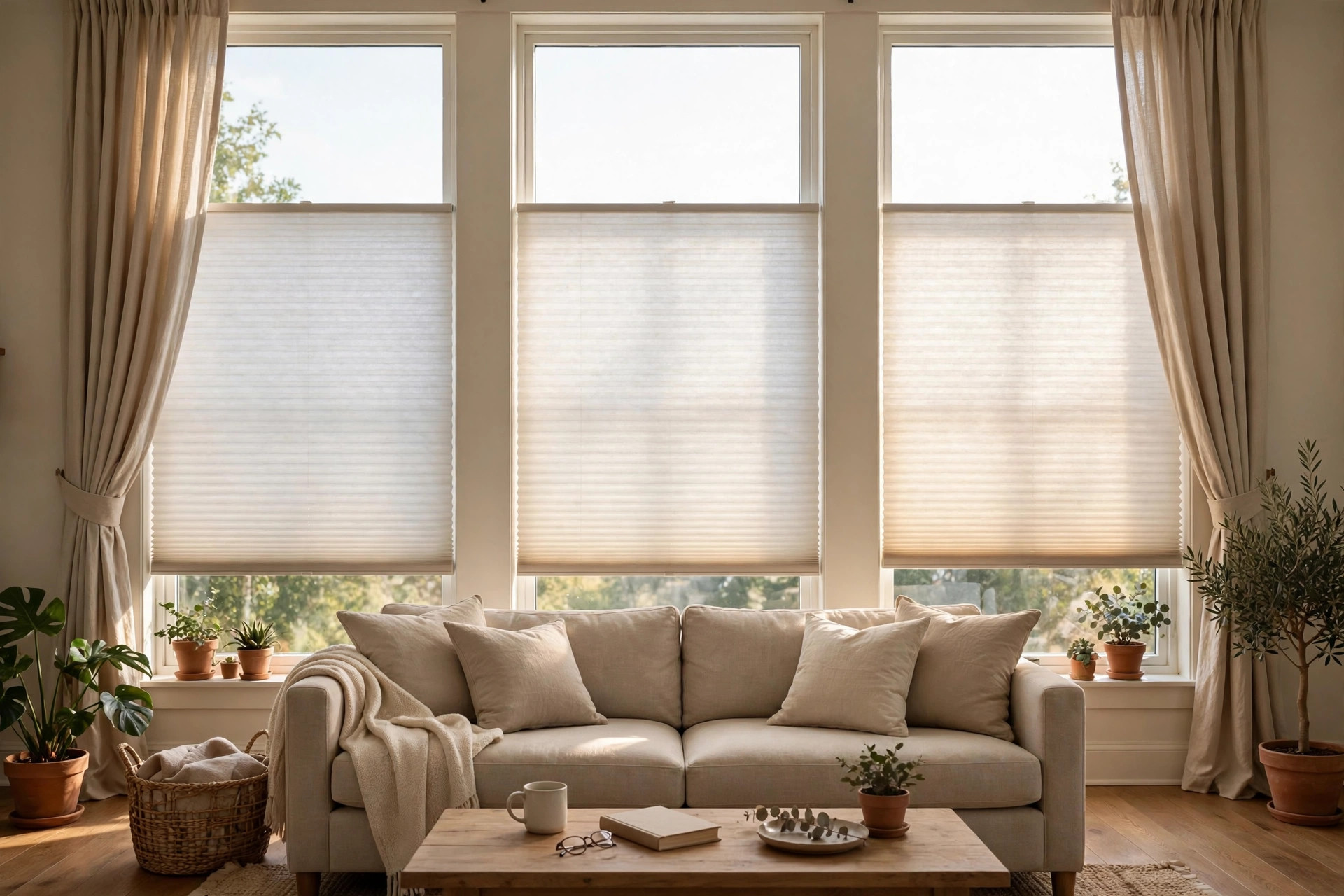

Finding premium energy efficient window treatments with free shipping is a smart move for any home owner. Windows are one of the weakest points in a house. In winter, warm air leaks out through the glass. In summer, hot sun pours in through the panes. Good window coverings slow this exchange. They act as a barrier between the room and the weather outside. Many shoppers now look for high grade treatments that save energy and arrive at the door without an extra freight charge. This guide explains what these products do, which types work best, what they cost, and how to care for them.
Why Energy Efficient Window Treatments Matter
A plain window does a poor job of holding heat. Glass alone lets warmth pass through in both directions. In cold months, the heater works harder to make up for the loss. In warm months, the air conditioner runs longer to fight the heat gain. Over a full year, this waste adds up to real money on the utility bill.
Coverings change this picture. A well made shade or lined curtain creates a still layer of air next to the glass. Still air is a poor carrier of heat. That simple fact is the basis of insulation. The thicker and tighter the treatment, the more it slows the flow of heat. Rooms feel less drafty near windows. The furnace and the air conditioner both run less often.
There is also comfort to consider. A home with bare or thin coverings can feel cold near the windows even when the rest of the room is warm. Family members move away from the cold glass. With good treatments in place, the whole room feels even. The furniture near the window also lasts longer, because strong sun is kept off the fabric and wood.
Light control is a third benefit. Many energy efficient styles also block glare. That helps with reading, watching screens, and sleeping. So one purchase solves several problems at once: lower bills, better comfort, and better light.
What To Look For When You Buy: Premium Energy Efficient Window Treatments with Free Shipping
Start with the fit. A treatment that leaves gaps at the sides lets air move past it. That movement defeats the insulation. Inside mounted shades should fill the frame closely. Curtains should be wide enough to cover the whole opening and tall enough to reach the sill or the floor.
Next, look at the fabric or material. Honeycomb or cellular shades are the classic energy saver. Their cell shape traps air in small pockets. The more layers of cells, the better the barrier. Lined curtains are another strong choice. A thick lining on the back of a curtain adds weight and blocks drafts.
Check the lift style too. Top rated cordless cellular shades for American homes are easy to raise and safe for children. Cordless designs remove the loop that can pose a hazard. Motorized options add ease for tall or hard to reach windows.
Look for honest labels. Reputable sellers describe the fabric, the lining, and the fit in plain terms. They state the light blocking level. They state whether the product is cut to order or ready made. Free shipping offers are common in this trade, but read the terms. Some sellers include free shipping only on orders above a set amount. Others include it on every order. Know the rule before you buy.
Types And Options
Cellular shades lead the field for insulation. Their fabric folds into rows of cells that look like a honeycomb from the side. Single cell shades give fair insulation. Double and triple cell shades give more. These shades fit inside the window frame and stack up neatly when open.
Thermal curtains are a simpler option. They hang from a rod like ordinary curtains. The difference is the backing. A thermal lining, often made of coated fabric or foam, sits against the glass side. These curtains work well on large windows and sliding doors. They also come in many colors and patterns, so they can suit the room decor.
Roller shades with blackout backing are a third type. A thick roller shade covers the glass fully and blocks light. When fitted with side channels, it seals the window well. Thermal energy efficient window treatments for sale often include this style for bedrooms and media rooms.
Plantation shutters give a built in look. Wood or composite shutters close across the window and add a solid layer. They cost more than fabric options. They last for many years and suit older homes.
Window film is a low cost add on. It sticks to the glass and cuts glare and heat gain. It does not insulate like a shade or curtain, but it helps in sunny climates.
Layered treatments give the best result of all. A cellular shade fitted inside the frame plus a lined curtain on the rod creates two air barriers. This double layer is the choice of many home owners in cold northern states. It costs more than one layer, but the room stays noticeably warmer.
When you compare styles, also think about daily use. Shades that you raise each morning and lower each night give the most savings, because they block sun in summer days and hold heat on winter nights. Motorized shades can be set on a timer, so they move on their own. This is useful for vacation homes or for windows that are hard to reach. Smart controls also help older home owners who cannot easily pull cords or reach high windows.
Seasonal changes matter too. In spring and fall, when the weather is mild, you may want the windows open to the light. Shades that stack into a small neat bundle at the top leave the view clear. Curtains that pull fully to the sides do the same. Choose hardware that lets the treatment open fully, so you can enjoy the bright seasons as well.
Cost And Price
Prices vary by type and size. Ready made thermal curtains often cost between forty and one hundred twenty dollars per panel. A pair covers one standard window. Cellular shades range from about sixty to two hundred dollars per window when bought ready made. Custom sizes cost more, often two to four hundred dollars per window.
Shutters are the most costly option. A single window can run from three hundred to eight hundred dollars for custom shutters. Installation adds to the bill unless the home owner does the work.
Free shipping changes the math in the buyer favor. Large or custom items are heavy. Freight charges on bulky window products can reach fifty dollars or more. A seller who ships free removes that charge entirely. When comparing thermal insulated curtain prices across the USA, check whether the quoted price includes delivery. A lower base price with a high shipping fee may cost more in the end than a higher price with free shipping.
Also count the savings over time. A house that loses less heat needs less fuel. Many families find that good coverings pay for themselves within two to four heating seasons. The comfort gain starts on the first day.
Care And Upkeep
Care keeps the insulation working. Dust builds up on shades and curtains and dulls their look. Vacuum cellular shades with a brush attachment once a month. Move from top to bottom so dust falls away from the cells.
Thermal curtains can usually be washed, but check the label first. Some linings break down in hot water or in a hot dryer. Wash in cool water and hang to dry when in doubt. Iron only the face fabric, never the coated back.
Roller shades wipe clean with a damp cloth. Do not soak them. Shutters wipe clean with a dry or slightly damp cloth. Oil wood shutters once a year to keep the finish fresh.
Check cords and lifts each spring. Cordless lifts should rise and fall smoothly. If a shade sticks, clean the headrail and check for bent slats. Small problems fixed early keep the product working for a decade or more.
Steam can refresh curtains that look tired. Hold a steamer a few inches from the fabric and move it slowly down the panel. This lifts dust and smooths wrinkles without a full wash. Test on a small hidden area first, because some coated linings do not like steam.
Sun is the main enemy of curtain fabric. Panels on south and west windows fade faster than others. Lined curtains resist this damage better, because the lining takes the brunt of the sun. If one window fades badly, swap its panels with panels from a north facing window once a year. This spreads the wear and keeps the room looking even.
Safety
Window cords have caused harm to small children and pets. For this reason, safety groups urge buyers to choose cordless or inaccessible cord products for homes with young children. The Consumer Product Safety Commission offers guidance on safe window covering design, and major retailers follow these standards.
When you shop, look for products marked as best for kids or cordless. Keep cords on older blinds tied up and out of reach. Move cribs, beds, and play areas away from windows with cords.
Fire safety matters too. Keep curtains clear of heaters, radiators, and candles. Heavy lined curtains can hang close to a heat source without notice. Leave several inches of space between fabric and any heater.
For homes in sunny states, also think about heat buildup between the glass and a dark shade. This can stress old window seals. Light colored shades reflect heat and keep this risk low.
Frequently Asked Questions
Do energy efficient window treatments really lower bills?
Yes, in most homes. Tests by energy agencies show that well fitted cellular shades can cut heat loss through windows by a large share. The exact savings depend on the climate, the window type, and how the home is heated. Drafty old windows benefit the most.
Which style gives the best insulation?
Double or triple cell honeycomb shades give the strongest insulation for the price. Thick thermal curtains are close behind, especially when they seal at the top and sides. Shutters add mass and work well but cost more.
Can I install them myself?
Most shades and curtains are made for do it yourself fitting. An inside mount shade needs only a drill and a level. Curtains need only a rod and brackets. Custom shutters are harder and may need a pro. Many sellers include clear instructions.
What does free shipping usually cover?
It usually covers standard ground delivery to the home. Large orders may still need a freight truck, and some sellers charge extra for that. Oversize or rush orders may also carry fees. Read the shipping policy on the product page.
How long do these products last?
Good quality shades and curtains last ten to fifteen years with basic care. Shutters can last twenty years or more. Sun fades all fabrics over time. Rotating curtains between windows can even out the wear.
Are cordless shades worth the extra cost?
For homes with children or pets, yes. They remove the cord hazard and are simple to use. The price gap has narrowed in recent years, and many cordless models now cost little more than corded ones.
A Short Final Word
Buying premium energy efficient window treatments with free shipping is a plain, practical step toward a more comfortable home. Choose a style that fits the window, seals the edges, and suits the room. Check the shipping terms so the deal is real. Install with care and keep the product clean. The reward is lower bills, warmer winters, cooler summers, and rooms that simply feel better to live in.
For more background, see IKEA, U.S. Consumer Product Safety Commission, and Wayfair. For more background, see The Home Depot, The Spruce, and HGTV. See also Target for further detail.
References
Blinds.com. (n.d.). Window blinds, shades, and shutters. https://www.blinds.com HGTV. (n.d.). Home and garden ideas. https://www.hgtv.com IKEA. (n.d.). Home furnishings. https://www.ikea.com Target. (n.d.). Retail store. https://www.target.com The Home Depot. (n.d.). Home improvement products. https://www.homedepot.com The Spruce. (n.d.). Home and garden advice. https://www.thespruce.com U.S. Consumer Product Safety Commission. (n.d.). Product safety information. https://www.cpsc.gov Wayfair. (n.d.). Furniture and home goods. https://www.wayfair.com
Was this guide helpful?

About Robert Taylor
The My Garden US editorial team writes practical, in-depth home and garden guides for American homeowners — tested advice, no fluff.
You May Also Like

Affordable Stained Glass Window Film With Free Shipping: A Plain Buyer’s Guide
March 17, 2026 0 views
Buy Rod Pocket Curtains Online in Texas
March 12, 2026 0 views
Top Rated Pet Friendly Curtains for USA Homes
June 7, 2026 0 views