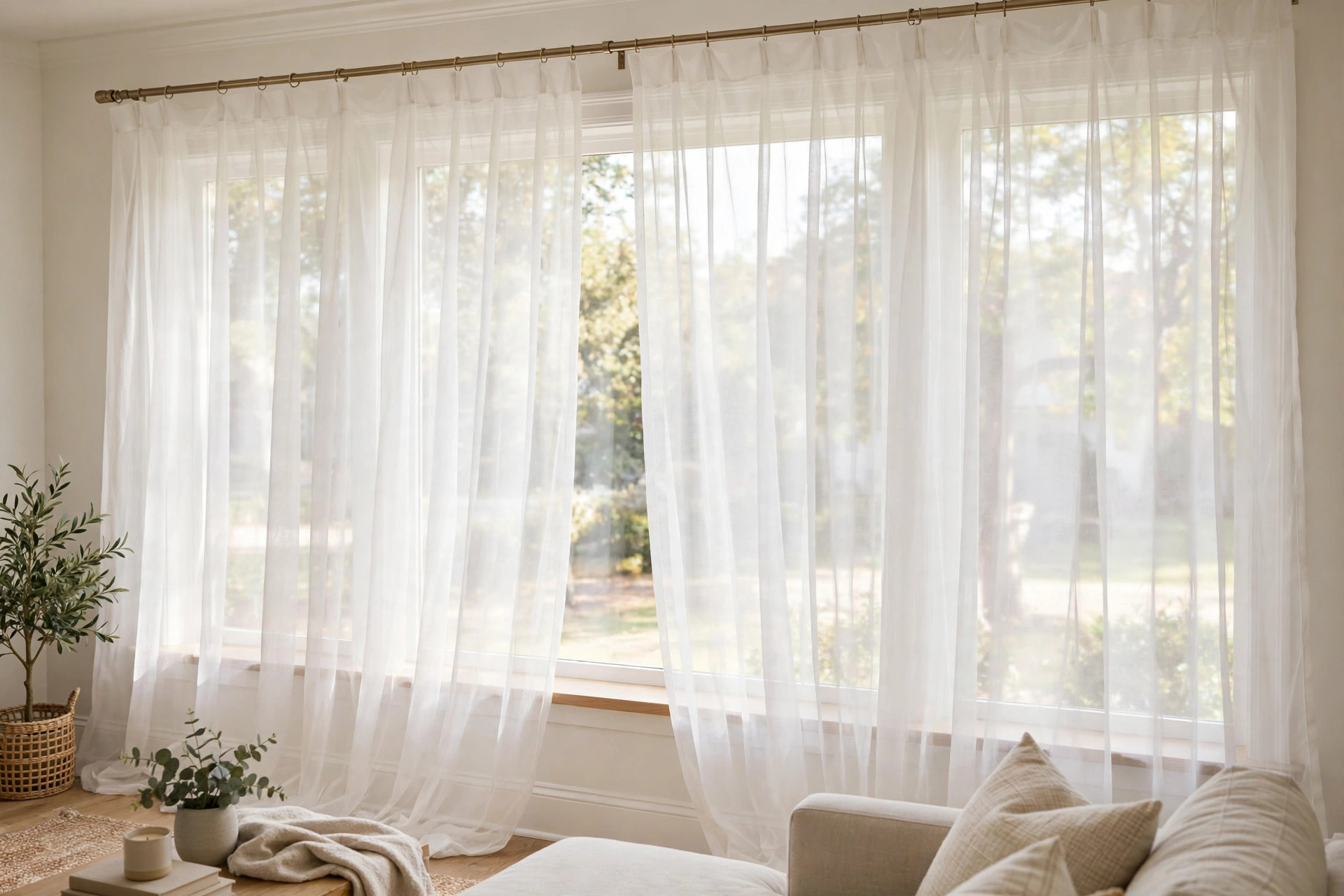

When you look for thermal sheer voile panels with free shipping, you are looking for two things at once. You want window panels that soften the light and slow the loss of heat. You also want them sent to your door with no extra charge for delivery.
Cold glass pulls heat out of a room. In winter the window is often the coldest wall of the house. A thin panel of voile alone will not fix that. But a thermal sheer voile panel is built to do more than a plain sheer. It has a denser weave or a fine heat-blocking finish. It still lets daylight through. It still gives privacy by day. And it adds one thin layer of air between you and the cold glass.
Why Thermal Sheer Panels Matter
Most rooms lose heat through the windows. The loss is steady and quiet. Heavy drapes are the old answer. They work well, but they darken the room. Many people want light during the day. They want the room to feel open and bright. Thermal sheer voile panels answer both needs at once. They filter light instead of blocking it. They cut glare. And they give the window a modest layer of insulation.
The effect is not the same as a thick curtain. A heavy drape can cut heat loss by a large share. A thermal sheer will cut it by a smaller share. That is still worth having. If you have six or eight windows in a home, the savings add up through a winter.
There is also the matter of comfort. A chair near a cold window can feel drafty even when the room air is warm. A thermal panel holds a pocket of air between the glass and the room. Sitting near the window becomes more pleasant.
And there is the simple look of the thing. Voile is soft. It moves with the air. It gathers light and spreads it through the room. A plain room can feel finished with nothing more than good panels at the window.
What Thermal Sheer Voile Panels Are: Thermal Sheer Voile Panels with Free Shipping
Voile is a light, plain-woven fabric. It has been used for curtains for many years. The weave is open enough to see light through, but tight enough to hide shapes. From the street, a voile panel gives daytime privacy. You can see out toward the light. Passersby cannot easily see in. That is the main charm of any sheer.
A thermal sheer voile panel adds one more idea. The fabric is made denser, or it is treated with a heat-reflective finish on one side. Some panels have a thin woven backing that you can hardly see. The goal is the same in each case. Light passes through. Heat moves through more slowly.
These panels are not blackout curtains. If you need a dark room for sleep, good blackout curtains for bedrooms will darken a room far better. But if you want daylight with a bit of insulation, the thermal sheer is the middle path. It is the panel for living rooms, dining rooms, and kitchens, where light is the point.
You will also see the phrase “free shipping” on many listings. Stores use it to draw buyers. It is worth reading the fine print. Some stores mean free shipping on every order. Others mean free shipping only past a certain dollar amount. Check the policy before you order. A panel set for one window may fall short of the free-shipping threshold. Ordering for two or three windows at once often clears it. Guides on window covering shopping from specialty retailers can help you learn what to check before you buy.
How to Choose the Right Panels
Weave and Weight
A heavier voile feels fuller in the hand. The open weave of a cheap sheer may look thin and stringy against light. A good thermal sheer has body. It falls in smooth folds. It does not cling to the glass in a draft. Ask the seller for the fabric weight if it is listed. Higher weight often means better insulation and a richer drape.
Thermal Finish or Thermal Backing
Panels reach the “thermal” claim in different ways. Some have a coating that reflects heat. Some have a bonded backing that you can feel as a second skin on the fabric. Some are simply woven tighter than plain voile. Coatings can wear with washing, so check the care label. A tight weave with no coating is the simplest option. It will not wear out, but it insulates less than a coated panel. Match the method to how long you want the panels to last.
Size and Length
Measure the window before you shop. Measure the width of the rod, not just the glass. For a full look, the total panel width should be at least one and a half times the rod width. Two times is better for a rich gather. Length is a matter of taste. Sill length suits kitchens and baths. Floor length suits living rooms and bedrooms. Panels that stop above the floor will not help as much with insulation, since cold air can slip under them.
Color
White and ivory are the common choices. They brighten the room and match most walls. Warm tans and soft grays add a bit of depth. Dark colors will block more light and give more privacy, but they also drink in more heat from the sun. If you want the most light with the most privacy, stay with light colors in a dense weave. Styling ideas for sheer fabrics appear in many home design galleries.
Hardware and Heading
Thermal sheers are light, so most rods will hold them. Rod pockets are simple and cheap. Tab tops add a relaxed, casual look. Grommets slide the best and make even folds. Back tabs hide the rod for a clean line. Make sure the rod extends past the window frame by several inches on each side. That way the panels can stack off the glass and let in full light when you open them. Advice on curtain hardware and installation is easy to find from major home stores.
Types and Options
The market offers several kinds of thermal sheer voile panels. Each has its own trade-offs.
Single-layer thermal voile. This is the simplest kind. The fabric itself is woven tighter than plain voile, sometimes with a heat-reflective thread. It looks the most like a classic sheer. It insulates the least of the group, but it washes easily and costs the least.
Coated thermal sheers. These have a thin finish on the back that reflects heat. The front looks like ordinary voile. They insulate better than single-layer panels. The coating may dull after many washings, so follow the care label with care.
Bonded or lined thermal sheers. These add a thin lining bonded to the voile. The panel is a little stiffer and a little heavier. It insulates the best of the sheer options. It is a good pick for large windows and drafty rooms.
Sheer-and-thermal sets. Some stores sell a sheer panel paired with a separate thermal liner. You hang both on one rod or on a double rod. Use the sheer alone on mild days. Add the liner when the cold sets in. The set costs more, but it is the most flexible option.
Shoppers who want natural materials may also like bamboo roman shades, which give a different texture and similar deals.
Cost and Price
Thermal sheer voile panels are not dear. A single panel often costs between ten and thirty dollars. A pair for a standard window often runs twenty to sixty dollars. Bonded or lined panels cost more. Sets with liners cost the most. Wide or extra-long panels also cost more, since they use more fabric.
Free shipping changes the math. Shipping a long box of curtains can cost eight to fifteen dollars by mail. If the store ships free, that is real savings. Compare the total price, not just the panel price. A fifteen-dollar panel with paid shipping may cost more than a twenty-dollar panel with free shipping.
Watch for sales in the shoulder seasons. Late winter and early fall are good times to buy. Stores clear stock between seasons. You may find last season’s colors at a deep discount. The fabric does not care what season it is.
Also think about how many windows you will cover. Covering every window in a house at once can cost several hundred dollars. Many buyers start with the coldest rooms. The north-facing rooms and the rooms with the largest glass lose the most heat. Start there. Shoppers comparing options can browse online curtain selections and large home store catalogs to get a feel for fair prices.
Care and Upkeep
Thermal sheer voile panels are easy to keep. Most are made of polyester or a polyester blend. That fabric resists wrinkles and shrinks very little. You can wash most panels in a machine on a gentle cycle with cool water. Use a mild soap. Do not use bleach. Bleach can yellow the fabric and may harm a thermal coating. Dry on low heat, or hang the panels damp straight back on the rod; the weight of the water pulls out wrinkles as they dry.
Dust the panels now and then. A vacuum with a soft brush head will lift the dust. You can also shake them out on a calm day. Keep them out of long, harsh sun if you can. Strong sun will fade any fabric in time. For more on fabric care, the home care guides at The Spruce are a solid reference.
Check the thermal coating once a year if your panels have one. Hold the panel to the light. If the coating looks thin or patchy, the panel is wearing out. It will still work as a sheer, but the insulation benefit will fade.
Safety
Curtains hang near glass, and glass can break. Keep panels clear of candles and open flames. Voile is light and can catch a draft. Do not let it blow into a heater or a fireplace. Keep space between the fabric and any heat source.
Cord safety matters too. Many panels come with tie-backs that have cords or loops. Long cords near a window are a hazard for small children and pets. The Consumer Product Safety Commission warns that window cords can strangle a young child. Use cord cleats to wrap cords high and out of reach. Keep cribs and play areas away from windows with cords.
If you hang panels in a kitchen, keep them clear of the stove. Grease in the air will soil light fabric faster. Choose a washable panel for kitchens, and wash it more often. In a bathroom, make sure the room vents well. Damp air can mildew any fabric over time.
For renters, thermal sheers are a kind design of window cover. They need only a tension rod or a simple bracket. They leave small marks at most. They come down in minutes when you move. If your lease limits changes to the windows, a tension rod inside the frame is the safest path.
Frequently Asked Questions
Do thermal sheer voile panels really save energy? They save some. They will not insulate like a wall or a heavy drape. But they slow heat loss at the glass and cut drafts. Pair them with good weatherstripping for the best result. Tips on sealing drafty windows can help you find the leaks first.
Will they darken my room? No. That is the point of a sheer. They soften and spread the light. They cut glare. The room stays bright. If you need darkness for sleep, add a separate blackout layer.
Can I see through them at night? At night the effect reverses. When the room is lit and the street is dark, people outside can see in more clearly. Sheers give daytime privacy, not nighttime privacy. If that worries you, close a second layer at night.
Are they hard to install? No. They are among the easiest window covers to hang. A basic rod, a level, and a drill or a tension mount are all you need. Most people finish a window in under half an hour. Shoppers who prefer a full-service route can look into custom window coverings in Colorado or browse ready-made options from large retailers.
How long do they last? A plain thermal voile can last many years with gentle washing. Coated panels last less long. The coating wears with washing and sun. Expect three to five years of full thermal benefit from a coated panel.
Is “free shipping” always a good deal? Not always. Compare the total cost. Some stores raise the panel price to cover the shipping. A store with honest pricing and truly free shipping is the best deal. Read reviews of the seller before you order a large set.
A Short Final Word
Thermal sheer voile panels with free shipping are a small purchase that pays back in comfort. They hang in minutes. They wash with ease. They let the daylight in while they hold the cold at bay. They will not turn a drafty house into a warm one by themselves. No curtain can do that.
Start with the coldest windows. Measure with care. Read the shipping terms. Choose a weave that feels good in the hand and a color that suits the room. A window dressed well changes the whole feel of a room. That is a plain fact, and it has been true for longer than any of us have been buying curtains online.
References
Blinds.com. (n.d.). Window blinds, shades, and shutters. https://www.blinds.com Bob Vila. (n.d.). Home improvement advice. https://www.bobvila.com HGTV. (n.d.). Home and garden ideas. https://www.hgtv.com IKEA. (n.d.). Home furnishings. https://www.ikea.com Lowe’s. (n.d.). Home improvement products. https://www.lowes.com The Home Depot. (n.d.). Home improvement products. https://www.homedepot.com The Spruce. (n.d.). Home and garden advice. https://www.thespruce.com U.S. Consumer Product Safety Commission. (n.d.). Product safety information. https://www.cpsc.gov Wayfair. (n.d.). Furniture and home goods. https://www.wayfair.com
Was this guide helpful?

About Michael Thompson
The My Garden US editorial team writes practical, in-depth home and garden guides for American homeowners — tested advice, no fluff.
You May Also Like

Buy Arched Window Shades Online in the USA
February 22, 2026 0 views
Top Rated Cordless Cellular Shades for American Homes
March 16, 2026 0 views
Top Rated Sheer Linen Curtains for Texas Homes
June 15, 2026 0 views