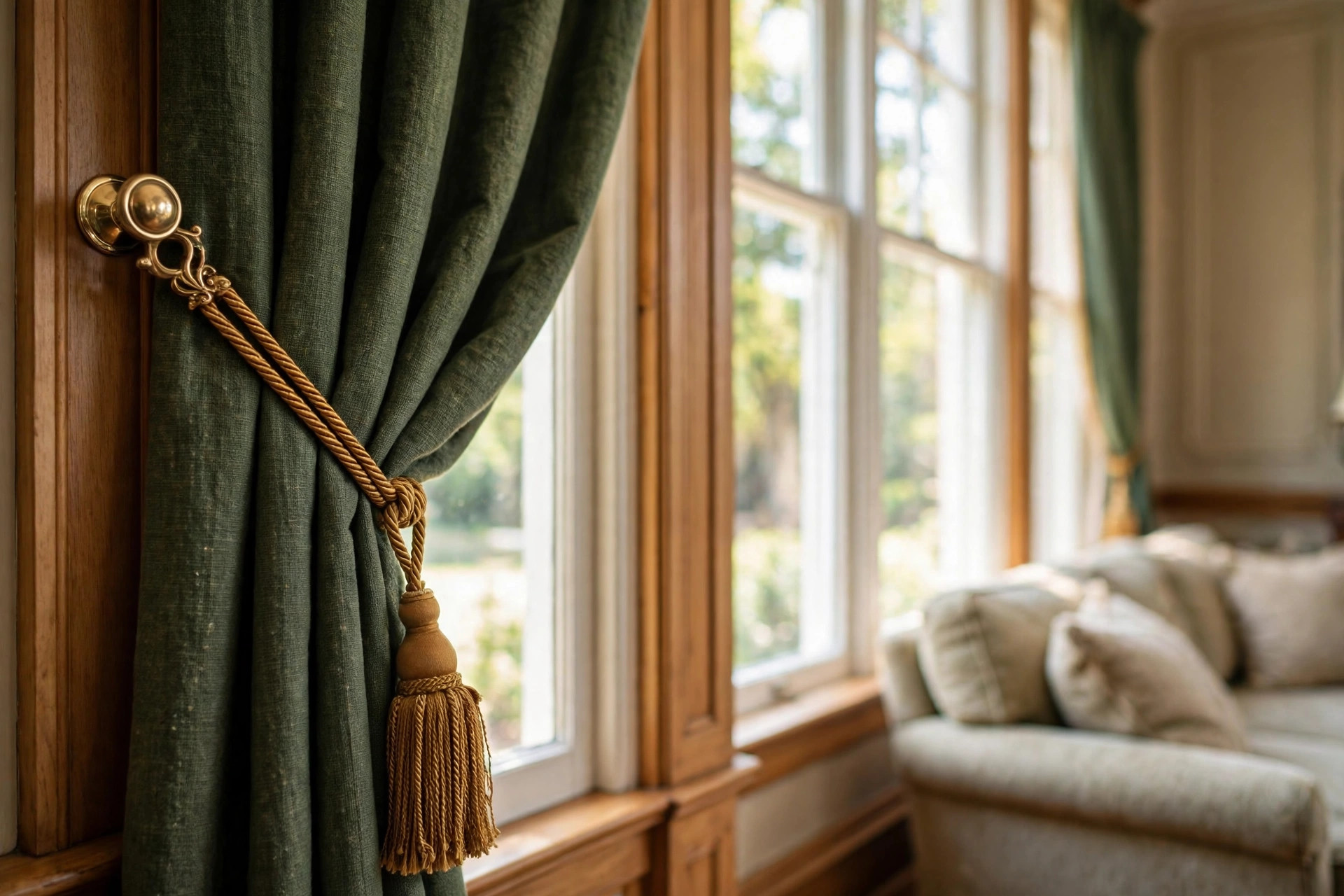

A Small Detail That Changes the Whole Window
A custom curtain tiebacks and holdbacks buying guide may seem like a narrow subject. Yet these small fittings have a large effect. They hold drapes open during the day. They shape the folds of the fabric. They set the tone of a room as much as the curtains themselves. A reader who plans to buy tiebacks or holdbacks should know the types, the materials, the fitting rules, and the cost. This guide sets out each point in plain order, so a buyer can choose with care and fit them with ease.
Why Tiebacks and Holdbacks Matter: Custom Curtain Tiebacks and Holdbacks Buying Guide
Curtains do more than dress a window. They control light. They guard privacy. They soften a room. But curtains that hang straight down all day block daylight that a home needs. Tiebacks and holdbacks pull the panels to each side and hold them there. This simple act changes a room in three ways.
First, light enters more freely. A room feels larger and more open when daylight reaches the walls. Second, the folds of the fabric form a gathered sweep, which looks neat and finished. Third, the wall around the window becomes visible. Paint, trim, and wallpaper all show to better effect.
Holdbacks and tiebacks are not the same thing, though buyers often mix the names. A holdback is a fixed piece of hardware. It screws into the wall or the window frame. The drape is tucked behind it or hooked onto it. A tieback is a loose band. It wraps around the gathered curtain and fastens with a hook, a loop, or a magnetic catch. Some tiebacks are plain cord. Others are bands of fabric, rope, or chain.
Custom versions of both exist. A custom holdback may be cut to an exact reach, or cast in a finish that matches other room hardware. A custom tieback may be sewn from the same fabric as the drapes, or made to an exact length for a tall panel. Buyers choose custom work when off-the-shelf pieces do not match the weight of the fabric, the depth of the window, or the style of the room.
What to Look For
A good purchase starts with five questions. The answers shape every choice that follows.
1. How Heavy Are the Curtains?
Weight is the first test. Light cotton or sheer linen drapes need only a slim tieback or a small hook. A top rated sheer linen curtains for usa homes pair gathers with almost no effort. Heavy velvet is another matter. A navy blue velvet curtains reviews and buying guide will show panels that weigh several pounds each. Such drapes need a holdback with a long reach and a strong wall anchor. Rope or thin cord tiebacks will slip under heavy cloth. Buyers should test the gather with a bathrobe sash or a belt before they order. If the sash barely holds, the hardware must be strong.
2. How Deep Is the Window Opening?
The holdback must project far enough from the wall to take the full gather of fabric. Measure the depth of the curtain panel when it is bunched. A common reach is three to five inches. Wide bay windows and thick insulated panels may need six inches or more. This is where custom work earns its price. A custom holdback can be ordered to an exact projection, so the drape sits snug without being crushed.
3. Where Will It Sit on the Wall?
The usual rule places the tieback or holdback about two-thirds of the way down the panel, measured from the top. Some rooms look better with the tieback set lower, at about three feet from the floor. A lower tieback lets more light in but shows more of the window frame. A higher tieback gives a tall, grand look but lets less light through. Tape a ribbon to the wall at both heights and stand back before deciding. The eye will choose faster than any rule.
4. What Finish Suits the Room?
Finishes should match the curtain rod and the other metalwork in the room. Common finishes include polished brass, antique bronze, matte black, brushed nickel, and painted wood. Brass suits classic rooms. Matte black suits modern rooms. A mismatch is easy to spot: a bright chrome holdback against an oil-rubbed bronze rod will draw the eye in a bad way. Many guides on HGTV show how small metal details set the tone of a whole room.
5. How Will It Be Fitted?
Wall type matters. Plaster, drywall, wood trim, and brick each need a different anchor. A holdback screwed into drywall without a wall plug will pull loose under heavy drapes. Buyers should know their wall type before they order, and buy anchors to suit. Renters may prefer magnetic tiebacks or hooks that leave no holes.
Types and Options
Tiebacks and holdbacks come in several forms. Each suits a different room and a different curtain.
Fabric Tiebacks
These are bands cut from curtain fabric or a matching cloth. They fasten with a hook and eye, or loop over a small wall hook. Fabric tiebacks look soft and quiet. They suit bedrooms, living rooms, and any space with a calm style. They cost little. Their weak point is wear. The edges fray with daily use, and the fastener loosens over time. A home sewing machine can make them, but buyers who want a neat match often order them custom from a workroom.
Cord and Rope Tiebacks
Braided cord, cotton rope, and tassel tiebacks belong to a classic style. They suit formal living rooms and dining rooms. Many come with wooden or brass ends and a long tassel. They gather heavy cloth well. The drawback is dust. Tassels collect dust and need a shake or a vacuum now and then. Buyers can find standard sizes at Wayfair or order braided lengths to measure.
Magnetic Tiebacks
Two magnetic balls or discs snap together around the curtain. No wall hook is needed. They suit renters and anyone who changes curtains often. They work best on light to medium cloth. On heavy velvet they may slip. Their magnets are strong, so homes with small children should keep them out of reach. Guidance on safe hardware around children is published by the U.S. Consumer Product Safety Commission.
Rope-and-Hook Holdbacks
A metal holdback with a U-shaped or J-shaped arm fixes to the wall. The curtain tucks behind the arm. These come in brass, iron, wood, and glass-topped styles. A glass or crystal holdback catches light and suits a bright room. An iron scroll suits a country look. Buyers should check that the arm is wide enough for the gathered panel.
Rosettes and Medallions
A rosette is a flat round plate that mounts to the wall. The tieback cord loops through it. Medallions are larger and often ornate. They give a formal, old-house look. They need careful placement, because the plate is always on show.
Custom Carved or Turned Holdbacks
Wooden holdbacks can be turned on a lathe to match existing trim or furniture. This is the true custom route. A local woodworker can copy a profile from a banister or a bedpost. The cost is higher, but the match is exact.
Materials at a Glance
The material of the fitting should suit both the weight of the curtain and the style of the room.
– Solid brass is strong and keeps its finish for years. It costs more but lasts. – Wrought iron is heavy and dark. It suits country and rustic rooms. – Wood is warm and light. Painted wood matches trim. Stained wood matches furniture. – Glass and crystal add sparkle. They suit bright rooms and formal drapes. – Fabric and trim are soft and quiet. They suit relaxed rooms. – Resin and plastic are cheap. They suit rental rooms and short-term needs.
Buyers should avoid thin hollow metal on heavy drapes. It bends. Solid stock holds its shape.
Cost and Price
Prices vary with material, finish, and custom work.
– Ready-made rope or cord tiebacks: a few dollars to twenty dollars per pair. – Ready-made metal holdbacks: ten to forty dollars per pair. – Glass or crystal holdbacks: twenty to sixty dollars per pair. – Fabric tiebacks made from curtain offcuts: the cost of a workroom hour, often twenty to forty dollars per pair. – Fully custom metal or turned-wood holdbacks: forty to one hundred fifty dollars per pair, sometimes more.
The Home Depot and Lowe’s sites list standard ranges, which help buyers set a budget. Custom work costs more because of labor. A buyer should ask whether the price covers the wall anchors and the fitting screws. Some makers include them. Some do not.
Buyers on a tight budget can often buy the holdback ready-made and have only the tieback made to match the curtain. This split choice cuts the cost in half.
How to Fit Them
Fitting is simple work, but it needs care.
1. Gather the curtain by hand and hold it to one side. Mark the spot on the wall where the fold feels right. 2. Check the mark with a level. Holdbacks should sit at the same height on both sides of the window. 3. Drill a pilot hole at the mark. Use the right bit for the wall: masonry for brick, wood for studs and trim. 4. Set the wall anchor. In drywall, use a toggle or a screw anchor rated for the weight of the drapes. 5. Screw the holdback into place. Turn it until the arm points up at a slight angle. This keeps the curtain from sliding off. 6. Tuck the curtain behind the arm. Let it fall in loose folds.
For tiebacks, screw a small hook into the wall at the mark. Loop the tieback around the gathered curtain and fasten it to the hook. Check that both sides match when viewed from across the room.
Buyers who lack tools can hire a handyman. The job takes about thirty minutes for a single window. Many how-to guides at The Spruce walk through each step with pictures.
Care and Upkeep
Tiebacks and holdbacks need little care, but a few habits keep them sound.
– Dust metal and wood fittings with a dry cloth once a month. Polish brass once a year. – Shake or vacuum tassel tiebacks to keep dust out of the fibers. – Check the screws once a year. Heavy drapes loosen wall anchors over time. Tighten what moves. – Wash fabric tiebacks with the curtains, so the color stays even. – Keep magnetic tiebacks away from pacemakers and credit cards, as makers advise.
Fabric tiebacks fade in strong sun. If one side of the room gets more sun than the other, swap the tiebacks from time to time to even the wear.
Safety
Most tiebacks are safe, but two points deserve care.
First, corded tiebacks and cords on blinds can form a loop. A loop near a window is a risk to small children and pets. Cords should be kept short, or replaced with cordless styles. The U.S. Consumer Product Safety Commission advises that window cords stay out of the reach of children.
Second, holdbacks must be anchored well. A loose holdback on a heavy drape can fall and strike a person or a pet. Use anchors rated for the load. In homes with children, place holdbacks high enough that little hands cannot pull on them.
Buyers can also find safety checklists for the whole window area at Bob Vila and Apartment Therapy.
Frequently Asked Questions
Should I choose tiebacks or holdbacks?
Choose holdbacks for heavy drapes and a clean, fixed look. Choose tiebacks for a softer look, for renters, or when the curtain fabric is light. Both do the same job. The choice is a matter of style and wall type.
What is the right height for tiebacks?
Most rooms suit a tieback set about two-thirds down the panel from the top. For an eight-foot drape, that is about five feet from the floor. Lower settings admit more light. Higher settings look more formal. Test with a ribbon before drilling.
Can I use tiebacks on insulated curtains?
Yes, but the fitting must be strong. Insulated panels are thick and heavy. A custom thermal insulated curtains for small apartments pair needs a holdback with a deep reach and solid wall anchors. Magnetic tiebacks often slip on thick cloth. Check the weight before buying.
How do I match tiebacks to my curtain rod?
Match the finish, not the brand. A brushed nickel rod wants brushed nickel or steel fittings. An oil-rubbed bronze rod wants dark bronze or iron. If the rod is wood, choose wood or a metal that echoes the room, such as brass. The IKEA and Blinds.com sites show how finishes pair in real rooms.
Are custom tiebacks worth the cost?
They are worth it when nothing ready-made fits. Wide windows, very tall panels, and rare finishes are the usual reasons. For a standard window with common curtains, ready-made pieces work fine and cost far less.
How long do tiebacks last?
Metal and wood holdbacks last for decades with basic care. Fabric tiebacks last as long as the curtains, often five to ten years. Rope tiebacks last until the fibers wear, which may be ten years or more in a quiet room.
A Final Word
Curtain tiebacks and holdbacks are small purchases, but they shape how a room feels all day long. A buyer who measures first, matches the finish, and anchors the fitting well will get a tidy window that stays put for years. Custom work is worth the price only when the window or the fabric asks for it. For most homes, a careful ready-made choice does the job. Start with the weight of the cloth, set the height with a ribbon, and buy the strongest anchor the wall will take. The window will thank the buyer every morning.
References
Apartment Therapy. (n.d.). Home design ideas and inspiration. https://www.apartmenttherapy.com Blinds.com. (n.d.). Window blinds, shades, and shutters. https://www.blinds.com Bob Vila. (n.d.). Home improvement advice. https://www.bobvila.com HGTV. (n.d.). Home and garden ideas. https://www.hgtv.com IKEA. (n.d.). Home furnishings. https://www.ikea.com Lowe’s. (n.d.). Home improvement products. https://www.lowes.com The Home Depot. (n.d.). Home improvement products. https://www.homedepot.com The Spruce. (n.d.). Home and garden advice. https://www.thespruce.com U.S. Consumer Product Safety Commission. (n.d.). Product safety information. https://www.cpsc.gov Wayfair. (n.d.). Furniture and home goods. https://www.wayfair.com
Was this guide helpful?

About Robert Taylor
The My Garden US editorial team writes practical, in-depth home and garden guides for American homeowners — tested advice, no fluff.
You May Also Like

Thermal White Linen Curtain Panels for Sale: A Plain Buying Guide
October 1, 2026 0 views
Energy Efficient Blackout Roller Shades for Florida Homes
August 29, 2026 0 views
Top Rated Faux Wood Blinds for USA Homes
February 7, 2026 0 views