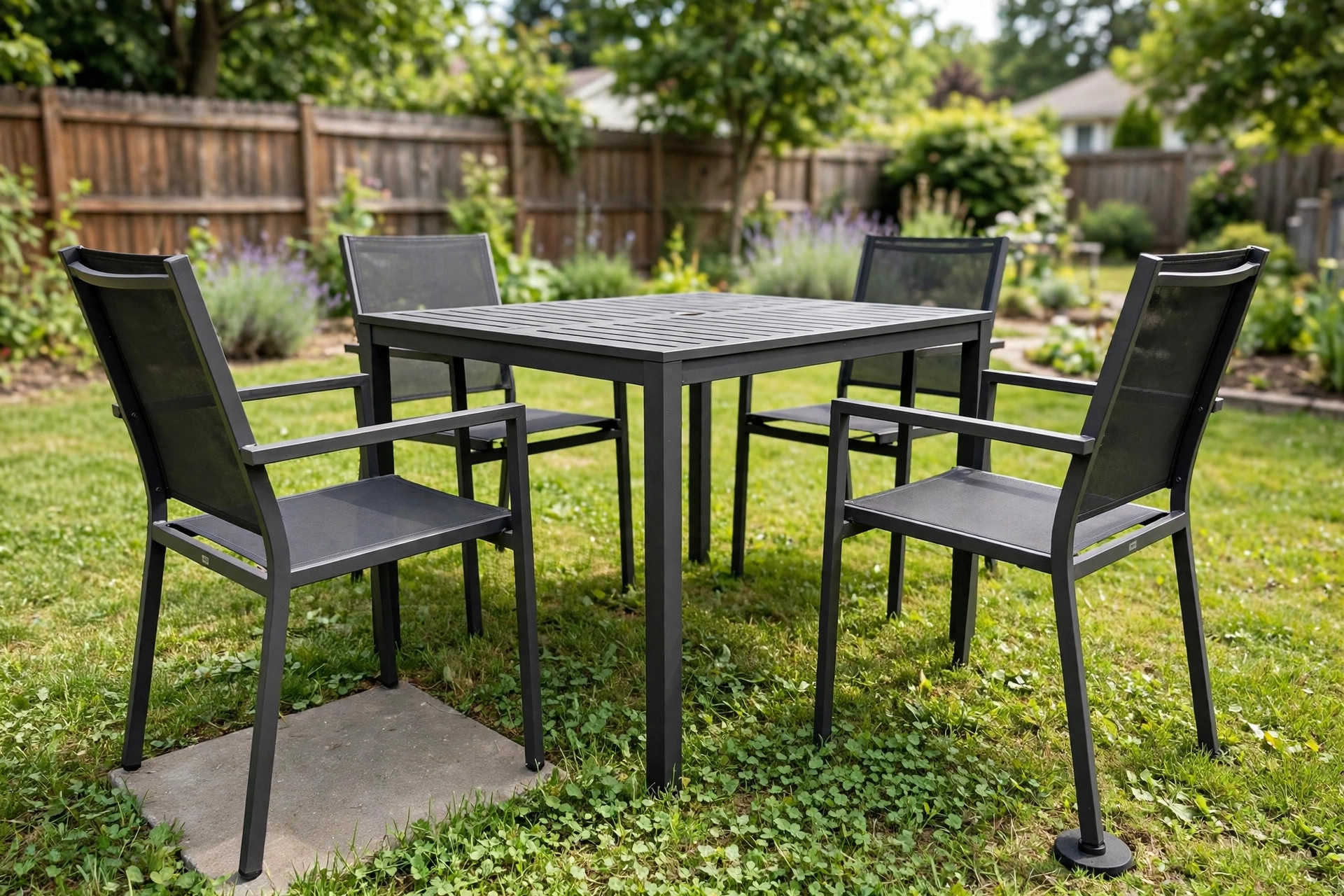

A wobbling chair can ruin a quiet afternoon. You sit down with a cold drink, and the chair rocks from side to side. A table shakes every time you set down a plate. Many people ask how to level patio furniture on grass, because lawns are rarely flat. Grass hides dips, bumps, and soft spots that concrete patios do not have. The good news is that the fix is usually simple. You do not need special skills. You need only a few common tools and a little time.
Why Level Patio Furniture on Grass Matters
A chair or table that sits crooked is more than an annoyance. It can wear out faster. When one leg carries more weight than the others, the joints take extra strain. Screws loosen. Frames bend. A table that rocks can spill food and drinks. That is wasteful and messy.
Comfort matters too. A sloped seat puts pressure on one hip. You shift around to find balance. Your back starts to ache. A level seat lets you relax. You enjoy the afternoon instead of fighting your chair.
Safety is another reason. An unsteady chair can tip when someone leans back. Older guests and small children are most at risk. A level base keeps everyone safer. It also keeps the furniture from walking across the lawn when the wind picks up.
Leveling matters most when you place furniture directly on grass. Grass is soft and alive. It compresses under weight. After rain, the soil sinks in some spots and stays firm in others. Knowing how to level patio furniture on grass saves you from buying a whole new set when the old one is still fine.
First Check How Uneven the Ground Is: How to Level Patio Furniture on Grass
Before you fix anything, study the ground. Pick the exact spot where the furniture will stand. A move of just a few feet can make a big difference on a lawn.
Set the chair or table in place. Press down firmly on each corner, one at a time. Watch which leg lifts off the ground. That leg needs help, or the leg opposite it does. Mark the low spots with small sticks or garden flags so you can find them again.
Use a simple level tool if you have one. Lay it across the seat of a chair or the top of a table. The bubble shows which way the piece tilts. A carpenter’s level works well. Even a small torpedo level will do. If you do not own one, you can use a clear glass of water set on the table. Watch the water line. It tells you which side sits low.
Look at the grass itself. Long grass can fool you. It may hide a dip of two or three inches. Mow the area first for a true reading. After mowing, press your foot down in each spot. Soft ground will sink. Mark those soft spots. They will need firmer support.
Think about drainage too. A low spot that collects rain will stay soft all week. Furniture placed there will keep sinking. It is better to move the set a few feet to higher ground than to fight a puddle.
Ways to Level Patio Furniture on Grass
There is no single right method. The best choice depends on your furniture, your lawn, and how long you plan to leave the set in place.
Adjustable Feet and Leg Levelers
Many patio chairs and tables have feet that screw in and out. Turn the foot on the short leg outward to make that leg longer. This is the cleanest fix. It costs nothing if your furniture already has them.
If your furniture lacks this feature, you can buy threaded leveling feet at a hardware store. They screw into the bottom of metal or wooden legs. They work best on light chairs. They are less useful on heavy tables, where the weight can crush the threads.
Outdoor furniture guides from Ikea show many chairs designed with adjustable glides. Check your model’s page to see if replacement feet are sold.
Shims and Wedges
Shims are thin wedges of wood or plastic. Slide one under the leg that sits too high, or under the whole base on the low side. Outdoor plastic shims hold up best because they do not rot.
Stack two shims if one is not enough. Push them in from opposite sides so they lock together. Trim the part that sticks out with a knife so it does not show. This method works well for tables that rock on a small bump.
Flat Stones or Pavers
For soft ground, shims are not enough. The legs keep sinking. Flat stones or concrete pavers give each leg a firm base. Dig the sod away so the paver sits level with the ground. Set each leg on its own paver.
This method takes more work at first. It pays off over the season. The furniture stays level for months. Pavers also keep metal legs from rusting in wet soil. Home improvement advice from The Home Depot explains how to bed pavers in sand for extra stability.
Outdoor Leveling Pads
You can buy rubber or plastic pads made just for this job. They stack under furniture legs. They spread the weight over a wider area. This stops sinking on soft lawns.
Pads work on both chairs and tables. They are light and easy to move. Keep a few extra on hand. Lawns change shape through the season as the soil dries and settles.
A Wooden Platform or Outdoor Rug
Sometimes the lawn is too uneven to fix leg by leg. In that case, level the ground under the whole set. A simple wooden platform made of deck boards gives you a flat floor on the grass. Lay the boards across two pressure-treated beams. Shim the beams until the platform is level.
An outdoor rug over a flat spot can help too. It smooths out small bumps. It does not fix big dips, but it adds comfort underfoot. Patio style ideas from HGTV show how rugs define a seating area and hide worn grass.
Move to a Better Spot
The simplest fix is often to move the furniture. Walk the yard and look for the flattest patch. Firm, short grass on high ground is ideal. Avoid the base of trees, where roots push up the soil. Avoid spots near downspouts, where the ground stays wet.
If you use your patio set in one place all summer, mark that spot. When you mow, keep the grass there short. Short grass compresses less and gives a truer surface.
What It Costs
Leveling patio furniture on grass does not have to cost much. Here are typical price ranges in the United States.
– Plastic shims: a few dollars for a pack. – Threaded leveling feet: a few dollars per set of four. – Rubber leveling pads: ten to twenty dollars for a set. – Concrete pavers: one to five dollars each at a garden center. – Flat natural stones: often free if you gather them yourself. – A simple wooden platform: thirty to eighty dollars in lumber, depending on size.
Most people spend under twenty dollars. The work itself takes less than an hour for a small set. A platform for a large dining set may take an afternoon.
Compare that to the cost of a new set. Learning how to level patio furniture on grass protects the set you already own. It is one of the cheapest lawn projects you can do. Design guides from Article show how a well-kept outdoor set can anchor a whole yard.
Care and Upkeep
Lawns change. What is level in June may not be level in September. Check your furniture every few weeks. Press on each corner again. Re-shim as needed.
Rain is the biggest cause of new dips. After a heavy storm, walk the area. Look for legs that have sunk. Pull out wet shims and let the ground dry before you reset them.
Keep grass under the furniture trimmed. Long grass holds moisture against metal legs and wooden frames. Trim grass also makes it easier to spot sinking early.
Store or cover the furniture in winter. Frost heaves the ground and pushes pavers up. If you leave the set out, re-level everything in spring. Product care tips from Polywood explain how weather affects outdoor frames over time.
If you used wood shims, check them each season. Replace any that have rotted or cracked. Plastic and rubber shims last for years without care.
Safety Tips
Always work with a partner when moving heavy tables. Lift with your legs, not your back. Wear gloves when handling pavers or rough stones.
Make sure nothing you place under a leg can slip out. Shims should fit tight. Pavers should sit flat. A chair that is stable today but slips tomorrow is worse than one that rocks, because you stop expecting the wobble.
Keep the area around the furniture clear. Tools, toys, and garden hoses are trip hazards on grass. Mow a clear border around the seating area.
Think about who uses the furniture. If grandparents visit often, extra care is worth it. Frontgate and other makers of patio furniture suited to senior living note that steady seating matters most for older adults. Check out reviews of outdoor storage benches for cushions as well, since stored cushions stay dry and ready.
Test every fix by sitting down and shifting your weight. Lean back. Stand up. If the chair holds steady, the job is done.
Frequently Asked Questions
Can I level patio furniture on grass without buying anything?
Yes. Start by moving the set to the flattest, firmest spot in the yard. Mow the grass short. Then try simple fixes like stacked flat stones from the garden or cut wood scraps under the short legs. These free fixes often work for mild rocking.
Why does my table rock even after I add shims?
The ground may be too soft. Shims sit on the grass, so the whole shim can sink. Try a paver under each leg instead. The paver spreads the weight and stops the sinking. Also check that the table frame itself is square. A bent frame will rock no matter what is under it.
Should I level the ground or the furniture?
Do both if you can. Level the ground first by moving to a flat spot or setting pavers. Then fine-tune the furniture with adjustable feet or shims. Ground fixes last longer. Furniture fixes are easier to adjust later.
Will an outdoor rug level my furniture?
A rug helps with comfort and looks, but it will not fix real dips. A rug follows the shape of the ground under it. Use a rug on top of an already level setup, not as the fix itself.
How often should I re-check the level?
Check at the start of the season and after heavy rain. Outdoor upkeep basics from The Spruce suggest a simple seasonal routine for patio care. Quick checks take only a minute. Press each corner of every chair and the table. If you add a fire feature nearby, review outdoor fireplace kits reviewed for patios to plan a safe, level spot for it too.
Is it better to build a small patio instead?
A patio of pavers or gravel is the best long-term answer if you use the spot daily. It costs more and takes a weekend to build. For seasonal use, leveling the furniture on grass is faster and cheaper. Many people start with leveling and build a patio later.
A Short Final Word
Knowing how to level patio furniture on grass is a small skill with a big payoff. A steady chair is safer, more comfortable, and lasts longer. Start with the free fixes. Move to a flat spot. Mow short. Then use shims, feet, or pavers to finish the job. Check the level through the season. With a little care, your lawn set will feel as solid as a set on stone. Independent testing from Consumer Reports and project guides from Lowe’s both agree on one point: steady furniture is the foundation of a good outdoor space.
References
Article. (n.d.). Modern furniture. https://www.article.com Consumer Reports. (n.d.). Product reviews and ratings. https://www.consumerreports.org Frontgate. (n.d.). Outdoor furniture and decor. https://www.frontgate.com HGTV. (n.d.). Home and garden ideas. https://www.hgtv.com IKEA. (n.d.). Home furnishings. https://www.ikea.com Lowe’s. (n.d.). Home improvement products. https://www.lowes.com Polywood. (n.d.). Outdoor furniture. https://www.polywood.com The Home Depot. (n.d.). Home improvement products. https://www.homedepot.com The Spruce. (n.d.). Home and garden advice. https://www.thespruce.com
Was this guide helpful?

About Robert Taylor
The My Garden US editorial team writes practical, in-depth home and garden guides for American homeowners — tested advice, no fluff.
You May Also Like
Patio Furniture for Townhouse Backyard Ideas
April 29, 2026 0 views
Best Outdoor TV Cover for Patio: A Complete Buyer’s Guide
August 7, 2026 0 views
Outdoor Bench for Front Porch Reviews: A Plain Buying Guide
August 3, 2026 0 views