
Many Americans drink water straight from the kitchen tap. Most of the time that water is safe. City water plants treat it well. Even so, it can carry chlorine taste, small bits of sediment, and lead from old pipes. An under sink filter deals with these problems at the point of use. This under sink filters buying guide usa walks you through the choices step by step.
An under sink unit sits inside the cabinet under your kitchen sink. It connects to the cold water line. It sends clean water to a small spout on your sink or through your regular faucet. It works quietly. It stays out of sight. It costs more than a pitcher filter, but it filters more water with less effort.
Why It Matters
Tap water in the United States meets federal standards in most places. The standards allow low levels of some things. Chlorine keeps water safe in the pipes, but it gives water a pool-like taste and smell. Sediment from aging mains can make water cloudy after repairs. Homes built before 1986 may have lead solder in the plumbing. Lead has no safe level, and it matters most for children.
A countertop pitcher helps. But it holds only a few cups. A family must fill it again and again. An under sink filter holds no limit. Open the tap and you have filtered water at once. For a busy kitchen, that convenience counts.
There is also less waste. A pitcher has its own cartridge to throw away often. An under sink cartridge lasts far longer. Fewer changes mean less plastic in the trash over the year.
What to Look For: Under Sink Filters Buying Guide Usa
Start with your water. Every city must publish a water quality report each year. It lists what was found in the local supply. Read it. It tells you whether lead, chlorine, or other items are a concern in your area. If you use a private well, have the water tested by a state lab.
Next, look at labels. The best proof of a filter is third-party testing. Two groups set the standards. NSF International sets the most cited rules for filters. The Water Quality Association also certifies products. Look for marks such as NSF/ANSI 42, 53, or 401 on the box. These marks mean the filter was tested for the claims it makes.
Also check these points:
– Flow rate. A rate of 0.5 to 1 gallon per minute feels normal at the tap. A rate below that will annoy a cook who fills pots often. – Capacity. A cartridge that lasts 500 to 1,000 gallons needs fewer changes. A large family may want the higher end of that range. – Fit. Measure the space in your cabinet. Some units are tall and narrow. Others are short and wide. Leave room for the cartridge to slide out at change time. – Faucet style. Decide if you want a separate small spout or a unit that feeds your main faucet. A separate spout is simpler to install. A main-faucet feed looks cleaner on the sink. – Ease of install. Some models snap in with push fittings. Others need basic plumbing work. If you have never worked under a sink, pick a push-fit model. – Certification marks. Do not trust claims printed on the box alone. The NSF or WQA mark on the label is what counts.
Sites like The Spruce publish plain guides that walk through these details for first-time buyers.
Types of Under Sink Filters
Simple Carbon Block Filters
These are the most common. Water passes through a solid block of activated carbon. The block catches chlorine, bad taste, odor, and many chemicals. It also traps sediment. These units are small. They cost the least. They suit homes whose main complaint is taste and smell.
Multi-Stage Filters
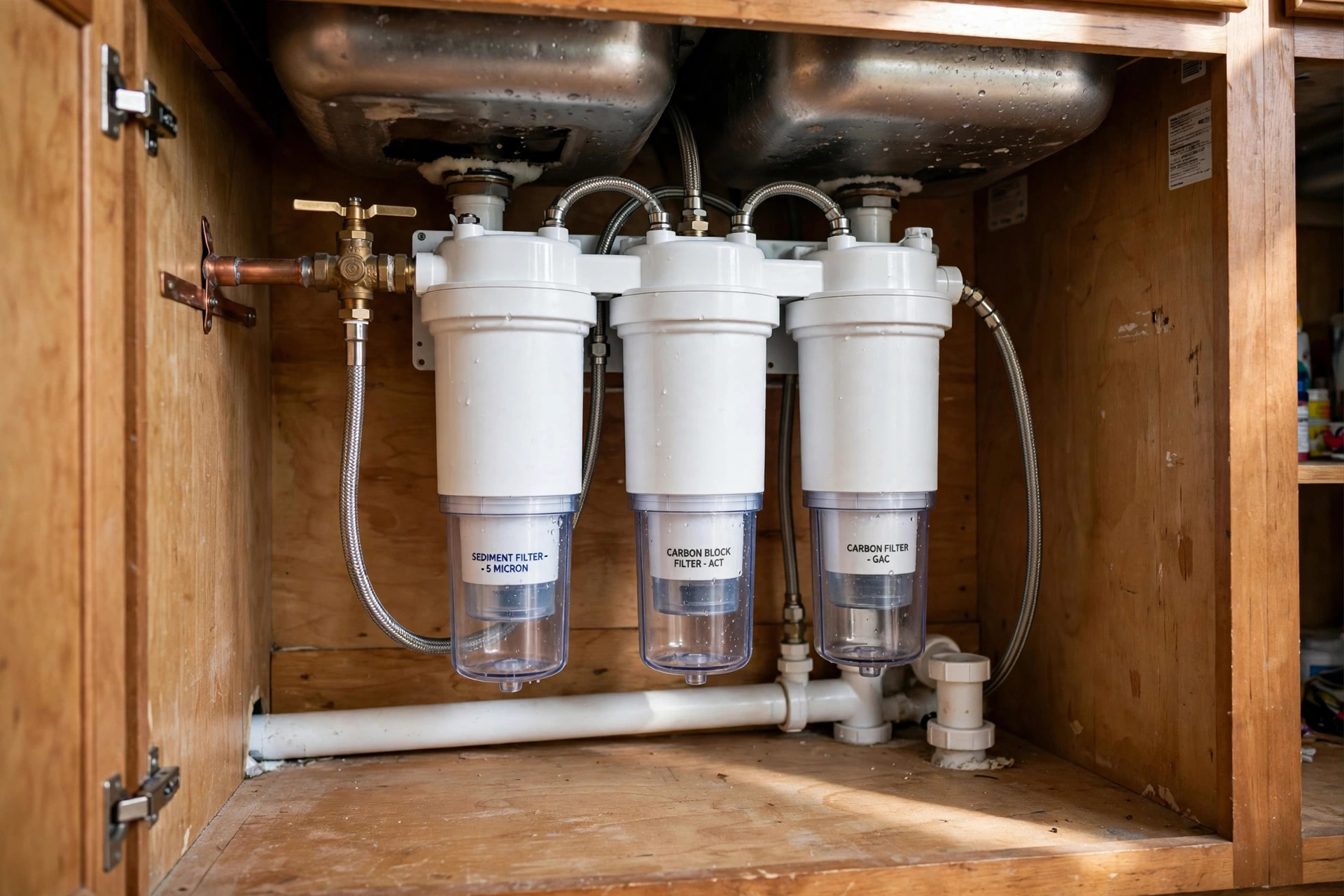
These units stack two or three cartridges in one housing. The first stage catches sediment. The second stage uses carbon for taste and chemicals. A third stage may add a finer carbon block or a special media for lead. More stages mean more protection. They also take more room.
Reverse Osmosis Systems
Reverse osmosis pushes water through a very fine membrane. It removes dissolved solids, fluoride, sodium, and many metals. These systems give very clean water. They have a trade-off. They waste some water during the process. They also need a storage tank under the sink. Newer models waste less water than old ones. Read the waste ratio on the label before you buy. Some new systems use no tank at all. They filter water as it flows. These tankless models save space, but they cost more.
Specialty Filters
Some homes need one special fix. A filter with KDF media handles high chlorine and heavy metals. It also stops bacteria growth inside the cartridge. A filter with a scale-reduction stage helps homes with hard water. It keeps scale off the coffee maker and the kettle. An ultraviolet lamp kills bacteria and viruses. This last type suits well water, not city water. You can pair an ultraviolet lamp with a carbon stage for full coverage.
For a wider look at home appliance choices, Whirlpool and GE Appliances both keep buying guides that explain how water treatment fits into a modern kitchen. Bosch also covers kitchen water quality in its home care materials.
Cost and Price
Under sink filters come in clear price bands. A simple carbon block unit runs from about 50 to 150 dollars. A multi-stage unit runs from about 150 to 400 dollars. A full reverse osmosis system runs from about 200 to 600 dollars.
The first price is not the whole cost. Cartridges wear out. Plan for the cost of new cartridges each year. A simple unit may need 30 to 60 dollars in parts per year. A reverse osmosis system may need 80 to 150 dollars per year. The unit label should state how many gallons each cartridge handles. Divide that by your daily use. That tells you how often you must change it.
Installation cost matters too. A handy owner can install many models with basic tools. If you hire a plumber, expect to pay 100 to 250 dollars for labor. Some makers include an install kit with all fittings. That saves a trip to the store.
Think long term as well. A family that buys bottled water may spend 300 dollars a year on cases. An under sink filter often pays for itself in the first year against that habit. The tap water is already paid for. The filter just makes it taste good.
Retailers such as Home Depot list current prices and stock most common models in stores and online. Checking a few prices before you buy helps you spot a fair deal. Our guide on under sink filters for sale usa also tracks where to find current offers.
Care and Upkeep
A filter is only as good as its cartridge. An old cartridge can let bad things through. Worse, an old cartridge can shed what it once caught. This is why the maker gives a change date or a gallon limit. Treat that limit as a rule, not a hint. Some makers print the change date on a small sticker. Others use a blinking light. Write the date on the cartridge with a marker when you install it. Set a note on your calendar.
Flush the system after each cartridge change. Run water for a few minutes. This clears loose carbon dust. The first glass may look gray. That is normal. It clears fast.
Check for leaks now and then. Open the cabinet once a month. Look at each joint. Feel for damp spots. Tighten any loose fitting by hand. Turn the shutoff valve off and on once a year so it does not stick.
Keep the area under the sink tidy. Do not stack heavy items against the filter housing. A bump can loosen a fitting over time. Leave the front of the unit clear so you can reach the cartridges fast.
Sanitize the system once a year if the manual says to. Some makers sell a small sanitizing kit. Follow their steps in order. Rinse well after.
Safety
Water under pressure can cause damage. Always shut off the cold water valve before you open the unit. Keep a towel and a small bucket in the cabinet during a cartridge change.
Never hook a filter to the hot water line. Hot water can damage the filter media. It can also let trapped chemicals flow back into your water.
Use only cartridges made for your model. A wrong cartridge may not seal. A poor seal lets unfiltered water pass through.
If your home has very old lead pipes, talk to your water utility first. A filter helps at the tap. It does not fix the pipes. The ENERGY STAR program also notes that homes can save water and energy by choosing efficient fixtures alongside filtration.
Guides at This Old House show safe plumbing steps for sink cabinet work. Bob Vila also covers basic shutoff and fitting skills that help with a first install.
Frequently Asked Questions
Do under sink filters remove lead?
Many do. Look for a product tested to NSF/ANSI 53 for lead reduction. The box or the maker site should name the standard. A simple taste-only filter may not be tested for lead. Check before you buy.
How long does installation take?
Most simple units take 30 to 60 minutes for a handy person. A reverse osmosis system takes one to two hours. The time depends on your plumbing and the space in the cabinet. Read the manual once before you start.
Will a filter lower my water pressure?
A small drop is normal. A good unit is built to keep pressure near normal. If pressure drops a lot, the cartridge may be clogged. Change it. If a new cartridge still gives weak flow, check the inlet valve and the lines for kinks.
Can I install one in a rental home?
Yes, in most cases. Most units connect with parts that can be removed later. Keep the old fittings in a bag. Restore the sink when you move out. Ask your landlord first to be safe.
How often must I change cartridges?
It depends on the model and your water use. Many carbon cartridges last six to twelve months. Reverse osmosis membranes can last two to three years. The maker gives a gallon rating. Track it and change on time.
Is reverse osmosis water safe to drink?
Yes. It is very clean. Some people add minerals back for taste. Others do not mind the plain taste. It is a matter of choice, not safety.
A Short Final Word
The right filter depends on your water, your cabinet space, and your budget. Read your water report first. Choose a unit tested by a trusted group. Change the cartridge on time. Do these three things and your tap water will taste better and test cleaner for years.
If you want to compare ratings first, our page on under sink filters reviews buying guide usa collects what testers say. And if you are picking a unit for a specific home type, see our notes on under sink filters american homes guide. Test results from Consumer Reports can also help you weigh one model against another.
References
Bob Vila. (n.d.). Home improvement advice. https://www.bobvila.com Bosch. (n.d.). Home appliances. https://www.bosch-home.com Consumer Reports. (n.d.). Product reviews and ratings. https://www.consumerreports.org ENERGY STAR. (n.d.). Energy efficient products. https://www.energystar.gov GE Appliances. (n.d.). Kitchen and home appliances. https://www.geappliances.com The Home Depot. (n.d.). Home improvement products. https://www.homedepot.com The Spruce. (n.d.). Home and garden advice. https://www.thespruce.com This Old House. (n.d.). Home renovation guidance. https://www.thisoldhouse.com Whirlpool. (n.d.). Home appliances. https://www.whirlpool.com
Was this guide helpful?

About Sarah Mitchell
The My Garden US editorial team writes practical, in-depth home and garden guides for American homeowners — tested advice, no fluff.
You May Also Like

Pot Filler Faucets: Finding the Best USA Online Deals
March 11, 2026 0 views
French Door Refrigerators USA Online Deals: How to Shop Smart and Save
April 17, 2026 0 views
Vinyl Plank Flooring for Florida Homes USA
February 11, 2026 0 views