Introduction
If you are shopping for motion flood lights for sale in the USA, you have many choices. Motion flood lights switch on when they sense movement. They light up driveways, backyards, garages, and side doors. They add safety to your home without wasting power, because they stay off until something moves.
This guide will help you buy with care. It covers how these lights work, what features matter, what they cost, and how to keep them working for years. By the end, you will know exactly which motion sensor flood light fits your home.
Why Motion Flood Lights Matter: Motion Flood Lights for Sale Usa
Most break-ins happen under cover of dark. A sudden bright light takes that cover away. Motion flood lights give you that protection only when it is needed. They also help your family. When you come home late, the driveway lights itself. When you walk out to the trash bins at night, the yard lights itself too.
There is a money side as well. A flood light that burns all night uses much more power than one that runs a few minutes per night. Motion sensors cut that waste. Over a year, the savings add up. If you want more ways to cut outdoor lighting costs, read the guide on solar path lights for options that run on the sun alone.
How Motion Flood Lights Work
A motion flood light has two parts: a lamp and a sensor. The sensor is usually a passive infrared eye, called PIR. It watches for body heat moving across its field. When a person or animal passes, the sensor trips and the lamp comes on. After a set time, the lamp goes off again.
Sensor Types
PIR sensors are the most common. They are cheap and they work well for wide areas. Some lights add microwave or dual sensors. These can catch movement through rain or behind thin cover. They cost more, but they give fewer false trips. For most homes, a good PIR unit is enough.
Daylight Sensors
Most models also have a small daylight eye. It stops the light from turning on in daytime. This saves power and saves the bulb. When you shop, check that this feature is included. It should be.
What to Look for When You Shop
With so many motion flood lights for sale in the USA, it helps to compare by the same list of points. Start with these.
Brightness. Brightness is measured in lumens. For a small side door, 700 to 1,200 lumens is often enough. For a large driveway, look for 2,000 to 3,000 lumens. More is not always better. Too much light can blind your own eyes and annoy your neighbors.
Detection range and angle. Range tells you how far the sensor can see. Angle tells you how wide it can see. A range of 30 to 70 feet suits most yards. An angle of 180 degrees covers a wide sweep. Mount the light high and point the sensor where people will pass.
Adjustable settings. Good lights let you set three things: how long the light stays on, how dark it must be before it can trip, and how sensitive the sensor is. These controls cut false trips from passing cars or small pets.
Color temperature. Light color is measured in kelvins. Warm white (2700K to 3000K) feels soft and suits a home porch. Cool white (5000K) looks harsh but shows detail, which can help a security camera. Pick the tone that fits your street.
Smart features. Some units link to a phone app. You can change the timer or brightness from your couch. Some join a wider smart home setup. These extras cost more. Decide whether you will use them before you pay.
Power source. Most models wire into your home power. Some run on batteries or solar panels. Wired models are brighter and never need a charge. Solar models are easy to place anywhere the sun can reach. Wired models suit a garage or porch; solar suits a far fence line. You can find both kinds among the big retailers. Big hardware stores list a wide range of these units, such as the motion light sections at The Home Depot and Lowe’s.
Weather rating. Outdoor lights must survive rain, heat, and cold. Look for a UL or ETL listing for wet locations. This mark means the light was tested for outdoor use. Do not buy an indoor-rated light for outside use.
Types and Options
Motion flood lights for sale in the USA come in several forms. Each has its own use.
Single-head lights. One lamp on one bracket. They suit a back door or a small patio. They are simple and cheap.
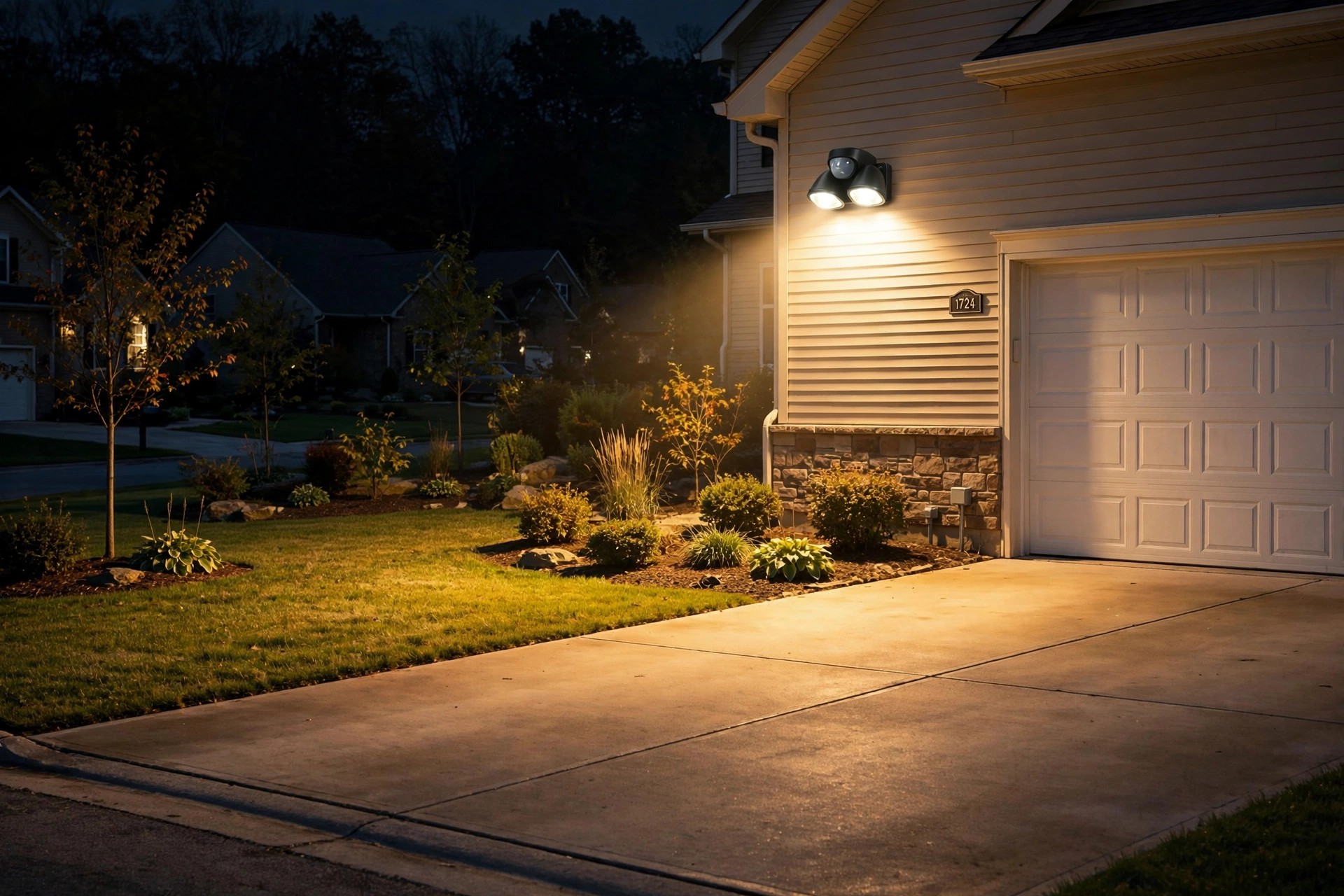
Dual-head lights. Two lamps that can aim in different directions. They cover a driveway and a walkway at once. This is the most common type sold today.
Triple-head lights. Three lamps for large yards or shops. They cost more, but one unit can cover a very wide space.
Integrated LED models. The LED panel is built into the unit. You never change a bulb. These are the standard now. They last long and use little power. Lighting maker Philips publishes guides on LED choices that explain why integrated LEDs last so long.
Bulb-based models. These take screw-in bulbs. You can pick your own bulb, even a smart bulb. They cost less up front. You will replace bulbs over time.
Camera models. Some motion lights add a small camera. They record when they trip. They can be useful, but they add cost and need Wi-Fi. Think about whether you want a light or a security system before you pay the extra.
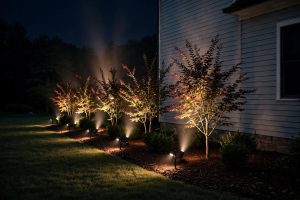
If you want a wider outdoor lighting plan, pair your flood lights with accent lights. The guide on landscape spot lights shows how to light trees and beds without harsh glare.
Cost and Price
Prices for motion flood lights for sale in the USA vary by type and brand. Here is what you can expect at most stores.
– Basic dual-head LED units: $20 to $40. – Mid-range units with long range and wide angle: $40 to $80. – Premium units with dual sensors or cameras: $80 to $200 or more. – Solar motion flood lights: $25 to $70.
Installation can add to the cost. If you replace an old light with a new one, you can often do it yourself with basic tools. If you need a new wiring run, an electrician may charge $100 to $250. Review sites such as Consumer Reports test outdoor lights and publish findings that can help you judge whether a higher price buys real quality.
Running cost is low. An LED flood light that runs 15 minutes a night costs only a few dollars a year in power. The US Department of Energy notes that LEDs use far less energy than older lamp types; you can read more on their lighting pages at energy.gov and ENERGY STAR.
Care and Upkeep
Motion flood lights need little care, but a few habits keep them working well.
Clean the lens and sensor. Dust and spider webs can block the sensor eye. Wipe it with a soft cloth a few times a year. Clean the lamp lens too, so the light stays bright.
Trim plants. Bushes and grass that wave in the wind can trip the sensor. Trim growth away from the sensor’s view. This cuts most false alarms.
Check the aim. Over time, wind and knocks can shift the aim. Check each season that the lamp points where you want and the sensor covers the right path.
Test the settings. Run a walk test once or twice a year. Walk through the area at night and see where the light trips. Adjust the range and timer as needed. Lighting retailers such as Lumens and Lamps Plus offer how-to guides that show the best mounting heights for steady coverage.
Replace parts. For bulb-based models, swap burned bulbs at once. For solar models, wipe the panel and check that nothing shades it. Most LED units last 10 years or more before the panel fades.
Safety
Outdoor wiring and ladders need care. Follow these rules.
Turn off the power at the breaker before you touch any wiring. Never trust the wall switch alone. If you are not sure which breaker feeds the light, stop and ask an electrician.
Use a firm ladder on level ground. Mount the light between 8 and 12 feet high. This height gives wide coverage and keeps the unit out of easy reach.
Do not aim lights into the street. Bright lights can blind drivers. Aim them down and inward toward your own yard. Also be kind to neighbors. Point beams at your ground, not at their windows. The US Consumer Product Safety Commission publishes safety guidance for outdoor electrical products at cpsc.gov.
Watch for heat. Old halogen flood lights ran very hot. Modern LED models run cool. Still, keep the unit clear of dry leaves and paper.
If your porch needs a smaller light instead of a flood, the guide on sensor porch lights covers gentler options for entries.
FAQ
Do motion flood lights work in very cold weather?
Most LED models work down to minus 20 degrees Fahrenheit or lower. Check the box for the rated range. In deep cold, a wired model is more sure than a battery or solar model, since batteries lose strength in the cold. Wipe snow off the sensor and the solar panel after storms.
How far can a motion sensor see?
Most home models sense motion from 30 to 70 feet. The range depends on the sensor quality and the mounting height. Walk-testing after install shows the true range.
Will rain or snow set off my motion flood light?
Good models should not trip on rain or snow. If yours does, lower the sensitivity setting. Dual-sensor models handle bad weather best. Also keep the sensor lens clean, since dirt can confuse the eye.
How long should the light stay on after it trips?
One to five minutes is the usual range. For a driveway, two or three minutes is often right. For a dark path, a longer time feels safer. Shorter times save power and save the LED.
Can motion flood lights run on solar power?
Yes. Solar motion flood lights have a panel that charges a battery by day. They work well where the sun hits the panel for most of the day. In deep shade or far-north winters, a wired model is more sure. Home improvement editors at The Spruce review solar models each year and compare real run times.
Do I need a permit to install a motion flood light?
Replacing an existing outdoor light rarely needs a permit. Running new wiring sometimes does. Rules differ by town. Check with your local building office before you start a new circuit.
Will a motion light bother my neighbors?
It can, if it is too bright or aimed at their home. Choose a moderate brightness, aim the beam down at your own ground, and use the timer so it does not stay on long. A short talk with your neighbor can prevent trouble.
Final Word
Shopping for motion flood lights for sale in the USA does not need to be hard. Start with your space. Note where people walk and where shadows fall. Pick a brightness that fits the area, a range that covers the path, and settings you can adjust. Buy a wet-rated LED unit from a name you trust. Mount it high, aim it down, and test it at night.
With that simple plan, you get safety, ease, and low power bills in one small package. Your driveway will greet you, your yard will watch itself, and you will wonder how you ever lived with a dark porch.
References
Consumer Reports. (n.d.). Product reviews and ratings. https://www.consumerreports.org ENERGY STAR. (n.d.). Energy efficient products. https://www.energystar.gov Lamps Plus. (n.d.). Lighting and home decor. https://www.lampsplus.com Lowe’s. (n.d.). Home improvement products. https://www.lowes.com Lumens. (n.d.). Lighting and ceiling fans. https://www.lumens.com Philips. (n.d.). Lighting products. https://www.philips.com The Home Depot. (n.d.). Home improvement products. https://www.homedepot.com The Spruce. (n.d.). Home and garden advice. https://www.thespruce.com U.S. Consumer Product Safety Commission. (n.d.). Product safety information. https://www.cpsc.gov U.S. Department of Energy. (n.d.). Energy efficiency and renewable energy. https://www.energy.gov
Was this guide helpful?

About Lisa Anderson
The My Garden US editorial team writes practical, in-depth home and garden guides for American homeowners — tested advice, no fluff.