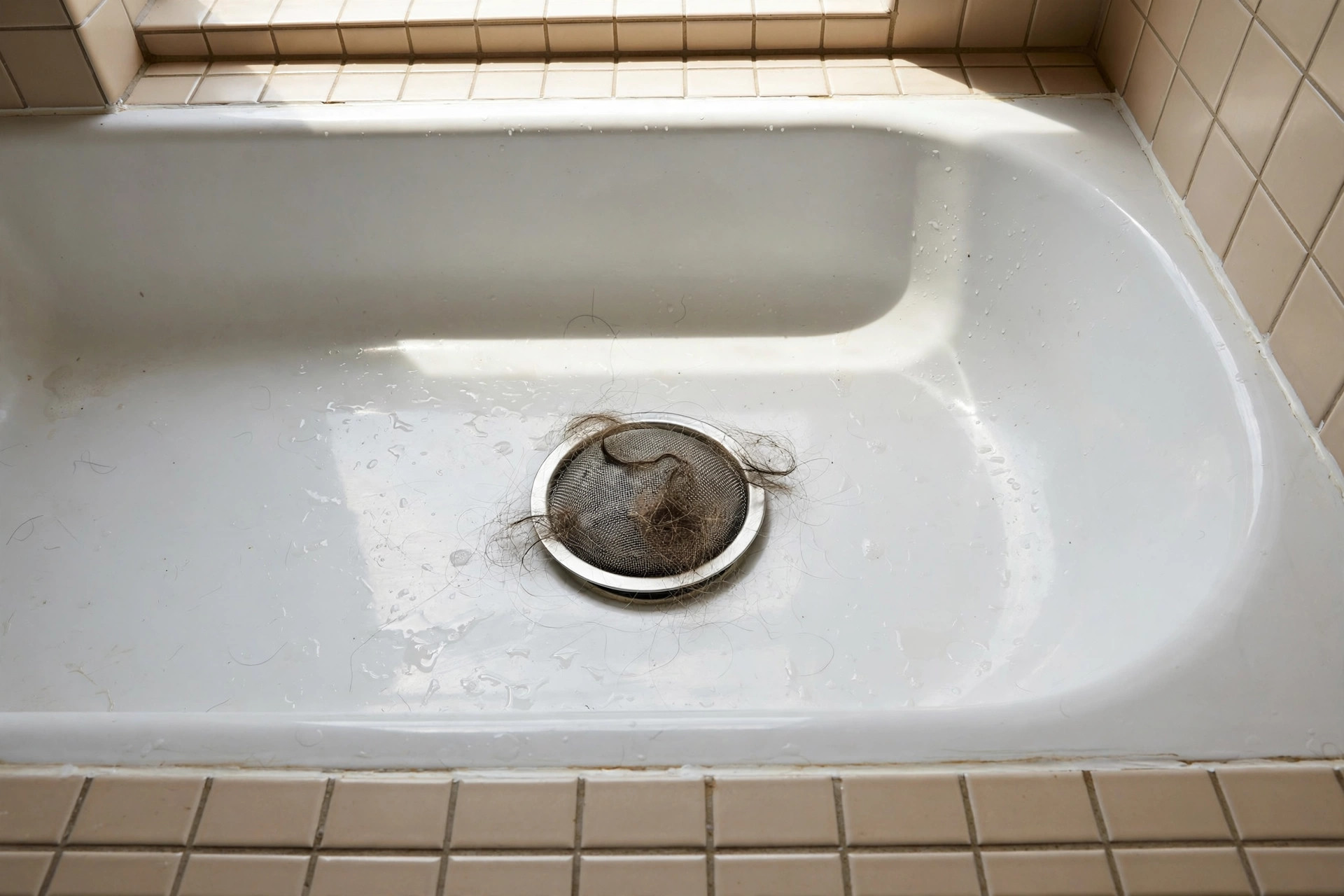

Every shower leaves hair behind. Long hair, short hair, and pet hair all wash down the drain each day. Over weeks and months, that hair builds into a tangled mat inside the pipe. Water drains slower. Odor creeps up. A slow drain turns into a full clog, and a full clog turns into a plumber bill. The simplest defense is a small, cheap device that sits in or over the drain and catches hair before it enters the pipe. This guide walks through how to choose the best drain strainer for shower hair usa households can buy, what types exist, what they cost, and how to keep them working.
Why a Shower Drain Hair Strainer Matters
A shower drain moves a great deal of water every day. The average American shower uses about seventeen gallons of water, and nearly all of it must pass through a drain only a few inches wide. Anything that enters that opening besides water is a risk. Hair is the worst offender because it wraps around itself and snags on rough pipe walls, soap scum, and mineral scale.
Once hair catches inside a pipe, it acts like a net. Soap residue and skin oils cling to it. More hair joins the tangle. Flow narrows. The shower floor starts to hold water around the feet. That standing water feels unpleasant, and it can feed mold and mildew in tile grout and caulk lines.
A strainer stops this chain at the start. It holds the hair where a hand can reach it, on top of the drain, instead of deep in the pipe where only a snake or a plumber can reach it. The cost difference is stark. A good strainer costs a few dollars. A single visit from a plumber to clear a shower drain often costs well over a hundred dollars, as shown in typical figures for drain cleaning cost per line near me. A strainer is one of the cheapest forms of home maintenance a person can buy.
Homes with more than one person, and homes with pets that get bathed indoors, see the fastest buildup. Long human hair is the most common cause, but short hair from daily shaving and fur from a dog washed in the tub add up just as surely. A strainer does not care whose hair it is. It catches it all the same.
How to Choose the Right Hair Strainer: Best Drain Strainer for Shower Hair Usa
Shower drains are not all alike. American homes use several standard drain sizes, and a strainer must fit the drain it serves. A poor fit defeats the purpose, because hair slips through the gaps at the edges. Work through these points before buying.
Measure the Drain First
Most American shower and tub drains measure between four and five inches across, with four and one quarter inches a very common size. Take a tape measure and record the inside diameter of the drain opening. If the shower has a drain cover screwed in place, measure the opening beneath it. Some strainers sit on top of the drain and need a flat rim around the opening. Others drop inside and grip the inner walls. Write the number down and compare it with the size range printed on the package.
Pick the Material
Stainless steel is the most common choice and the most durable. It resists rust, holds its shape, and cleans with a quick rinse. Silicone strainers are soft and flexible, which lets them seal well against uneven drain rims, and they come in colors that suit a decorated bathroom. Plastic strainers are the cheapest option, but they crack over time and can stain. For a strainer that will sit in standing water daily, stainless steel gives the longest service life.
Look at the Hole Pattern
The holes must be small enough to catch hair but large enough to pass water freely. Fine mesh catches nearly everything, including fine pet fur, but it can slow drainage in a high-flow shower and needs more frequent cleaning. Wider slots drain fast but let short, fine hairs slip through. A middle ground works best for most homes: holes around one eighth of an inch that stop the bulk of hair while keeping water moving. Some designs use a raised dome, which keeps the mesh off the drain surface and slows clogging of the mesh itself.
Consider Cleaning Ease
A strainer only helps if it is cleaned. Designs that lift out with a fingertip or a small tab get cleaned far more often than ones that must be pried up. Smooth surfaces rinse clean under the faucet. Mesh that is too fine may need a brush or an old toothbrush to clear. Think honestly about the routine in the home. If the bathroom sees quick morning showers before work, choose a design that empties in seconds.
Types of Drain Strainers for Shower Hair
Shoppers will meet a handful of basic designs. Each suits a different drain style.
Over-drain strainers. These sit flat on top of the drain, held by their own weight or a silicone seal. They fit most standard tub and shower drains and need no tools. They are the easiest to remove and clean, and they are the best choice for renters who cannot alter the plumbing.
In-drain baskets. These drop into the drain opening and sit below the rim. A basket holds more hair before it needs emptying, and it stays out of sight. It works best in drains with a smooth, round opening. Some baskets include a center post or handle for easy lifting.
Mushroom or dome strainers. The raised cap shape sheds water over its sides, which keeps the strainer itself from sealing shut with a hair mat. These drain quickly and are popular in showers with strong water pressure.
Pop-up and stopper replacements. Some tub drains use a built-in stopper that hair wraps around. Replacement stoppers with hair-catching baskets swap in for the old stopper and catch hair at the source. They require removing the existing stopper first, which usually takes a simple twist.
Disposable or peel-off catchers. Thin sheets with adhesive rings stick around the drain for a few weeks, then peel off with the collected hair. They suit travel or short stays, but they cost more over a year than one reusable strainer.
Fixture makers such as Moen and Delta Faucet publish drain dimensions for their tub and shower fittings, and matching the strainer to those numbers avoids returns. Bath fixture brands like Kohler likewise list standard drain sizes in their product guides. Large home stores such as The Home Depot and Lowe’s stock all of the types above, so a shopper can compare them in hand.
Cost and Price Ranges
Hair strainers are among the least expensive plumbing accessories sold. Typical prices in the United States run as follows.
Basic plastic over-drain strainers sell for two to six dollars. They work, but plan to replace them yearly. Silicone strainers run five to twelve dollars and last several years with normal care. Stainless steel strainers run eight to twenty dollars. The price climbs with finer mesh, heavier gauge steel, and brand names. In-drain baskets of stainless steel often sit in the ten to eighteen dollar range.
Multi-packs lower the unit price. A set of three silicone strainers may cost about the same as one single unit bought alone. Sets are useful for homes with several bathrooms. Specialty designs, such as pop-up stopper replacements, run twelve to twenty five dollars.
Compared with the cost of chemical drain openers, which run eight to fifteen dollars a bottle and must be bought again and again, a strainer pays for itself within weeks. Compared with a plumber visit, the math is not close. One avoided service call buys a lifetime supply of strainers.
Prices move with sales and region, and independent reviewers such as Consumer Reports periodically test drain accessories and plumbing fixtures for value. For general buying advice on small plumbing parts, the home guides at The Spruce and Family Handyman keep updated roundups.
Care and Upkeep
A strainer works only when its holes stay open. Cleaning is a small job, but it must be done on a schedule.
Lift the strainer after each shower, or at least every few days, and pull off the collected hair. In a home where two or more people shower daily, check it daily. Hair left in place mats down and blocks flow just as surely as hair inside the pipe would.
Rinse the strainer under hot water once a week. Soap film builds on the mesh and narrows the holes. A squirt of dish soap and a soft brush once a month keeps the metal bright and the holes clear. For hard water areas, where mineral scale crusts on metal, soak the strainer in plain white vinegar for twenty minutes, then brush lightly and rinse. Homes fighting mineral buildup may also want to read about the best shower filter for hard water usa and shower head filter for chlorine reviews usa, since softer, filtered water leaves less residue on every bathroom surface.
Inspect the strainer every few months for damage. Bent steel lets hair slip past. Cracked plastic can drop shards into the drain. Worn silicone loses its seal. Replace a damaged strainer at once rather than running the shower unprotected.
Never use a chemical drain opener to clean a strainer. The harsh liquid is meant for pipes, not for a device that hands touch daily, and it shortens the life of silicone and plastic. If a strainer smells stale despite cleaning, soak it in a mix of baking soda and warm water, then rinse well.
Safety Notes
A strainer is a simple device, but a few safety points deserve care.
Choose a strainer with smooth edges. Rough or sharp rims can cut bare feet, especially on over-drain designs that sit where feet step. Run a finger around the edge before first use.
Make sure the strainer sits flat and does not rock. A rocking strainer can shift underfoot and create a slip risk on a wet shower floor. Silicone-based designs grip best on smooth fiberglass and acrylic bases.
Keep the strainer in place whenever the shower runs. An empty drain with a missing strainer invites more than hair. Small caps, jewelry, and children’s bath toys all fit down an open drain. If the strainer must come out for cleaning, put it back before the next shower.
In homes with small children or frail elders, treat the strainer as part of bath safety, alongside grab bars and non-slip mats. A drain that flows freely means no ankle-deep water to slip in.
The U.S. Environmental Protection Agency reminds homeowners that keeping drains clear reduces the need for harsh chemical cleaners, which is better for household plumbing and for local water systems. Water treatment specialists such as Aquasana make the same point in their home water guides: prevention beats cure.
Frequently Asked Questions
How often should I clean a shower hair strainer? Check it after every shower and empty it at least every two to three days. In busy households with long hair, daily emptying keeps water flowing fast. A full strainer behaves like no strainer at all.
Will a strainer slow down my shower drain? A clean strainer slows flow only slightly. A dirty one slows it a great deal. If water pools around the feet, the strainer is full, not faulty. Empty it and flow returns. Choose a dome design if the shower has very strong pressure and the mesh clogs fast.
Can a strainer fit any shower drain? Most fit most drains, but not all. Measure the drain opening and read the size range on the package. Odd sizes, square drains, and linear trench drains need matching specialty strainers. When in doubt, bring the old drain cover to the store for comparison.
Are silicone or steel strainers better? Steel lasts longer and resists staining, which makes it the better long-term buy. Silicone seals better on uneven rims and comes in colors. Many homeowners keep a steel strainer in the main shower and silicone ones in guest baths. Both catch hair well when sized right.
Do I still need drain cleaner if I use a strainer? Rarely. A strainer stops the hair that causes most shower clogs. Soap scum still builds slowly on pipe walls, so a yearly flush with hot water and baking soda is good upkeep. Heavy chemical openers should be a last resort, not a routine.
Can pets use a shower with a strainer in place? Yes. A strainer is even more useful when a dog is bathed, because pet fur sheds heavily in warm water. Use a fine-mesh basket for bath time and empty it right after, since fur mats quickly. Never leave a pet unattended near an open drain.
A Final Word
A shower hair strainer is a small purchase with an outsized payoff. It costs less than a sandwich, installs in seconds, and spares the home from slow drains, foul odors, and plumber bills. Measure the drain, choose steel or silicone, keep it clean, and the shower will drain as fast on the hundredth day as on the first. For a home that also battles hard water or chlorine, pairing a strainer with a good shower filter covers both the drain and the skin. The best maintenance is the kind that takes ten seconds, and emptying a strainer is exactly that.
References
Aquasana. (n.d.). Water filtration systems. https://www.aquasana.com Consumer Reports. (n.d.). Product reviews and ratings. https://www.consumerreports.org Delta Faucet. (n.d.). Kitchen and bathroom faucets. https://www.deltafaucet.com Family Handyman. (n.d.). DIY home repair and maintenance. https://www.familyhandyman.com Kohler. (n.d.). Bathroom and kitchen fixtures. https://www.kohler.com Lowe’s. (n.d.). Home improvement products. https://www.lowes.com Moen. (n.d.). Faucets and plumbing fixtures. https://www.moen.com The Home Depot. (n.d.). Home improvement products. https://www.homedepot.com The Spruce. (n.d.). Home and garden advice. https://www.thespruce.com U.S. Environmental Protection Agency. (n.d.). Protecting human health and the environment. https://www.epa.gov
Was this guide helpful?

About Robert Taylor
The My Garden US editorial team writes practical, in-depth home and garden guides for American homeowners — tested advice, no fluff.
You May Also Like

Reverse Osmosis System Under Sink Reviews USA: What American Buyers Report
February 7, 2026 0 views
Best Bidet Toilet Seat Reviews USA 2026: A Plain Guide for Homeowners
July 16, 2026 0 views
Water Softener vs Conditioner: A Full Comparison for American Homes
February 20, 2026 0 views