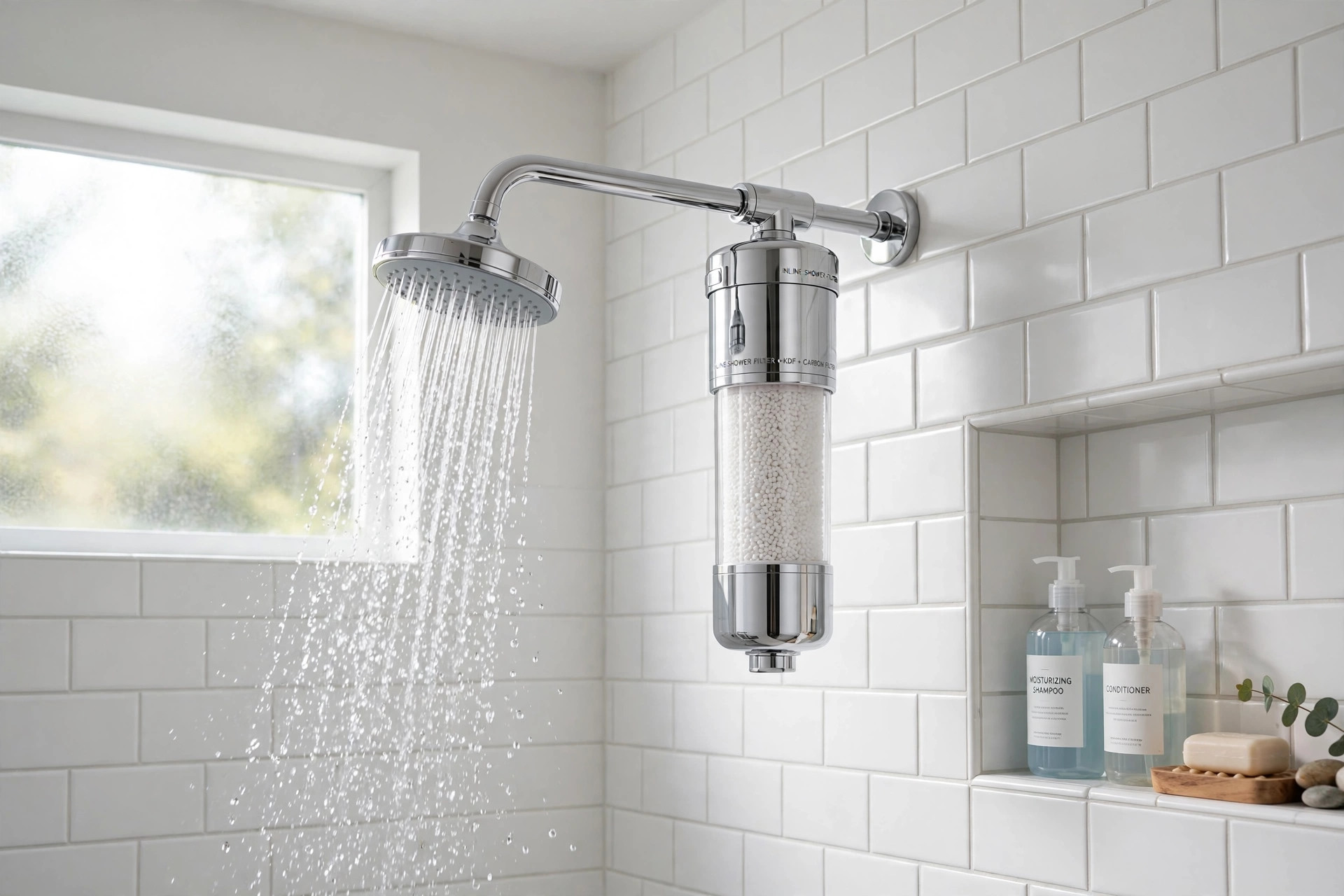

Hard water is a fact of life in much of the United States. When water carries too much calcium and magnesium, it leaves white scale on glass, dries out skin, and makes hair feel rough. The search for the best shower filter for hard water usa begins with a simple truth. A shower filter will not soften water the way a whole-house system does. It can, however, cut chlorine, trap sediment, and reduce some mineral load at the point of use. That small change can make showers kinder to skin and hair and keep fixtures cleaner.
This guide explains how shower filters work, what to look for, what types exist, what they cost, and how to keep one working well. It also covers safety and answers common questions.
Why Hard Water Matters in the Shower
Hard water is common across the country. Cities in Texas, Arizona, Florida, and much of the Midwest draw on groundwater rich in minerals. Even city water can test high for hardness. You can read about how minerals in drinking water are tracked at EPA water quality resources.
The signs show up fast. Soap does not lather well. A film stays on the tub. Shower doors spot up with white marks that need vinegar to remove. Hair feels dull and tangles more. Skin may itch after a shower. People with eczema or dry skin often feel it most.
Hard water also works against your fixtures. Scale builds up inside showerheads and on valves. Flow drops over time. An in-line filter can catch some sediment before it reaches the head, which helps protect showerhead and fixture finishes from crusty buildup.
How Shower Filters Work: Best Shower Filter for Hard Water Usa
Most shower filters are small cartridges that sit between the shower arm and the showerhead. Water passes through the cartridge on its way out. Inside are layers of media. Common media include KDF-55, calcium sulfite, activated carbon, vitamin C, and sediment screens.
Each medium has a job. KDF-55 and calcium sulfite are good at reducing free chlorine. Activated carbon cuts chlorine and some odors. Vitamin C filters neutralize chlorine and chloramine but do little for minerals. Fine screens trap sand and rust flakes.
Be honest about limits. These small cartridges cannot exchange hardness minerals the way a salt-based softener does. Contact time is too short and the bed is too small. If your test shows very hard water, read up on salt-free water softener reviews for hard water to see how larger systems compare. A shower filter is a finishing step, not a full cure.
Types of Shower Filters
In-Line Canister Filters
This is the most common type. It is a cylinder that threads between the shower arm and the showerhead. It holds the most media of any shower filter type. Many models let you change the cartridge while keeping the housing. Look for housings made of solid plastic or metal rather than thin, brittle shells.
Showerhead Filters
Some showerheads have a filter built into the handle. These are neat and compact. They hold less media, so cartridges change more often. They suit renters who want a simple swap. Guides at The Home Depot often group these under filtered showerheads.
Vitamin C Filters
These use ascorbic acid to knock out chlorine and chloramine. They work well for that one job. They do almost nothing for calcium, magnesium, or scale. Think of them as chlorine filters with a hard-water name.
Multi-Stage Cartridges
Better in-line units combine stages. A sediment screen first, then KDF or calcium sulfite, then carbon. More stages mean better chlorine removal and cleaner flow. They cost more up front but perform more steadily over the cartridge life.
How to Test Your Water First
Before you buy, know what is in your water. A simple test strip kit costs a few dollars and shows hardness, pH, and chlorine in minutes. City water reports are free and list chlorine levels and hardness. If you use a well, a lab test gives the full picture.
Hardness is measured in grains per gallon or milligrams per liter. Water above 7 grains per gallon counts as hard. Above 10 is very hard. A shower filter makes the most sense when hardness is mild to moderate and chlorine is the bigger complaint. When the test shows very hard water, plan for a softener or conditioner and use the shower filter as backup. Test kits from hardware stores or mail-in labs both work.
What to Look For When You Buy
Filter Media and Capacity
Check what is inside and how much. A cartridge that claims six months may last two months in a house with heavy chlorine and high use. Look for stated gallon ratings rather than time claims alone. When hardness is the main worry, pair the filter with broader steps. The best sediment filter for well water usa can catch grit before it ever reaches the bath.
Flow Rate
Filters add resistance. A cheap unit can cut flow to a thin stream. Look for a rated flow of at least 2.0 gallons per minute. Your showerhead already limits flow by law to 2.5 GPM or less, so the filter should not add much drag.
Compatibility
Most units use standard half-inch threads. That fits most American shower arms. Check whether you need Teflon tape or extra washers. Some units include them in the box. Tall units can drop the showerhead a few inches, which matters in low ceilings.
Cartridge Cost and Availability
The unit price is only the start. Cartridges are the real cost. Check the price of replacements and how easy they are to find. A filter whose cartridges sell only through one store can leave you stuck. Retailers like Lowe’s carry common replacement cartridges on the shelf.
Certification
Look for NSF or WQA marks on the box. NSF/ANSI 177 covers shower filtration systems. A certified claim for chlorine reduction means the maker tested it under set rules. Uncertified claims about softening or mineral removal should be read with care.
Cost and Price Ranges
Expect these rough ranges in the United States.
– Basic in-line filter: 20 to 40 dollars. Cartridges run 10 to 20 dollars each. – Mid-range multi-stage unit: 40 to 80 dollars. Cartridges run 20 to 35 dollars. – Showerhead with built-in filter: 30 to 90 dollars. Cartridges run 15 to 30 dollars. – Vitamin C filter: 25 to 50 dollars. Refills run 10 to 25 dollars.
Yearly cost lands near 40 to 120 dollars for most homes, based on how often you change the cartridge. That is far less than a whole-house system. But it also does far less. For a side-by-side look at full-home options, see the best water softener for well water usa guide.
Installation costs nothing if you do it yourself. Thread the filter on by hand, snug it with a wrench, and check for leaks. Ten minutes is all it takes.
Care and Upkeep
A filter only helps while its media is fresh. Mark the change date on a calendar or on the housing with a marker. When flow drops or chlorine smell returns, change the cartridge even if the date has not come.
Flush a new cartridge before the first shower. Run water through it for a few minutes into the tub. This clears loose carbon dust and loose media. It keeps black specks out of your first showers.
Clean the housing when you change the cartridge. Rinse it with warm water. Check the rubber washers for cracks. A tired washer causes slow drips at the threads. Keep one spare washer in the bath drawer.
If you leave town for weeks, run the shower a minute or two on return. Stale water sitting in media can pick up an odor. A quick flush clears it. Project guides at This Old House remind readers that small plumbing add-ons still need a regular check, just like any fixture.
Safety Notes
Shower filters are low risk, but a few points matter.
Do not overtighten plastic threads. They crack under force. Hand-tight plus a quarter turn with a wrench is enough. Use Teflon tape on metal-to-metal threads to stop seepage.
Hot water shortens the life of some media. Vitamin C cartridges wear faster in very hot showers. If you like scalding water, expect shorter cartridge life.
A filter is not a health device. It will not make unsafe water safe. If your water comes from a private well, test it yearly. Bacteria, lead, and nitrates need proper treatment, not a shower cartridge. Kohler’s plumbing resources and the EPA both stress that filtration claims should match real certifications.
Check for leaks after install. A slow drip behind the housing can soak a wall over months. Wipe the threads dry, run the shower, and look closely.
Frequently Asked Questions
Will a shower filter soften hard water?
No, not in the way a softener does. It can reduce chlorine and trap sediment. It may cut a small share of minerals. But it cannot exchange calcium and magnesium out of the water the way salt-based softening does. If hardness is high, a filter helps the feel of the water but does not fix the cause.
How often should I change the cartridge?
Most makers say two to six months. Real life varies. Heavy use, high chlorine, and very hard water all shorten life. Change it when flow drops, when chlorine smell comes back, or when scale returns to the glass. A calendar reminder keeps you honest.
Do shower filters remove chlorine?
Many do. KDF-55, calcium sulfite, carbon, and vitamin C media all cut free chlorine. Check for an NSF/ANSI 177 listing for chlorine reduction. Vitamin C types also handle chloramine, which carbon alone struggles with. Repair guides at Family Handyman note that chlorine is often the easiest win a shower filter gives.
Are filtered showerheads worth it?
For renters and light users, yes. They install in minutes and need no tools. The trade is smaller media beds and more frequent changes. Heavy users often prefer a full-size in-line canister that holds more media and lasts longer between swaps.
Can I install one myself?
Yes. Unscrew the showerhead, thread the filter onto the arm, then thread the head onto the filter. Wrap threads with Teflon tape. Check for leaks. No plumber is needed. Moen’s product pages show how standard half-inch threads fit most American shower arms.
What pairs well with a shower filter?
A whole-house sediment filter keeps grit out of every fixture. A water softener or conditioner tackles hardness at the source. You can browse treatment options from makers like Aquasana to see how point-of-use and whole-house systems fit together.
Do I need tools to swap a cartridge?
No. Most housings open by hand. Unscrew the housing, lift out the old cartridge, drop in the new one, and check the washer. The whole job takes five minutes. Keep the old cartridge box so you can match the part number next time you buy.
A Short Final Word
The best shower filter for hard water usa is the one that matches your real problem. If chlorine dries your skin, a KDF or vitamin C cartridge helps. If sediment clogs your head, a screened canister helps. If your water tests very hard, treat the filter as a helper and fix hardness at the source. Buy a unit with standard threads, cheap and easy cartridges, and real certification. Change the cartridge on time. Your skin, your hair, and your shower door will show the difference.
References
Aquasana. (n.d.). Water filtration systems. https://www.aquasana.com Delta Faucet. (n.d.). Kitchen and bathroom faucets. https://www.deltafaucet.com Family Handyman. (n.d.). DIY home repair and maintenance. https://www.familyhandyman.com Kohler. (n.d.). Bathroom and kitchen fixtures. https://www.kohler.com Lowe’s. (n.d.). Home improvement products. https://www.lowes.com Moen. (n.d.). Faucets and plumbing fixtures. https://www.moen.com The Home Depot. (n.d.). Home improvement products. https://www.homedepot.com This Old House. (n.d.). Home renovation guidance. https://www.thisoldhouse.com U.S. Environmental Protection Agency. (n.d.). Protecting human health and the environment. https://www.epa.gov
Was this guide helpful?

About Lisa Anderson
The My Garden US editorial team writes practical, in-depth home and garden guides for American homeowners — tested advice, no fluff.
You May Also Like
Enzyme Drain Cleaner Reviews for Septic USA: What Really Works
February 3, 2026 0 views
Tub Drain Hair Catcher Reviews 2026 USA: A Plain Buyer’s Guide
January 9, 2026 0 views
Lead in Drinking Water Filter Reviews USA: What Tests, Types, and Brands to Trust
February 25, 2026 0 views