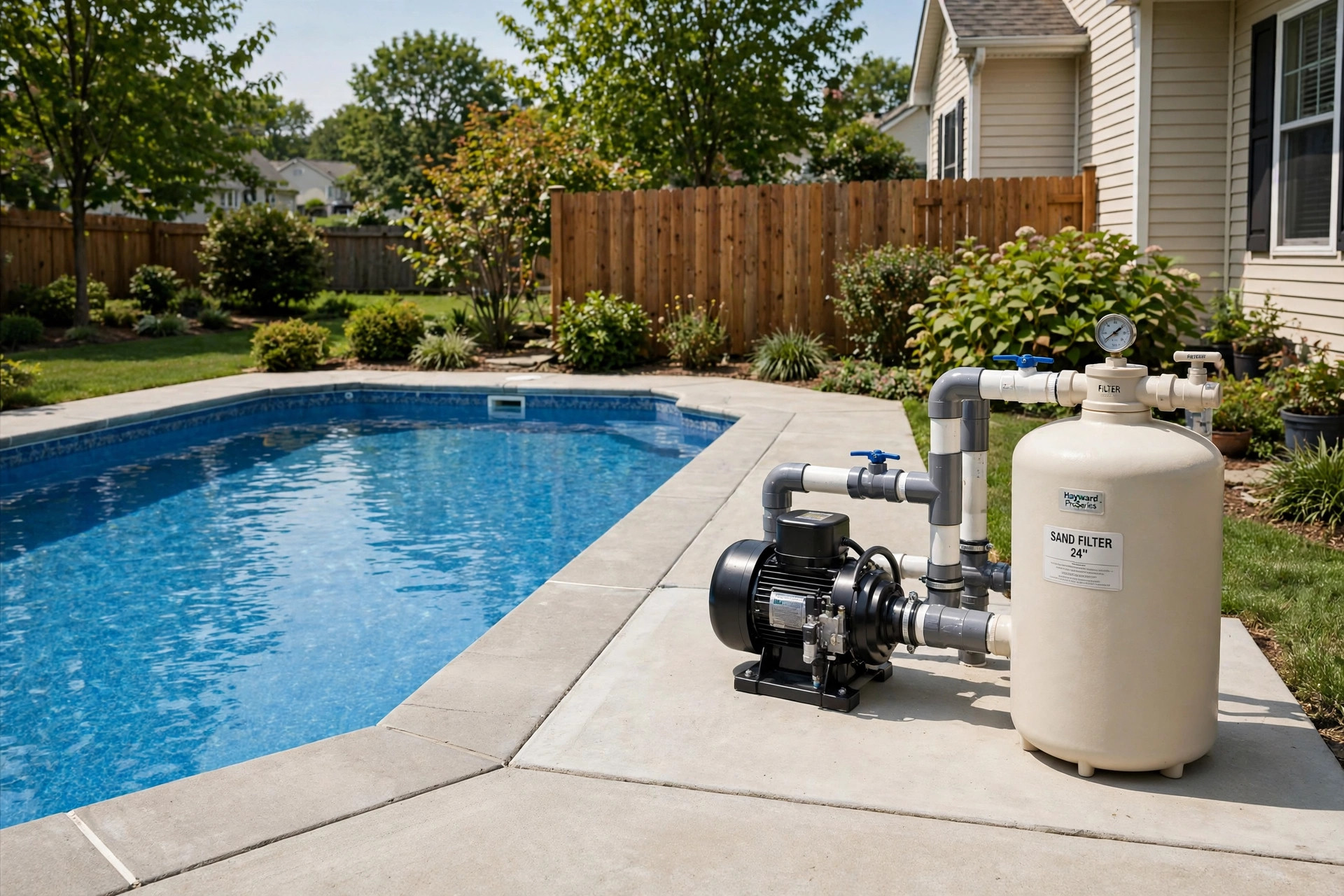
A swimming pool brings fun and rest, but it also adds to the electric bill. The pool pump is the part of the pool that uses the most power. Many owners ask what the pool pump running cost per month will be before they buy a pump, and many more ask after the first high bill arrives. The answer depends on the size of the pump, the hours it runs each day, and the price of power in your area. With a little math, you can find your own number in a few minutes.
Why It Matters
The pool pump moves water through the filter. It runs every day in the swim season, often for many hours. Because it runs so long, even a small change in pump power or run time makes a big change in the bill. A pump that runs eight hours a day is like running a hair dryer for eight hours. The cost adds up fast.
Knowing the pool pump running cost per month helps you plan. If you know the number, you can decide how long to run the pump, when to run it, and whether a new pump would pay for itself. It also helps you spot problems. If the bill jumps and nothing else changed, the pump may be running too long or working too hard.
How to Work Out Your Own Monthly Cost: Pool Pump Running Cost Per Month
The math is simple. You need three facts.
First, find the watts of your pump. Look at the label on the motor or in the manual. A typical single speed pump draws about 1,500 to 2,000 watts. A large one may draw more.
Second, find your hours per day. Most pools run the pump six to twelve hours a day in summer.
Third, find your price per kilowatt hour. Look at your power bill. In the United States, most homes pay between 12 and 25 cents per kilowatt hour.
Now do the math in three steps.
1. Divide the watts by 1,000 to get kilowatts. A 1,500 watt pump is 1.5 kilowatts. 2. Multiply kilowatts by hours per day, then by 30 days. That gives the kilowatt hours used in a month. 3. Multiply that by your price per kilowatt hour.
An example makes it clear. A 1.5 kilowatt pump running eight hours a day uses 1.5 times 8, which is 12 kilowatt hours per day. Times 30 days, that is 360 kilowatt hours a month. At 17 cents per kilowatt hour, the pool pump running cost per month is 61 dollars and 20 cents.
Run the same math with your own numbers and you will have your answer. A simple guide to pool pump types can help you read the label on your motor if the watts are not clear.
What Drives the Cost Up or Down
Four main facts set the cost.
Pump size. A bigger motor draws more watts. Many pools have pumps that are larger than they need. An oversized pump costs more to run and does not clean the pool better.
Run time. Each extra hour adds to the bill. A pump that runs twelve hours a day costs twice as much as the same pump running six hours. Many pools stay clear with fewer hours than owners think.
Power price. The price of power varies by state and by time of day. Some power plans charge less at night. Running the pump at night can cut the bill if your plan works that way.
Pump type. Old single speed pumps run at full power all the time. New variable speed pumps slow down when full power is not needed. A slow pump uses far less power, since power use drops fast when speed drops. A variable speed pump can cut the pool pump running cost per month by half or more in many pools.
Types of Pool Pumps and What They Cost to Run
Single speed pumps. These are the old standard. They run at one speed, full power, all the time. They are cheap to buy but dear to run. Most older pools have one. A single speed pump is often the reason for a high pool pump running cost per month.
Two speed pumps. These pumps have a high speed and a low speed. The low speed is used for daily filtering and the high speed for jobs like vacuuming. The low speed uses much less power. These pumps cost more than single speed pumps but less than variable speed pumps.
Variable speed pumps. These pumps can run at many speeds and adjust to the job. For normal filtering, they run slow and quiet. They are the most dear to buy but the cheapest to run. In many states, new pumps must now be variable speed by law. The savings on the power bill often pay back the higher price in one or two swim seasons.
For more on sizing and speed choices, see this guide to choosing a pool pump. If you also run a heater, you may want to read about pool heaters for inground pools and how they add to the total.
Cost and Price Ranges
Across the country, the pool pump running cost per month for a typical home pool lands between 40 and 150 dollars. A small above ground pool with a small pump on a short run time may cost 25 to 40 dollars a month. A large inground pool with a big single speed pump running long hours can cost over 150 dollars a month in areas with dear power.
Variable speed pumps change this picture. The same pool that costs 100 dollars a month with a single speed pump may cost 30 to 50 dollars a month with a variable speed pump set to run slow for long hours. Slow water flow for more hours filters just as well as fast flow for fewer hours, and it uses far less power.
The price of the pump itself matters too. A single speed pump may cost 300 to 600 dollars. A variable speed pump may cost 800 to 1,500 dollars. The higher price is often paid back by the lower pool pump running cost per month.
Ways to Lower the Monthly Cost
You do not always need a new pump to save money. Try these steps first.
Shorten the run time. Most pools need the full volume of water to pass through the filter once or twice a day. That is called a turnover. Work out your turnover time and set the pump to run only that long. Many pools run far longer than needed.
Run at off peak hours. If your power company charges less at night, run the pump after ten at night. Check your bill or call your power company to ask about time of use plans.
Clean the filter and baskets. A dirty filter makes the pump work harder. Clean the skimmer basket and pump basket each week. Backwash or clean the filter when the gauge rises.
Check the pipes. Leaks, clogs, and blocked returns make the pump work hard. A quick look at the equipment each month catches small problems early.
Consider a variable speed pump. If your pump is old, this is the single best step. The savings are large and steady. Many pool owners report that their pool pump running cost per month falls by 50 to 70 percent after the change.
For pools with salt water systems, keep the filter in good shape too, since a clean filter helps the whole system run well. A guide to pool filters for saltwater systems can help you match the filter to the pump.
Care and Upkeep
A pump that is cared for runs better and lasts longer. Listen to the motor each week. A loud hum or a grinding sound can mean worn bearings. Feel for too much heat. A motor that runs very hot may be failing or blocked.
Keep the area around the pump clear of leaves and junk. Make sure air can reach the motor vents. Shade the pump from hot sun if you can. Heat shortens the life of the motor.
Prime the pump after cleaning. A pump that runs dry can be ruined in a short time. If the pump loses prime often, look for air leaks in the pipes or a bad lid seal.
Have the pump looked at by a pool pro once a year. A pro can check the seal, the wiring, and the run time setting. This small service can stop a small fault from becoming a dead pump.
Safety
Pool equipment runs on high voltage power near water. That mix must be treated with care. Never open the pump or touch the wires with the power on. Turn off the breaker before you work on the pump, the filter, or the timer. Keep the cover on the electrical box.
Ground fault protection is a must for pool equipment. If your pump is not on a ground fault breaker, have an electrician add one. It cuts power in a split second if current leaks, and it can save a life.
Tie down loose gear before storms. A pump lid left loose can blow off and let air into the system. Keep pool chemicals away from the motor. Chlorine and acid fumes eat metal parts.
Learn the basic rules of pool safety for your family too. A pool alarm and a locked fence add layers of safety around the water.
Frequently Asked Questions
How many hours should my pool pump run each day? Most pools need six to ten hours a day in summer. The right number depends on pool size, pump flow, and how much the pool is used. Work out your turnover time and set the timer to match it. In winter, closed or covered pools may need only two to four hours a day.
What is the average pool pump running cost per month in the United States? For a typical inground pool with a single speed pump, most owners pay between 60 and 120 dollars a month in the swim season. With a variable speed pump, the range drops to 25 to 60 dollars a month. Your own number comes from the watt, hour, and price math shown above.
Does a variable speed pump really save that much money? Yes, in most pools. Power use drops sharply as pump speed drops. Running at half speed uses far less than half the power. Many owners cut their pool pump running cost per month by half or more. The savings often pay for the pump in one to two seasons.
Is it cheaper to run the pump at night? It can be, if your power company has time of use rates with cheap night power. Night running also helps keep the pool water clear by filtering when no one swims. Check your power plan before you change the timer.
Can I run my pump fewer hours without harming the pool? In most cases, yes. The key is full turnover of the water. If the water stays clear and the chemicals stay balanced, the run time is enough. Cut back one hour at a time and test the water each few days until you find the right level.
Why did my electric bill jump this month? Common causes are a timer stuck on, a pump left running around the clock, a dirty filter, or a new rate from your power company. Check the timer first. Then clean the filter and baskets. If the bill stays high, have a pro check the pump.
A Final Word
The pool pump running cost per month is not a mystery. It comes from three simple facts: the watts of the pump, the hours it runs, and the price of power. Work out your number, trim the run time, and keep the gear clean. If the pump is old and single speed, a variable speed pump is often the best money you can spend on the pool. A clear pool and a fair power bill can go together.
For more background, see The Home Depot, U.S. Consumer Product Safety Commission, and Leslie’s Pool Supplies. For more background, see Pool Warehouse, Swim University, and Hot Spring Spas. Buying guides are also published by Bullfrog Spas and The Spruce.
References
Bullfrog Spas. (n.d.). Hot tubs and spas. https://www.bullfrogspas.com Hot Spring Spas. (n.d.). Hot tubs and spas. https://www.hotspring.com Leslie’s Pool Supplies. (n.d.). Pool supplies and equipment. https://www.lesliespool.com Pool Warehouse. (n.d.). Pool equipment and supplies. https://www.poolwarehouse.com Swim University. (n.d.). Pool and hot tub care guides. https://www.swimuniversity.com The Home Depot. (n.d.). Home improvement products. https://www.homedepot.com The Spruce. (n.d.). Home and garden advice. https://www.thespruce.com U.S. Consumer Product Safety Commission. (n.d.). Product safety information. https://www.cpsc.gov
Was this guide helpful?

About Emily Rodriguez
The My Garden US editorial team writes practical, in-depth home and garden guides for American homeowners — tested advice, no fluff.