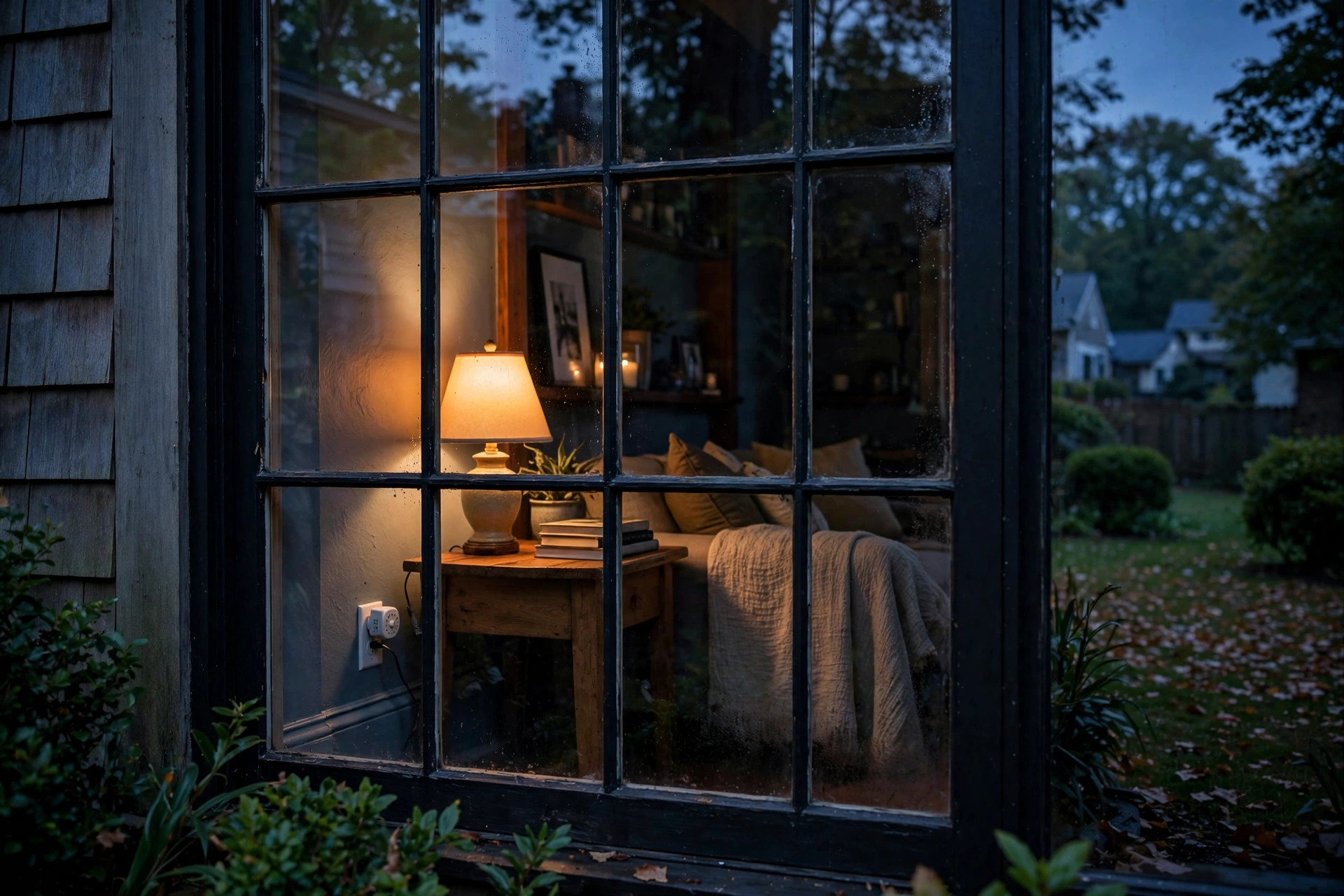
A dark house tells a plain story. No lights at dusk. No lamp in the window. Anyone who walks past can read the sign: nobody is home. The best timer for lights when away, reviewed by many American shoppers, solves this problem for a small price. It turns lamps on and off by itself, on a schedule you set. The house looks lived in. You can be across town or across the country and still keep the front room glowing.
This guide reviews the choices and explains how to pick one. It covers plug-in timers, wall-switch timers, and smart timers. It covers cost, safety, and care. It answers common questions from real buyers in the United States.
Why It Matters
A home that stays dark night after night draws notice. Delivery drivers see it. Strangers see it. Most break-ins are crimes of opportunity, and an empty-looking house is an open invitation. Security writers have said for years that a lit window is one of the cheapest guards a home can have. A timer gives you that light without waste.
Tim timers do more than scare off trouble. They protect pipes in winter when paired with a small lamp near a cold room. They welcome you home after a late trip with a lit hall. They let a pet feel less alone in the evening. Many owners pair a light timer with a best wireless doorbell camera reviews usa setup so they can see the front step too.
A timer also saves energy. You do not leave lamps burning all night while you are gone. The timer runs them only in the hours you choose. The savings are small per lamp, but they add up over a two-week trip.
What to Look For When You Choose: Best Timer for Lights When Away Reviews Usa
Start with the lamp you want to control. A simple table lamp takes a simple plug-in timer. A porch light or a bath fan hard-wired to the wall needs an in-wall timer switch. Do not mix the two.
Check the load rating. Every timer lists a maximum wattage or amperage. Old incandescent bulbs draw far more than modern LED bulbs. A timer rated for 1,800 watts at 15 amps is fine for most lamps, but read the label before you buy. Oversizing is safe. Undersizing is not.
Decide how much control you want. The cheapest dial timers repeat the same on-off pattern every day. Digital timers let you set a different plan for weekends. Smart timers let you change the plan from your phone and can randomize the timing so the pattern does not look mechanical. Reviewers at PCMag note that randomization is one of the most useful features a timer can have, because a lamp that clicks on at exactly 7:00 every evening fools no one who watches for long. See PCMag for their latest smart home roundups.
Look for battery backup. A timer with a small built-in battery keeps its clock through a power outage. A timer without backup forgets everything and may stay off for the rest of your trip. This one feature separates good vacation light timer reviews from poor ones.
Check indoor versus outdoor use. A porch timer must be rated for weather. An indoor timer will fail fast in rain and can be unsafe. The safety listings on the package will say which one you are buying.
Finally, check ease of setup. The best timer for lights when away should take five minutes to program, not an hour. Many buyers in reviews say the timer worked fine but the setup took a whole evening. Pick one with clear buttons or a clean app.
Types of Timers on the Market
Mechanical Plug-In Timers
The old round dial timer is the grandparent of the group. You push small tabs down around the dial to mark on-hours, then plug it into the wall and plug your lamp into it. It turns every 24 hours and repeats. Cost is low. Batteries are not needed. The drawbacks are noise, a visible tick, and the same schedule day after day. Reviewers still recommend them as a second line of defense for a garage or a back room. The CPSC reminds buyers to check that any plug-in device carries a proper safety listing before use; see U.S. Consumer Product Safety Commission.
Digital Plug-In Timers
Digital models use a small screen and buttons. You can set several on-off programs per day and different plans for different days. Most keep time with a battery backup. They cost more than dial models but remain under the price of a meal out. Buyers praise them in reviews for precision and quiet operation. They are the workhorse choice for a living room lamp while you are on a trip.
In-Wall Timer Switches
These replace a standard light switch on the wall. They control porch lights, hall lights, and bath fans that are wired in. Some have small dials behind a flip cover. Newer ones are digital with touch pads. They look built in and never walk away from the outlet. They cost more and need basic wiring skill or an electrician. Homeowners who want a clean look choose these for the front of the house, where the light matters most for curb appeal.
Smart Timers and Smart Plugs
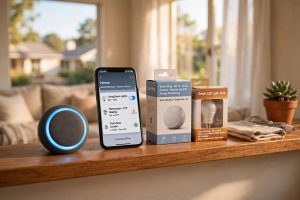
Smart models connect to your home Wi-Fi or to a hub. You set schedules in a phone app, add random offsets, and turn the lamp on yourself from anywhere in the world. Some read sunset times from the internet and shift the schedule through the year. Others pair with voice assistants. Reviewers at CNET and The Verge test these units for app quality and reliability; see CNET and The Verge. The trade-off is dependence on your home network. If the router drops during your trip, most smart timers keep their last program, but check the fine print. Buyers who already run a video doorbell or a smart lock often add a smart timer to the same system, since the pieces work as a team. Ring and SimpliSafe both sell ecosystems where a lamp timer can sit beside cameras and alarms; see Ring and SimpliSafe.
Whole-Home Systems and Solar Options
Some security companies, such as ADT, fold lighting schedules into a monitored package; see ADT. These cost more but come with service. For porches and paths, solar lights with dusk sensors need no timer at all. They charge by day and glow by night. They do not replace a timed indoor lamp, but they are a fine partner.
Cost and Price
Prices in the United States fall into three bands. Mechanical plug-in timers run about five to fifteen dollars. Digital plug-in timers run about fifteen to forty dollars. Smart timers and in-wall digital switches run about twenty-five to sixty dollars or more, plus an electrician if you need one.
Two timers will cover most homes: one for the living room and one for a bedroom or bath. A full setup with a smart hub runs under two hundred dollars. Compare that with a single night of a house sitter, and the timer pays for itself on the first trip.
Do not buy on price alone. The cheapest no-name timers draw the most complaints in reviews: lost programs, loud clicks, pins that fall out. A mid-priced timer from a known maker with a safety listing is the better buy. Consumer Reports has long tested small electrical devices for safety and reliability; see Consumer Reports.
Where you buy matters little. Hardware stores, big-box retailers, and online shops all carry the same brands. Keep the receipt until the timer survives one full trip.
Care and Upkeep
A light timer asks for almost nothing. Once a year, check the program still matches your plan. Daylight saving time shifts the clock on models without auto-adjust; reset them in spring and fall.
Wipe dust from plug pins and vents. A timer buried under a rug or behind a curtain of dust runs hot. Keep it in the open air.
Test before every long trip. Set the timer, watch one full on-off cycle, and ask a neighbor to glance at the window the first evening. This five-minute test catches dead batteries and bad programs.
Replace batteries on schedule. If your digital timer uses a coin cell, swap it once a year. If it uses rechargeable backup, let it charge for a full day on the wall before a trip.
For smart timers, keep the app updated and check the Wi-Fi signal at the outlet. A timer at the far end of the house on a weak signal may miss its cues. A simple range extender can fix it. Google’s store lists current smart home options that work with its platform; see https://store.google.com.
Safety
Light timers are low-risk devices, but they sit on live power and deserve respect.
Buy only timers with a recognized safety listing such as UL. The mark should be printed on the unit, not just on the box. The CPSC tracks recalls of electrical products; check U.S. Consumer Product Safety Commission before buying an unknown brand.
Respect the load rating. Never plug a space heater, a toaster, or any heat-making appliance into a light timer. Heaters draw far more current and can melt the timer. This is the most common cause of timer fires, and reviews of burn cases almost always trace back to a heater on a lamp timer.
Do not chain timers together or stack them on a power strip. One timer, one outlet, one lamp.
Keep timers away from water. A bath timer must be rated for damp locations. Never handle a plug-in timer with wet hands.
Unplug the timer before you change its program pins or wipe it down.
If a timer smells hot, buzzes loudly, or shows burn marks, throw it away. A ten-dollar timer is never worth a risk to the house.
Owners who worry about overall home safety often pair timers with wider security steps. A best video intercom system for home usa lets you speak to visitors from afar, and steady lighting makes the whole setup more convincing.
Frequently Asked Questions
Will a light timer really fool a burglar?
No device guarantees safety. But a lamp that glows at dusk makes a house look occupied, and most thieves prefer an empty house. Police and security writers agree that lighting is one of the cheapest deterrents. Pair the timer with locked doors, closed blinds at night, and stopped mail for best effect.
How many lamps should I put on timers?
Two is enough for most homes. Put one in the living room near the front window and one in a bedroom. A third on a back-room lamp adds depth. Too many timers on one circuit is fine electrically if the loads are small, but keep the total under the rating of each timer and the circuit.
Can I use a timer with LED bulbs?
Yes. LED bulbs draw very little power and work well with modern timers. Some old mechanical timers need a minimum load to switch cleanly, so a tiny LED night light alone may flicker. A normal LED table lamp is fine. Check the timer’s instructions for LED compatibility notes.
Do smart timers work if the internet goes out?
Most keep running their stored program without the internet. You cannot change the program remotely until the connection returns. Battery backup keeps the clock alive through short outages. This is one reason many reviewers still suggest a simple digital timer as a backup for the most important lamp.
Should the schedule be the same every day?
Better to vary it. Smart timers can add a random offset of ten or twenty minutes around your set times. With a mechanical timer, you can shift a few pins by hand before each trip. The goal is a house that behaves like people, not like a clock. This detail shows up in almost every set of best timer for lights when away reviews usa buyers post online.
Can a timer control outdoor lights?
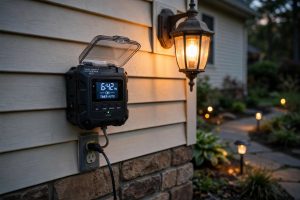
Yes, if the timer is rated for outdoor use. Many makers sell weatherproof digital timers for porches, paths, and holiday lights. Indoor-only timers must never go outside. For year-round outdoor lighting, consider dusk-to-dawn sensors or solar lights as a partner to your indoor timers. A best smart dehumidifier with pump reviews usa is a different kind of set-and-forget device, but the idea is the same: let the machine watch the house while you are gone.
A Short Final Word
The best timer for lights when away is the one you will actually use. A simple dial timer, set with care, beats a smart hub that never got programmed. Start with one good plug-in timer for the front room. Test it. Then add a second for the back of the house. For the price of a pizza you buy a lit window, a calmer trip, and a house that keeps its own hours while you are gone.
References
ADT. (n.d.). Home security and automation. https://www.adt.com CNET. (n.d.). Technology news and reviews. https://www.cnet.com Consumer Reports. (n.d.). Product reviews and ratings. https://www.consumerreports.org Google Store. (n.d.). Smart home devices. https://store.google.com PCMag. (n.d.). Technology product reviews. https://www.pcmag.com Ring. (n.d.). Smart home security devices. https://www.ring.com SimpliSafe. (n.d.). Home security systems. https://www.simplisafe.com The Verge. (n.d.). Technology news and reviews. https://www.theverge.com U.S. Consumer Product Safety Commission. (n.d.). Product safety information. https://www.cpsc.gov
Was this guide helpful?

About Lisa Anderson
The My Garden US editorial team writes practical, in-depth home and garden guides for American homeowners — tested advice, no fluff.