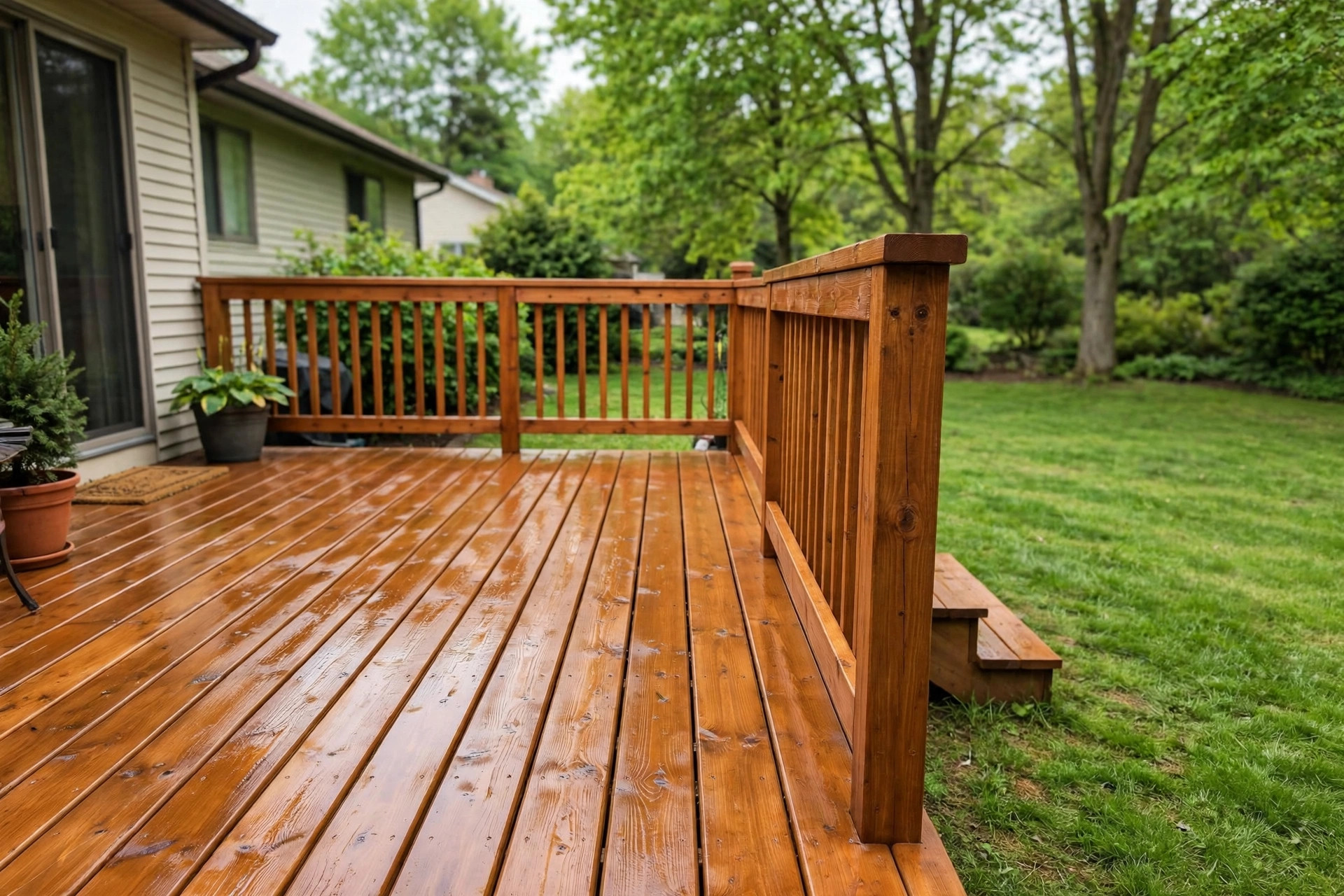
A wood deck is one of the great comforts of the American home. It is the place for morning coffee, for summer dinners, and for quiet evenings with family. But sun, rain, and snow attack wood day after day. Without a good finish, a deck will gray, crack, and rot within a few short years. That is why so many homeowners search for the best exterior wood stain for decks usa stores carry. A sound stain keeps water out, slows sun damage, and gives the wood a warm, even color. This guide explains, in plain terms, what makes a deck stain good, which types exist, what they cost, and how to pick the right one for your own deck.
Why a Good Deck Stain Matters
Wood is a living material even after it is cut. It drinks water when it rains and lets it go when the sun comes out. This endless swelling and shrinking opens small cracks. Water enters the cracks. Fungus follows. Boards warp, cup, and in time must be replaced. Paint hides this damage for a while, but paint sits on top of the wood and peels when the surface moves.
Stain works in a different way. Most deck stains soak into the wood rather than sitting on it. They carry pigments and resins deep into the fibers. The result is a deck that can still breathe and flex while resisting water and the ultraviolet rays of the sun. A deck treated with the best exterior wood stain for decks usa weather can handle will last many more years than one left bare. The cost of a stain is small when set beside the cost of a full deck rebuild.
How to Choose: What to Look For: Best Exterior Wood Stain for Decks Usa
Shopping for stain can be confusing. The shelves hold dozens of cans. A few simple rules make the choice easy.
Opacity: Transparent, Semi-Transparent, or Solid
Transparent stains show nearly all the wood grain. They offer the least protection against the sun, but they look the most natural. Semi-transparent stains let the grain show through while adding more color and more sun defense. Solid stains look much like paint, cover the grain, and give the most protection. For a new deck of good lumber, most pros suggest a semi-transparent stain. For an older deck with gray patches and marks, a solid stain hides the flaws.
Oil-Based or Water-Based
Oil-based stains sink deep into wood. They are often praised for rich color and long life. Water-based stains dry faster, clean up with soap and water, and smell less. In some states, rules limit the sale of oil-based products, so read the label where you live. Either kind can serve well if applied right.
Climate and Wood Type
The United States has many climates. A deck in Arizona faces hard sun. A deck in Oregon faces long rain. In sun-heavy states, pick a stain with strong UV blockers. In wet states, pick one that resists mildew and lets water bead off. Pressure-treated pine, cedar, and redwood are the common deck woods. Cedar and redwood hold stain well and need less prep. Pressure-treated pine should dry for a few months after building before staining.
Ease of Use
Some stains need only one coat. Some need two. Some dry in four hours; others need a full day before rain can fall. Check the can for drying time and recoat time. If your weekends are short, a fast-drying water-based stain may suit you better. Also think about color. A dark stain hides dirt and gives an old deck a fresh face, but it also gets hot under bare feet in summer. A light, natural tone stays cooler and shows off the grain of cedar or redwood. Bring home a few small sample cans and test them on a hidden board before you commit to a full five gallons.
Types of Deck Stain Explained
The best exterior wood stain for decks usa buyers can find will belong to one of these groups.
Semi-transparent penetrating stains. These are the classic choice. They enter the wood, add color, and show the grain. They fade slowly over two to three years rather than peeling. A light cleaning and a fresh coat brings them back. For most decks, this is the sweet spot of looks and care.
Transparent water repellents. These add very little color. They suit owners who love the look of bare wood. They must be redone often, sometimes every year, because the sun breaks them down fast.
Solid color stains. These cover the wood like paint but still let moisture pass through, which lowers the risk of peeling. They are kind to old decks with stains and patches. Expect three to five years of service.
Two-in-one stain and sealer products. Many modern stains promise to stain and seal in one step. They are simple to use and do a fair job. Read reviews to see how they hold up in real weather.
If you want to compare brands before you buy, the BEHR deck stain line offers a wide range of colors made for outdoor wood. Benjamin Moore deck products are another old and trusted name. Sherwin-Williams deck finishes are sold in stores across the country and are known for solid color coverage.
Cost and Price: What to Expect
A gallon of deck stain in the United States usually costs between thirty and seventy dollars, with top brands near the top of that range. One gallon covers about two hundred to three hundred square feet on rough wood, or up to four hundred square feet on smooth wood. A medium deck of four hundred square feet may need three to five gallons for two coats.
Hiring a pro adds labor. A full clean-and-stain job often runs from one thousand to two thousand dollars for an average deck, depending on size and condition. Doing it yourself costs far less, mostly your time and the price of the cans.
To plan your budget, it helps to look at real service prices. Read our guide on deck staining cost calculator near me to see how pros price the work. If you also need a fence refreshed, see fence staining service near me prices for typical rates.
Preparing the Deck Before You Stain
No stain, however good, will work on a dirty or damp deck. The prep work matters as much as the can you buy.
1. Sweep the deck clean of leaves and dirt. 2. Wash with a deck cleaner or a mild mix of oxygen bleach and water. A pressure washer helps, but keep the nozzle moving and stay at a safe distance so you do not gouge the wood. 3. Let the deck dry fully, usually two to three dry days. 4. Sand rough spots and raised grain with coarse sandpaper. 5. Check the weather. Apply stain when the temperature is between fifty and ninety degrees, with no rain in the forecast for at least one full day.
Take your time with this stage. Most stain failures come from poor prep, not from a bad product.
Applying the Stain
Brush, roller, or pad applicator all work. Many pros prefer a wide brush or a stain pad because it pushes the product into the grain. Work in small sections, one or two boards at a time, and keep a wet edge so you do not get dark lap marks. Start at the far side of the deck and work toward the house so you never paint yourself into a corner.
Two thin coats are better than one thick coat. A thick coat sits on the surface and may peel. Follow the directions on the can for time between coats. For ideas on related surfaces, our porch and patio paint buying guide usa covers finishes for concrete and wood porches.
Care and Upkeep Through the Years
A stained deck needs little care, but it needs some.
– Sweep often. Wet leaves left on a deck trap water and grow mildew. – Wash once a year with a deck cleaner and a garden hose. – Move planters and mats now and then so the wood colors evenly. – Check for loose boards, popped nails, and soft spots each spring. Fix small problems before they grow. – Recoat when water no longer beads on the surface. A simple splash test tells you: pour a little water on the deck. If it soaks in dark, it is time to restain.
With this simple routine, a deck can look good for decades.
Safety Notes
Work safe. Stain fumes can be strong, so work on a breezy day and wear a mask rated for vapors. Wear gloves to protect your skin. Keep rags used with oil-based stain spread out flat to dry before you throw them away; a pile of oil-soaked rags can catch fire on its own. Store cans away from heat and out of the reach of children. Never pour leftover stain into a storm drain. Let it dry out and take it to your local hazardous waste drop-off.
Good building advice is easy to find. The This Old House site offers clear guides for deck care and repair. Bob Vila also keeps a deep library of deck maintenance articles.
Frequently Asked Questions
How often should I restain my deck? Most stains last two to four years. Solid stains last longer. A quick water test each spring tells you when the time has come.
Can I stain over old stain? Yes, if the old finish is sound. Clean the deck well and apply a fresh coat of the same or a similar product. If the old stain is peeling or flaking, strip it first.
Should I use a stain or a paint on my deck? Stain is the better pick for most decks because it soaks in and does not peel. Paint can work on rails and steps, but it peels on walking surfaces when water gets under it.
What is the best time of year to stain a deck? Spring and early fall are best in most states. Avoid the heat of mid-summer, when stain can dry too fast and leave marks, and avoid cold days near freezing.
How long must I wait after rain before staining? Wait two to three full dry days. The wood must be dry deep down, not just dry on top. A moisture meter reading under fifteen percent is ideal.
Can I stain pressure-treated wood right away? No. New pressure-treated lumber is wet from the mill. Give it two to three months of dry weather first, or test with the water drop method.
A Short Final Word
The best exterior wood stain for decks usa homeowners can buy is the one that fits your wood, your weather, and your patience for upkeep. A semi-transparent stain is the safe middle choice for most decks. Prep the surface well, apply two thin coats on a mild dry day, and your deck will reward you with years of good looks. Before you shop, browse Lowe’s deck stain options, Home Depot deck stain options, The Spruce deck stain reviews, and HGTV deck care guides to compare colors and prices. Your deck is an outdoor room. Treat it like one.
References
Behr. (n.d.). Paints, primers, and stains. https://www.behr.com Benjamin Moore. (n.d.). Paints and stains. https://www.benjaminmoore.com Bob Vila. (n.d.). Home improvement advice. https://www.bobvila.com HGTV. (n.d.). Home and garden ideas. https://www.hgtv.com Lowe’s. (n.d.). Home improvement products. https://www.lowes.com Sherwin-Williams. (n.d.). Paints and coatings. https://www.sherwin-williams.com The Home Depot. (n.d.). Home improvement products. https://www.homedepot.com The Spruce. (n.d.). Home and garden advice. https://www.thespruce.com This Old House. (n.d.). Home renovation guidance. https://www.thisoldhouse.com
Was this guide helpful?

About Sarah Mitchell
The My Garden US editorial team writes practical, in-depth home and garden guides for American homeowners — tested advice, no fluff.