The best pool ladder for inground pools is the one that fits your pool wall, holds your weight, and stays firm when you step on it. A good ladder makes it easy to get in and out of the water. A bad one can move, bend, or hurt bare feet. This guide explains what to look for, what types exist, what they cost, and how to keep one in good shape for many years.
Why Your Pool Ladder Matters
An inground pool is a fine place to spend the summer. But every swimmer must get in and out of the water. Most people use the ladder many times a day. Children climb it fast. Older swimmers lean on it hard. Guests trust it without thinking. A weak or loose ladder can cause slips and falls.
A good ladder also protects the pool itself. A ladder that wobbles can scratch the pool wall or tear a vinyl liner. Anchor sockets set in the deck must not crack. The right ladder spreads weight well and stays still. It also helps people with stiff knees or bad backs enter the water with care.
Pool ladders last a long time when chosen well. Many owners keep the same ladder for ten years or more. That makes the first choice an important one. A few hours of study now can save trouble later.
What to Look for When You Buy: Best Pool Ladder for Inground Pools
Strong Material
Most inground pool ladders are made of stainless steel. This metal stands up to pool chemicals and sun. It does not rust the way plain steel does. Look for 304 or 316 grade stainless steel. The 316 grade costs more but fights salt water and heavy chemical use better. It is a sound pick for salt water pools.
Some ladders use resin or heavy plastic for the steps. These steps stay cooler under the sun and feel kind to bare feet. Metal rails with plastic steps give a mix of strength and comfort.
Steps That Do Not Slip
Steps should have a rough or ridged surface. Wet metal gets slick fast. Many good ladders add slip-resistant tread to each step. Wide steps are easier on feet than thin rungs. Look for steps at least four inches deep. Five inches is better for older swimmers.
Weight Limit
Check the weight limit before you buy. Most good ladders hold 250 to 300 pounds. Some heavy-duty models hold 400 pounds or more. The limit should cover the largest person who will use the pool, plus the extra force of climbing. Water adds drag, and a wet swimmer pulls hard on the rails.
Fit With Your Pool
Ladders come in set sizes. The height of the rails must match the depth of your pool at the spot where the ladder will sit. A ladder made for a shallow end will not reach the floor in the deep end. Measure from the deck to the pool floor. Then match that number to the ladder size. Many makers print a depth range on the box.
Anchors and Sockets
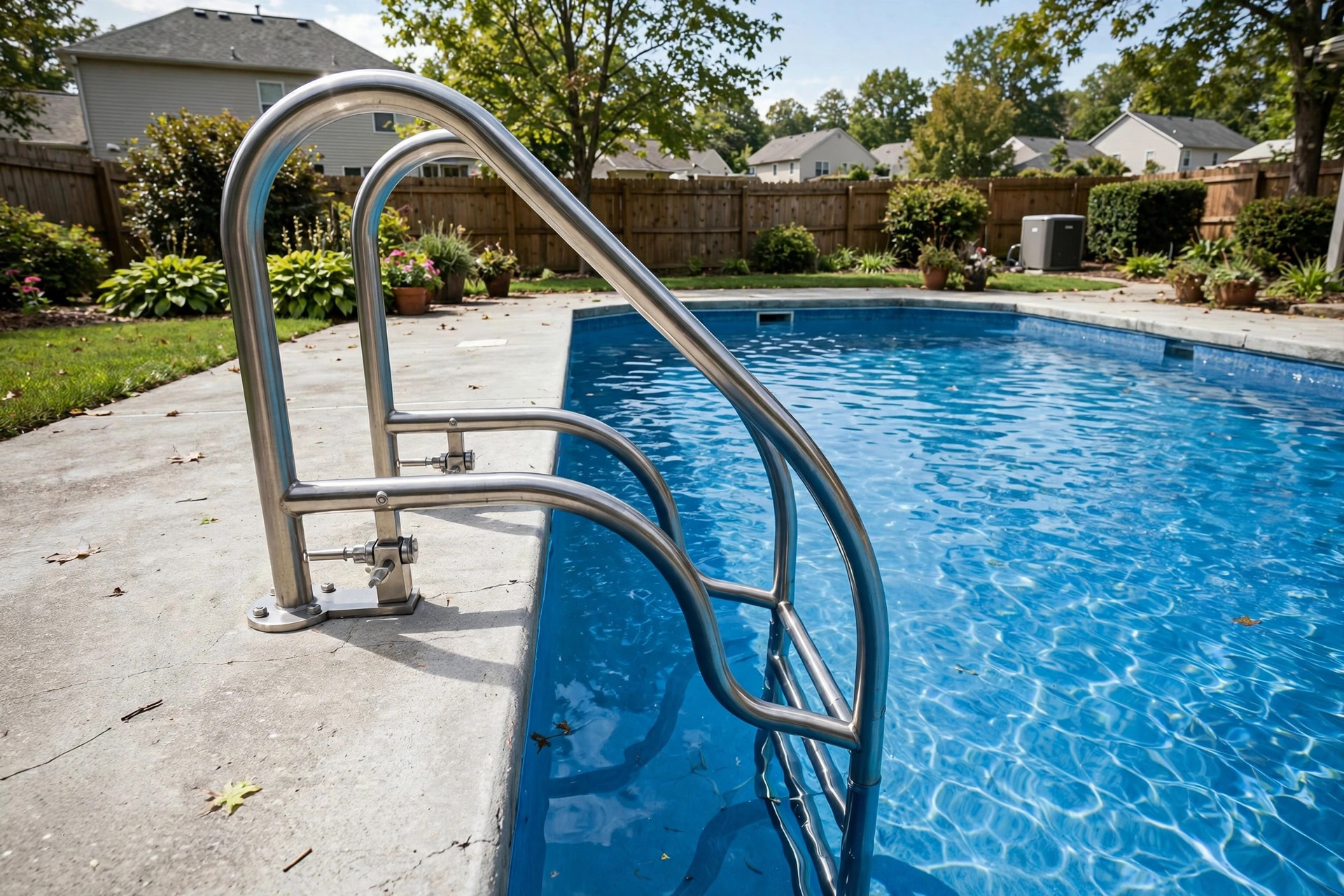
Most ladders fix to the deck with anchor sockets. These are metal cups set into the concrete. The ladder legs slide into the cups and are held by bolts. Check that your deck has sockets, or plan to have them set. Some ladders use a clamp that grips the pool coping instead. These are simpler to fit but may move more. Guides at Pool Warehouse explain the common anchor types in plain terms.
Types of Inground Pool Ladders
Standard Two-Rail Ladders
This is the common type. Two curved rails rise from the deck, and three or four steps hang between them. It suits most home pools. It costs less than other types and fits standard anchor sockets.
Ladders With Handrails Only
Some pools use a pair of grab rails with steps built into the pool wall. The rails give a firm grip while swimmers use the recessed steps. This style looks neat and takes little room on the deck. It works best when the pool was built with step recesses in the wall.
Wide-Step Ladders
These ladders use broad plastic or stainless steps that feel like small stairs. They are kind to feet and easy to climb. Many are made for the shallow end. They cost more, but families with children or older swimmers often find the price worth it.
In-Wall and Deck-to-Water Models
Some ladders bend in a full curve from the deck down to the pool floor. They give a strong grip all the way down. They suit pools with a deep end entry. Check the turn radius against your deck space before you buy.
Salt Water Models
Salt water pools need 316 grade stainless steel or coated rails. Salt eats lesser metal in a few seasons. If your pool uses a salt system, do not buy a standard 304 grade ladder to save money. The higher grade pays for itself in longer life. Reviews and care notes at Swim University cover how salt affects pool metal.
How Much a Good Ladder Costs
Prices run from about 150 dollars to over 600 dollars. A plain stainless ladder with three steps often sells for 150 to 250 dollars. A wide-step model or a 316 grade model often runs 300 to 500 dollars. Top models with extra-wide steps and heavy anchors can pass 600 dollars.
Big stores such as Home Depot carry several models, so you can compare prices in one place. Pool supply shops such as Leslie’s often stock a wider range and can order parts. Price is only part of the cost. You may also pay for anchor sockets, a core drill to set them, or a handyman to do the work. Plan 50 to 150 dollars for fitting if you do not do it yourself.
Cheap ladders tempt many buyers. A very low price often means thin rails and weak welds. In pool gear, as in most things, you get what you pay for. A mid-range ladder from a known maker is usually the best value.
Care and Upkeep
A pool ladder needs little care, but small habits add years to its life.
Rinse the ladder with fresh water once a week. Pool chemicals dry on metal and dull the finish. A quick hose rinse takes one minute. Once a month, wipe the rails with a soft cloth and a mild cleaner. Do not use steel wool or harsh pads. They scratch the surface and let rust start.
Check the anchor bolts each spring when you open the pool. Bolts can work loose over winter. Tighten them with a wrench. Look at the rubber bumpers or escutcheons where the rails meet the deck. Cracked bumpers let water seep into the sockets. Replace them when they show wear.
Watch for rust spots, most often at welds. Small spots can be cleaned with a paste of baking soda and water. If rust spreads under the surface, the rail may be failing. Replace the ladder before it breaks. Many owners find step-by-step seasonal checklists at The Spruce helpful for pool opening and closing.
When you close the pool for winter, lift the ladder out if you can. Store it in a dry shed or garage. This one habit does more for ladder life than any cleaner. If the ladder must stay out, cover the rails with a simple tarp tied firm against wind.
Safety First
The U.S. Consumer Product Safety Commission urges pool owners to treat every pool as a risk that needs active care. A ladder plays a part in that care.
Teach children to climb down facing the ladder, one step at a time. Do not let them jump from the rails. Keep the steps free of toys and towels. Wet toys on steps cause slips.
Make sure the ladder cannot be used by small children when the pool is closed. Some ladders have a lift-out design or a locking gate for this reason. If your ladder stays in place all season, use a pool fence with a self-closing gate. A ladder alone is never a substitute for a fence.
Check that the ladder does not wobble before each swim season. Stand on the bottom step and shift your weight. Any side play means the anchors or bolts need work. Fix it before anyone swims.
Older swimmers should use ladders with wide steps and firm rails. A helper standing on the deck adds safety. Hot tub and spa makers such as Hot Spring and Bullfrog Spas stress the same point for their steps and rails: enter slow, hold the rail, and never rush.
Matching Your Ladder to Pool Equipment
A ladder is one part of a working pool system. It should suit the rest of your gear. If you run a strong pump, water moves fast near the returns. A ladder near a return jet may catch leaves and need more cleaning. A best pool skimmer for inground pools keeps the surface clear so swimmers see the steps well. Clean water also means you can spot a loose bolt or a cracked step tread before it fails.
Heated pools get more use in cool months. If you heat your water, read about the best pool heater for inground pools to match your heating plan with your swim season. A longer season means more ladder use and more wear, so pick a heavy-duty model.
Vinyl liner pools need extra care at the ladder feet. Sharp feet can press through the liner over time. Use a ladder with rounded foot caps or add a liner guard pad under the legs. Owners of vinyl pools who also run cleaners may like the best robotic pool cleaner for vinyl to keep the floor grit-free, since grit under ladder feet grinds the liner.
Frequently Asked Questions
How many steps should my ladder have?
Most home ladders have three or four steps. Shallow ends need three. Deeper spots need four or five. The bottom step should sit about one foot above the pool floor. If the gap is larger, swimmers must jump down, which is unsafe.
Can I install a pool ladder myself?
Yes, in most cases. You need a drill, a masonry bit, anchor sockets, and basic care. Mark the spot, drill the holes, set the sockets in epoxy or grout, and let them cure fully before you load the ladder. If your deck is thin or cracked, hire a pro. A bad anchor job will fail.
Stainless steel or plastic steps?
Stainless rails last longest. For the steps, plastic tread feels better on bare feet and stays cooler. A mix of steel rails and plastic steps is a popular middle ground. All-plastic ladders cost less but may fade and grow brittle in strong sun after some years.
How do I stop my ladder from wobbling?
First, tighten the anchor bolts. Next, check the sockets for cracks. If the socket moves in the deck, reset it with fresh grout. Some ladders add a brace bar between the rails under the deck. If the rails themselves bend, the ladder is worn out and should be replaced.
Will a ladder damage a vinyl liner?
It can if the feet are sharp or grit gets trapped under them. Use foot caps, keep the pool floor clean, and check the liner near the feet each month. Small wear marks can be patched early. Deep cuts need a pro repair.
How long should a pool ladder last?
A good stainless ladder lasts eight to twelve years with basic care. Salt water and heavy use shorten that span. Ladders left out all winter in harsh climates wear faster. Store the ladder indoors in the off season to reach the long end of that range.
A Final Word
The best pool ladder for inground pools is not the dearest one on the shelf. It is the one that fits your depth, holds your family, and stands firm year after year. Measure your pool, check the weight limit, pick strong metal, and fit it well. Keep it rinsed, keep the bolts tight, and store it dry in winter. Do these simple things and your ladder will serve your pool for a long time.
References
Bullfrog Spas. (n.d.). Hot tubs and spas. https://www.bullfrogspas.com Hot Spring Spas. (n.d.). Hot tubs and spas. https://www.hotspring.com Leslie’s Pool Supplies. (n.d.). Pool supplies and equipment. https://www.lesliespool.com Pool Warehouse. (n.d.). Pool equipment and supplies. https://www.poolwarehouse.com Swim University. (n.d.). Pool and hot tub care guides. https://www.swimuniversity.com The Home Depot. (n.d.). Home improvement products. https://www.homedepot.com The Spruce. (n.d.). Home and garden advice. https://www.thespruce.com U.S. Consumer Product Safety Commission. (n.d.). Product safety information. https://www.cpsc.gov
Was this guide helpful?

About Robert Taylor
The My Garden US editorial team writes practical, in-depth home and garden guides for American homeowners — tested advice, no fluff.