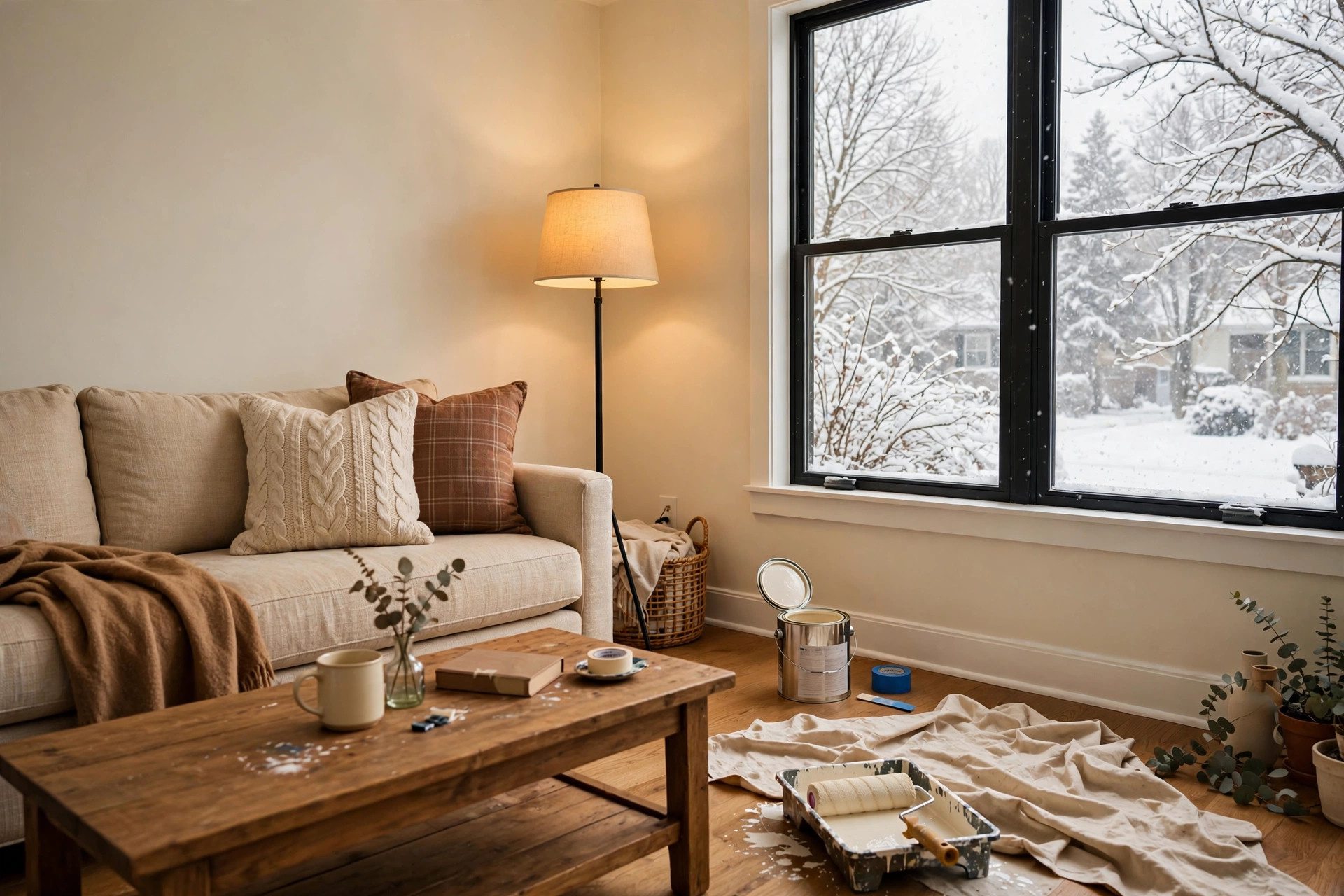

Most people think spring is the season for painting. Winter, though, can be one of the best times to paint the inside of an American home. Painters often have open calendars. Supplies are in stock. Families spend more time indoors and want their rooms to look fresh. These winter interior painting tips for USA homes will help you plan the work, pick the right paint, and get a finish that lasts for years.
Cold weather changes the way paint behaves. The air is dry. The furnace runs all day. Windows stay shut. Each of these things can help or hurt a paint job. A little planning goes a long way.
Why Winter Can Be a Good Time to Paint Indoors
Winter offers steady indoor conditions. In summer, high humidity slows drying. In winter, indoor air in most USA homes is dry, which helps water-based paint cure fast. Furnaces and heat pumps keep room temperature steady day and night. Steady temperature is good for paint.
Contractors are easier to book in winter. Their summer and fall schedules fill fast. In January and February, many painters offer discounts to keep their crews busy. This can lower your cabinet refacing cost per linear foot projects as well, since winter labor rates often drop across the trade.
Paint stores also run sales in the cold months. National chains like Home Depot and Lowe’s clear stock and offer coupons on paint and tools. You can buy premium paint for less money.
There is a catch. Winter air can be too dry in some regions. Paint may dry so fast that brush marks stay visible. Cold outside air can also chill a wall near a window, which changes how paint bonds. These problems are easy to avoid if you follow the tips below.
What to Look for When Choosing Winter Paint: Winter Interior Painting Tips for Usa Homes
Paint type
For winter indoor work, choose a quality latex paint with low volatile organic compounds, called low VOC paint. It gives off less odor. That matters when windows must stay closed. Many makers now sell paints with near-zero VOC. Paint makers such as Sherwin-Williams and Benjamin Moore list VOC levels on the label.
Latex paint dries fast in winter indoor heat. Oil-based paint dries slow and smells strong. It is rarely the right choice for winter rooms in use. Save oil paint for trim work in warm weather with open windows.
Finish
Flat and matte finishes hide wall flaws. They suit bedrooms and living rooms. Eggshell and satin finishes resist stains and clean well. They suit halls, kitchens, and bathrooms. Semi-gloss suits trim, doors, and cabinets. A guide on spray painting kitchen cabinets cost near you can help you weigh whether to spray or brush the cabinet paint.
Color
Winter light is cool and dim. Colors look darker and bluer in January than in July. Test a color on the wall and watch it at morning, noon, and night before you buy gallons. Warm whites, soft grays, and earthy tones feel cozy in winter light. Deep accent walls can also look rich when the sky stays gray.
Types of Winter Painting Projects
Single rooms
A bedroom or office is a fine weekend job. One room keeps the mess small. You can move furniture to the center and cover it with drop cloths.
Whole-home repaints
Winter is a smart time for a full interior repaint. Painters charge less. You avoid the rush of spring. Plan room by room so you always have a clean place to sleep. Move through the house in order: bedrooms first, then baths, then living areas.
Trim, doors, and cabinets
Detail work suits winter well. Trim and doors need steady temperature and low dust. Paint one door at a time so you can still close rooms against the cold. If your cabinets need more than paint, you may want to compare refacing. A cabinet refacing cost per linear foot guide helps you see which option fits your budget.
Decorative finishes
Textured finishes, stripes, and murals all work in winter. The dry air keeps tape edges crisp. Just keep the room warm and let each layer dry fully. Large wall art can finish the look once the paint cures. Ideas for oversized canvas art above sofa walls show how new paint and big art work together.
Preparing the Room for Cold-Weather Painting
Heat the room first
Bring the room to 60 to 85 degrees Fahrenheit before you open a can. Most paint labels give this range. Turn the heat up an hour or two before you start. Keep the heat on for at least two days after you finish so the paint cures fully.
Mind the walls near windows
Exterior walls run colder than interior walls. In very cold states, a wall behind a window can be ten or more degrees colder than the room air. Let the room warm up well. Touch the wall. If it feels cold to the hand, wait. Paint will not bond well to a cold surface.
Control humidity
Very dry air can make paint dry too fast. This causes lap marks where wet edges meet dry ones. If your home has a humidifier, run it to keep indoor humidity near 40 to 50 percent while you paint. If the air is humid in your region, use a dehumidifier or run the bath fan.
Ventilate without freezing the room
You still need fresh air, even with low VOC paint. Crack one window in the room and one at the far end of the house for cross flow. Open them only an inch or two. Run a fan to move air. Close the windows when you stop for the day and let the heat work.
Clean and repair first
Dust, grease, and grime weaken the bond between paint and wall. Wash walls with a mild soap solution. Rinse and let dry. Fill holes and cracks with spackle. Sand smooth. Prime bare spots and repairs. Good prep takes time but gives a smooth finish. Project guides from This Old House show each prep step in detail.
Painting Technique Tips for Winter
Work in thin coats
Thick coats dry slow and may wrinkle. Two thin coats always beat one heavy coat. Thin coats also cure more fully in dry winter air.
Keep a wet edge
Dry winter air shortens the time paint stays workable. Paint one wall at a time. Roll from dry area back into wet area to blend each stroke. Do not go back over drying paint. It will leave marks.
Paint ceiling to floor
Start with the ceiling, then walls, then trim. Gravity pulls drips down. This order lets you catch drips as you go.
Use good tools
Cheap brushes shed bristles and leave lines. Buy a quality angled brush for cutting in and a good roller cover with the right nap for your wall texture. Smooth walls need a short nap. Rough walls need a longer nap. Paint experts at Bob Vila test tools and rate the best ones for home use.
Mind drying times
Winter heat speeds drying on the surface but the paint may still be soft below. Wait the full time the label states before a second coat. Most latex paints need two to four hours. Full cure takes up to 30 days. Treat new paint gently during that first month.
Cost and Price Guide
Interior painting costs vary by region and room size. In most parts of the USA, a professional painter charges between 2 and 6 dollars per square foot of floor area for walls and ceiling. A 12 by 12 foot bedroom may cost 300 to 800 dollars with labor and paint.
Doing it yourself cuts cost sharply. A gallon of quality interior paint covers about 350 to 400 square feet and costs 30 to 70 dollars. A full room may need two gallons plus primer, brushes, rollers, tape, and drop cloths. Total DIY cost for one room often lands between 150 and 350 dollars.
Winter discounts can lower labor cost. Ask painters for off-season rates. Buying paint during holiday sales also saves money. Many stores offer buy-one-get-one deals in January.
If cabinets are part of the job, prices rise. Spraying gives the smoothest finish but needs skill and gear. Compare the DIY price with a pro quote before you choose. Local search results for spray painting kitchen cabinets cost near you give a quick sense of market rates.
Care and Upkeep After Painting
Let the paint cure before you hang pictures or push furniture against walls. Wait at least two weeks for full hardness. In winter, heat helps curing but very dry air can make paint brittle. Keep room temperature steady.
Clean new walls gently. Use a soft damp cloth for marks. Avoid harsh cleaners for the first month. Eggshell and satin finishes clean more easily than flat paint, which is one reason they suit busy homes.
Save leftover paint in a sealed can. Label it with the room and color name. Store it in a heated space, not a freezing garage. Cold storage ruins latex paint. Touch-ups in spring will match if you keep the paint at room temperature.
Check caulk lines around trim each year. Winter cold makes wood shrink, which can open small gaps. A fresh bead of paintable caulk keeps the finish sharp.
Safety Tips for Winter Indoor Painting
Odor and fumes
Use low VOC or zero VOC paint when you must keep windows shut. People with asthma or allergies should leave the house while painting and for a few hours after. Keep pets out of the room until the paint dries.
Ladder safety
Winter clothes are bulky and clumsy. Set ladders on flat, dry floors. Do not stand on the top step. Have someone hold the ladder when you paint high walls.
Electrical safety
Turn off power to outlets and switches before you paint around them. Remove cover plates. Keep paint away from hot light bulbs and fixtures. Do not paint over smoke detectors or cover vents.
Fire safety
Keep space heaters away from drop cloths and rags. Never leave a heater running in a room you are not in. Store rags flat or in a metal can. Oily rags from oil-based products can catch fire on their own.
Lead paint
Homes built before 1978 may have lead paint. Sanding or scraping it can spread lead dust. Test before you disturb old paint. Follow the rules for safe work. The HGTV home guides explain when to call a certified lead-safe contractor.
Frequently Asked Questions
Can I paint indoors in winter?
Yes. Winter is a fine time to paint indoors in USA homes. Keep the room between 60 and 85 degrees. Use low VOC paint. Ventilate a little. The dry winter air often helps paint dry and cure faster than humid summer air.
What is the best indoor temperature for painting?
Most paint labels ask for 60 to 85 degrees Fahrenheit. The middle of that range works best. Keep the temperature steady for two days after painting so the paint cures well.
Will paint dry if it is cold outside?
Yes, if the room is warm. The outside cold only matters if it cools the walls or the room air. Warm the room well before you start. Avoid painting walls that feel cold to the touch.
Should I use a humidifier while painting in winter?
A humidifier can help if your indoor air is very dry. Aim for 40 to 50 percent humidity. Too little humidity makes paint dry too fast and leaves marks. Too much humidity slows drying.
How long does interior paint take to dry in winter?
Surface dry time is often two to four hours for latex paint in warm dry rooms. Wait the full label time before the second coat. Full cure takes up to 30 days. Treat the surface gently during that time.
Is it cheaper to hire painters in winter?
Often yes. Painters have less work in winter and may offer lower rates. Paint stores also run winter sales. Get three quotes and compare. Off-season pricing is one of the best reasons to paint in winter.
Final Word
Winter is not a barrier to painting. It is an open door. Warm the room, pick low odor paint, prep the surface well, and paint in thin coats. You will get a clean finish and likely save money too. Plan one room at a time and let each coat dry fully. Come spring, your home will look fresh while everyone else is just starting their list.
See The Spruce for more detail.
References
Benjamin Moore. (n.d.). Paints and stains. https://www.benjaminmoore.com Bob Vila. (n.d.). Home improvement advice. https://www.bobvila.com HGTV. (n.d.). Home and garden ideas. https://www.hgtv.com Lowe’s. (n.d.). Home improvement products. https://www.lowes.com Sherwin-Williams. (n.d.). Paints and coatings. https://www.sherwin-williams.com The Home Depot. (n.d.). Home improvement products. https://www.homedepot.com The Spruce. (n.d.). Home and garden advice. https://www.thespruce.com This Old House. (n.d.). Home renovation guidance. https://www.thisoldhouse.com
Was this guide helpful?

About Lisa Anderson
The My Garden US editorial team writes practical, in-depth home and garden guides for American homeowners — tested advice, no fluff.
You May Also Like

Wall Decals for Kids Rooms: Reviews and Buying Guide USA
March 13, 2026 0 views
How to Use a Painting Quote Comparison Checklist for Homeowners
June 13, 2026 0 views
Picture Frame Molding Installation Cost USA: A Complete 2026 Price Guide
February 10, 2026 0 views