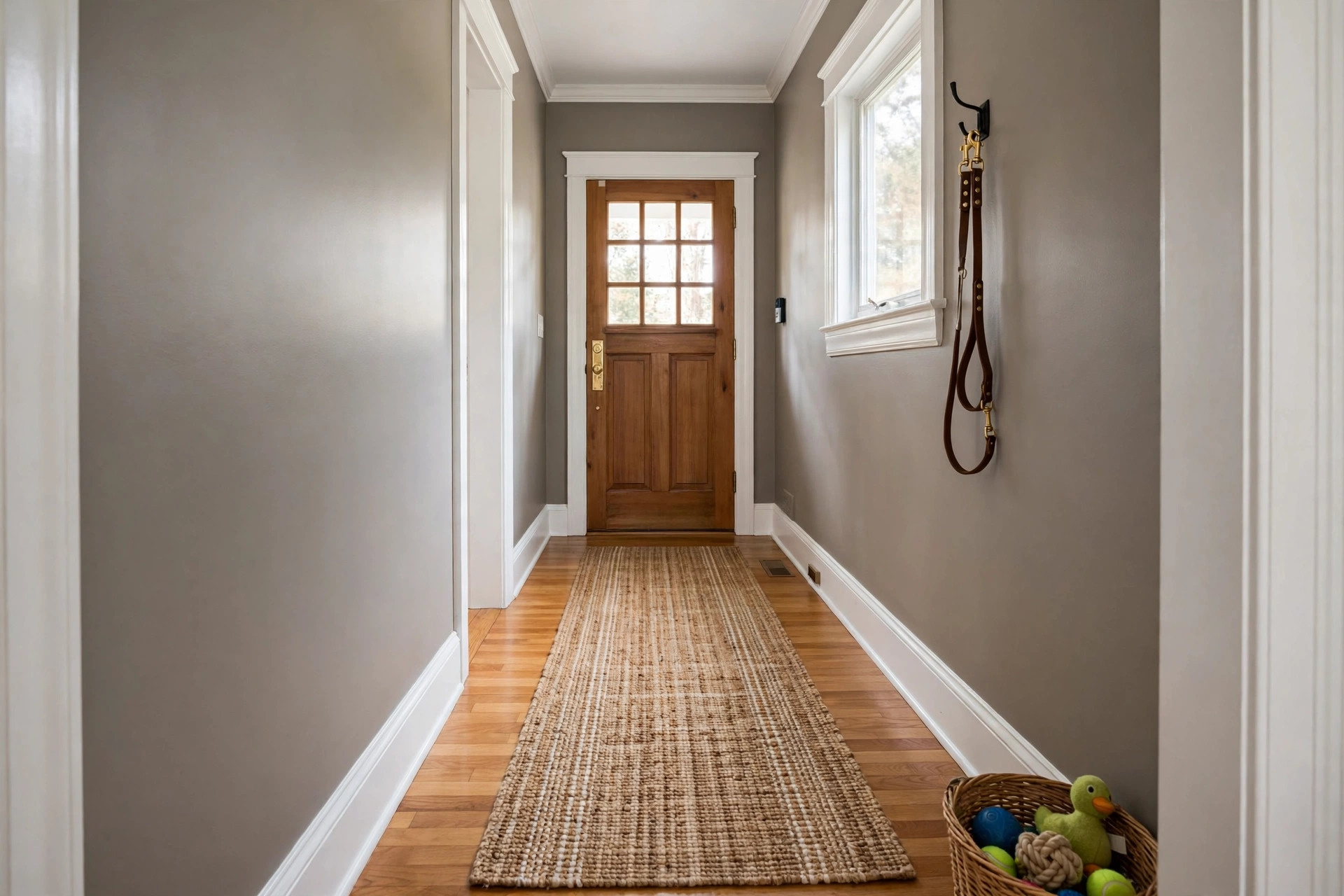
A hallway takes more wear than almost any room in the house. Feet pass through it all day. Bags and boxes bump against the walls. When you add a dog, the wear gets much worse. Muddy paws press against the trim. Wet fur rubs along the lower wall. Noses leave small smudges near the door. Easy clean paint for hallways with dogs solves this common problem. It is paint that wipes clean with a damp cloth. You do not need to repaint every year. You do not need to scrub until your arms hurt. The right paint holds its color and its finish, even with daily dog traffic. This guide explains what to buy, how to choose it, and how to keep it looking fresh.
Why Washable Paint Matters in a Dog Home
Hallways are narrow. Dogs brush against the walls as they walk past. In rain or snow, a dog comes inside wet and shakes. Dirt and water fly across the hall. Light-colored flat paint shows every mark. Once the marks dry in, plain soap may not lift them. You may scrub and find that the paint itself wears away, leaving a shiny bald spot or a dull patch. That is why washable paint matters so much.
Easy clean paint is made to resist this kind of damage. It uses stronger resins and tougher binders. Dirt sits on the surface instead of soaking in. A damp sponge lifts most marks away. The finish does not fade when you wipe it often. This matters because dog homes need frequent wiping. One long winter can bring months of muddy footprints. With the right paint, a quick wipe each week keeps the hallway clean. Without it, the walls look tired by spring.
There is also a money reason. Repainting a hallway takes time and money. If you choose a paint that survives dog traffic, you may wait five to eight years before the next full coat. That is a real saving. It is also a comfort. A home that looks clean feels calmer, even on busy days.
What to Look For When You Shop: Easy Clean Paint for Hallways with Dogs
Not all washable paints are the same. A few key traits tell you which ones truly hold up in a home with dogs.
First, check the sheen. Sheen is how much light the paint reflects. Flat paint has almost no shine. It hides small bumps in the wall, but it marks easily and is hard to clean. Satin and semi-gloss have more shine. They are much easier to wipe. For a hallway with dogs, satin is the sweet spot for most people. It is washable, it is not too glossy, and it still looks warm. Semi-gloss is even tougher, and it suits the trim and doors well.
Second, look for the words “scrubbable” or “washable” on the label. These words are not the same. Washable means you can wipe the paint gently without damage. Scrubbable means the paint stands up to harder rubbing. For dog homes, scrubbable is the better choice. Muddy paw prints often need a firm hand. A paint from Sherwin-Williams or Behr with a scrubbable rating will handle that work.
Third, check the stain resistance. Some paints resist common stains like dirt, oil, and pet marks. This is different from being washable. Stain resistance means the stain does not set into the film in the first place. Look for lines made for busy homes and families. Many brands now sell lines made for high traffic. These paints cost a little more, but they pay for themselves in a dog hallway.
Fourth, read the label for low odor and low VOC. VOC stands for volatile organic compounds. These are fumes that paint gives off as it dries. Low-VOC paint is kinder to people and pets. Dogs spend much of the day close to walls and floors. A low-odor paint lets you repaint with the dog still in the house, as long as the room is aired well. Benjamin Moore and other major brands offer low-VOC lines in washable finishes.
Fifth, pick a color with care. Light colors show paw prints fast. Very dark colors show dust and fur. Mid-tone colors hide both best. Warm grays, soft tans, and muted greens are good choices. They look calm and they forgive a lot. Many pet owners also pick a color close to their dog’s coat. This simple trick makes loose fur less visible on the walls.
Types and Options That Work Well
Satin Finish Wall Paint
Satin is the first choice for most dog hallways. It has a soft glow, not a hard shine. It wipes clean with a damp cloth and mild soap. Most premium interior paints come in satin. It costs about the same as other sheens. It is the best balance of looks and toughness.
Eggshell Finish
Eggshell is one step below satin in shine. It looks richer than satin and hides wall flaws a bit better. Many scrubbable eggshell paints can still take weekly wiping. It is a fine choice if you dislike any shine. Check the label, though. Some cheap eggshell paints do not scrub well.
Semi-Gloss Paint
Semi-gloss is the toughest common sheen. It is the classic pick for doors, trim, and baseboards. In a dog hallway, it works well on the lower third of the wall, where most paw marks land. Some owners paint the whole hallway in semi-gloss. It can look bright and clean. It does show wall flaws more, so the wall should be smooth and well patched first.
Scrubbable Specialty Lines
Several brands sell lines made for busy homes. These use harder acrylic formulas. They resist scuffs and stains better than standard paint. They often cost two to five dollars more per gallon. For a hallway with dogs, the extra cost is worth it. These lines are sold at Home Depot and Lowe’s, as well as at paint stores.
Enamel for Trim and Doors
Trim takes the worst hits. Doors get nose prints. Baseboards collect dust and fur. A water-based enamel in semi-gloss stands up to all of this. Enamel forms a hard shell as it cures. It resists chipping when a dog’s nails click against it. Give enamel a full week to cure before heavy use. It reaches full hardness slowly, even though it feels dry in a day.
Cost and Price: What to Expect
Paint prices vary by brand and region. A standard gallon of interior wall paint costs about twenty-five to forty-five dollars. Scrubbable and stain-resistant lines cost about thirty-five to sixty dollars per gallon. Specialty pet-friendly or ultra-durable lines can reach seventy dollars. For a typical hallway, one to two gallons cover the walls, plus a quart for trim.
Hiring a painter adds labor cost. Most painters charge two to four dollars per square foot of wall for interior work. A simple hallway may cost three hundred to eight hundred dollars in labor, depending on size and condition. If the walls need heavy patching from dog damage, the price rises. Many pet owners paint hallways themselves. It is a small job, and a roller covers a hallway fast.
Buy good brushes and rollers, not just good paint. A nine-inch roller with a three-eighths-inch nap suits most smooth walls. Painter’s tape keeps edges neat along trim and doors. Drop cloths protect floors from drips. A dog should stay out of the work zone until the paint is dry to the touch, usually two to four hours.
There is a related task worth thinking about. Cabinet and trim paint takes the same kind of abuse in kitchens. Guides to durable paints made for cabinets cover the same hard-wearing formulas that suit hallway trim. The lessons carry over well.
Care and Upkeep: Keeping the Walls Clean
The best paint still needs care. A simple routine keeps a dog hallway looking new for years.
Wipe the walls once a week. Use a soft sponge or microfiber cloth with warm water and a drop of dish soap. Wring the cloth well. Work from the top down so dirty water does not streak clean areas. For paw prints, wipe while they are fresh. Fresh marks lift in seconds. Dried marks need more work.
For tough spots, use a cleaner made for painted walls. Avoid harsh powders and stiff brushes. They dull the finish. Magic erasers work well on scuffs, but use them gently. They are mildly abrasive and can polish the paint to a shine if you rub too hard. Test any cleaner in a hidden spot first, such as behind a door.
Clean the baseboards every month. Fur and dust settle there. A damp cloth run along the baseboard takes only minutes in a hallway. This one habit does more for the look of the hall than anything else.
Deal with scratches and chips right away. Keep a small jar of leftover paint for touch-ups. Dab it on with a small brush and let it dry. A fast touch-up stops a chip from growing. Dogs tend to scratch the same spots. If one spot gets hit again and again, a clear corner guard or a washable panel can protect it.
Repaint on a steady cycle. Even great paint wears. In a busy dog hallway, plan a fresh coat every five to seven years. Touch-ups and yearly deep cleaning stretch this time. Watch the lower walls near the door. That is where wear shows first.
Color choice also shapes upkeep. If you are starting fresh, the best white paint for interior walls can still work in a dog hallway if you choose a scrubbable satin version and a warm undertone. Pure bright white shows every mark. A warm off-white hides more and still looks clean.
Safety for Dogs During and After Painting
Dogs are closer to the ground and closer to the walls than people. They also lick surfaces. A few safety steps matter.
Ventilate the room well. Open windows and run a fan while you paint and while the paint dries. Keep the dog out of the hallway until the paint is fully dry. Most interior paints dry to the touch in a few hours. Full cure takes about two weeks. During that time, keep heavy dog traffic light if you can.
Choose low-VOC paint. This cuts fumes during the job and after. It is better for the dog’s nose and lungs. It is also better for anyone in the home with breathing trouble. Read the label for the VOC level in grams per liter. Lower is better.
Store paint and supplies where the dog cannot reach them. Paint cans, solvents, and rags are all risks. Even “safe” paint is not food. Clean brushes in a closed room or outdoors. Throw rags away at once.
Watch for chewing. Some dogs chew trim or baseboards, mostly young dogs. No paint is safe to eat in large amounts. If your dog chews woodwork, fix the behavior first, then repaint. Bitter sprays made for pets can help during the cure period. Ask your vet if chewing is constant.
Frequently Asked Questions
What sheen is best for a hallway with dogs?
Satin is the best all-around pick. It wipes clean easily and still looks soft on the walls. Use semi-gloss on trim, doors, and baseboards for extra toughness. Avoid flat paint in a dog hallway. It marks fast and does not wash well.
Can I just wipe my current paint instead of repainting?
Try it first. Wipe a small hidden area with a damp cloth and mild soap. If the marks lift and the paint looks fine, your paint may be washable enough. If the paint dulls, fades, or rubs off, it is not. Repainting with a scrubbable paint is the fix.
How do I remove dried muddy paw prints?
Start with a damp microfiber cloth and warm water. Rub gently in circles. Add a drop of dish soap if water alone fails. For set stains, use a cleaner made for painted walls. Do not soak the wall. Too much water can soften the paint film.
Is there paint made just for pet owners?
No major brand sells a paint labeled only for pet owners. But many sell lines made for high-traffic homes, kids, and pets. These lines offer stain resistance and scrubbability. Look for words like “ultra-durable,” “stain-resistant,” or “scrubbable” on the label.
Will a darker color hide dog marks better?
Mid-tone colors hide marks best. Very light colors show dirt fast. Very dark colors show dust and light fur. A warm gray, tan, or soft green forgives the most. Match the tone to your dog’s coat for the best effect.
How often should I repaint a hallway with dogs?
Plan on every five to seven years with a good scrubbable paint. Touch up chips each year. Wipe walls weekly. Homes with several large dogs may need paint sooner. Homes with one small dog may go longer.
A Short Final Word
A hallway with dogs does not have to look worn. Easy clean paint for hallways with dogs is a simple upgrade with a big payoff. Choose a scrubbable satin finish. Pick a mid-tone color that forgives daily life. Prep the walls well, give the paint time to cure, and wipe the walls each week. The work is small. The result is a hallway that stays bright and clean through muddy paws, wet fur, and years of happy traffic.
For a finishing touch, many owners dress up the hall with an accent wall painting ideas approach in the rooms nearby. A strong painted wall in the living room can draw the eye past the hard-working hallway. Sites like This Old House, Bob Vila, The Spruce, and HGTV all carry step-by-step painting guides that pair well with this project.
References
Behr. (n.d.). Paints, primers, and stains. https://www.behr.com Benjamin Moore. (n.d.). Paints and stains. https://www.benjaminmoore.com Bob Vila. (n.d.). Home improvement advice. https://www.bobvila.com HGTV. (n.d.). Home and garden ideas. https://www.hgtv.com Lowe’s. (n.d.). Home improvement products. https://www.lowes.com Sherwin-Williams. (n.d.). Paints and coatings. https://www.sherwin-williams.com The Home Depot. (n.d.). Home improvement products. https://www.homedepot.com The Spruce. (n.d.). Home and garden advice. https://www.thespruce.com This Old House. (n.d.). Home renovation guidance. https://www.thisoldhouse.com
Was this guide helpful?

About Jennifer Lee
The My Garden US editorial team writes practical, in-depth home and garden guides for American homeowners — tested advice, no fluff.