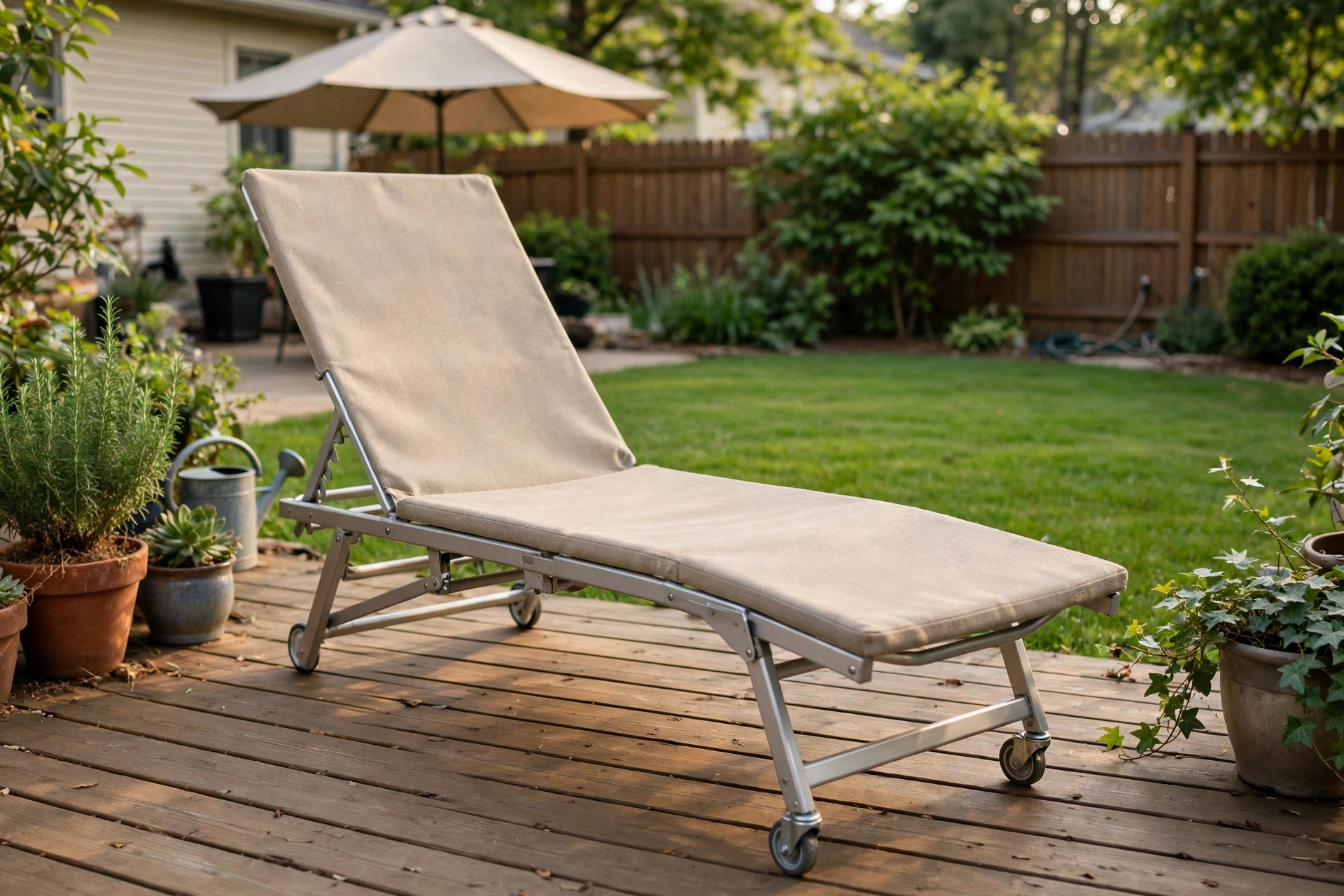

A backyard is a fine place to spend a warm afternoon. A good chair makes the time better. Outdoor chaise lounge with wheels reviews help buyers find a lounger that is both comfortable and easy to move. These long chairs let a person lie back, stretch out, and enjoy the air. The wheels make the difference. With a good set of wheels, a person can roll the lounger from a sunny corner to a cool patch of shade. There is no heavy lifting. There is no need to ask for help.
Shoppers often read reviews before they spend their money. Reviews tell the plain truth that product boxes do not tell. A box may say the frame is strong. A review may say the frame bends after one summer. A box may say the wheels roll smoothly. A review may say the wheels stick on grass. This guide gathers what many outdoor chaise lounge with wheels reviews have in common. It explains why these chairs are popular, what to look for, what kinds are sold, what they cost, and how to keep them in good shape.
Why Outdoor Chaise Lounge with Wheels Reviews Matter
Most people buy an outdoor chaise lounge only once every few years. It is a long-term purchase. Reviews shorten the road to a good choice. They point out small faults that matter over time. A strap may fray. A wheel axle may rust. A fabric may fade in the sun. These are things a person cannot see in a store on a dry day.
Reviews also show how a chair performs in real weather. Wind, rain, and bright sun all test an outdoor chair. A review from a hot southern state tells a different story than a review from a cool northern state. Reading both kinds gives a fuller picture. Many outdoor chaise lounge with wheels reviews agree on a few points. Wheels must be large enough to cross grass. Frames must resist rust. Fabric must dry fast after rain. When many reviewers say the same thing, a wise buyer listens.
Another reason reviews matter is safety. A weak frame can break under weight. A poorly placed wheel can tip. Reviewers report these problems in plain words. They also report good news. They name chairs that held up for years. They describe which cushions stayed bright and which did not. This shared knowledge saves money and saves trouble.
How to Choose the Right Lounger: Outdoor Chaise Lounge with Wheels Reviews
Choosing the right outdoor chaise lounge with wheels is simpler when a buyer knows what to check. The list below covers the main points.
Frame Materials
The frame is the skeleton of the chair. Most loungers use aluminum, steel, or wood. Aluminum is light and does not rust. Steel is heavier and stronger, but it must have a good coating to keep rust away. Wood looks warm and classic, but it needs oil or sealant each year.
Many outdoor chaise lounge with wheels reviews favor aluminum frames. They are easy to move and they hold up well in rain. Steel frames earn praise too, when they carry a powder coat finish. Buyers should check the weight rating. A good frame should hold at least 250 pounds. Heavier duty frames hold 350 pounds or more.
Wheel Quality
Wheels are the heart of this kind of chair. Small plastic wheels look fine in a store, but they sink into soft grass. Large wheels, about six inches or more, roll better over lawn and deck boards. Rubber or resin wheels move more quietly than hard plastic ones.
Look for wheels that lock. A lock keeps the chair from rolling on a sloped patio. Many outdoor chaise lounge with wheels reviews warn about chairs without wheel locks. A chair that drifts in a breeze is a small bother. On a wet deck, it can be a real hazard. Some chairs have wheels only at one end. These are pulled like a hand truck. Others have four wheels. These roll like a cart. Both styles work well when the wheels are sound.
Comfort Features
A chaise lounge is made for rest. The seat and back should adjust to more than one position. Most good models have four or five settings, from flat to upright. The fabric should be strong but soft. Textilene and vinyl-coated polyester are common. They dry fast and they resist mildew.
Cushions add comfort. Some chairs come with thin pads. Others come with thick foam pads. Thick pads feel better, but they take longer to dry. A headrest pillow is a nice touch for reading in the sun. Armrests help older users sit up with ease. Check that the fabric breathes. A chair that traps heat is no joy on a hot day.
Types and Options
Outdoor chaise lounges with wheels come in several styles. Each style suits a different kind of yard.
The classic folding lounger is the most common. It has a fabric seat over a metal frame. It folds flat for storage. It is light and easy to carry. Many pool owners choose this style. It dries fast and it stacks well.
The wooden recliner is a heavier choice. It looks fine on a deck or under a tree. Teak and acacia are popular woods. These chairs often have two large wheels at the head end. They cost more, but they last for many years with care.
The cushioned rolling lounger feels more like indoor furniture. It has thick pads on a sturdy frame. It is best for covered patios. Full rain will soak the thick pads. Some buyers keep these under a roof and move them out only in fine weather.
The hammock style lounger hangs fabric between two frame rails. It sways a little. Some buyers love the gentle motion. Others find it hard to get up from. Wheels on these models are usually small, so they roll best on hard surfaces.
A sun tanning chair is a simple kind with a face hole. It is made for lying face down in the sun. It has a basic frame and small wheels. It is the cheapest kind, but it is less useful for reading or sitting up.
Shoppers who want a full outdoor room may also read about a best porch swing for two people to pair with their lounger. A swing and a lounger together make a fine porch set. A cantilever umbrella base weight guide is also worth a look, since shade makes a chaise far more pleasant on hot days.
Cost and Price
Prices vary widely. A simple fabric lounger with wheels can cost between forty and eighty dollars. These models work well for a season or two. They are a good choice for a first purchase or for a rental home.
Mid-range models cost between eighty and two hundred dollars. This is where most outdoor chaise lounge with wheels reviews focus. Chairs in this range have better frames, larger wheels, and more settings. They often last three to five years with basic care. Many families find this range gives the best value.
High-end loungers cost between two hundred and five hundred dollars. These use teak wood, heavy steel, or thick premium cushions. They look fine and they feel fine. They can last ten years or more. They are a sound buy for a person who uses the yard every day in summer.
Very cheap chairs often fail at the wheels or the joints. Very costly chairs are not always better than mid-range ones. Reviews are the best way to judge value. A chair with many strong reviews at a fair price is usually the smart pick.
Big home stores and large online sellers carry wide selections. Shoppers can browse outdoor seating at IKEA and compare styles and sizes. Others check Wayfair for customer ratings and price ranges. Independent lab tests at Consumer Reports can also help buyers judge quality before they buy.
Care and Upkeep
A little care keeps a chaise lounge in good shape for years. Wipe the frame with a damp cloth once a month. This removes dust and pollen. Check the wheels now and then. Hair and grass wrap around axles and make rolling hard. Pull these bits away with a finger or a small brush.
If the frame is steel, look for chips in the coating. A small chip can grow into rust. Touch it up with outdoor paint made for metal. If the frame is wood, oil it once a year with teak oil or a similar product. This keeps the wood from drying and cracking.
Fabric needs care too. Brush off loose dirt with a soft brush. Wash stains with mild soap and warm water. Do not use bleach on colored fabric. Let the fabric dry in the open air before folding the chair. Folded damp fabric grows mildew. Many outdoor chaise lounge with wheels reviews mention mildew as the main cause of early failure. Dry storage is the best fix.
Wheel locks need a drop of oil now and then. A stiff lock can snap if forced. Bolts and screws loosen over time. Tighten them once each spring. Keep spare hardware in a small bag so parts do not get lost.
When winter comes, store the chairs under cover. A garage, a shed, or a covered porch works well. Folding chairs take little space. For more ideas on cold-season care, see these patio furniture storage ideas for winter. Good storage can add years to the life of any lounger.
Safety Tips
Outdoor chairs are safe when they are used with care. A few simple rules help.
First, set the chair on flat ground before sitting down. A lounger can tip on a steep slope. Lock the wheels each time the chair is in use. An unlocked chair can roll on a wet deck.
Second, respect the weight limit. Do not let two adults sit on a chair made for one. The frame can bend or snap. Children should not stand on the seat. They can tip the chair or break the fabric.
Third, check for sharp edges. Older chairs may have worn spots where metal pokes through. Run a hand along the frame once a year. Sand down any rough spot and cover it with paint.
Fourth, mind the sun. Metal frames grow hot in full sun. A light towel over the seat keeps it cool. This is a small step that makes a big difference in comfort.
Fifth, keep chairs away from open flame. Fabric and wood burn. A grill should stand at least ten feet from any lounger. Many outdoor chaise lounge with wheels reviews remind readers of this simple rule.
Frequently Asked Questions
Are chaise lounges with wheels worth the extra cost?
For most buyers, yes. The wheels make it easy to chase the shade or follow the sun. They also help when cleaning the patio. The price difference is small, often ten to twenty dollars more than a fixed chair.
Do the wheels work on grass?
Large wheels work on grass. Small wheels do not. Wheels of six inches or more roll over most lawns with ease. On soft or wet soil, even large wheels may sink a little. A stone or wood deck is the smoothest surface for any rolling chair.
How long do these chairs last?
A good mid-range chair lasts three to five years outdoors all season. With winter storage and yearly care, it can last seven to ten years. Cheap models may last only one or two seasons. Wood models often outlast fabric models.
Can I leave my chaise lounge out in the rain?
Most models can take a rain shower. Textilene fabric dries fast. But weeks of rain cause mildew and rust. It is better to store chairs under cover during long wet spells. Cushions should always come inside before heavy rain.
What weight can these loungers hold?
Most hold between 250 and 300 pounds. Heavy duty models hold 350 pounds or more. Check the product label or the reviews for the exact rating. Never exceed the stated limit.
Are they hard to put together?
Most models need simple assembly. Two people can usually finish the job in twenty to thirty minutes. The wheels and bolts are the main parts. Reviews often say whether the instructions are clear.
Final Word
Outdoor chaise lounge with wheels reviews tell a clear story. Buyers love the freedom to move their seat. They want large wheels that roll on grass. They want frames that resist rust. They want fabric that dries fast. A mid-range chair with strong reviews is the safest buy for most families.
Take time to read before you buy. Compare a few models. Check the wheels, the weight rating, and the comfort settings. Then choose the chair that fits your yard and your budget. A good lounger turns a plain patio into a place of rest. Many summers of quiet afternoons are worth a careful choice.
References
Consumer Reports. (n.d.). Product reviews and ratings. https://www.consumerreports.org IKEA. (n.d.). Outdoor furniture. https://www.ikea.com Wayfair. (n.d.). Outdoor furniture. https://www.wayfair.com
Was this guide helpful?

About Robert Taylor
The My Garden US editorial team writes practical, in-depth home and garden guides for American homeowners — tested advice, no fluff.
You May Also Like

Outdoor Fireplace Kit for Patio Reviews: What Buyers Say Before You Buy
April 9, 2026 0 views
How to Clean Outdoor Umbrella Fabric: A Simple Step-by-Step Guide
June 13, 2026 0 views
How to Level Patio Furniture on Grass
September 14, 2026 0 views