
Introduction
A wood fire brings warmth and charm to a home. It also brings real danger to small children and pets. A fireplace safety gates price comparison usa search helps parents see what these gates cost and which models fit their homes. Gates form a fence between a child and a hot firebox, sharp stone edges, and loose embers. This guide explains why gates matter, how to pick the right one, the main types on the market, typical prices, and simple care steps. By the end, you will know what a fair price looks like and how to buy with confidence.
Why a Safety Gate Matters Around the Fireplace: Fireplace Safety Gates Price Comparison Usa
A fireplace stays hot long after the flames die down. Glass doors on gas units can reach temperatures that burn skin in seconds. Stone and brick hearths stay warm for hours. Small children do not sense these risks. Toddlers crawl toward light and motion, and both draw them to the fire.
Burns are only one risk. Children can pull on loose tools, knock over screens, and climb on raised hearths. A fall onto a stone corner can cause a deep cut. A sturdy gate stops all of this. It keeps a child at arm’s length from the heat and the hard edges.
Many parents use a gate for a few short years and then store it away. During that time, the gate earns its price every single day. Child safety groups and home guides such as Family Handyman stress that barriers are the first line of defense around hearths and stoves.
What to Look for When You Choose a Gate
Not all gates are built the same. A low price can hide weak metal or loose joints. Before you compare prices, learn the traits that matter most.
Size and Fit
Measure your hearth from wall to wall before you shop. Measure the depth too. Many gates come in panels that fold, so they can wrap around a wide hearth or stretch across a straight opening. A gate that fits snugly needs no force to stay in place. A gate that is too short leaves gaps at the ends. A gate that is too long bunches up and looks untidy.
Check the height as well. Most hearth gates stand between 28 and 32 inches tall. A crawling baby needs a gate that reaches well above his head when he stands. If you plan to use the gate for a dog, pick a taller model.
Build Material
Steel is the standard for hearth gates. It stands up to heat and resists bending. Look for powder-coated steel, which resists rust and chips. Some gates use hard wood with metal fittings. These look nice, but wood can scorch if it sits too close to a hot fire. Aluminum is light and will not rust, yet it dents more easily than steel.
Avoid thin plastic gates near a real fire. Heat can warp them. For a look that blends with the room, many buyers pair a steel gate with their existing childproof fireplace screens for extra coverage.
Mounting Style
Freestanding gates rely on weight and wide feet. They are easy to move and need no tools. Wall-mounted gates screw into studs. They hold firm but leave small holes when removed. Pressure-mounted gates press against walls or the fireplace surround. They suit renters, but they can slip on smooth tile if a child leans hard on them.
For a wood stove or a deep masonry hearth, a wall-mounted unit is the safest choice. Guides like This Old House note that fixed barriers give the most reliable protection.
Main Types of Fireplace Safety Gates
The market offers three broad types. Each suits a different home and budget.
Freestanding Hearth Gates
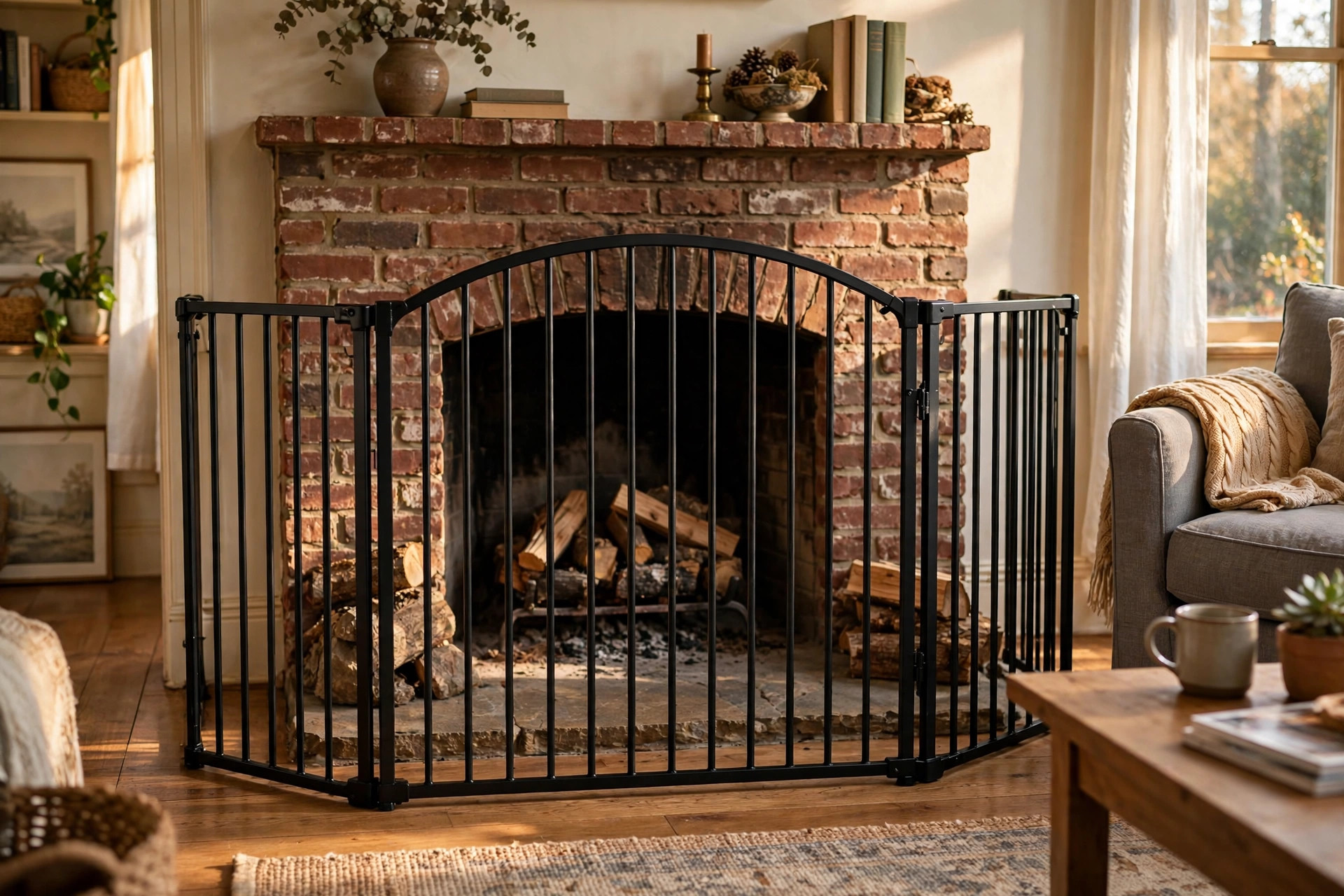
These gates fold into a wide arc. They stand on the floor with flat feet. You set them up in minutes with no tools. Most measure 60 to 72 inches wide when open. They suit families who want a quick fix or who move the gate between rooms.
The downside is stability. A strong toddler can push a light gate across a smooth floor. Anti-slip pads help, but they do not fix a flimsy frame. Freestanding models cost the least, which makes them popular as a first buy.
Wall-Mounted Gates
Wall-mounted gates attach to the wall or the fireplace surround with brackets. They cannot tip or slide. Many models include a small walk-through door for adults, so you do not have to lift the gate each time you tend the fire.
These gates take more time to install. You need a drill and basic tools. They also cost more than freestanding models. The extra cost buys peace of mind, since the gate will not move when a child pushes on it.
Play Yard Panels
Some parents use interlocking play yard panels as a hearth barrier. These panels link in a ring or a long run. They are wide and tall, and the panels adjust to odd angles. They work well for large stone hearths or corner fireplaces.
The catch is that play yards are made for play, not for heat. Keep them at a safe distance from the firebox. Check the manual for heat limits. If your hearth runs very hot, choose a gate built for fireplaces instead. Shoppers who like this route often read fireplace glass doors reviews too, since doors and gates work well together.
Fireplace Safety Gates Price Comparison USA: What Each Type Costs
Prices vary by size, material, and brand. The table below shows common ranges seen at major United States retailers in 2026. These are street prices, not list prices, and sales can push them lower.
– Freestanding hearth gates: 60 to 130 dollars. Basic steel models sit at the low end. Wider models with five or six panels cost more. – Wall-mounted gates: 90 to 220 dollars. A walk-through door adds 20 to 40 dollars. Extra-wide kits for large hearths push past 200 dollars. – Play yard panels: 80 to 180 dollars. Price rises with panel count. Eight-panel sets are common for fireplace use. – Deluxe or designer gates: 150 to 300 dollars. These use thicker steel, nicer finishes, and sturdier hinges.
Where you buy matters. Big home stores such as The Home Depot and Lowe’s carry several brands side by side, which makes it easy to compare build quality in person. Online prices are often lower, but you cannot feel the weight of the gate or test the latch before you buy.
When you compare, look past the price tag. Check the steel thickness, the latch design, and the warranty. A gate that costs 40 dollars more but lasts through two children is the better deal. The U.S. Environmental Protection Agency reminds owners that safe hearth habits start with barriers and clean-burning practices, and a well-built gate is part of that plan.
Seasonal sales bring real savings. Late summer and early fall sales often cut 15 to 25 percent off gate prices as stores stock up for the heating season. If your child is due in the fall, buy the gate in August and store it until you need it.
Shipping adds to the cost of heavy steel gates. A gate can weigh 20 to 30 pounds. Check whether the seller offers free shipping. Some stores ship free to the store for pickup, which saves money and lets you inspect the box before you take it home.
For wood-burning setups, makers like Napoleon and Heatilator publish hearth clearance charts. Use those charts to set your gate at a safe distance. The right distance keeps the gate cool to the touch even when the fire runs hot.
Care and Upkeep
A safety gate needs little care, but a small routine keeps it strong for years.
Wipe the gate down each month with a damp cloth. Dust and ash build up on the bars and joints. Dry it well after wiping so the coating does not rust. Check the latch each week. Press it, pull it, and make sure it clicks shut. A latch that sticks is a latch a child may learn to defeat.
Look at the feet or brackets. Freestanding gates should sit flat on the floor. Tighten any wall brackets that have loosened. If the powder coating chips, touch it up with heat-safe paint so bare metal does not rust.
Store the gate flat or folded when the fire season ends. Keep it in a dry spot like a garage shelf or a closet. Stack nothing heavy on top of it. A bent panel will not close square, and a gate that does not close square is not safe.
Replace the gate if the frame bends, a weld cracks, or the latch breaks. Small repairs with zip ties or tape are not enough. A gate is safety gear, and safety gear must be sound.
Safety
A gate is one part of a safe hearth. The rest depends on daily habits.
Never leave a fire burning with a child alone in the room, even behind a gate. Gates slow a child down; they do not replace a watchful adult. Keep the gate closed and latched at all times when the fire is lit or the stove is hot.
Set the gate at least 24 inches from the firebox opening. Hot air and sparks can reach past a gate that sits too close. Keep firewood, kindling, and tools behind the gate or out of reach. A child who can grab a poker through the bars can still get hurt.
Test the heat. Hold your hand near the gate bars when the fire runs strong. If the metal feels hot, move the gate back. Check again after you rearrange the room. Articles on The Spruce advise the same simple heat test for any barrier near a flame.
Teach older children to respect the gate. Explain that the gate marks the hot zone. Praise them when they keep their distance. Rules that children understand stick better than rules they only hear.
Smoke and carbon monoxide alarms add a second layer of safety. Test them each month. If you burn wood, have the chimney swept once a year. Creosote buildup can cause chimney fires, and no gate protects against that.
FAQ
What size fireplace safety gate do I need?
Measure the full width of your hearth, wall to wall, and add a few inches on each side. Most homes need a gate between 60 and 72 inches wide. For corner fireplaces or wide stone hearths, look at models that reach 120 inches or link two gates together.
Are fireplace safety gates heat resistant?
Steel gates made for hearths resist heat well when set at the right distance. They are not meant to touch the firebox. Keep the gate at least 24 inches from the opening, and never place a plastic or fabric gate near a live fire.
Can I use a regular baby gate around a fireplace?
A standard baby gate is too narrow and too light for most hearths. It can tip or slide. Use a gate built for fireplaces, with wide feet or wall mounts and heat-safe materials. Standard gates suit doorways, not hot zones.
How much should I expect to pay in the USA?
Most buyers pay between 60 and 220 dollars. Freestanding gates run 60 to 130 dollars. Wall-mounted gates with a walk-through door run 90 to 220 dollars. Deluxe models reach 300 dollars. Sales in late summer often bring prices down.
Do safety gates work with gas fireplaces?
Yes. Gas fireplaces with glass fronts get very hot, and a gate keeps small hands off the glass. The same rules apply: set the gate at a safe distance, keep the latch closed, and test the bars for heat.
Should I pair a gate with a fireplace screen?
A gate and a screen do different jobs. The screen blocks sparks and embers. The gate keeps children away from the heat and the hard hearth edge. Many families use both. If you want screen ideas, look at childproof screen options alongside your gate choice.
Final Word
A fireplace safety gate is a small price for a large gain in peace of mind. Measure your hearth, pick steel, choose a mounting style that suits your home, and compare prices across a few stores before you buy. A fireplace safety gates price comparison usa search is the right first step, and this guide has given you the rest of the picture. Buy once, install it well, and enjoy your fires with the whole family safe and warm.
References
Family Handyman. (n.d.). DIY home repair and maintenance. https://www.familyhandyman.com Heatilator. (n.d.). Fireplaces and fireplace products. https://www.heatilator.com Lowe’s. (n.d.). Home improvement products. https://www.lowes.com Napoleon. (n.d.). Fireplaces, grills, and heating products. https://www.napoleon.com The Home Depot. (n.d.). Home improvement products. https://www.homedepot.com The Spruce. (n.d.). Home and garden advice. https://www.thespruce.com This Old House. (n.d.). Home renovation guidance. https://www.thisoldhouse.com U.S. Environmental Protection Agency. (n.d.). Protecting human health and the environment. https://www.epa.gov
Was this guide helpful?

About Sarah Mitchell
The My Garden US editorial team writes practical, in-depth home and garden guides for American homeowners — tested advice, no fluff.
You May Also Like
How to Buy Outdoor Fire Pits Online in California: A Practical Guide
April 18, 2026 0 views
EPA Certified Chimney Inspection Services for Homeowners
May 10, 2026 0 views
Vented Gas Log Sets: Reviews and Buying Guide
February 4, 2026 0 views