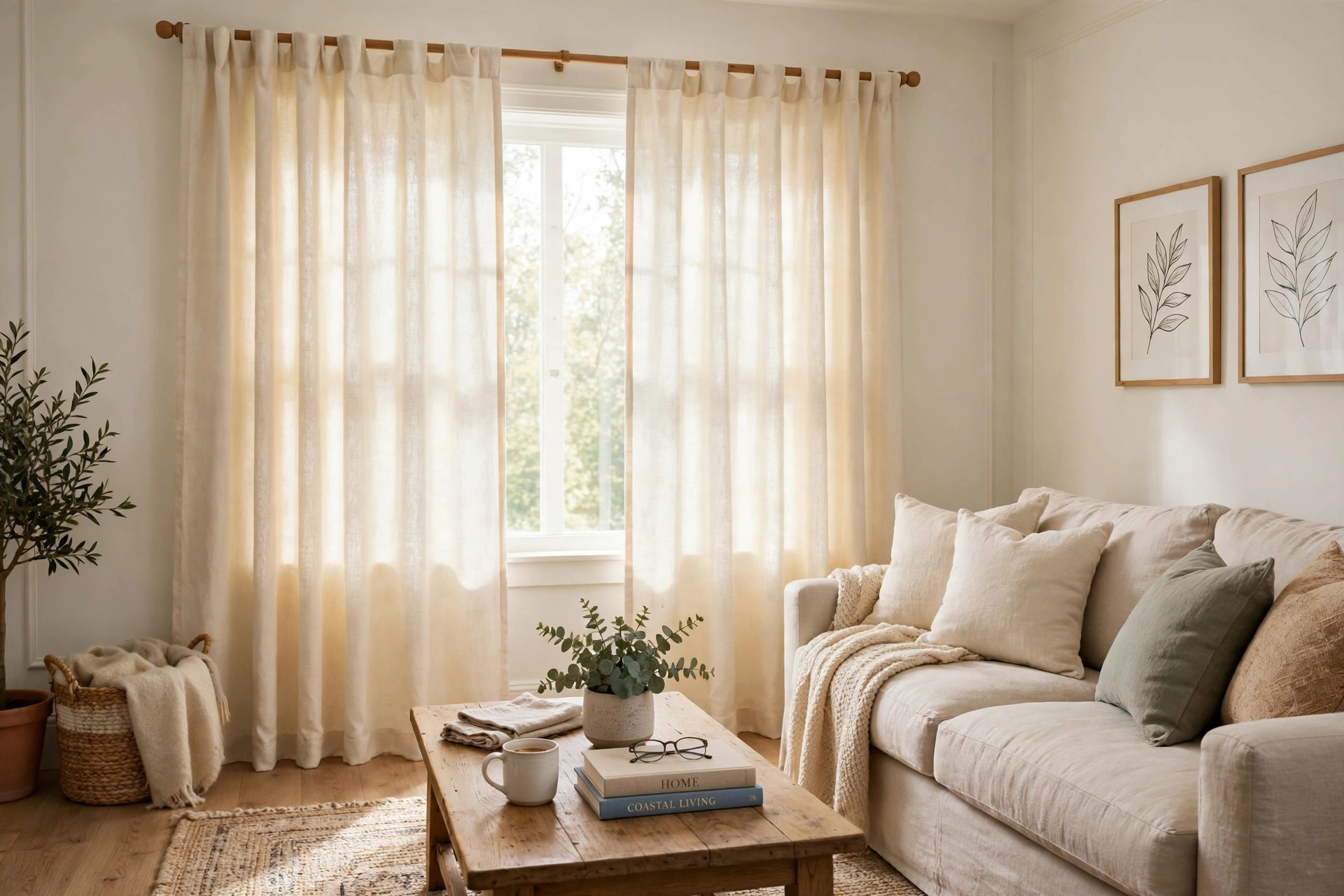

Buying your first home is a great joy. It also brings a long list of small jobs. One of the first jobs is the windows. Bare windows look empty. They also let in too much light at night and too many eyes from the street. The best rod pocket curtains for first time homeowners solve this problem in a simple way. A rod pocket is a sewn channel at the top of the curtain. You slide a plain curtain rod through the channel. That is all. There is no hardware to learn. There are no rings to clip. The curtain gathers into soft folds on its own. For a first home, where the budget is tight and the tool box is small, this style is hard to beat.
Why Rod Pocket Curtains Suit a First Home
A first home is often bought with every dollar counted. The closing costs take much of the savings. Furniture, paint, and moving take the rest. Window coverings can wait, but they should not wait long. Bare windows make a home feel unfinished. They also waste heat in winter and let heat in during summer. Heavy drapes from a showroom can cost hundreds of dollars per window. Rod pocket curtains cost far less. They hang well, they look neat, and they need only a basic rod.
The style is also very forgiving. First time homeowners are still learning how a home works. A curtain that needs exact pleats and special hooks is a poor first project. A rod pocket curtain hides small mistakes. If the rod is a little off center, the folds of fabric hide it. If the panels are a little too wide, they simply gather more. This forgiving nature makes the best rod pocket curtains for first time homeowners a wise pick. You get a finished look without a learning curve.
There is one more point. Rod pocket curtains work on a standard round rod. You can buy such rods at any home store. When you move to a second home, or when your taste changes, the same curtains work on a new rod. Nothing goes to waste.
What to Look for When You Shop: Best Rod Pocket Curtains for First Time Homeowners
Measure First
Measure the window before you buy anything. This is the step most new owners skip, and it is the step that matters most. Measure the width of the window frame. Then measure from the top of the frame, or from where you plan to mount the rod, down to where you want the curtain to end. For a living room, most people let the curtain fall to the floor or just below the sill. For a kitchen or bath, the curtain often ends at the sill.
A good rule is to buy panels whose combined flat width is about one and one half to two times the width of the window. This gives the fabric enough body to gather into folds. If the panels are too narrow, they will hang flat like a sheet. That is the most common mistake. Wide panels cost a little more, but they look far better. Home guides at The Spruce offer clear measuring charts for new buyers who want to check their numbers.
Choose the Right Fabric
Fabric decides how the curtain hangs and how much light it blocks. For a first home, medium weight fabrics are the safest choice. Polyester blends are popular because they resist wrinkles and keep their color. Cotton gives a soft natural look and washes well. Linen looks fine and airy, but it wrinkles and lets more light through.
Think about the room. A bedroom needs more darkness than a living room. A bathroom needs fabric that handles steam. A sunny kitchen needs fabric that will not fade fast. Stores like IKEA and Wayfair list the fabric and care details on each product page, so read them before you click buy. Buyers who compare ratings across brands often check Consumer Reports for notes on fabric quality and wash tests.
Lining and Light Control
Many rod pocket curtains come with a lining sewn inside. A lining does three good things. It blocks more light. It protects the face fabric from sun damage. It makes the curtain hang in a fuller fold. For bedrooms, look for blackout lining or thermal lining. These block nearly all light and add some insulation against cold glass.
For living rooms, a simple privacy lining is often enough. It stops people outside from seeing in at night while still letting some light pass in the day. Lightweight sheers with a rod pocket are a different option. They soften the light but give little privacy after dark. Many first time owners buy lined panels for the bedrooms and unlined or lightly lined panels for the living room. This mix keeps the cost down while covering each need.
Check the Pocket Size
The rod pocket must fit your rod. Most ready made curtains have a pocket that fits rods from one half inch to one inch in diameter. Measure your rod before you buy. A pocket that is too tight will bunch and fight you when you hang it. A pocket that is too loose will let the rod show and slip around. If you already own a thick wooden rod, check the pocket size on the package or on the product page. Blinds.com and Lowe’s list pocket and rod sizes on most curtain listings, which helps you match the two.
Types and Options Worth Knowing
Not all rod pocket curtains are the same. A few common types are worth knowing before you shop.
Standard rod pocket panels. These are the plain ones. A simple channel at the top, panels sold in pairs or singles. They are the cheapest option and the easiest to hang.
Rod pocket with back tabs. Some panels have fabric tabs sewn on the back behind the pocket. You can slide the rod through the tabs instead of the pocket. This gives a slightly different fold and lets the curtain slide more freely on the rod.
Sheer rod pocket panels. Thin, see through panels that soften light. They work alone in rooms where privacy is not a concern, or as a layer under heavier panels.
Blackout rod pocket panels. Panels with a dark backing that blocks most light. Good for bedrooms and for homes near bright street lights.
Cafe curtains. Short rod pocket panels that cover only the lower half of a window. They are common in kitchens. They give privacy at eye level while letting light in from the top.
Valances. Short rod pocket pieces that cover only the top of a window. They hide the rod and add a finished look, often paired with blinds.
If you are unsure which type fits your home, home project guides such as Bob Vila and HGTV show photos of each style in real rooms. For those who want wood blinds as an added layer, our guide to an affordable real wood blinds buying guide explains what to look for before you spend.
Cost and Price
Rod pocket curtains are among the cheapest window coverings you can buy. A pair of ready made polyester panels from a big box store can cost as little as fifteen to thirty dollars. Cotton pairs often run twenty five to sixty dollars. Linen look pairs may cost forty to ninety dollars. Blackout or thermal lined pairs run thirty to eighty dollars in common sizes.
Custom made rod pocket curtains cost much more, often two hundred dollars and up per window. For a first home, custom work is rarely needed. Ready made panels come in standard lengths of sixty three, eighty four, and ninety five inches, which fit most homes built in the last fifty years.
Plan the whole house, not one room. A small home may have ten to fourteen windows. At thirty dollars a pair, the full house costs about three hundred dollars. That is far less than custom blinds or shutters. Watch for store sales. Curtain panels go on sale often around holidays and at the start of the year. The Home Depot and Wayfair both run regular curtain sales, and buying all panels at once can save on shipping.
Keep a small fund for rods and brackets. A basic metal rod with brackets costs ten to twenty dollars per window. Wooden rods cost more. Do not forget the screws and anchors for your wall type. Drywall anchors cost only a few dollars and save you from a rod that pulls out of the wall.
Care and Upkeep
Rod pocket curtains are easy to care for. That is another reason they suit new owners who have little free time.
Most polyester and cotton panels can go in a home washing machine. Wash them in cold water on a gentle cycle. Use a mild soap. Do not use bleach unless the label allows it. Dry on low heat or hang them to dry. Take them out of the dryer while still a little damp and hang them at once. The weight of the fabric pulls out most wrinkles.
Sheers need gentler care. Use a mesh bag in the washer to keep them from snagging. Linen look panels may need a warm iron to smooth out. Always read the care label first. Labels are sewn into the side seam and tell you exactly what the maker allows.
Wash curtains once or twice a year. Kitchens may need more often because of grease in the air. Vacuum the tops and folds with a brush tool every few months to keep dust down. This takes five minutes per window.
If your curtains get heavy use, or if you have pets, keep the number for a local cleaner. Our article on premium curtain cleaning services near me explains when a home wash is enough and when a pro is the better call.
Lined curtains last longer because the lining takes the sun damage instead of the face fabric.
Safety
Curtains are safe by nature, but a few points deserve care in a first home.
Hang rods with care. A heavy rod with heavy curtains can pull out of soft drywall. Use wall anchors rated for the weight. If you can, mount the brackets into a wood stud. A curtain rod that falls in the night can hurt a sleeper or a child below.
Keep fabric away from heat. Curtains near a stove, a space heater, or an old radiator can catch fire if they touch the hot surface or the flame. Keep at least a foot of space between the curtain edge and any heat source. In kitchens, short cafe curtains are safer than long panels near the range.
Choose cordless rods and mounts. Rod pocket curtains are a good choice here because they need no pull cords at all. Loop cords on old blinds are a known hazard to small children. The U.S. Consumer Product Safety Commission warns parents about cord dangers on windows and backs the move to cordless coverings. Since rod pocket panels slide on the rod by hand, they remove that risk by design.
Keep the bottom of long curtains off the floor if you have small children or pets. Fabric that pools on the floor can trip a toddler. A length that just kisses the floor is the safest look.
Frequently Asked Questions
How many curtain panels do I need per window?
For most windows, buy two panels. The pair should have a combined flat width of one and one half to two times the window width. For a very wide window or a sliding door, you may need three or four panels. Measure first, then buy. A single narrow panel on a wide window looks thin and poor.
Do rod pocket curtains block enough light for a bedroom?
It depends on the lining. Unlined panels let much light through. Panels with a blackout or thermal lining block nearly all light. For a bedroom, choose blackout lined rod pocket panels.
Can I hang rod pocket curtains without drilling?
Yes, there are options. Tension rods fit inside the window frame and need no screws. They hold light curtains well but may slip with heavy panels. Adhesive brackets work on smooth surfaces but hold less weight. For a first home you own, drilling with proper anchors gives the strongest hold and is worth the small effort.
What rod size fits standard rod pocket curtains?
Most ready made panels fit rods from one half inch to one inch across. Check the pocket size on the label. Very thick wooden rods, over one and one quarter inches, may not fit standard pockets. When in doubt, buy the rod first, measure it, then buy the curtains.
Should I hire a pro to hang my curtains?
Most first time owners can hang a simple rod with a drill, a level, and anchors. It takes about twenty minutes per window. If you have plaster walls, very high windows, or heavy lined panels, a pro is worth it. In California, our piece on reliable blinds installation companies in California lists what to ask before you hire.
A Final Word
The best rod pocket curtains for first time homeowners are not the most costly ones. They are the ones that fit the window, suit the room, and hang with a simple rod you mount yourself. Measure first. Choose a fabric that fits the room. Pick lining for light and cold where it counts. Keep safety in mind around heat and small children. Do these small things right, and your windows will look finished for years. A first home grows on you one good choice at a time, and the curtains are a fine place to start.
References
Blinds.com. (n.d.). Window blinds, shades, and shutters. https://www.blinds.com Bob Vila. (n.d.). Home improvement advice. https://www.bobvila.com Consumer Reports. (n.d.). Product reviews and ratings. https://www.consumerreports.org HGTV. (n.d.). Home and garden ideas. https://www.hgtv.com IKEA. (n.d.). Home furnishings. https://www.ikea.com Lowe’s. (n.d.). Home improvement products. https://www.lowes.com The Home Depot. (n.d.). Home improvement products. https://www.homedepot.com The Spruce. (n.d.). Home and garden advice. https://www.thespruce.com U.S. Consumer Product Safety Commission. (n.d.). Product safety information. https://www.cpsc.gov Wayfair. (n.d.). Furniture and home goods. https://www.wayfair.com
Was this guide helpful?

About Sarah Mitchell
The My Garden US editorial team writes practical, in-depth home and garden guides for American homeowners — tested advice, no fluff.
You May Also Like

Thermal Solar Shades for Sunrooms Buying Guide: Control Heat, Glare, and Energy Bills
August 5, 2026 0 views
Thermal Energy Efficient Window Treatments for Sale
June 16, 2026 0 views
Buy Window Film Privacy Tint Online in California: A Practical Guide
July 27, 2026 0 views