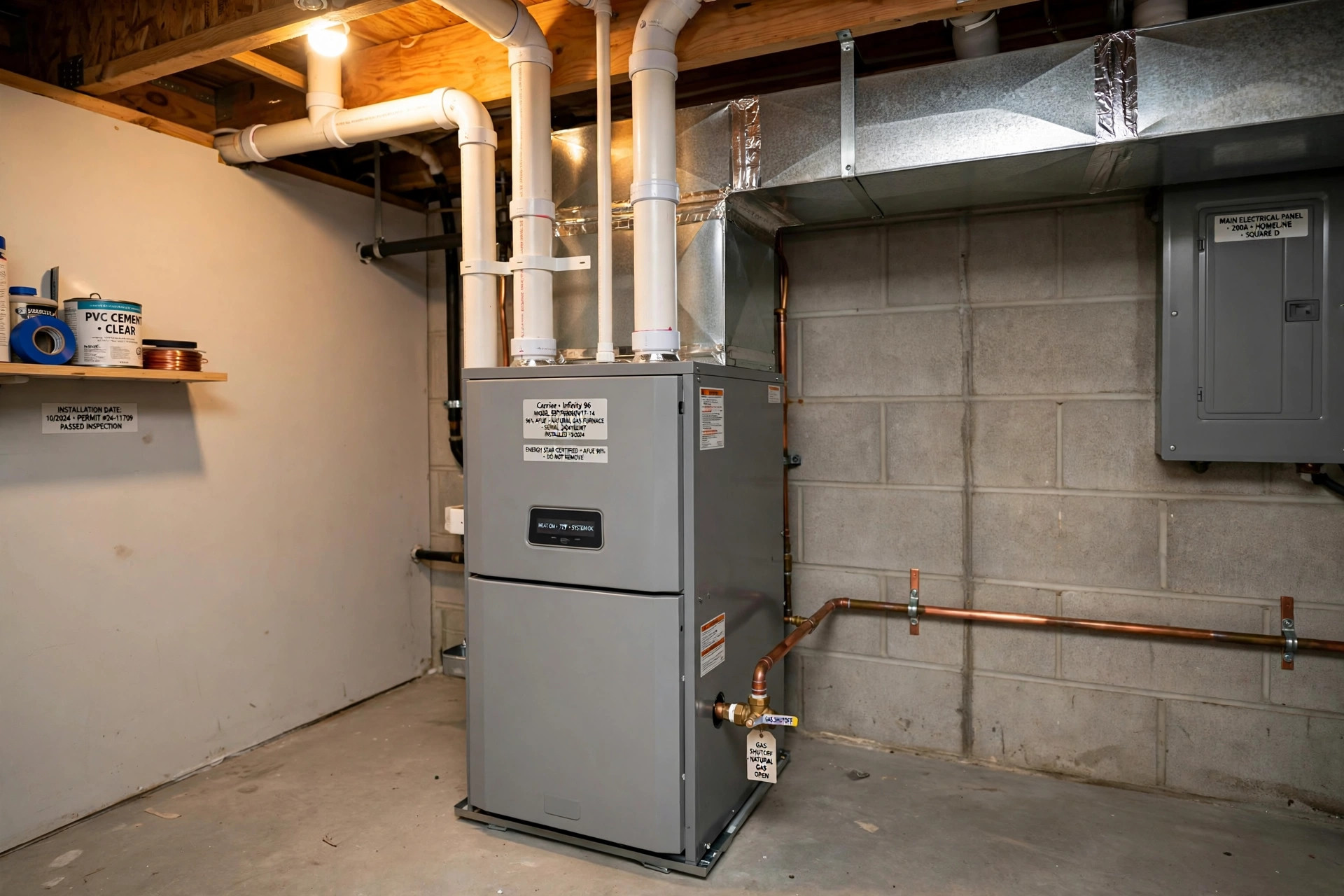

The gas furnace installation cost for 2000 sq ft of living space is one of the first questions a homeowner asks when the old unit starts to fail. A home of about 2,000 square feet is a common size across the United States. It sits in the middle of the market. That means prices are well documented. Still, the final bill can swing by thousands of dollars. In 2026, most homeowners pay between $3,500 and $7,500 for a full gas furnace installation in a 2,000 sq ft home. The average sits near $5,200. This guide walks through what drives the price up or down, how to size the unit, which types are worth the money, and how to keep the new system running for years.
Why the Installation Cost Matters More Than the Sticker Price
A furnace is not a shelf item. The gas furnace installation cost for 2000 sq ft covers labor, duct changes, gas line work, permits, and the removal of the old unit. The furnace itself is often less than half of the bill. A cheap unit put in badly will cost more in repairs and wasted gas than a fair unit put in well. Heating makes up close to half of the average home energy bill, according to figures published by the U.S. Department of Energy. That makes the install a long term decision. A good install in a 2,000 sq ft home can serve for 15 to 20 years. A poor one can cut that life in half.
Cost also matters because the range is wide. Two neighbors with the same size home can pay very different amounts. One may have simple ductwork and a gas line already in place. The other may need new vents, a chimney liner, or a larger gas feed. Knowing the pieces of the bill helps you read a quote with clear eyes.
How to Size a Gas Furnace for a 2,000 Square Foot Home: Gas Furnace Installation Cost for 2000 Sq Ft
Furnaces are sized in BTUs. That is British Thermal Units. It measures heat output. A common rule says a home needs 40 to 50 BTUs per square foot in a cold climate, and 30 to 40 in a mild one. For 2,000 sq ft, that points to a furnace in the 60,000 to 100,000 BTU range. Most contractors aim for 80,000 BTU for a 2,000 sq ft home in the middle of the country.
Bigger is not better. An oversized furnace heats fast and shuts off fast. That short cycling wastes gas and wears parts. It also leaves cold spots. An undersized furnace runs all day and never quite warms the house. The right way to size is a load calculation. Heating pros call it a Manual J. It looks at insulation, windows, doors, ceiling height, and local weather. Ask for this calculation before you sign. A contractor who quotes by square footage alone is guessing. Guides at ENERGY STAR stress that proper sizing is key to both comfort and efficiency.
Climate zones change the math. A 2,000 sq ft ranch in Minnesota needs far more heat than the same home in Texas. The installer should ask about past gas bills. Those bills show how much heat the home really uses. That data is worth more than any rule of thumb.
Types of Gas Furnaces and What They Cost Installed
Gas furnaces come in three main stages. Each stage changes both the price and the comfort level.
Single Stage Furnaces
These are the simplest. The burner is either on full or off. They cost the least to install, often $3,500 to $5,000 for a 2,000 sq ft home. They work fine in mild climates. The downside is uneven heat. The house swings between warm and cool. They also burn more gas than newer types.
Two Stage Furnaces
A two stage unit runs on low most of the time and kicks to high on cold days. This evens out the temperature. Installed cost for a 2,000 sq ft home usually runs $4,500 to $6,500. Many homeowners find this the best middle ground. You may want to read a two stage furnace vs single stage comparison before you decide.
Modulating Furnaces
These adjust the flame in small steps to match the exact need. They give the most even heat and the lowest gas bills. They are the priciest to install, often $6,000 to $7,500 or more. In cold regions, the fuel savings can pay back the extra cost over time.
Efficiency Ratings
Every gas furnace carries an AFUE rating. That is Annual Fuel Utilization Efficiency. It tells what share of the gas turns into heat. An 80 percent AFUE furnace wastes 20 cents of every gas dollar. A 96 percent unit wastes only 4 cents. High efficiency units cost $1,000 to $2,000 more up front. In a 2,000 sq ft home with cold winters, they can save $200 to $400 a year. Check the efficiency pages at Carrier, Trane, Lennox, Rheem, and Goodman to compare current models and their ratings.
Full Cost Breakdown for a 2,000 Sq Ft Installation
Here is where the money goes. The figures below are typical 2026 prices for a 2,000 sq ft home.
The furnace unit. A mid range 80,000 BTU gas furnace costs the contractor $1,200 to $2,500. High efficiency models run $1,800 to $3,500. Brand name units from established makers often cost more but carry longer warranties. If you are still shopping, look at best gas furnace brands 2026 reviews usa for a brand overview.
Labor. Installation labor runs $1,500 to $3,000 in most markets. Big cities run higher. The job takes a crew most of a day. Complex jobs with duct changes can take two days.
Ductwork changes. If the ducts fit the new unit, there is little extra cost. If ducts need repair, sealing, or resizing, add $500 to $2,000. Leaky ducts can waste a third of the heat, so this money is well spent.
Gas line work. A new or larger gas line may be needed. That can add $300 to $800. A gas permit is required in most towns.
Venting and flue. High efficiency furnaces use PVC pipe vents. Older homes may need a chimney liner or new vent runs. Budget $200 to $600.
Thermostat. A new programmable or smart thermostat adds $150 to $400 with install. It is a small cost that trims the gas bill all winter.
Permits and inspection. Most areas require a permit for furnace work. Fees run $50 to $300. The inspection protects you. It confirms the install meets code.
Old unit removal. Hauling away the old furnace and disposing of it safely often costs $100 to $300. Many quotes include this.
Put together, the gas furnace installation cost for 2000 sq ft lands at $3,500 on the low end for a basic swap, and $7,500 or more for a top tier modulating unit with duct fixes. The national middle is about $5,000 to $5,500.
What Pushes the Price Up or Down
Several factors move the final number.
Current system type. Swapping a gas furnace for a new gas furnace is the cheapest path. The gas line and vents exist. Switching from electric heat or oil to gas adds thousands. If you are weighing fuel types, see this heat pump vs furnace cost comparison usa guide.
Home layout. A one story 2,000 sq ft ranch is easy to serve. A two story home with far corners is harder. Long duct runs need more work.
Insulation and windows. A drafty home needs a bigger furnace. Sealing air leaks before the install can let you buy a smaller, cheaper unit.
Location. Labor rates vary widely. Quotes in the Northeast and West Coast run 20 to 30 percent above the national average. Rural areas may have fewer contractors, which also lifts prices.
Time of year. Contractors are busiest in late fall. Booking in spring or summer can bring a discount. Some companies run off season deals.
Rebates. Federal tax credits and local utility rebates can cut the cost of high efficiency models by hundreds of dollars. The U.S. Department of Energy and ENERGY STAR sites list current programs. Ask your contractor what rebates they handle.
Getting and Reading Quotes
Get at least three written quotes. Each should list the furnace brand, model number, BTU size, AFUE rating, and the full scope of work. Be wary of a quote far below the others. It may skip permits or duct sealing. It may also hide a smaller unit.
Ask each contractor these questions. Will you do a load calculation? What is the warranty on parts and labor? How long will the job take? Who pulls the permit? What is the total price with no extras?
Check reviews and licenses. A licensed, insured installer with strong local reviews is worth more than the lowest bid. Home improvement guides at This Old House and Family Handyman offer checklists for hiring HVAC contractors.
Care and Upkeep After Installation
A new furnace needs little care, but regular care keeps it efficient.
Change the air filter every one to three months during heating season. A clogged filter makes the blower work hard and shortens its life. Filters are cheap. A box of them costs less than one service call.
Book a professional tune up each fall. A tech will clean the burners, check the gas pressure, test the ignition, and inspect the heat exchanger. This visit runs $80 to $200. It catches small faults before they grow. For a refresher on yearly costs, see furnace tune up cost near me 2026.
Keep vents and returns clear. Move furniture and drapes away from registers. Vacuum the return grilles now and then.
Watch the flame. A gas burner should burn blue. A yellow or flickering flame can signal a problem. Call a tech if you see it.
Safety Basics for Gas Furnaces
Gas heat is safe when the system is installed and cared for well. Still, every home with a gas furnace needs carbon monoxide detectors. Put one on each floor, near sleeping areas. Test them monthly and change batteries yearly.
Never store paint, gasoline, or cleaners near the furnace. Keep the area around the unit clear for at least three feet. If you smell gas, leave the house and call the gas company from outside. Do not flip switches or light matches.
The heat exchanger is the heart of the furnace. It keeps combustion gases away from the air you breathe. A cracked exchanger can leak carbon monoxide. Annual inspections check for this. Older furnaces need this check most.
Frequently Asked Questions
How long does a gas furnace install take in a 2,000 sq ft home?
A straight swap takes one day, usually six to eight hours. If ductwork needs changes or a gas line must be run, plan for two days. Your contractor should give a firm schedule in writing.
Is a 100,000 BTU furnace too big for 2,000 sq ft?
It can be. Most 2,000 sq ft homes do well with 70,000 to 90,000 BTU. A 100,000 BTU unit suits a poorly insulated home in a very cold zone. Only a load calculation can say for sure. Oversizing wastes fuel and wears the unit.
Should I replace the air conditioner at the same time?
If the air conditioner is over 12 years old, doing both together can save on labor. The crew is already on site. Some contractors discount the combined job. If the AC is fairly new, leave it alone.
How long will a new gas furnace last?
Expect 15 to 20 years with yearly care. High efficiency units last about the same as standard ones. The blower motor and heat exchanger are the parts most likely to fail first. A strong warranty covers them.
Does a high efficiency furnace need special venting?
Yes. Furnaces rated 90 percent AFUE and above vent through PVC pipe out a side wall. They do not use the chimney. This often means new vent runs. Your installer will plan the route during the quote visit.
Can I install a gas furnace myself to save money?
No. Gas work is dangerous and requires a license in most states. A bad install risks gas leaks and carbon monoxide. It also voids the warranty. The permit and inspection process exists to keep you safe.
A Short Final Word
The gas furnace installation cost for 2000 sq ft is a big line item, but it buys two decades of steady heat. Get the size right with a load calculation. Choose the stage and efficiency that fit your climate. Get three honest quotes. And keep up with filters and fall tune ups once the unit is in. Do these things and the new furnace will pay you back in comfort and lower bills for years to come.
References
Carrier. (n.d.). Heating and cooling systems. https://www.carrier.com ENERGY STAR. (n.d.). Energy efficient products. https://www.energystar.gov Family Handyman. (n.d.). DIY home repair and maintenance. https://www.familyhandyman.com Goodman. (n.d.). Heating and cooling equipment. https://www.goodmanmfg.com Lennox. (n.d.). Heating and cooling systems. https://www.lennox.com Rheem. (n.d.). Heating, cooling, and water heating. https://www.rheem.com This Old House. (n.d.). Home renovation guidance. https://www.thisoldhouse.com Trane. (n.d.). Heating and air conditioning. https://www.trane.com U.S. Department of Energy. (n.d.). Energy efficiency and renewable energy. https://www.energy.gov
Was this guide helpful?

About David Wilson
The My Garden US editorial team writes practical, in-depth home and garden guides for American homeowners — tested advice, no fluff.
You May Also Like

Dual Hose Portable AC Reviews 2026 USA: A Plain Buyer’s Guide
August 22, 2026 0 views
Best Portable AC for Bedroom Reviews USA: What Buyers Should Know
February 26, 2026 0 views
Central AC Replacement Cost Near Me 2026
September 19, 2026 0 views