
What Is the Furnace Tune Up Cost Near Me in 2026
When cold weather comes back each year, one question comes up in homes across the country: what is the furnace tune up cost near me in 2026? A furnace tune up is a yearly check of your home heating system by a trained worker. The visit keeps the unit safe, cuts fuel waste, and helps it last longer. For most homes in 2026, a single tune up runs between about seventy-five and two hundred dollars. The exact price depends on where you live, the kind of furnace you own, and the company you call.
This guide walks through what you pay, what the visit includes, and how to pick the right service. It also covers ways to trim the bill without skipping the work that matters.
Why a Yearly Tune Up Matters: Furnace Tune Up Cost near Me 2026
A furnace is a machine with fire, fuel, and moving parts. Over a year of rest, dust builds up on burners. Parts loosen. Small cracks can form in the heat exchanger, the metal box that keeps hot air and flue gases apart. A trained eye can spot these problems before they turn into a no-heat night in January.
There are three main reasons to keep the yearly visit on your calendar.
Safety
A cracked heat exchanger can let carbon monoxide leak into the home. This gas has no smell and no color. It can cause grave harm before anyone notices. A tune up includes a check of the exchanger and the venting, which lowers this risk. The technician also tests the flame and the safety shutoff controls.
Lower Fuel Bills
A dirty furnace burns more fuel to make the same heat. When burners are clean and the blower moves air as it should, the system runs at its rated power. Many homeowners find that the tune up pays for part of itself through lower gas or oil bills over the winter.
Longer Life
A furnace that gets yearly care often runs for twenty years or more. One that is ignored may need a new blower motor or a full change after only twelve or fifteen years. Since a new furnace can cost several thousand dollars, a small yearly visit is cheap insurance.
What a Standard Tune Up Includes
Prices differ, but most companies follow a common list of tasks. When you call for quotes, ask each firm what is in the visit. A full tune up should include:
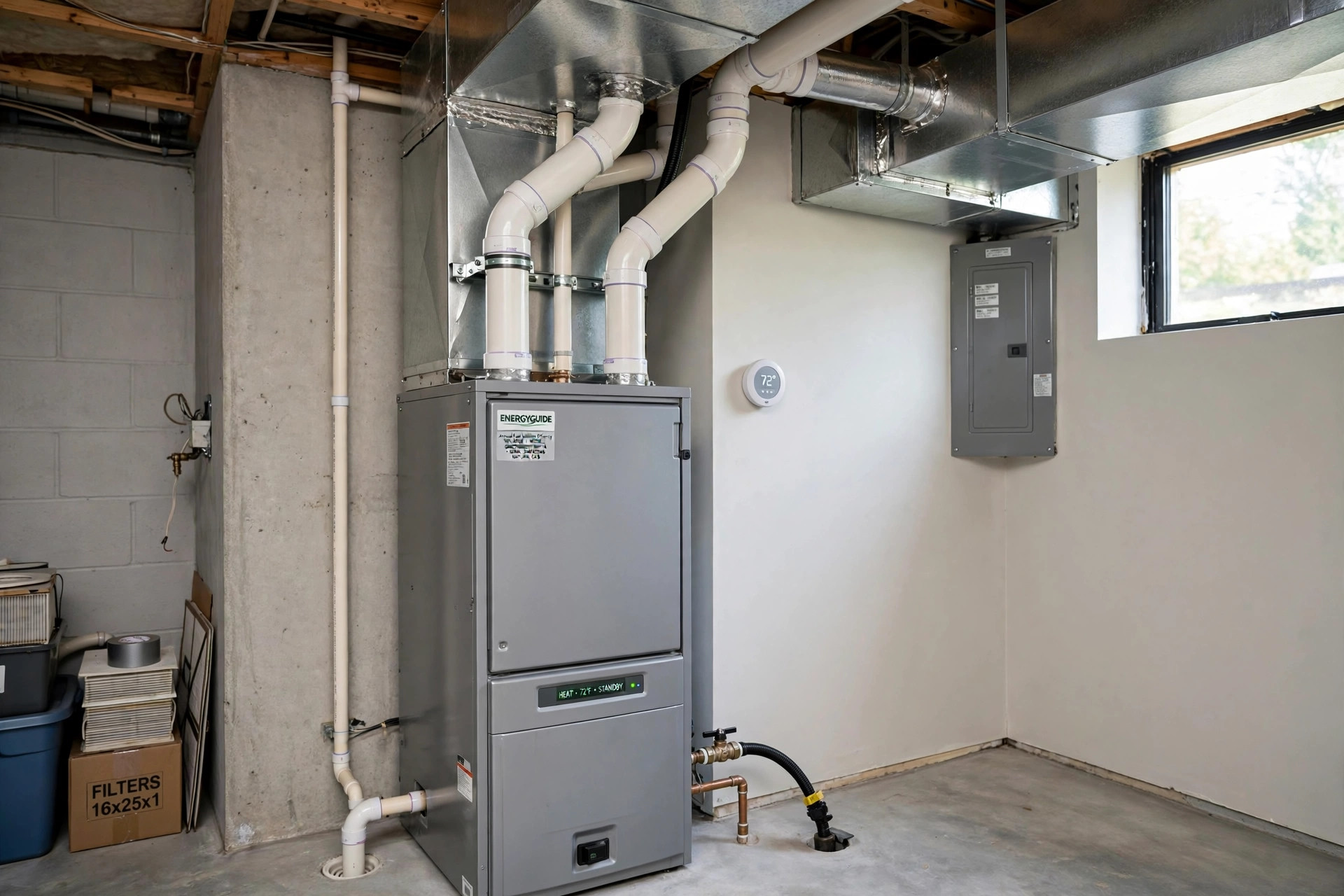
– Visual check of the whole unit. The technician looks at the cabinet, wiring, and vent pipes for rust, cracks, or loose joints. – Cleaning of burners and the flame sensor. Soot and scale are removed so the flame burns blue and steady. – Check of the heat exchanger. The tech inspects for cracks or holes, often with a mirror or a camera scope. – Filter check. A dirty filter is replaced or cleaned. Some firms include one standard filter in the visit price. – Blower inspection. The motor and fan wheel are checked for wear, and the amp draw is measured. – Thermostat test. The setting is compared against the room air to make sure the reading is true. – Safety control tests. Limit switches, pressure switches, and the gas valve are tested to confirm they shut the unit down if something goes wrong. – Carbon monoxide test. The tech tests the air near the furnace and in the vent for unsafe gas levels. – Lubrication. Older motors with oil ports get a drop of oil.
Some firms add a combustion test, which measures how well the furnace turns fuel into heat. Others wash the condensate trap on high-efficiency units. Ask for a written list before the visit so you know what your money buys.
Types of Furnaces and How They Change the Price
The kind of furnace in your home shapes the cost of the visit. Most American homes use one of three fuel types.
Gas Furnaces
Gas units are the most common. A tune up for a gas furnace is often the least costly because parts are common and the work is routine. Expect the low to middle end of the price range. High-efficiency condensing models take a little more time because the tech must check the condensate drain and the sealed vent system.
Oil Furnaces
Oil units need more labor. The nozzle that sprays the oil wears out each year and is usually replaced. The tech cleans soot from the firebox, changes the oil filter at the tank, and checks the pump pressure. All of this adds time, so an oil furnace tune up often costs twenty to fifty dollars more than a gas visit.
Electric Furnaces
Electric units have no flame and no flue. The visit is simpler: check the heating elements, test the sequencer that turns them on in steps, and inspect the wiring and blower. Electric tune ups are often priced like gas visits or slightly less.
Heat pumps and mini splits follow their own service plans. For a side-by-side look at two common heating choices, see our comparison of heat pump vs furnace cost to learn which fits your climate.
Cost and Price in 2026
So what numbers should you expect? Based on common market rates for 2026:
– Basic visit, gas furnace: 75 to 125 dollars. – Basic visit, oil furnace: 125 to 200 dollars. – Basic visit, electric furnace: 75 to 125 dollars. – High-efficiency or sealed-combustion unit: 100 to 175 dollars. – Add-on: duct inspection or cleaning quote: 150 to 400 dollars for a separate cleaning visit.
These are averages for one visit with no repairs. If the tech finds a worn ignitor or a weak capacitor, parts add to the bill. A hot surface ignitor often runs 100 to 250 dollars installed. A blower capacitor may add 75 to 150 dollars. Ask the tech to show you any worn part before you agree to the extra work.
Service Plans
Many companies sell a yearly plan that covers one heating visit and one cooling visit. In 2026 these plans often run 150 to 300 dollars per year. A plan can be a good deal if it includes both visits, a filter, and a small repair discount. Compare the plan price against two single visits before you sign.
Regional Differences
Labor rates shape the final price. A tune up in a large city in the Northeast or on the West Coast often costs more than the same visit in a small town in the Midwest or South. Rural areas may add a travel fee of 25 to 50 dollars. When you search for “furnace tune up cost near me,” get at least three written quotes and compare what each one includes.
Ways to Save
– Book early. September and early October are slow for heating firms. Some offer ten to twenty percent off preseason visits. – Bundle visits. Ask for one price that covers the fall furnace check and the spring air conditioner check. – Ask about the plan. A two-visit plan is often cheaper than two separate calls. – Keep the filter clean. A clean filter means less work for the tech and less strain on the blower all winter. – Skip add-ons you do not need. A salesman may push duct cleaning or a new thermostat. Buy them only if you need them.
Guidance from federal energy programs notes that a well-kept heating system can use much less fuel than a neglected one. You can review efficiency advice from the Department of Energy at energy.gov and the ENERGY STAR program at energystar.gov to see how upkeep ties into lower bills.
How to Choose the Right Service Company
Price is only one part of the choice. A cheap visit that skips key steps is poor value. Look for these marks of a good firm.
Licensing and Insurance
Heating work should be done by a licensed contractor. Ask for the license number and check it with your state board. The firm should carry liability insurance and workers compensation. A proper company will show proof without a fuss.
NATE Certification
Many of the best technicians hold certification from North American Technician Excellence. This is a voluntary test program. It does not promise perfection, but it shows the tech has passed a real skills test. Manufacturer sites such as Carrier, Trane, Lennox, Rheem, and Goodman list dealers who meet their training standards, which is one way to find a trained firm.
Clear Written Quotes
A good firm gives a written price before the visit and a written report after. The report should list what was checked, what was cleaned, and any problems found. Keep these reports. They are proof of care if you later file a warranty claim.
Reviews and Referrals
Ask neighbors who they use. Read online reviews, but look for patterns rather than single loud voices. A firm with many reviews that praise on-time visits and honest pricing is a good sign. Be wary of a company whose reviews mention pushy sales tactics.
Home improvement guides at This Old House and Family Handyman offer plain advice on what a fair heating service visit should cover, which helps you judge quotes.
Care and Upkeep Between Visits
The yearly visit is the big job, but you can do small tasks through the season. These steps keep the system running well and stretch the value of each dollar you spend.
– Change the filter on time. Check it every month in winter. A clogged filter chokes airflow and can overheat the heat exchanger. Our furnace maintenance checklist for fall lists this step first. – Keep vents and returns open. Do not block supply registers with rugs or furniture. Every room needs free air flow. – Keep the area around the furnace clear. Leave at least three feet of open space. Never store paint, gasoline, or cleaning chemicals near the unit. – Watch the flame. Through the small sight glass on a gas unit, the flame should burn mostly blue with small yellow tips. A lazy yellow flame means you should call for service. – Test carbon monoxide alarms. Press the test button each month. Change batteries at least once a year, or use sealed long-life units. – Note odd sounds and smells. New rattles, bangs, or a hot dusty smell that lasts more than a few days deserve a service call.
For a full schedule of how often each task is due, see our guide on how often to service a furnace.
Safety Rules Every Homeowner Should Know
Heating equipment is safe when it is cared for, but it deserves respect. Keep these rules in mind.
– Never skip the carbon monoxide alarm. Place one on each floor and near each sleeping area. This is the law in many states. – Know the signs of trouble. Headaches, nausea, and dizziness in the home can signal carbon monoxide. If alarms sound, leave the house and call the fire department from outside. – Keep flue pipes clear. After a heavy snow, check that the vent outside is not buried. A blocked vent can push exhaust back into the home. – Do not work on gas parts yourself. Cleaning a filter and clearing space around the unit are fine. Leave gas lines, burners, and electrical parts to a trained tech. – Use only the right fuel. Burn only the fuel your unit was built for. Never burn trash, wood, or chemicals in a furnace.
The Consumer Product Safety Commission at cpsc.gov posts recalls and safety notes for home heating equipment. A quick check there each fall takes only a few minutes.
Frequently Asked Questions
How much does a furnace tune up cost near me in 2026?
For most gas and electric furnaces, expect 75 to 125 dollars per visit. Oil furnaces often run 125 to 200 dollars because the work takes longer. City areas and high-efficiency units sit at the high end. Always ask what the visit includes before you book.
How often should I have my furnace tuned up?
Once a year, in early fall, before the first cold snap. Yearly care keeps the warranty valid on many new units, which often require proof of yearly service. A fall visit also means the tech can find problems while firms still have open schedules.
What is the difference between a tune up and a repair?
A tune up is planned care: cleaning, checking, and testing. A repair fixes something that has already broken. A tune up visit sometimes finds a small problem early, which you can fix at a lower cost than a midnight breakdown call.
Can I tune up my own furnace?
You can change the filter, keep vents clear, and test alarms. Leave burners, gas parts, heat exchanger checks, and electrical tests to a trained worker. Home work on gas equipment can void the warranty and create safety risks.
Does a tune up really lower my heating bill?
It can. A clean burner, a clear filter, and a true thermostat reading all help the furnace turn fuel into heat with less waste. Most homes see a modest drop in fuel use after a good service, though the exact savings depend on the age and state of the unit.
Should I buy a yearly service plan?
A plan makes sense if the yearly price is less than two single visits and includes filters or repair discounts. Read the fine print. Make sure both the heating and cooling visits are covered and that the plan is with a firm you trust.
A Short Final Word
The furnace tune up cost near me in 2026 is modest next to the cost of a winter breakdown or a new furnace. For most homes, one yearly visit between 75 and 200 dollars buys safety checks, cleaner burning, and a longer-lived unit. Book in early fall, compare three written quotes, and pick a licensed firm that gives you a clear report. Then keep the filter clean and the alarms tested through the season. Your furnace will repay the care with steady, safe heat all winter long.
References
Carrier. (n.d.). Heating and cooling systems. https://www.carrier.com ENERGY STAR. (n.d.). Energy efficient products. https://www.energystar.gov Family Handyman. (n.d.). DIY home repair and maintenance. https://www.familyhandyman.com Goodman. (n.d.). Heating and cooling equipment. https://www.goodmanmfg.com Lennox. (n.d.). Heating and cooling systems. https://www.lennox.com Rheem. (n.d.). Heating, cooling, and water heating. https://www.rheem.com This Old House. (n.d.). Home renovation guidance. https://www.thisoldhouse.com Trane. (n.d.). Heating and air conditioning. https://www.trane.com U.S. Consumer Product Safety Commission. (n.d.). Product safety information. https://www.cpsc.gov U.S. Department of Energy. (n.d.). Energy efficiency and renewable energy. https://www.energy.gov
Was this guide helpful?

About Jennifer Lee
The My Garden US editorial team writes practical, in-depth home and garden guides for American homeowners — tested advice, no fluff.
You May Also Like
Best Through the Wall AC Reviews USA: A Plain Buyer’s Guide
September 21, 2026 0 views
The Best Wood Stove for 2000 Sq Ft: Reviews and a Buyer’s Guide
February 21, 2026 0 views
Gas Furnace Installation Cost for 2000 Sq Ft Homes: 2026 Prices and What to Expect
September 4, 2026 0 views