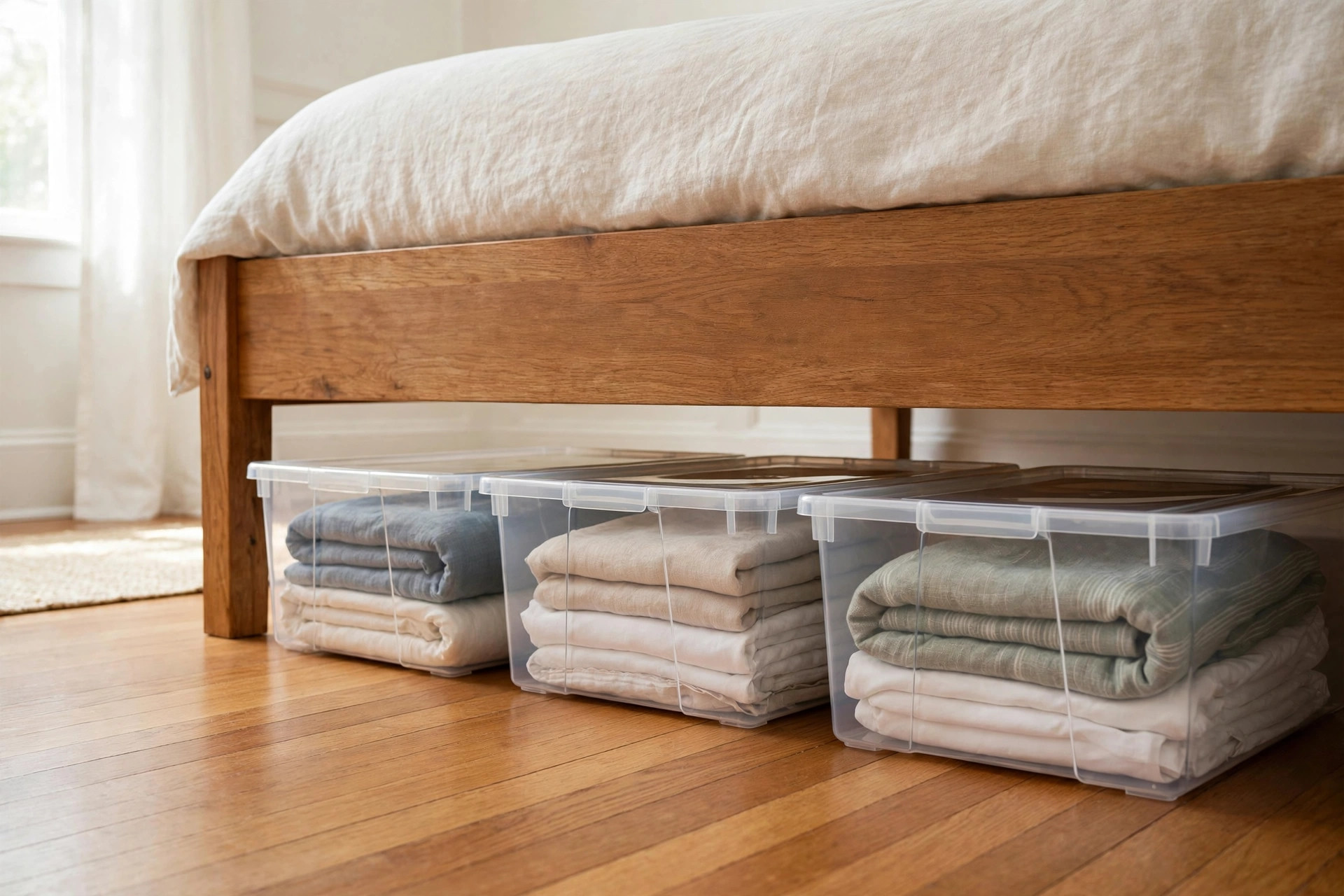

The space under a bed is often wasted. Dust collects there. Shoes pile up around the room. Clothes sit in bags in the closet. An affordable under bed storage containers buying guide helps you use that empty space in a smart way. These low containers slide right under the frame. They hold off season clothes, extra sheets, shoes, and toys. They keep your things clean, dry, and out of sight. Best of all, they cost very little money. You do not need a big budget to bring order to your bedroom.
Why Under Bed Storage Matters
Every bedroom has dead space under the bed. In a small room, that space can act like a second closet. In a large room, it keeps clutter off the floor. Storing things under the bed also protects them from light. Sunlight can fade fabric. Closed bins block the light and keep colors bright. A good set of containers can hold blankets for guests, winter coats, or a child’s toys. The room looks larger and calmer when the floor is clear.
Many people buy a storage ottoman or a second dresser instead. Those cost far more. Under bed bins cost a fraction of the price. They also move easily. You can pull a bin out with one hand and push it back when you are done. For a college dorm, a small apartment, or a shared house, this kind of storage is hard to beat. It works well with other low cost ideas like rolling storage carts, which you can read about in our buy rolling storage carts online in Florida article.
What to Look For When You Shop: Affordable under Bed Storage Containers Buying Guide
Measure First
Before you buy, measure the space under your bed. Take a tape measure and check the height from the floor to the bottom of the frame. Most bins are five to eight inches tall. Leave at least one inch of room so the bin slides in and out with ease. Also measure the width and depth. A queen bed can hold four large bins. A twin bed may hold only two. Write the numbers down and bring them with you, or keep them near your phone when you shop online.
Pick the Right Material
Most low cost bins are made of plastic. Plastic is light, easy to clean, and keeps out dust and moths. Look for plastic that feels thick and firm when you press it. Thin plastic can crack in cold rooms. Some bins use fabric with a clear window. Fabric bins are lighter and fold flat when empty. They do not keep out dust as well. For clothes and bedding, a lidded plastic bin is the safer choice. It seals out dirt and moisture.
Check the Lid
A lid keeps dust off your things. Some lids snap down tight. Others rest loose on top. A tight lid is better for long term storage. If you will open the bin every day for shoes, a loose lid is fine and easier to handle. Clear lids let you see what is inside without opening the bin. That saves time when you are looking for one pair of socks in a sea of bins.
Wheels or No Wheels
Wheeled bins roll out smooth on hard floors. They are a kind gift to your back. You do not have to bend and drag. On thick carpet, small wheels can sink and stick. Look for large wheels if your room has deep carpet. Some bins have built in handles on the ends instead of wheels. Handles work well on any floor. A bin with both wheels and a handle is the best of both worlds.
Handles That Last
Test the handle before you buy, if you can. Cheap fabric handles can tear when the bin is full of heavy blankets. Wide plastic handles hold more weight. A handle that runs across the full end of the bin spreads the load. For daily use bins, strong handles matter more than you think.
Types of Under Bed Containers
Flat plastic bins with lids. These are the most common. They come in sets of two or four. Heights run from five to seven inches. They fit under most beds.
Fabric bags with zippers. These cost less than plastic. They are soft, so they squeeze into tight spaces. Many have a clear top so you can see inside. They are best for soft items like sweaters and quilts.
Divided bins. Some bins have small dividers inside. These work well for shoes, one pair per slot. They stop shoes from pressing into each other. They also work for craft supplies and small toys.
Vacuum bags. Not really a container, but worth a mention. A vacuum bag lets you shrink bulky winter coats flat. Slip the bag into a low bin or lay it flat under the bed. This trick can double your storage space.
Rolling wood or metal drawers. These cost more, but they last for years. Some beds are sold with matching drawers built in. A freestanding rolling drawer works under almost any bed with tall legs. For ideas on matching larger pieces, see our top rated freestanding wardrobe closets for USA homes piece.
Cost and Price: What Should You Pay?
Under bed storage is one of the cheapest ways to gain space. A set of two basic plastic bins often costs between ten and twenty dollars. A set of four runs from twenty to forty dollars. Fabric bags cost even less, sometimes five dollars each. Name brand bins with smooth rolling wheels and tight lids cost more, but even those stay under sixty dollars for a set.
Watch for sales. Back to school season in late summer brings deep cuts on storage. January brings closet and home sales. Many stores also sell open box or clearance sets at half price. Buying online can save money, but check the shipping cost first. A bulky set of bins can carry a high shipping fee. Free shipping offers are common at big home stores, so look for those.
Do not pay extra for fancy colors unless they matter to you. Clear bins often cost less than colored ones, and they let you see inside. That is a real plus. Spend the money you save on a good set of labels or a simple shelf label maker.
How to Organize Your Bins
Plan what goes in each bin before you fill it. Give every bin one job. One bin for winter sweaters. One bin for extra sheets. One bin for shoes. This keeps you from hunting through three bins for one item. If you store items for two seasons, place the current season on top and the off season on the bottom. Some people pack off season clothes in vacuum bags inside the bin to save even more room.
Label each bin on the end that faces out. A strip of masking tape and a marker work fine. Write big words you can read from across the room. “WINTER HATS” is better than “Misc.” Sort by person if the bedroom is shared. Each person gets their own bins. Kids can learn to pull out one bin, play, and push it back. For wall storage ideas that pair well with under bed bins, read our pegboard wall organizers price comparison USA guide.
Keep a list on the fridge of what lives under each bed. When you have three bedrooms, this list saves real time. Update it when you switch items for the season. A five minute task in spring and fall keeps the system working all year.
Care and Upkeep
Clean your bins twice a year. Pull them out, wipe them down with a damp cloth, and let them dry in the open air. Wash fabric bins in the machine if the tag allows it. Check lids for cracks. A cracked lid lets in dust and should be replaced. Vacuum under the bed while the bins are out. Dust bunnies love that space.
Air out stored clothes once a year. Take them out, shake them, and let them breathe for a day. This stops musty smells. Toss a cedar block or a lavender sachet in each bin to keep clothes fresh. Do not store damp items. Mildew grows fast in a closed bin. Make sure all clothes are fully dry before they go in.
Check wheels now and then. Hair and string can wrap around small wheels and stop them from rolling. Pull the mess off with your fingers or a pair of scissors. A drop of oil on a squeaky wheel keeps it quiet.
Safety Notes
Do not store heavy items that a child could pull down on themselves. Bins full of books get very heavy. Keep heavy bins low and near the wall. Teach small children not to climb on or into bins. A bin can tip. A child can get stuck inside a large bin with a lid. Keep lids loose or remove them where toddlers play.
Do not store candles, batteries, or chemicals under the bed. Heat builds up in a closed space. Keep a clear path to the bed for night time trips. Bins that stick out past the frame can trip you in the dark. Push bins fully under the bed each night. If you live in an earthquake zone, keep breakables out from under beds entirely.
FAQ
How tall should under bed storage containers be? Measure your bed frame first. Most frames leave six to eight inches of space. Buy bins that are at least one inch shorter than that space. Low platform beds may leave only three inches. For those, use flat vacuum bags or soft fabric bags.
Plastic or fabric: which is better? Plastic keeps out dust and moisture best. It costs a bit more and takes up space when empty. Fabric is cheaper and folds flat. It lets in some dust. For clothes you wear often, fabric is fine. For clothes stored for months, plastic wins.
How many bins fit under a queen bed? A queen bed can hold four large bins, each about thirty four inches wide, in a two by two layout. You can also fit six smaller bins. Measure your bed and plan the layout on paper first.
Will under bed bins scratch hardwood floors? Cheap bins with rough edges can scratch wood. Look for bins with smooth bottoms or add felt pads. Wheeled bins with rubber wheels are safe on wood. Always lift rather than drag a heavy bin on bare floors.
Can I store shoes under the bed? Yes. Shoes are a perfect fit for under bed bins. Use divided bins so pairs stay together. Put a dryer sheet or baking soda sachet in the bin to fight odor. Clean shoes before storing them for the season.
Where can I buy affordable under bed storage containers? Big home stores and online shops carry them year round. Look at IKEA for flat pack options, The Container Store for a wide range, and Home Depot for low prices. Compare a few stores before you buy. For design ideas, browse Apartment Therapy and The Spruce.
A Short Final Word
An affordable under bed storage containers buying guide comes down to three steps. Measure your space. Pick sturdy low bins with good lids. Give each bin one job and label it. That is all it takes to turn wasted space into a clean, quiet storage zone. Your bedroom will feel larger. Your mornings will run smoother. And your wallet will stay happy.
Buying guides are also published by Family Handyman and Wayfair. See also Target for further detail.
References
Apartment Therapy. (n.d.). Home design ideas and inspiration. https://www.apartmenttherapy.com Family Handyman. (n.d.). DIY home repair and maintenance. https://www.familyhandyman.com IKEA. (n.d.). Home furnishings. https://www.ikea.com Target. (n.d.). Retail store. https://www.target.com The Container Store. (n.d.). Storage and organization products. https://www.containerstore.com The Home Depot. (n.d.). Home improvement products. https://www.homedepot.com The Spruce. (n.d.). Home and garden advice. https://www.thespruce.com Wayfair. (n.d.). Furniture and home goods. https://www.wayfair.com
Was this guide helpful?

About James Carter
The My Garden US editorial team writes practical, in-depth home and garden guides for American homeowners — tested advice, no fluff.
You May Also Like

Premium Kitchen Cabinet Organizers Buying Guide
May 15, 2026 0 views
Stackable Pegboard Wall Organizers for Sale: A Complete Buying Guide
August 6, 2026 0 views
Toy Storage Bins Price Comparison in the USA: A Plain Guide for Parents
August 1, 2026 0 views