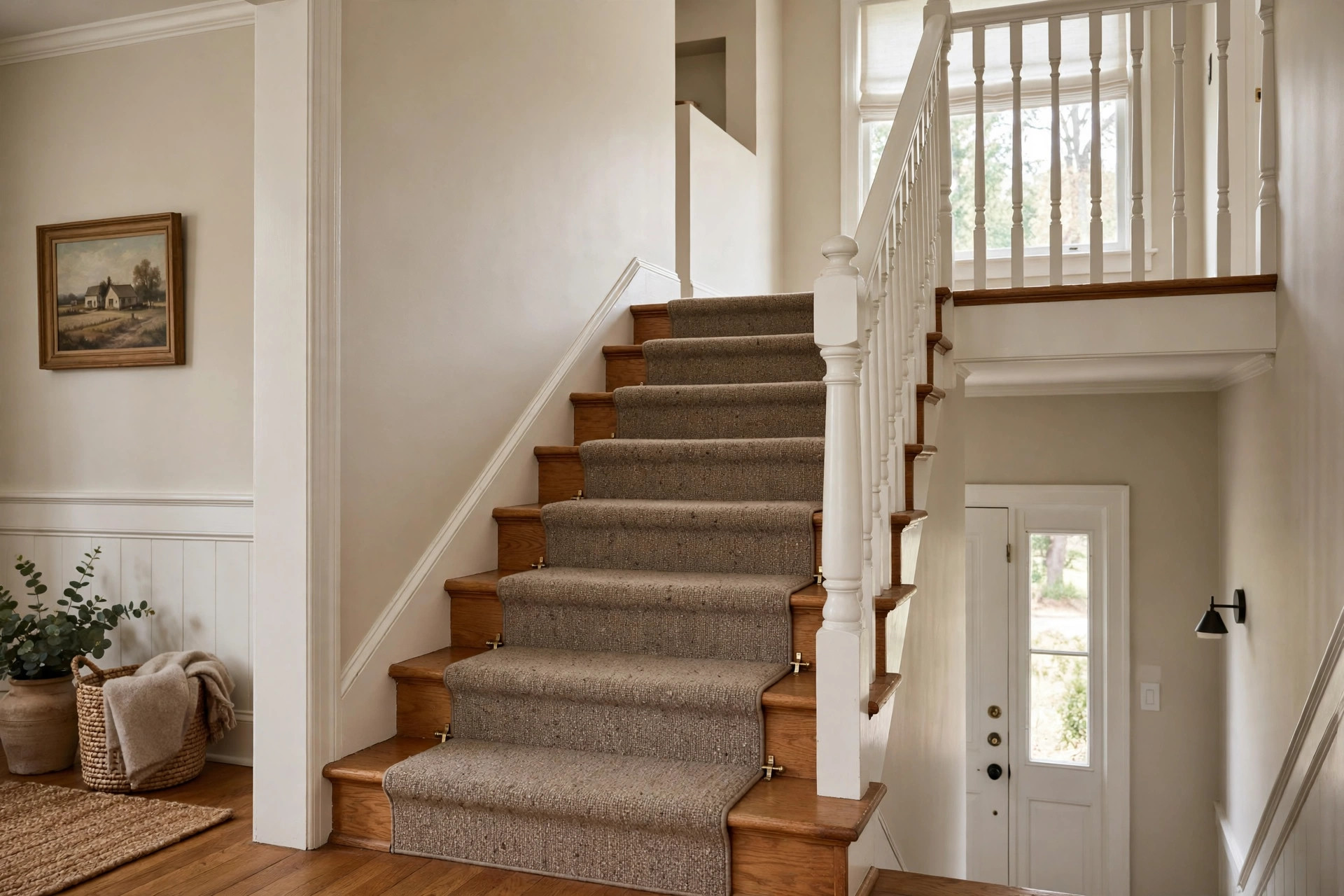

Stairs take more abuse than almost any surface in the home. Add dogs, and the abuse doubles. Claws dig in on every climb. Mud lands on every step. Hair drifts into every corner. The best carpet for stairs with dogs USA homeowners can buy is not the softest carpet in the store. It is not the cheapest carpet either. It is the toughest one. Good stair carpet for dog homes grips paws, hides hair, and cleans up fast after a muddy walk.
Why It Matters
Dogs run stairs the way people do not. They launch from the bottom. They skid at the top. They turn hard on the landing. Every move grinds dirt into the fibers. Bare wood stairs look fine, but they turn into a slide under paws. Many dogs learn to fear slick steps. Older dogs with stiff joints suffer the most. A fall on hard stairs can injure a pet badly.
Carpet solves the traction problem. It gives paws something to grab. It also quiets the house. A 70-pound dog thundering down bare wood at six in the morning wakes everyone. Carpet softens each step. It also warms cold stairs in winter.
But the wrong carpet fails fast. A tall, loose shag traps hair and mats under claws. A light cream pile shows every paw print. A weak pad flattens in months. Cheap stair carpet can look worn in a single year with two active dogs. The right choice lasts a decade. That is why the choice matters.
Dogs also bring stains. Accidents happen, even with trained pets. A nervous puppy or a sick older dog can soil the steps. Carpet that resists stains saves real money. It saves hours of scrubbing. Pick well once, and the stairs stay clean for years.
What to Look For: Best Carpet for Stairs with Dogs Usa
Fiber First
Fiber is the material the carpet is made from. It decides how the carpet wears and stains. Nylon is the classic pick for stairs with dogs. It is strong. It springs back after feet press it down. Most good nylon carpets also carry built-in stain guards.
Polyester is cheaper and soft. It resists stains well. But it flattens faster than nylon under heavy dog traffic. Triexta, sold under names like SmartStrand, is a newer option. It resists stains at the fiber level. Pet stains wipe out of it with plain water in many cases. It costs more, but dog owners rate it highly.
Wool looks rich and wears well. But wool stains badly and costs a lot. Most experts steer dog owners away from wool on stairs.
Pile Height and Style
Pile is the height of the carpet fibers. On stairs with dogs, keep it low. A pile under half an inch works best. Low pile is easier to vacuum. Hair lifts out with one pass. Claws do less damage because there is less fiber to catch.
Loop pile, like Berber, is dense and tough. The loops resist crushing. But long dog nails can snag a loop and pull a long thread. If your dogs have long claws, a tight, low loop is fine. A loose, tall loop is risky.
Cut pile, like frieze, has twisted fibers that stand up. Frieze hides footprints and paw prints well. It looks casual and handles traffic. Saxony, a smooth cut pile, shows every mark. Skip it for dog homes.
Density and Weight
Density means how tightly fibers are packed. Face weight is the weight of fiber per square yard. On stairs, both matter more than in a bedroom. Bend a sample backward. If you see the backing through the fibers, the carpet is too thin. Good stair carpet for dogs has a face weight of at least 40 ounces per square yard. Denser carpet resists matting. It stands up to the daily pounding of paws.
Backing and Pad
The pad sits under the carpet. On stairs, use a firm, thin pad. A pad made for stairs is usually about 3/8 inch thick and very dense. Thick soft pads feel nice, but they let the carpet stretch and wrinkle on steps. Wrinkled carpet wears out fast. A moisture-barrier pad is a smart upgrade for dog homes. It stops accidents from soaking into the wood below.
Stain Protection
Look for factory stain treatment. Brands such as Shaw and Mohawk build stain guards into many of their pet lines. These treatments coat each fiber. Spills bead up instead of soaking in. You still must clean fast, but the guard buys you time. A good built-in guard beats any spray you apply at home.
Types and Options
Berber and loop carpets. These are the workhorses. Tight loops handle heavy traffic. They hide dirt between cleanings. Patterns woven into the loop hide stains even better. A speckled or tweed Berber is a classic dog-house pick. Just keep claws trimmed to avoid snags.
Frieze and twist carpets. The twisted fibers of frieze bounce back after each step. They hide paw prints and vacuum marks. Frieze suits homes where the stairs get constant use. It looks informal, which fits most family homes.
Patterned carpet. Patterns are a dog owner’s friend. A small geometric or organic print breaks up the surface. Muddy prints and shed hair blend into the design. Dark or medium tones work best. Charcoal, taupe, and warm brown hide the most.
Stair runners vs. wall-to-wall. A runner covers the center of each step and leaves the wood edges showing. It is cheaper than full carpet. It also lets you replace one worn runner later without redoing the whole staircase. Wall-to-wall carpet covers every inch. It gives the most traction and the most noise control. With dogs, full coverage means no bare edge for slipping.
Carpet tiles. Some owners use carpet tiles on stairs. Tiles are easy to swap when one step gets ruined. But tiles can shift on stair noses. They need strong adhesive and careful fitting. Most installers still favor a fitted runner or full carpet for stairs.
If you are redoing floors beyond the stairs, it helps to compare options. You might read about rubber flooring for a home gym if you want a tough workout space, cork flooring for kitchens for a warm kitchen underfoot, or pebble shower floors for a bath project.
Cost and Price
Stair carpet costs more per square yard than bedroom carpet because the grade is higher. Expect to pay $3 to $8 per square foot for good pet-grade carpet material alone. That equals $27 to $72 per square yard. Premium triexta lines run higher. Budget polyester can dip lower, but it wears out sooner with dogs.
Installation on stairs costs extra. Stairs need more labor than flat rooms. Each step must be cut and fitted. Installers often charge $150 to $400 for a standard straight staircase, on top of the material. Curved stairs cost more.
The pad adds $1 to $3 per square foot. A moisture-barrier pad sits at the top of that range. It is worth the money in dog homes.
A typical straight staircase has about 12 to 14 steps. Total cost for a quality job often lands between $800 and $2,500. That sounds steep. But a cheap job that fails in two years costs more in the long run. Pay for density and good installation once.
Watch for sales at big retailers. Stores like Home Depot and Lowe’s run carpet promotions several times a year. Flooring specialists like LL Flooring also carry pet-rated lines worth comparing. Get at least three quotes from local installers before you commit.
Care and Upkeep
Good habits matter as much as good carpet. Vacuum stairs twice a week if you have dogs. Use the upholstery or stair tool. Hair works deep into low pile fast. A rubber broom also pulls hair out of carpet well. Run it over each step before vacuuming.
Blot spills at once. Never rub a stain. Rubbing pushes it deeper and spreads it. Press a clean cloth down hard. Lift straight up. Repeat with a fresh cloth. For pet urine, use an enzyme cleaner made for pets. Enzyme cleaners break down the proteins that cause odor. Regular soap leaves the smell behind. Dogs return to spots that still smell.
Deep clean twice a year. A rented steam cleaner works for most homes. Use a pet-safe carpet solution. Do not over-wet the stairs. Too much water can damage the pad and the wood below. Let each step dry fully before dogs walk on it.
Trim your dogs’ nails every few weeks. Short nails snag less and scratch less. Brush heavy shedders outside when you can. Less loose hair in the house means less hair ground into the stairs.
Plan a professional cleaning once a year. Pros use stronger extraction machines. They pull out deep dirt that home machines leave. Yearly pro cleaning can add years to the life of stair carpet. Guides from The Spruce offer step-by-step cleaning routines worth bookmarking.
Safety
Carpet on stairs must be tight. Loose carpet on a step is a trip hazard for people and dogs. A good installer stretches each piece snug and staples it well. Check the nosing, the front edge of each step. It should feel firm under your hand. If it lifts, call the installer back.
Loop carpet and long claws need attention. A caught claw can panic a dog. It can also pull a long run in the carpet. Keep nails short. Choose tight, low loops, not tall loose ones.
New carpet has a smell. Air the house out after installation. Open windows for a day or two. Keep dogs in another room until the smell fades. Some sensitive pets react to new-carpet fumes. Low-VOC carpet options release fewer fumes. Ask your dealer about them.
If your stairs have tile landings, keep them dry. Wet paws on tile are slick. Rugs with rubber backing help. For tile questions, makers like Daltile publish care and safety notes for their floors.
Frequently Asked Questions
What is the best carpet fiber for stairs with dogs? Nylon and triexta lead the field. Nylon is strong and springs back under traffic. Triexta resists stains at the fiber level and cleans with water alone. Both beat polyester for long-term wear on stairs. Wool is a poor pick for dog homes because it stains easily.
Is Berber carpet good for stairs with dogs? Yes, with one warning. Tight, low Berber handles dog traffic very well and hides dirt. But long claws can snag the loops. Keep nails trimmed. If your dogs will not tolerate nail trims, pick a low cut-pile frieze instead.
How often should I clean stair carpet with dogs? Vacuum twice a week. Spot clean stains the day they happen. Deep clean with a steam cleaner twice a year. Book a professional extraction cleaning once a year. Heavy shedders or multiple large dogs may need more frequent vacuuming.
Can I install stair carpet myself? Flat rooms are doable for skilled DIYers. Stairs are much harder. Each step needs precise cuts and tight stretching. Poor fitting creates trip hazards. Most homeowners hire a pro for stairs. Installation guides from This Old House show what the job involves if you want to judge the difficulty.
Dark or light carpet for stairs with dogs? Medium to dark tones win. Charcoal, warm brown, taupe, and gray hide hair and paw prints. Patterned carpet hides even more. Very light carpet shows every mark. Very dark carpet shows light-colored hair. Match the tone to your dog’s coat for the easiest upkeep.
Which brands make the best pet carpet? Shaw and Mohawk both sell pet-rated lines with built-in stain protection. Their pet collections are designed for homes with dogs and cats. Compare warranties. Some brands offer pet-specific stain warranties that cover accidents.
A Final Word
The best carpet for stairs with dogs is a practical choice, not a luxury one. Pick dense nylon or triexta. Keep the pile low. Choose a tight pattern in a forgiving tone. Put it over a firm, thin pad. Then keep up with vacuuming and nail trims. Do these things, and your stairs will stay safe, quiet, and clean for years, no matter how many paws run up and down them each day.
References
Daltile. (n.d.). Ceramic and porcelain tile. https://www.daltile.com LL Flooring. (n.d.). Hardwood, vinyl, and tile flooring. https://www.llflooring.com Lowe’s. (n.d.). Home improvement products. https://www.lowes.com Mohawk Flooring. (n.d.). Flooring products. https://www.mohawkflooring.com Shaw Floors. (n.d.). Flooring products. https://www.shawfloors.com The Home Depot. (n.d.). Home improvement products. https://www.homedepot.com The Spruce. (n.d.). Home and garden advice. https://www.thespruce.com This Old House. (n.d.). Home renovation guidance. https://www.thisoldhouse.com
Was this guide helpful?

About Jennifer Lee
The My Garden US editorial team writes practical, in-depth home and garden guides for American homeowners — tested advice, no fluff.
You May Also Like
Frameless Shower Door Cost Installed USA: What Homeowners Pay
August 17, 2026 0 views
Best Flooring for Three Season Porch USA Homeowners Can Trust
August 21, 2026 0 views
Best Outdoor Tile for Screened Porch USA: A Practical Guide to Flooring That Lasts
October 4, 2026 0 views