
The kitchen is the busiest room in most homes, where we cook, eat, talk, and stand for long hours. When you weigh cork flooring pros and cons for kitchens, you are really asking one simple question: will this floor hold up in a room that sees spills, dropped pots, and heavy feet every day? The short answer is yes, with care. Cork can be a fine kitchen floor. It is soft, warm, and quiet. But it is not for every cook and every home. This guide walks through the good and the bad in plain terms, so you can make a clear choice.
Why the Kitchen Floor Deserves Extra Thought
A kitchen floor takes more punishment than any other floor in the house. Water from the sink finds its way down. Grease from the stove drifts through the air. Dishes fall and break. Heavy chairs scrape across the surface. A refrigerator stands in one spot for years.
In most rooms, a floor only needs to look good and feel good. In a kitchen, it must also survive, which is why the choice matters.
Comfort matters too. Many of us stand in the kitchen an hour or more each day, and a softer floor eases feet and backs. This is one reason cork has fans among home cooks.
What Cork Flooring Is: Cork Flooring Pros and Cons for Kitchens
Cork comes from the bark of the cork oak tree. Most cork oaks grow in Portugal and Spain. The bark is cut from the tree in sheets. The tree is not harmed. New bark grows back. For this reason, cork is known as a renewable material.
The bark is ground into small grains. The grains are pressed together with heat. The natural resin in cork, called suberin, holds the grains tight. Little glue is needed. The result is a firm but springy board or tile.
Cork has been used for floors for a long time. In homes, it appears most often in kitchens and family rooms, where comfort and quiet matter.
How It Is Made and Sold
Kitchen cork flooring comes in two main forms. Cork tiles are squares, often twelve by twelve inches. They are glued down to the floor. Cork planks are long boards. They snap together like puzzle pieces. These are called floating floors.
Both forms have a wear layer on top. This layer guards the cork against scuffs and stains. Most cork floors sold today come with a finish already applied. Guides at The Spruce explain these forms in simple terms for buyers who are new to cork.
The Pros of Cork Flooring in the Kitchen
It is soft and easy on the body. Cork gives under your feet. It springs back when you step away. Cooks who stand for long periods notice the difference. Backs and knees feel less strain.
It stays warm to the touch. Cork holds heat well. In winter, the floor does not feel like ice under bare feet.
It is quiet. Cork soaks up sound. Footsteps make less noise. Clatter from pots and dishes is softer.
It resists mold and mildew. Suberin, the natural resin in cork, turns away moisture and fights mold growth. A damp kitchen needs this trait.
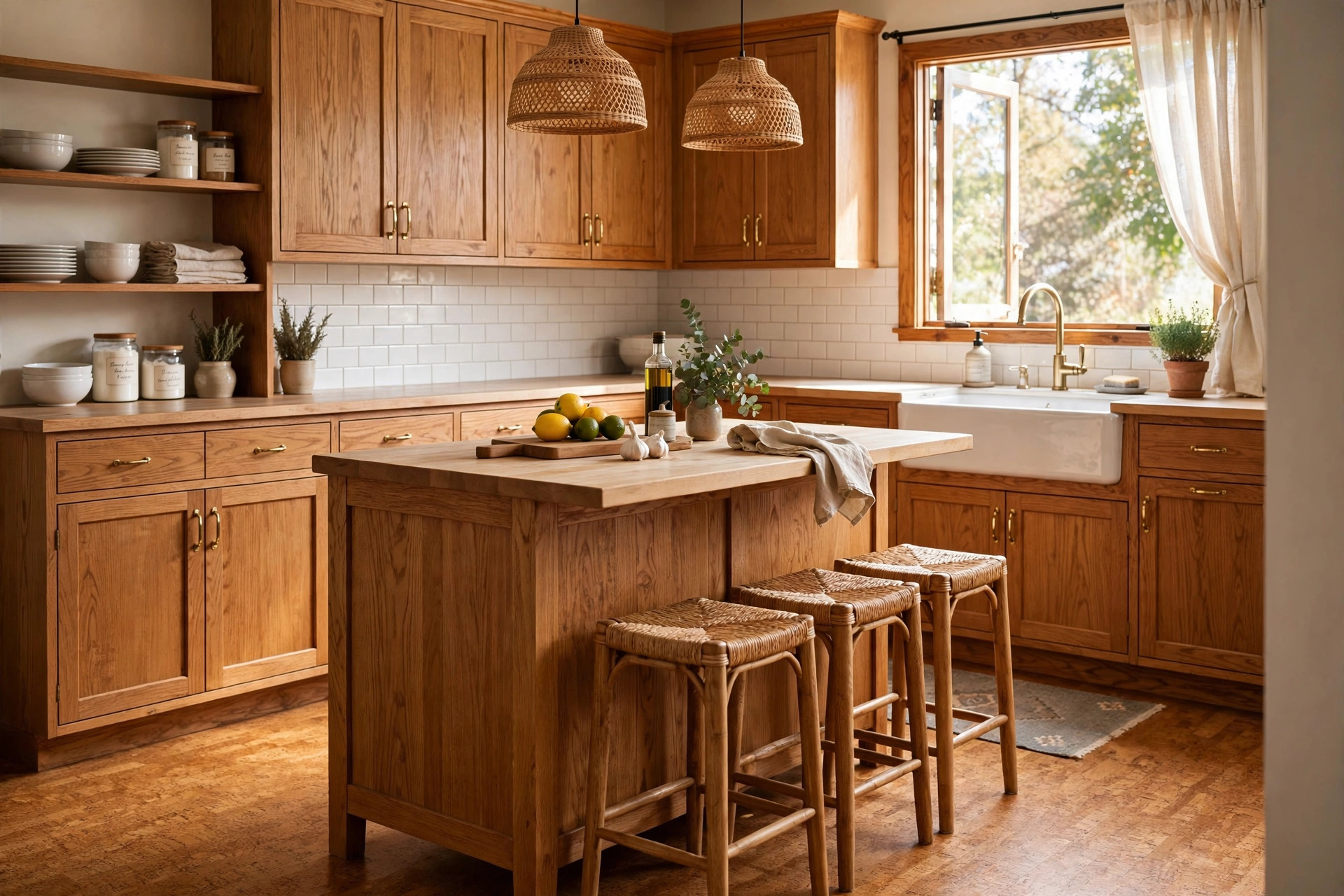
It looks warm and natural. Cork has a fine grain and warm tones of gold, amber, and tan. It pairs well with wood cabinets and stone counters. Readers of This Old House often praise this warm look in kitchen design stories.
It is kind to the earth. The bark is harvested without cutting the tree. The tree keeps living and giving. If green living matters to you, this counts as a real pro.
The Cons of Cork Flooring in the Kitchen
Water is its greatest enemy. This is the main con. Cork can handle a splash wiped up at once. It cannot handle a puddle left for hours. A leaking dishwasher or a slow pipe drip will swell and stain the floor. In a kitchen, water events are not a question of if, but when. Homeowners comparing options at The Home Depot often ask staff about this weakness first.
It dents and scratches. Cork is soft. That softness is a pro for feet and a con for furniture. Heavy chairs, table legs, and dropped cans leave marks. Sharp heels and pet claws can scratch the surface. For homes with large dogs, you may want to read about the best flooring for kitchens with dogs before you decide.
It fades in strong sun. Direct sunlight bleaches cork over time. A kitchen with big south-facing windows will show pale patches where the sun falls each day.
It needs sealing and resealing. The seams between tiles or planks let water in. A good sealant closes them. That seal wears down and must be reapplied every few years.
It can be hard to repair. A damaged section of glued-down cork tile can be cut out and replaced. A floating plank floor is trickier. A deep stain may never come out.
It costs more than basic vinyl. Cork sits in the middle of the price range. It is not the cheapest kitchen floor.
Types of Cork Flooring for Kitchens
Glue-down cork tiles. These are thin squares stuck straight to the subfloor. They give a smooth, flat surface with tight seams. But they show every bump in the subfloor, so the base must be flat.
Floating cork planks. These click together and rest on the subfloor. They go down fast and need no glue. They forgive a slightly uneven base. Most homeowners choose this type today.
Engineered cork. Some cork floors have a thin cork top over a dense fiberboard core. They are stiff and stable. They often come with strong factory finishes.
Unfinished versus prefinished. Unfinished cork takes stain and sealant on site. This lets you match a color, but it adds work and days of drying. Prefinished cork arrives sealed from the factory and is ready to walk on sooner. Flooring guides at LL Flooring show how factory finishes differ from site-applied ones.
What to Look for When You Choose
Thickness. Thicker cork cushions more and lasts longer. Look for at least three eighths of an inch for a kitchen.
Wear layer. Ask how thick the protective coat is. A thicker wear layer means more years before scratches show.
Density. Denser cork dents less. The box or spec sheet should list density.
Finish type. Water-based polyurethane is common and clear. Some finishes have aluminum oxide for extra hardness. Ask what the floor is sealed with before you buy.
Warranty. Read the fine print. Many cork warranties cover homes but not kitchens, or they exclude water damage. A warranty that names kitchens plainly is worth more. Independent testers at Consumer Reports often note warranty gaps buyers miss.
Color and pattern. Cork comes in many tones now, from pale wheat to dark roast. Some planks mimic wood grain. Pick a tone that hides crumbs and small stains.
Subfloor needs. Cork needs a clean, dry, flat base. Concrete must be tested for moisture. Old tile must be level. Shoppers browsing Lowe’s can ask the flooring desk about subfloor test kits.
Cost and Price
Cork flooring usually runs between four and ten dollars per square foot for materials. Plain glue-down tiles sit at the low end. Thick floating planks with strong finishes sit at the high end.
Labor adds more. Professional install of glue-down tile often costs three to six dollars per square foot. Floating planks cost less to install, since they click together fast. A typical two-hundred-square-foot kitchen may run two thousand to four thousand dollars all in.
Compare that with common rivals. Sheet vinyl can cost half as much. Cork lands in the middle of the price range.
Do not forget the hidden costs. You may need a moisture test on concrete. You may need the subfloor leveled. You will need sealant now and again over the years.
Prices move by region and season. Big stores like Mohawk Flooring dealers and national chains run sales in spring and fall.
Getting It Installed in a Kitchen
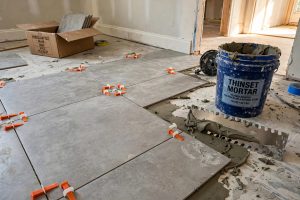
Cork likes a calm, dry home. Let the boxes sit in the kitchen for two or three days before install. This lets the cork adjust to your home’s heat and humidity.
The room must be dry. Fix any leaks first. Test concrete for moisture with a simple kit. If the test fails, do not install cork there until the moisture is solved.
Many owners install floating cork planks themselves. Glue-down tile is harder. It demands a steady hand, a flat base, and clean glue lines. Most people should hire a pro for glue-down work.
Keep appliances in mind. A refrigerator that leaks will ruin cork fast. Put a drip pan under the fridge and the dishwasher. These cheap trays catch slow leaks before they reach the floor.
After install, seal the seams if the maker calls for it. Keep the room at normal indoor humidity. Very dry air can shrink cork. Very damp air can swell it.
Care and Upkeep
Daily care is simple. Sweep or vacuum with a soft brush. Grit is the enemy. Sand and dirt grind into the finish like sandpaper.
Mop with a damp mop, not a wet one. Wring the mop until it is nearly dry. Use a cleaner made for cork or hardwood. Wipe spills the moment they happen. This one habit matters more than any product.
Recoat the finish every three to five years in a busy kitchen. This means a light screen sand and a fresh coat of polyurethane. Mark it on your calendar the way you would a furnace check.
Use felt pads under chair and table legs. Lift furniture instead of dragging it. Keep pet nails trimmed. These small steps stop most dents and scratches before they start. Pet owners may also want to compare pet friendly flooring options for the rest of the house.
Watch the sun. If one patch of floor gets strong light each day, use a rug or blind to spread the wear.
Safety in the Kitchen
Cork has a natural grip. It is less slippery than polished tile or stone when damp. This is a plus in a room where water lands on the floor. Still, no floor is slip-proof. Wipe spills fast and use rugs with rubber backs near the sink.
Cork burns slowly and does not give off harsh fumes like some plastics. It meets normal indoor fire standards. Do not set hot pans on it. Use trivets and mats near the stove.
Indoor air quality is a strong point. Natural cork gives off very few vapors. Look for floors certified low in VOCs if anyone in the home has asthma or allergies. Product pages at Shaw Floors list these certifications for shoppers who ask.
One caution: a very soft floor can be a trip risk at thresholds. Where cork meets a harder floor, use a proper transition strip.
Frequently Asked Questions
Is cork flooring waterproof? No. Cork resists moisture, but it is not waterproof. Small spills wiped up at once cause no harm. Standing water seeps into seams and swells the cork.
How long does cork flooring last in a kitchen? With good care, ten to twenty years is common. A quiet kitchen with careful owners reaches the high end. Recoating the finish on time is the biggest factor in long life.
Can I put cork flooring over old tile? Sometimes. The old tile must be flat, firm, and clean. Loose or cracked tiles must be fixed first. A floating cork floor handles this better than glue-down tile. Ask an installer to look at your floor before you buy. Kitchen design pieces at Daltile note the same subfloor rules for tile-over-tile work.
Does cork flooring work with radiant heat? Yes, in most cases. Cork lets gentle heat pass through, though it insulates a bit more than tile. Keep the floor temperature within the maker’s limits. A floating floor over radiant heat is a common and comfortable pairing.
Can heavy appliances sit on cork? They can, but take care. Put the fridge and stove on wide boards or cups that spread the weight. Move appliances by lifting, never by dragging.
Is cork hard to clean after cooking messes? Day to day, no. A damp mop and quick wipe handle most messes. Clean the stove area often so grease does not build up in the finish. For the rest of your kitchen surfaces, pairing cork floors with classic handmade subway tile backsplashes makes cleanup easy all around.
A Final Word
Cork flooring pros and cons for kitchens come down to a trade. You gain comfort, warmth, quiet, and natural beauty. You accept care, caution with water, and upkeep on a schedule. For a careful cook in a calm kitchen, cork is a joy underfoot. For a chaotic kitchen with frequent floods and heavy claws, harder floors may serve you better.
How often do spills sit? Who cooks? What pets roam? Answer those questions with honesty, and the right floor will pick itself. A spare box in the garage is the cheapest insurance any floor can have.
References
Consumer Reports. (n.d.). Product reviews and ratings. https://www.consumerreports.org Daltile. (n.d.). Ceramic and porcelain tile. https://www.daltile.com LL Flooring. (n.d.). Hardwood, vinyl, and tile flooring. https://www.llflooring.com Lowe’s. (n.d.). Home improvement products. https://www.lowes.com Mohawk Flooring. (n.d.). Flooring products. https://www.mohawkflooring.com Shaw Floors. (n.d.). Flooring products. https://www.shawfloors.com The Home Depot. (n.d.). Home improvement products. https://www.homedepot.com The Spruce. (n.d.). Home and garden advice. https://www.thespruce.com This Old House. (n.d.). Home renovation guidance. https://www.thisoldhouse.com
Was this guide helpful?

About Jennifer Lee
The My Garden US editorial team writes practical, in-depth home and garden guides for American homeowners — tested advice, no fluff.
You May Also Like

Can You Install LVP Over Hardwood? A Full Guide for USA Homeowners
March 5, 2026 0 views
Wood Look Tile Pros and Cons Reviews: A Full Guide
April 26, 2026 0 views
The Best Rug for Under Dining Table: A Complete USA Guide
October 5, 2026 4 views