
A good sewing kit is the first step into a craft that can last a lifetime. Many adults come to sewing late. Some want to fix a torn seam. Some want to make gifts. Some want a quiet hobby for the evenings. Whatever the reason, the best sewing kit for beginners adults crafts is one that is simple, complete, and easy to use. It does not need to be large or dear. It needs to hold the right tools and nothing more.
This guide will show you what a beginner kit should hold, how to pick one, what kinds are sold, what they cost, and how to care for them. By the end, you will know how to shop with ease and how to start your first small project with trust in your tools.
Why a Starter Kit Matters
Learning is easier with the right tools
Sewing has a learning curve, but dull tools make it much steeper. A bent needle tears cloth. Cheap thread snaps and tangles. Bad scissors chew the edge of the fabric. When your tools work well, you can focus on the stitch. That is the whole point of a beginner kit. It gives you a fair chance.
A kit keeps costs low
Buying each item one by one is costly. A kit packs the basics together at a lower price. For a new adult crafter, that matters. You do not yet know which tools you will use the most. A kit lets you try them all without a big outlay.
It suits adult crafters in particular
Many kits sold today are aimed at children. They hold plastic needles and thin thread. An adult needs more. You will work with real fabric, from cotton to denim. You will want steel needles, sharp shears, and full-size spools. When you search for the best sewing kit for beginners adults crafts, look for kits made for grown hands and real projects.
What a Good Beginner Sewing Kit Should Hold: Best Sewing Kit for Beginners Adults Crafts
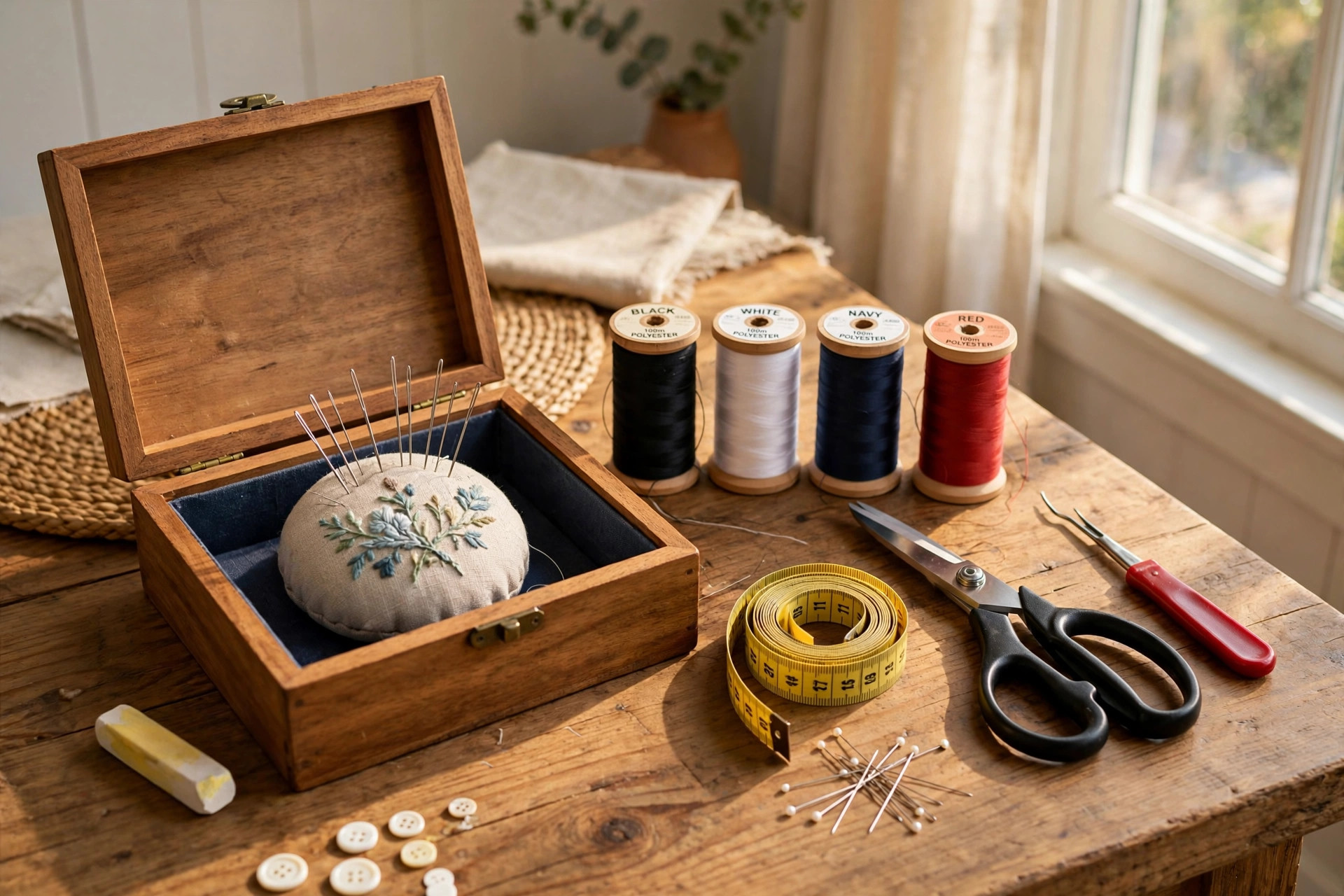
A sound kit has four groups of items: needles, thread, cutting tools, and measuring tools. Some extras help too. Here is what to look for.
Needles
– Hand sewing needles in several sizes. Sharp, fine needles suit light cloth. Larger needles suit heavy cloth and darning. – A needle threader. This small metal tool pulls thread through the eye of the needle. It saves time and strain on the eyes. – A thimble. It pushes the needle through thick layers and guards your finger. – A pin cushion or magnetic holder. It keeps needles and pins in one safe place.
Thread
– All-purpose thread in common colors: black, white, navy, gray, and a few earth tones. Polyester thread is strong and suits most fabrics. – Bobbins and a bobbin winder if your kit is made to pair with a machine. For hand sewing only, this is not needed.
Cutting tools
– Fabric scissors or shears. These should be sharp and used only on cloth. Paper dulls them fast. – A seam ripper. It opens wrong stitches without harm to the cloth. – A small snip or embroidery scissor for fine cuts near the work.
Measuring and marking tools
– A flexible tape measure. This is used to take body sizes and to measure hems. – A seam gauge or small ruler for quick small measures. – Tailor’s chalk or a fabric marker to draw cut lines and stitch lines on cloth. – Straight pins to hold pieces of cloth in place before you sew.
Extras worth having
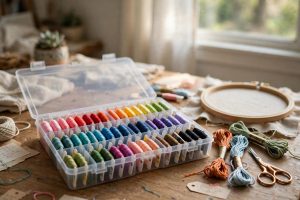
– Buttons and snaps for repairs. – A few safety pins for threading elastic and holding hems. – A storage case with clear lids so you can see what you have.
When a kit holds these items in full size, it is ready for real adult crafts.
Types of Sewing Kits for Beginners
Basic hand-sewing kits
These are the most common beginner kits. They hold needles, thread, scissors, pins, a tape measure, and a seam ripper in a small case. They are made for repairs and small hand projects: hems, buttons, torn seams, and simple crafts. For most adults starting out, this is the right place to begin.
Travel and repair kits
These are small kits made for quick fixes at home, at work, or on a trip. They hold a few needles, short threads, and small scissors. They are handy but too small for learning. Use them as a backup, not as your main kit.
Machine-ready kits
These kits are built for owners of a sewing machine. They add machine needles, bobbins, extra presser feet, and a wider range of thread. If you own a machine or plan to buy one soon, this kind of kit saves you a second round of shopping.
Craft-focused kits
Some kits are made for crafts rather than repairs. They add embroidery floss, felt squares, beads, and colored thread. If your goal is to make gifts, wall art, or soft toys, look at these. The range of colors and threads will please you, and craft supply stores carry matching notions and floss.
You can learn more about related craft tools in our guide to the best polymer clay for jewelry making crafts, which pairs well with stitched pieces for mixed-media gifts.
How to Choose the Best Sewing Kit
Check the needle quality
Needles are the heart of the kit. They should be smooth, straight, and sharp. Steel needles from known makers last far longer than soft ones. Read reviews and look for words like “nickel-plated” or “stainless steel.” If the listing does not name the needle type, be wary.
Look at the thread
Good thread is even in thickness and free of knots. All-purpose polyester thread is the best pick for beginners because it works on many fabrics and does not break under strain. Cotton thread suits light, natural cloth but snaps more often. Avoid kits where the spools are tiny or the colors are only bright and odd. You want thread you will use daily.
Test the scissors on paper first
Sharp shears cut cloth in one clean line. Dull ones crush it. When your kit arrives, make one cut on scrap cloth. If the edge is clean, the shears are sound. Guides with DIY tool advice show how to test and keep shears sharp. Keep them for cloth alone and store them in a sleeve so the blades stay true.
Judge the case
A good case keeps tools sorted and safe. Needles should sit in a pin cushion or a lidded slot, never loose. Scissors should have a cover. A hard case lasts longer than a soft pouch, but a pouch packs better for travel. Pick what fits your life.
Match the kit to your goals
Ask yourself what you plan to sew in the first year. Repairs and hems? A basic kit is enough. Small crafts and gifts? A craft-focused kit with more colors will serve you. A new machine? A machine-ready kit will cut down on extra buys. For home decor projects, you may also like our notes on the best iron for quilting and sewing crafts, since pressing seams is half the work of clean sewing.
Read reviews from other beginners
Look for product reviews written by adults who are new to sewing. They will say which kits held up and which fell short. Watch for complaints about thread that tangles or needles that bend. One bad batch of needles can spoil a kit.
Cost and Price Guide
Prices for beginner sewing kits sit in a friendly range. Most adults will pay between ten and forty dollars for a sound kit.
– Under fifteen dollars: Basic repair kits. They hold the must-haves but often use thinner thread and smaller scissors. Fine for a first try or a travel bag. – Fifteen to thirty dollars: The sweet spot. Kits in this range hold full-size tools, better thread, and a sturdier case. This is where the best sewing kit for beginners adults crafts is most often found. Shop craft retailers and fabric stores to compare kits side by side. – Thirty to sixty dollars: Larger kits with wide color ranges, craft extras, or machine accessories. Worth it if you sew often or plan many craft projects.
Watch out for kits that seem large but hold many cheap fillers. Thirty items of poor quality are worse than twelve good ones. Price per item means little if half the items break.
If you plan to refinish frames or craft stands for your sewing space, see our guide to the best wood stain for diy furniture refinishing for a matching project idea; stain and finishes are easy to find at a home improvement store.
Care and Upkeep of Your Sewing Kit
Keep needles dry and clean
Store needles in a dry place. Damp air can rust them. A pin cushion filled with emery powder can clean light rust off a needle. Throw away needles that bend or lose their point. A bent needle is not worth the torn cloth it leaves behind.
Oil your scissors lightly
A drop of sewing machine oil on the pivot screw keeps shears smooth. Wipe the blades clean after each use. Never cut paper, wire, or plastic with fabric shears.
Store thread out of sun
Sun fades thread and weakens it over time. Keep spools in a closed case or a drawer. If thread feels dry or snaps with a light pull, replace it. Old thread is the main cause of tangles.
Clean the case
Shake out lint and cut threads each month. A clean case means you find tools fast and needles stay sharp.
Replace what runs out
Thread, pins, and needles wear out. That is normal. Keep a small list of what you use most and buy refills twice a year. A kit is not a one-time buy. It is a tool box that grows with you.
Safety Tips for New Adult Crafters
Sewing is a safe hobby, but sharp tools need care.
– Always cap or sheath scissors when not in use. Store them blade-down in the case. – Count your needles and pins after each session. A lost pin in a chair or rug can hurt a foot. – Use a thimble when pushing needles through thick cloth. It guards your fingertip. – Keep the seam ripper pointed away from your body. Its tip is sharper than it looks. – Store the kit out of reach of small children. Needles and pins are not toys. – Work in good light. A bright lamp cuts eye strain and keeps stitches even.
Getting Started: Your First Three Projects
Once your kit arrives, try these simple projects. Each one uses only basic tools. For clear how-to photos of basic stitches, home craft guides are a fine help.
Sew on a button
This is the classic first task. Thread a needle, knot the end, and stitch through the button holes four times. It takes ten minutes and teaches you how to start and end a stitch.
Hem a pair of trousers
Fold the extra length, pin it, and use a simple slip stitch. You will learn to measure, mark, and sew in a straight line.
Make a small drawstring bag
Cut two rectangles, sew three sides, fold a top hem, and thread a cord through it. This project teaches cutting, straight seams, and finishing. It also makes a fine gift bag.
Work slowly. Rip out bad stitches with the seam ripper and try again. Every skilled sewer was once a beginner with a tangled thread.
FAQ
What is the best sewing kit for beginners adults crafts?
The best kit holds full-size steel needles, all-purpose thread in common colors, sharp fabric shears, a seam ripper, a tape measure, pins, tailor’s chalk, and a thimble in a sturdy case. It should be made for adults, not children, and it should cost between fifteen and thirty dollars for most buyers.
Do I need a sewing machine to use a beginner kit?
No. Most beginner kits are made for hand sewing. You can do repairs, hems, buttons, and small crafts by hand. A machine speeds up long seams, but it is not needed to start learning.
How much should a beginner pay for a sewing kit?
Between ten and forty dollars. Under fifteen buys a basic repair kit. Fifteen to thirty is the sweet spot for quality tools. Over thirty adds craft extras or machine parts.
How long does a beginner sewing kit last?
The case and scissors can last for years. Needles, pins, and thread wear out and need refills. With light care, a good kit serves you for a long time. Replace needles that bend and thread that snaps.
Can left-handed adults use a standard sewing kit?
Yes for most tools. Needles, thread, and pins work the same for all. Scissors are the one item to watch. Some shears are made for right hands only. Left-handed crafters should look for shears marked for both hands or for left hands.
Where should I store my sewing kit?
In a dry drawer or shelf, out of direct sun and out of reach of small children. A hard case guards the tools. Keep it near your work table so you reach for it often.
A Short Final Word
Sewing rewards patience. The first stitches may be uneven. The first hem may wave. That is fine. With a sound kit in hand, each project will go a little smoother. Pick tools made for adults, keep them sharp and dry, and start with small tasks. The best sewing kit for beginners adults crafts is not the largest or the dearest. It is the one that sits on your table, ready, every time you feel like making something with your hands.
References
Blick Art Materials. (n.d.). Art and craft supplies. https://www.dickblick.com Bob Vila. (n.d.). Home improvement advice. https://www.bobvila.com Brother. (n.d.). Sewing and embroidery machines. https://www.brother-usa.com Family Handyman. (n.d.). DIY home repair and maintenance. https://www.familyhandyman.com Fiskars. (n.d.). Garden and cutting tools. https://www.fiskars.com JOANN. (n.d.). Fabric and craft supplies. https://www.joann.com Michaels. (n.d.). Arts and crafts supplies. https://www.michaels.com Singer. (n.d.). Sewing machines and accessories. https://www.singer.com The Home Depot. (n.d.). Home improvement products. https://www.homedepot.com This Old House. (n.d.). Home renovation guidance. https://www.thisoldhouse.com
Was this guide helpful?

About Michael Thompson
The My Garden US editorial team writes practical, in-depth home and garden guides for American homeowners — tested advice, no fluff.
You May Also Like
DIY Macrame Keychain Kit for Beginners Gifts
February 13, 2026 0 views
Finding the Best Craft Desk with Storage for Cricut Machine
May 4, 2026 0 views
Glass Painting Kit for Beginners Suncatchers DIY
June 22, 2026 0 views