The space under your bed is one of the most useful storage areas in the home. Most beds leave several inches of open space above the floor. When used well, that space can hold off-season clothes, spare bedding, shoes, toys, and papers. When ignored, it gathers dust and lost items. This under bed storage containers reviews and buying guide walks you through the choices step by step. It covers the main types, what to look for before you buy, what shoppers say in reviews, what these containers cost, how to care for them, and how to use them safely.
Why Under Bed Storage Matters
Bedrooms are often the hardest rooms to keep tidy. Closets are small. Dressers fill up fast. The area under the bed offers several square feet of hidden space that is easy to reach and easy to forget. A pair of low containers can hold a full set of winter blankets or a season of shoes.
Renters benefit most. When you cannot add shelves or change the room, the space under the bed is one of the few places you can control. Families with children use it for toys and school supplies. People in small apartments use it for things they need only a few times a year.
Good storage also protects what it holds. A box on an open shelf collects dust. A closed container under a bed keeps dust out and keeps items clean until you need them. The key is choosing containers that fit the space and close well. A box that sticks out from under the bed frame looks untidy and gets in the way.
Types of Under Bed Storage Containers: Under Bed Storage Containers Reviews and Buying Guide
Soft Fabric Bags
Soft storage bags are made of cloth or non-woven fabric with a zipper top. They are light, cheap, and fold flat when empty. Many have clear plastic windows so you can see what is inside. They work well for blankets, sweaters, and soft items. They are not a good pick for heavy books or sharp objects, since the fabric can tear. Reviews often praise how little they weigh and how easy they are to tuck under low beds.
Hard Plastic Bins
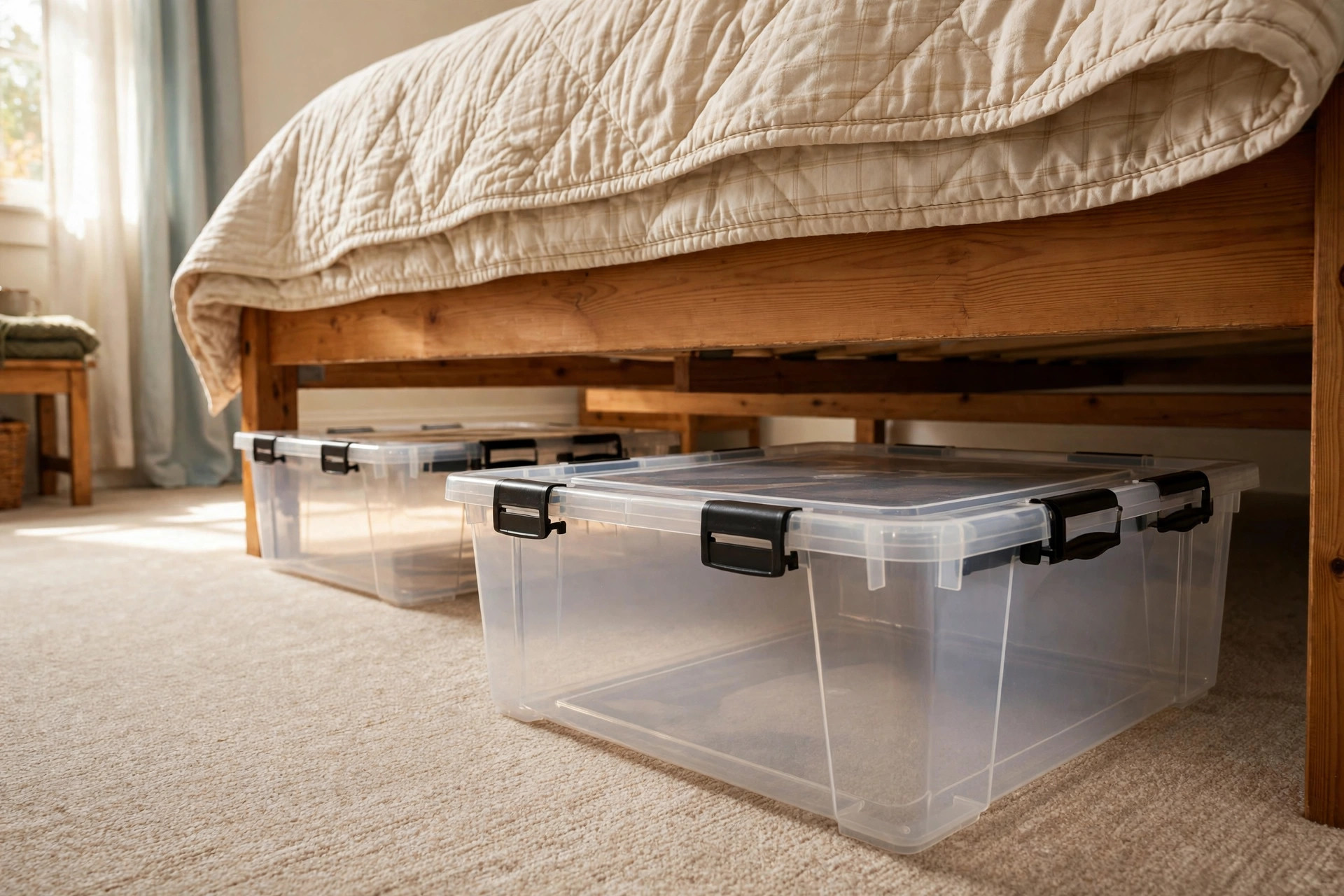
Hard plastic bins are the most common type. They are made of clear or colored plastic with snap-on lids. Many have small wheels on the bottom so they roll out easily. Clear bins let you see the contents without opening the lid. Plastic bins cost more than fabric bags but last longer and keep dust and moisture out. Shoppers on large retail sites like Target and Walmart often rate clear plastic bins highly for strength and visibility.
Wooden and Drawer Units
Some under bed storage units are made of wood or engineered wood and look like small dresser drawers. They are sturdier than fabric and look nicer than plastic. Some come with wheels or smooth glides. They cost more and weigh more, so they suit people who plan to keep them in one place for a long time. Furniture stores such as IKEA carry wooden drawer units designed to fit under standard bed frames.
Rolling Drawer Carts
Rolling carts are narrow drawers on caster wheels. They come in plastic or metal. You pull them out like a drawer and push them back when done. They are easy to use for shoes, craft supplies, or small toys. The wheels make them a good choice for older adults and children, since there is no heavy lifting. Many models stack two drawers in one unit to double the storage.
How to Choose: What to Look For
Measure Your Clearance
The single most important step is to measure. Use a tape measure to find the height from the floor to the bottom of the bed frame. Most under bed containers need between six and twelve inches of clearance. Measure the depth from the front of the bed to the wall behind it as well. Write both numbers down before you shop. A container that is too tall will not fit. One that is too deep will stick out or hit the wall. If you are also shopping for other small-space organizers, guides like our kitchen cabinet organizers reviews and buying guide show the same measure-first method.
Material and Build
Think about what you plan to store. Heavy items need hard plastic or wood. Soft items like quilts and clothes do fine in fabric bags. Check the seams and corners in product photos. In reviews, weak handles and thin lids are the most common complaints. A thicker plastic or a reinforced fabric edge is worth a few extra dollars. Home improvement retailers such as Home Depot and Wayfair list the material and weight rating on most product pages, which makes comparison easier.
Lids and Closures
A good lid keeps out dust, light, and curious pets. Snap-on lids work well for plastic bins. Zipper tops are standard on fabric bags. Some wooden units use sliding or hinged lids. Whatever the style, the lid should close fully and stay closed when you push the container under the bed. A lid that pops open defeats the purpose of the box.
Wheels, Handles, and Ease of Use
Containers with wheels or smooth bottoms are far easier to use. Without them, you must lift and drag the box across the floor each time. Handles on the ends help you pull the box straight out. Test the feel in the store if you can. If you shop online, read reviews that mention the wheels. Shoppers often report whether small wheels roll well on carpet or only on hard floors.
Weight Capacity
Each container has a weight limit set by the maker. A fabric bag may hold ten to fifteen pounds. A hard plastic bin may hold twenty to forty pounds. Wooden drawer units hold more. Do not guess. Overloading a container breaks the bottom or the wheels. Place the heaviest items in the strongest boxes.
What the Reviews Say
Reading reviews before you buy is wise. Look at patterns rather than single comments. If many reviewers say the wheels break after a few months, believe them. If many say the size runs small, measure your own space again.
Across major shopping sites, the highest-rated under bed containers share a few traits. They fit standard bed heights. Their lids stay shut. Their wheels roll smoothly. Reviewers like clear plastic bins because they can find things at a glance. They like fabric bags because they are light and cheap. The most common complaints are flimsy zippers, lids that warp, and wheels that fall off on carpet. The advice site The Spruce and the lifestyle site Apartment Therapy both publish roundups of storage products where these same points come up again and again.
Pay attention to the number of reviews. A product with three thousand reviews and a four-star average is a safer bet than one with twelve reviews and five stars. Look for review photos. Photos from real buyers show the true size, the true color, and how the container looks under a real bed. Marketplaces such as Amazon make it easy to sort reviews by most helpful and to view customer images.
Cost and Price Guide
Under bed storage containers are not expensive. Soft fabric bags often cost between eight and twenty dollars each. They are sold in sets of two or three, which brings the price per bag down. Clear plastic bins with lids usually cost between ten and thirty dollars each, depending on size and brand. Bins with wheels or locking lids sit at the higher end of that range.
Wooden under bed drawer units cost the most. A single wood drawer unit can cost between forty and one hundred dollars. A set of two drawers can cost over one hundred fifty dollars. The higher price buys better looks and longer life.
Specialty stores like The Container Store often carry mid-range and premium options with stronger materials and better finishes. Discount stores and warehouse clubs carry budget sets that work well for basic needs. Watch for sales in late summer, when stores clear out dorm room supplies, and after the holidays, when winter storage items go on sale.
To keep costs down, buy only what you need. Two well-chosen containers beat five cheap ones that fall apart. Measure first, then buy the right size once.
Care and Upkeep
Under bed containers need little care, but a small routine keeps them useful for years. Wipe plastic bins with a damp cloth every few months. Dust the lids before you pull them out, so dust does not fall on the contents. Wash fabric bags by hand or on a gentle cycle if the maker allows it. Let them dry fully before you refill them.
Check the wheels once a year. Hair and thread wrap around small wheels and stop them from turning. Pull the tangle out with tweezers. Oil metal wheels with a drop of household oil if they squeak.
Keep an inventory list. Write down what is in each box on a small card and tape it to the lid, or keep a list on your phone. This saves you from pulling out every box to find one item. If you label your boxes well, you will actually use them. Readers organizing other small spaces may also like our guide on the best makeup and cosmetics organizers for Florida homes, which uses the same labeling method.
Store like with like. Keep all winter clothes in one box and all spare sheets in another. When you need something, you open one box, not four.
Safety Tips
Under bed storage is safe when used with care. Keep a few rules in mind.
First, do not block heating vents or radiators. Beds often sit near walls with vents. Pushing a box over a vent blocks warm air and can dry out fabric items or warp plastic. Leave several inches of space around any vent.
Second, keep heavy boxes on the floor only. Never stack under bed containers on top of each other unless they are made for stacking. A stack can tip when you pull the bottom box out.
Third, watch out for damp floors. In basements or ground-floor rooms, floors can sweat with moisture. Plastic bins handle this better than fabric bags. If your floor feels damp, place a plastic mat under the containers or switch to sealed plastic bins. Do not store paper photos or important papers under the bed in a damp room.
Fourth, use child-safe latches if small children can reach the boxes. A heavy lid can pinch little fingers. Keep medicines, cleaners, and sharp objects out of under bed boxes in homes with children. For more on keeping home storage safe for young families, family guides like the ones on Family Handyman offer practical checklists. If you are setting up storage in a nursery or child room, our article on where to buy linen closet organizers in California also touches on keeping stored goods out of reach.
Frequently Asked Questions
What size under bed storage container should I buy? Measure the height from your floor to the bottom of your bed frame. Most beds allow six to twelve inches. Then measure the depth from the front of the bed to the wall. Buy a container at least one inch shorter than your clearance so it slides in and out without scraping.
Are fabric or plastic under bed containers better? It depends on what you store. Plastic bins are better for heavy items, damp rooms, and things you want to see. Fabric bags are better for soft items like blankets, for tight budgets, and for very low beds, since the fabric gives a little when you push it in.
How many under bed storage containers fit under a queen bed? A standard queen bed frame offers about sixty by eighty inches of space underneath. Most under bed containers are about thirty-six inches long and sixteen inches wide. Two to four containers usually fit, depending on their exact size and on whether the bed has center legs in the way.
Do under bed storage containers work on carpet? Yes, but choose carefully. Small hard wheels can sink into thick carpet. Look for larger wheels or smooth-bottom bins that slide. Some reviewers say fabric bags actually work best on carpet because they glide without wheels.
How do I keep dust out of under bed storage? Use containers with lids that close fully. Snap-on lids and zippered tops both work. Place the boxes fully under the bed frame, not sticking out into the room. Wipe the lids before opening. A closed, well-fitted lid keeps out nearly all dust.
Can I store shoes under the bed? Yes. Shoes are one of the best uses for under bed space. Use shallow bins with dividers or individual shoe pockets. Keep the bins ventilated or add a small packet of baking soda to control odor. Clean the shoes before you store them.
A Final Word
The right under bed storage containers turn wasted space into useful space. Start by measuring your bed. Choose the type that fits what you plan to store. Read a good spread of reviews before you buy. Spend a little more on strong lids and working wheels, and you will not need to replace the boxes for many years. With two or three well-chosen containers, a cluttered bedroom becomes a calm one, and the space under your bed finally earns its keep.
References
Amazon. (n.d.). Online shopping. https://www.amazon.com Apartment Therapy. (n.d.). Home design ideas and inspiration. https://www.apartmenttherapy.com Family Handyman. (n.d.). DIY home repair and maintenance. https://www.familyhandyman.com IKEA. (n.d.). Home furnishings. https://www.ikea.com Target. (n.d.). Retail store. https://www.target.com The Container Store. (n.d.). Storage and organization products. https://www.containerstore.com The Home Depot. (n.d.). Home improvement products. https://www.homedepot.com The Spruce. (n.d.). Home and garden advice. https://www.thespruce.com Walmart. (n.d.). Everyday low prices. https://www.walmart.com Wayfair. (n.d.). Furniture and home goods. https://www.wayfair.com
Was this guide helpful?

About Sarah Mitchell
The My Garden US editorial team writes practical, in-depth home and garden guides for American homeowners — tested advice, no fluff.