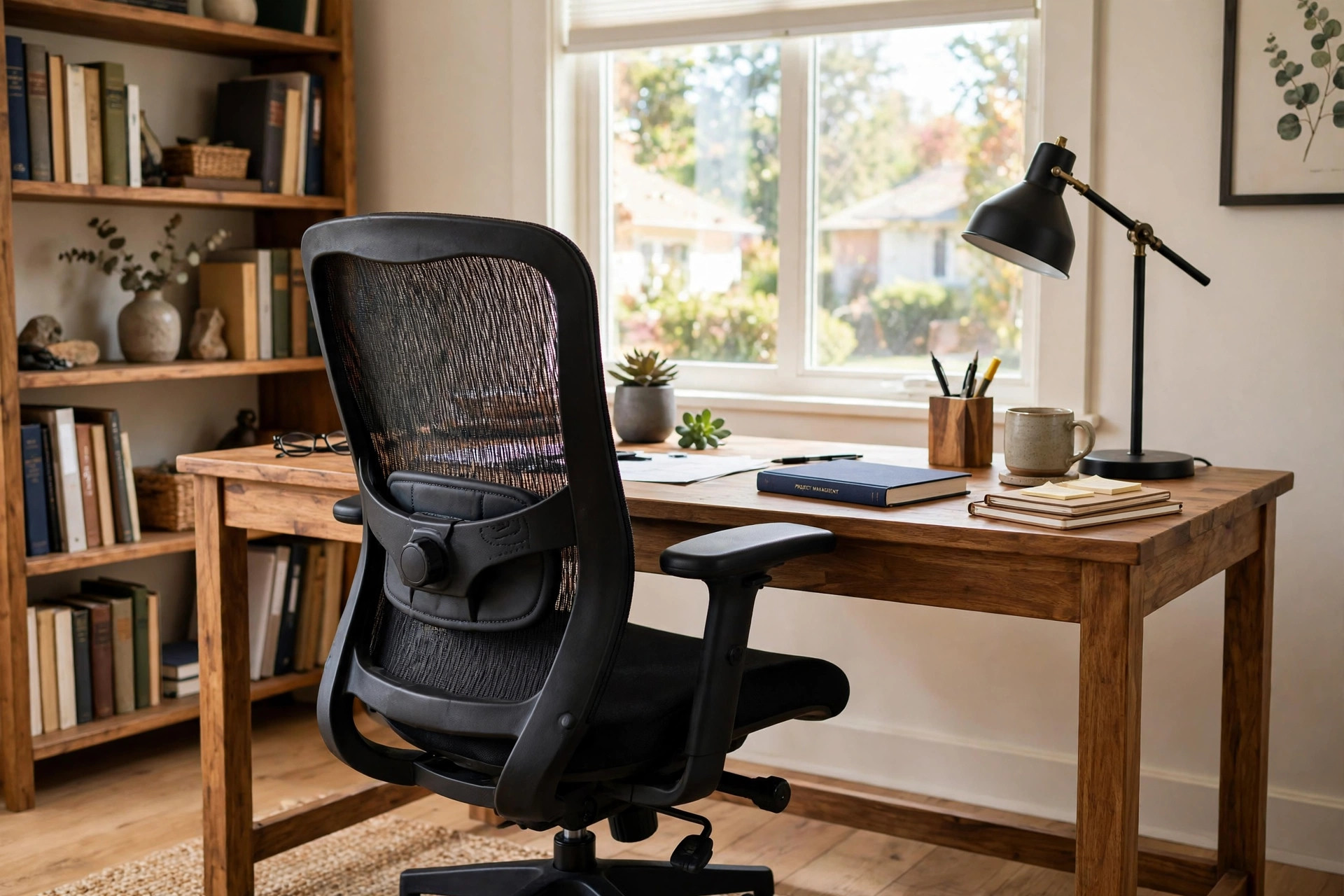

An ergonomic office chair mesh back with lumbar support is a seat built to keep the spine in a healthy curve while the worker sits. The back rest is made of woven mesh instead of foam. A lumbar pad or band presses gently against the lower back. Together these parts cut strain on the back, neck, and shoulders through long work days.
More people now work from home for most of the week. The kitchen chair or the old wooden desk chair no longer serves. Back ache shows up by mid day. Poor posture slows the work. A chair built for the task can change this. This guide explains the chair in plain terms. It covers why it matters, what to look for, the main types, what it costs, how to care for it, and how to use it with safety in mind.
Why the Chair Matters
The human back is not made for eight hours of still sitting. The spine has a natural curve. When that curve flattens in a poor chair, the discs between the bones take extra load. The muscles along the spine work hard to hold the body up. By evening the result is a dull ache in the lower back.
A lumbar support keeps the small of the back pressed into its natural curve. It does the work the muscles would otherwise do. The mesh back adds cool air flow. Solid foam backs trap body heat. On warm days the back sweats and the worker shifts and fidgets. Mesh lets air pass through. The back stays dry and the sitter stays still.
Posture also affects the neck and shoulders. A chair that holds the lower back in place keeps the upper body upright. The head sits over the shoulders instead of drifting forward. Eye strain drops when the screen stays at a steady distance. Workers often report fewer headaches once their seat supports them well.
Productivity gains follow. A worker who is not shifting in pain stays at the task longer. Fewer breaks are needed. The work flow stays smooth. An office chair is not a luxury item for people who sit all day. It is a tool, much like a good desk lamp or a sturdy desk.
How to Choose: What to Look For: Ergonomic Office Chair Mesh Back with Lumbar
Adjustable Lumbar Support
Not every back has the same shape. A fixed lumbar pad may sit too high or too low. Look for a support that slides up and down. Some models also adjust how far the pad pushes into the back. This control matters more than any other feature.
Test the range. Sit in the chair if you can. The pad should meet the curve of the lower back, about belt height. It should feel firm but not hard. If it presses too deep, it will ache after an hour. The best models allow fine changes so the fit lands just right.
Mesh Quality
Mesh is not one thing. Cheap mesh sags within months. The seat of sag feels like a hammock. Good mesh holds tension for years. Look for a tight weave that springs back when pressed. The frame behind it should be sturdy, with no sharp edges.
Double check the warranty on the mesh. A maker that trusts its weave will cover it for five years or more. Short cover on the mesh is a warning sign. Independent chair reviews often test how mesh holds up over time.
Seat Depth and Height
The seat pan should let the user sit back with two fingers of space behind the knees. Too deep, and the thighs press on the edge. Too shallow, and the back cannot reach the support. Many good chairs let the seat slide forward and back.
Height must fit the desk. The feet should rest flat on the floor. The thighs should run level or tilt slightly down. Most adults need a range from about sixteen to twenty one inches. Taller or shorter workers should check the exact numbers before they buy.
Armrests
Arm rests take weight off the shoulders. Fixed arms fit only one body type. Look for arms that move up, down, forward, and back. The elbows should rest at about ninety degrees while the hands reach the keyboard. Arms that lock in place hold the setting through the day.
Base and Casters
A five point base with smooth casters is the norm. Check the wheel type against your floor. Hard plastic wheels suit carpet. Soft rubber wheels suit wood or tile. A chair that rolls too freely on a hard floor can be fixed with a chair mat.
Types and Options
Task Chairs
The standard model is the task chair. It has a mesh back, a padded seat, arm rests, and a simple tilt. It fits most home offices and most budgets. Many makers sell task chairs with adjustable lumbar as the core model. For most buyers, this is the right place to start.
Executive Mesh Chairs
Larger chairs add a tall back and a head rest. They suit tall workers and those who lean back to read. They cost more and take more floor space. In a small room they can crowd the desk. Measure the space before ordering one.
Drafting and Standing Desk Chairs
Workers at raised desks need a higher seat and a foot ring. Mesh backs with lumbar come in drafting form too. Pair such a chair with a height adjustable desk. Standing desk makers often sell matching chairs built for the higher seat.
Petite and Big and Tall Models
Standard chairs fit bodies between about five feet two inches and six feet two inches. Outside that range, look for sized models. Petite chairs have a shallower seat and lower back. Big and tall chairs carry higher weight ratings and wider seats. A poor fit cancels every other feature.
Cost and Price
Prices run wide. Budget models sell for under one hundred fifty dollars. These often have fixed lumbar and thin mesh. They suit light use, perhaps two or three hours a day.
The middle range, from about two hundred to five hundred dollars, holds the best value for most buyers. Chairs here carry adjustable lumbar, decent mesh, and sliding seats. They last through years of daily use. Most home workers should shop in this band.
High end chairs run from six hundred dollars past one thousand. Makers known for ergonomic design and office furniture research sit in this tier. The mesh lasts longer, the adjustments are finer, and the warranty may run twelve years. Heavy daily users may find the price fair over the chair’s life.
Watch for sales around office season in late summer. Floor models and open box chairs can cut the price by a third. Keep the receipt and the warranty card. A chair is a long term purchase.
Care and Upkeep
Mesh needs little care but regular cleaning. Vacuum the back with a brush head once a month. Dust and lint settle in the weave. For stains, wipe with a damp cloth and mild soap. Never use harsh solvents. They weaken the fibers.
Check the screws twice a year. Tilt parts and arm rest bolts loosen with use. A small hex key set handles most chairs. Tighten gently. Over tightening can crack plastic housings.
Keep the chair out of direct sun. Long sun exposure fades the mesh and dries the seat foam. A chair near a window should have a blind drawn in the afternoon. Home care guides list simple cleaning mixes safe for mesh fabric.
The gas lift cylinder lasts for years but can fail. If the seat sinks on its own, the cylinder needs replacement. Spare cylinders are sold by chair makers and fit most models. The swap takes ten minutes with basic tools.
A chair mat also guards the floor and eases rolling. On carpet, a thick pile mat stops the wheels from sinking. On wood, a mat stops scratches. The mat should span the full roll zone, not just the chair base. This small add on keeps both the chair and the floor in good shape for years.
Safety
A chair is safe when set up right. Lock the tilt when you stand up and sit down. A free tilting seat can slide out from under the user. Teach this habit to children who may use the desk.
Mind the casters on hard floors. The chair can shoot backward when you lean. A chair mat or soft wheels fix this. Keep cords off the floor near the chair base. A wheel can catch a cord and pull a lamp or charger down.
Weight ratings matter. Do not exceed the maker’s limit. Big and tall models exist for a reason. Check the rating on the box or the maker’s page before purchase.
Pair the chair with a sensible desk setup. The screen top should sit near eye level. The keyboard should let the wrists stay straight. A well chosen chair works as part of a full home office furniture set. Add a desk side file drawer unit on wheels to keep files close without twisting. Run cords through a home office cable raceway for wall mounted tv so nothing trails across the floor.
Frequently Asked Questions
Is mesh back better than a padded back for daily office work?
For long days, most workers find mesh cooler and more forgiving. It bends with the back and lets air through. Padded backs feel softer at first but trap heat. The lumbar support matters more than the back material. A mesh back with poor lumbar loses to a padded back with good lumbar.
How long should an ergonomic office chair mesh back with lumbar last?
A mid range chair should serve five to eight years of daily use. High end chairs often last ten to twelve years. Mesh outlasts thin foam in most cases. Replace the chair when the mesh sags, the lumbar no longer holds, or the tilt sticks.
Can a short person use a standard mesh back chair?
Often not well. Standard chairs set the lumbar pad for average height. A short user may find the pad hits the mid back. Petite models move the support lower and shorten the seat. Always check the minimum seat height and the lumbar range.
Do I still need a cushion with lumbar support built in?
Most users do not. The built in support, set right, does the job. Some add an ergonomic seat cushion for wooden office chair when they must sit in a plain chair away from home. At the home desk, trust the chair’s own lumbar.
What is the best sitting posture in this chair?
Sit with the back flat against the mesh and the lumbar pad in the small of the back. Feet flat on the floor. Knees near ninety degrees. Shoulders relaxed, not raised. Stand and walk for five minutes each hour. No chair removes the need to move.
Where can I compare models before buying?
Detailed buying guides test chairs side by side and rank them by comfort. Large retailers list hundreds of models with buyer reviews that flag mesh sag and lumbar faults.
A Short Final Word
An ergonomic office chair mesh back with lumbar is a practical buy for anyone who sits to work. Match the lumbar to your back, check the mesh quality, and set the height right. The chair will not fix bad habits on its own. Sit well, move often, and keep the setup tidy. Done right, the long work day ends with a back that feels as fresh as it did in the morning.
References
Herman Miller. (n.d.). Office furniture and ergonomic seating. https://www.hermanmiller.com IKEA. (n.d.). Home furnishings. https://www.ikea.com PCMag. (n.d.). Technology product reviews. https://www.pcmag.com Steelcase. (n.d.). Office furniture and workplace research. https://www.steelcase.com The Spruce. (n.d.). Home and garden advice. https://www.thespruce.com UPLIFT Desk. (n.d.). Standing desks and ergonomic office furniture. https://www.uplift-desk.com Wayfair. (n.d.). Furniture and home goods. https://www.wayfair.com Wirecutter. (n.d.). Product reviews from The New York Times. https://www.nytimes.com/wirecutter
Was this guide helpful?

About Michael Thompson
The My Garden US editorial team writes practical, in-depth home and garden guides for American homeowners — tested advice, no fluff.
You May Also Like
A Home Office Chair Mat for Carpet Protection: A Plain Guide
July 24, 2026 0 views
Adjustable Laptop Desk for Bed and Couch Use
January 5, 2026 0 views
Adjustable Under Desk Keyboard Tray Ergonomic Guide for Home Offices
July 13, 2026 0 views