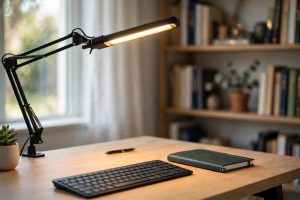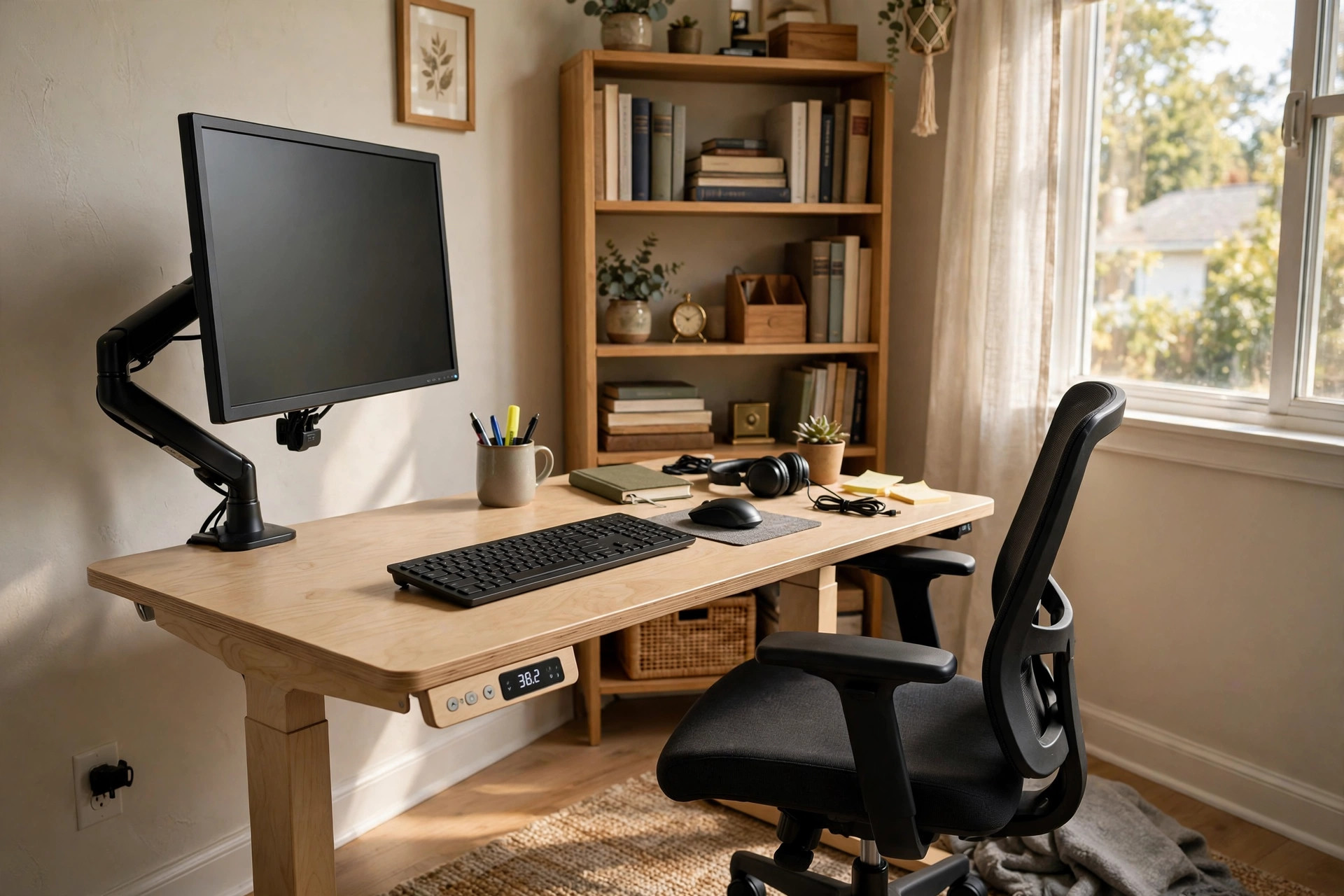

Most standing desks sold today are made for the average adult. The common height range works well for people between five foot four and six foot two. A person under five feet tall sits below that range. When the desk cannot go low enough, the shoulders rise and the wrists bend. After a few hours, pain sets in. This guide to the best standing desk for short people under 5ft will help you pick a desk that truly fits a petite frame. It covers the right height range, the desk features that matter most, fair prices, and simple steps for safe daily use.
Why a Proper Low Height Range Matters
Ergonomics is a simple idea. The work surface should meet the body, not the other way around. For typing, the elbows should rest near a 90 degree angle. The forearms should stay level. The wrists should stay straight. For a woman of four foot ten, the ideal sitting desk height is close to 22 or 23 inches. The ideal standing height is close to 34 or 35 inches. Most standard desks fix the top at 29 inches. Many standing desks only drop to 27 or 28 inches. That gap forces small users to reach up all day.
Over time, bad fit causes real harm. Tight shoulders are common. Neck pain follows. Wrist strain can grow into carpal tunnel problems. A desk that moves down to 22 inches or lower solves most of these issues at once. That is why the lowest setting matters more than any other spec for short users. A fine desk for a tall person can be a poor desk for a short one. Fit is personal.
What to Look for When You Shop: Best Standing Desk for Short People under 5ft
The market is full of claims. Sales pages promise the world. A short buyer should focus on a short list of facts. The five points below will guide a sound choice.
Low End of the Height Range
Check the lowest height first. It should be 22 inches or less. Many quality frames reach 21 inches. Some reach even lower. If a product page only lists the maximum height, that is a warning sign. Write to the maker and ask for the full range. A good Herman Miller desk or a unit from UPLIFT Desk will state both ends of the range in plain numbers. Do not settle for vague words like “fully adjustable.” You need the actual inches.
Desktop Size and Depth
A deep desktop keeps the screen at a safe distance. For short users, 24 inches of depth is a good minimum. Thirty inches is better. A small desktop can still work well in a tight room. An ergonomic standing desk for small home office use often measures 40 to 48 inches wide. That size holds a monitor, a keyboard, and a few papers without crowding. Rounded front edges add comfort for the wrists and forearms.
Lift System and Weight Capacity
Desks lift in two main ways. Electric motors give smooth, even motion at the push of a button. Manual cranks cost less and need no power outlet. For a short user, an electric desk has one clear edge: memory presets. You can save your exact sit and stand heights and return to them with one touch. That small feature saves daily hassle. Weight capacity matters less for petite users, but a stronger frame shakes less. Look for a desk rated for at least 150 pounds.
Stability at Every Height
Wobble is the enemy of focus. Read reviews that test the desk at its lowest and highest points. A frame with wide feet and a crossbar between the legs stays steadier. Thin legs and narrow feet sway when you type fast. If you plan to add a monitor arm or a heavy printer, stability matters even more. Review sites such as Wirecutter often test desks for wobble at full height. Their reports are worth a look before you buy.
Controls and Presets
Simple controls win. Four memory buttons, an up and down rocker, and a small display are enough. Child locks keep settings safe if little ones visit the office. Anti collision sensors stop the desk when it meets an object. These sensors protect drawers, chairs, and toes. They are now common on mid price desks.
Types and Options
Several desk styles can serve a short person. Each has strengths and trade offs.
Full size electric standing desks are the most popular choice. They offer the widest range, smooth motion, and strong frames. Brands such as IKEA and Wayfair carry models at many price points. Office grade makers like Steelcase sell heavier frames built for daily use over many years.
An adjustable height desk converter for existing table is a cheaper path. The converter sits on top of a regular desk and lifts the keyboard and monitor. Some models drop low enough for short users, but many do not. Measure the sitting height of the unit before you buy. A converter also adds weight on top of the old desk, so check that the base can carry it.
A portable standing desk for working from anywhere suits people who move between rooms. These light frames fold or roll away. Height ranges vary a lot. Only a few go low enough for users under five feet. Read the spec sheet with care.
Manual crank desks deserve mention too. They cost less than electric models. The crank folds away when not in use. The trade off is speed. It takes many turns to move from sit to stand. For users who change height two or three times a day, a crank is fine. For constant switching, electric is kinder.
Keyboard trays are one more option worth a look. A tray that clamps under the desk drops the keyboard a few inches below the top. This lets a short user keep the desk a little higher for the monitor while the hands rest lower. Not every tray fits every desk, so check the clamp range and the width before you order. A tray with adjustable tilt keeps the wrists straight while you type.
Cost and Price
Prices fall into three clear bands. Budget desks run from 150 to 300 dollars. They often use single motors and thinner frames. Many budget models cannot drop below 27 inches, so short buyers must check the range first. Mid range desks run from 300 to 700 dollars. This band holds the best value for petite users. Dual motors, memory presets, and low ranges near 22 inches are common here. Premium desks run from 700 to 1500 dollars or more. They bring thicker desktops, longer warranties, and rock solid frames.
Price guides from The Spruce and tech reviews at PCMag help compare models side by side. Remember that a desk is a long term purchase. A well built frame lasts ten years. Spread over a decade, the cost per day is small. Buy the best fit you can afford, not the cheapest box.
Care and Upkeep
A standing desk needs little care. Wipe the desktop with a damp cloth once a week. Keep liquids away from the control box and the motor housing. Check the bolts and screws twice a year and tighten any that have worked loose. If the desk has a wood top, use coasters under hot cups. Sunlight can fade some finishes, so keep the desk out of direct sun when you can.
For electric desks, run the full travel from low to high once a month. This keeps the motor and the controller in sync. If the two legs ever move out of step, most makers publish a simple reset step. It usually takes less than a minute. Keep the power cord clear of the moving legs so it never snags.
Safety
Height adjustable desks are safe when used with common sense. Keep children and pets clear of the moving frame. Teach the household that the desk goes up and down. Store cables in a tray under the top so nothing hangs near the legs. Place the desk on a level floor. If it rocks, adjust the leveling feet.
Do not stand on the desk, even to reach a high shelf. The frame is built to hold office gear, not a person. Respect the weight limit on the spec sheet. If the desk hits something while moving, stop and check for damage before you use it again. Anti collision sensors help, but they do not replace attention.
FAQ
What is the ideal desk height for someone under 5 feet? For sitting, most users under five feet do best with a top near 22 to 23 inches. For standing, a top near 33 to 36 inches fits well. These numbers shift a bit with arm length and shoe height. The key is a desk that reaches at least 22 inches at its lowest point.
Can a regular standing desk work for a short person? Sometimes. Some standard desks drop to 24 inches, which is close. But many bottom out at 27 or 28 inches. That is too high for most people under five feet. Always check the lowest height on the spec sheet before you order.
Is an electric or manual desk better for petite users? Electric desks win for daily comfort. Memory presets return the desk to your exact heights. Manual cranks work fine if you change height only once or twice a day. Cranks cost less and need no outlet.
Do I need a footrest with a standing desk? A footrest helps while sitting. It lifts the feet so the knees rest at a good angle. Many short users find a footrest or a low stool makes a fixed chair work with a low desk. For standing time, an anti fatigue mat softens the floor and eases the legs.
How do I set my monitor at the right height? The top of the screen should sit at or just below eye level. For short users, this often means a monitor arm or a low stand rather than the tall stand in the box. Keep the screen about an arm length away. Tilt it back a few degrees to cut glare.
What if my chair does not go low enough? This is a common problem. Pair the low desk with a chair that drops to 15 or 16 inches at the seat. Drafting style stools and petite task chairs often reach lower than standard office chairs. A footrest fills the gap if your feet dangle.
Final Word
The best standing desk for short people under 5ft is not the most costly model. It is the model that goes low enough, stays steady, and remembers your heights. Start with the height range. Confirm 22 inches or lower. Then weigh size, lift type, and build quality against your budget. Set it up with care, pair it with a chair that fits, and your small frame will finally get the comfort that tall users take for granted. Good fit is not a luxury. It is the whole point of the desk.
References
Herman Miller. (n.d.). Office furniture and ergonomic seating. https://www.hermanmiller.com IKEA. (n.d.). Home furnishings. https://www.ikea.com PCMag. (n.d.). Technology product reviews. https://www.pcmag.com Steelcase. (n.d.). Office furniture and workplace research. https://www.steelcase.com The Spruce. (n.d.). Home and garden advice. https://www.thespruce.com UPLIFT Desk. (n.d.). Standing desks and ergonomic office furniture. https://www.uplift-desk.com Wayfair. (n.d.). Furniture and home goods. https://www.wayfair.com Wirecutter. (n.d.). Product reviews from The New York Times. https://www.nytimes.com/wirecutter
Was this guide helpful?

About James Carter
The My Garden US editorial team writes practical, in-depth home and garden guides for American homeowners — tested advice, no fluff.
You May Also Like

Home Office Filing Cabinet Lateral Two Drawer: A Complete Guide
February 6, 2026 0 views
Ergonomic Footrest With Massage Rollers Under Desk: A Guide for Home Workers
May 15, 2026 0 views
Home Office Desk with Keyboard Tray Slide Out: A Full Buyer’s Guide
May 12, 2026 0 views