
Introduction
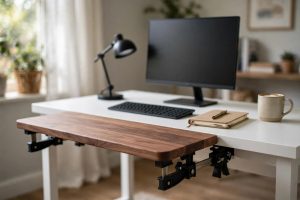
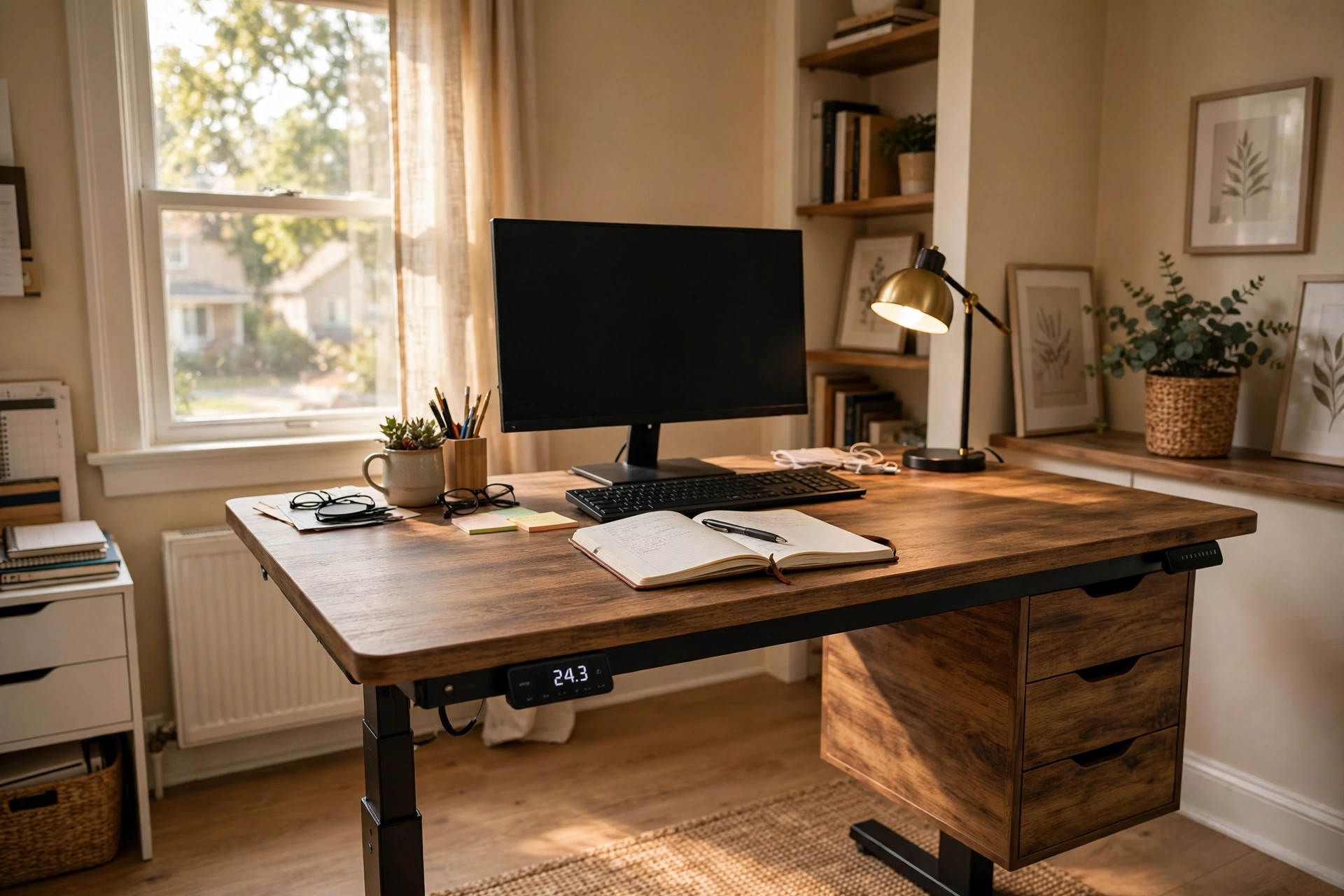
A home office standing desk with drawers attached solves two problems at once. It lets you change your working height through the day. It also gives you storage that moves with the desk top.
The idea is simple. The drawers are fixed to the underside of the desk or to one side of the frame. When you press the button or turn the crank, the whole desk rises. The drawers rise with it. Your pens, paper, and folders stay in reach whether you sit or stand.
This guide explains why this type of desk matters, what to look for when you buy one, the main types on the market, what you should expect to pay, how to care for it, and how to use it safely. It ends with answers to common questions.
Why It Matters: Home Office Standing Desk with Drawers Attached
Sitting all day is hard on the body. Doctors have warned about this for many years. Long hours in a chair can strain the lower back. It can stiffen the neck and shoulders. It can slow the blood flow in the legs.
A standing desk lets you change position. You can sit for a while, then stand for a while. Many users say their back pain fades after a few weeks of this habit. Movement breaks improve comfort and focus.
Storage matters just as much as height. A desk without drawers forces you to reach far for supplies. Drawers give every item a place. Pens go in one drawer. Folders go in another. The desk top stays clear for the computer and the task at hand.
When the drawers are attached to a standing desk, they travel up and down with you. This is the key advantage over a separate cabinet. You do not have to bend down to a cabinet on the floor when the desk is raised. Everything stays at a comfortable height.
A tidy desk also helps the mind. A clear work surface makes it easier to start work. Drawers attached to the desk make it easy to clear the surface at the end of the day. You close the drawers and the room looks neat again.
How to Choose
Buying a home office standing desk with drawers attached takes some care. The desk will be the center of your workday for years.
Size of the Work Surface
Measure your room first. Measure the wall or corner where the desk will go. Leave at least 30 inches of room behind the chair so you can get in and out.
A common width is 48 to 60 inches. A 48-inch top holds a monitor, a keyboard, and some papers. A 60-inch top holds two monitors with room to spare. Depth usually runs 24 to 30 inches.
Think about what sits on the desk. A laptop needs less room than a desktop with two screens. A printer needs more room still. Write down every item you plan to place on the desk. Then pick a top size that fits them all with space left for writing.
The Lift Frame
The frame is the part that moves. It sets the price and the life of the desk.
Electric frames use one or two motors. You press a button and the desk glides up or down. Two-motor frames are stronger and steadier. They lift more weight without shaking.
Manual frames use a crank or a counterweight. You turn a handle to change the height. They cost less and have no motor to break. They work well for lighter setups.
Check the height range. A good desk goes from about 25 inches at the low end to about 50 inches at the high end. That range fits most seated and standing users. Taller people should check the top number before buying.
Check the weight rating. Add up the weight of everything that will sit on the desk. Include monitors, the computer, and everything in the drawers. Pick a frame rated well above that total.
The Drawers
Drawers differ more than buyers expect. Look at the number of drawers first. Two drawers hold basic supplies. Three drawers can hold supplies plus files.
Check the drawer depth. Shallow drawers suit pens, cables, and small tools. Deep drawers hold hanging file folders. If you keep paper files at home, one deep file drawer is worth its weight.
Check how the drawers open. Full-extension slides pull the drawer all the way out. You can see and reach everything inside. Ball-bearing slides run smooth and last longer than plain roller slides.
Look at the drawer lock. Some desks include a lock that secures all the drawers at once. This helps if you keep tax papers or medical records at home. A home office storage cabinet with locking doors can take over this job if you need more secure space than desk drawers can hold.
Look at how the drawers attach to the frame. On some desks the drawer unit hangs from the top. On others it bolts to a leg. Make sure the drawer unit moves with the top, not with the floor. If the drawers stay low while the top rises, you lose the main benefit of this design.
Materials and Finish
The top is usually wood, laminate, or engineered board. Solid wood tops look fine and last long. They cost more. High-pressure laminate tops resist scratches and coffee rings. They cost less and come in many colors.
Pick a finish that fits the room. Light oak and white tops suit bright modern rooms. Walnut and dark tops suit studies and libraries.
Types and Options
Manufacturers sell several versions of this desk. The right one depends on your budget and your work style.
Electric Lift Desks With Drawers
This is the most popular type. A motor lifts the desk at the touch of a button. Many models include memory presets. You set one button for your sitting height and one for your standing height.
These desks suit people who switch positions often. Brands such as UPLIFT Desk, FlexiSpot, and Vari are well known in this market. Wirecutter and PCMag both test and rank standing desks each year.
The drawback is price. Electric desks cost more than manual ones. They also need a power outlet near the desk.
Manual Crank Desks With Drawers
These desks use a hand crank to change height. They cost much less than electric models. They have no motor and no cord. You can place them anywhere in the room.
The crank takes about 30 seconds to move from sitting to standing height. Most people find this acceptable. These desks suit buyers on a tight budget.
The drawback is effort. Some users stop changing the height because cranking feels like a chore. If you know you want to switch often, an electric model may serve you better.
L-Shaped Desks With Drawers
An L-shaped desk wraps around a corner. One arm holds the computer. The other arm holds papers, a printer, or a second task. Many L-shaped standing desks include drawers on one side.
These desks give the most work surface for the money. They fit well in corners and in rooms with an odd shape.
The drawback is size. An L-shaped desk needs a large corner. It can dominate a small room. Measure carefully before you order one.
Desks With Hutch and Drawers
Some standing desks add a small hutch above the back edge. The hutch holds shelves and small cubbies. The drawers sit below the top. This setup gives storage above and below.
The drawback is weight. The hutch adds load to the lift frame. Make sure the frame rating covers the hutch plus everything you will store in it.
Cost and Price
Prices for a home office standing desk with drawers attached vary widely. A basic manual model may cost between $250 and $450. A mid-range electric model with two drawers may cost between $500 and $900. A premium electric model with three drawers, memory presets, and a solid wood top may cost between $1,000 and $1,800.
What raises the price? The lift frame is the biggest factor. Two motors cost more than one. One motor costs more than a crank. The drawer unit is the next factor. Full-extension ball-bearing slides cost more than basic slides. A locking drawer unit costs more than a plain one. The top material also matters. Solid wood costs more than laminate.
What keeps the price down? Buying during holiday sales helps. Many furniture stores cut prices in January and in late summer. IKEA and Wayfair run frequent sales on home office furniture. Herman Miller and Steelcase sell premium office furniture with strong warranties but higher prices.
Watch for hidden costs. Delivery fees for heavy desks can be high. Assembly services add to the bill. A desk with drawers has more parts than a plain desk, so assembly takes longer.
Think in terms of cost per year. A $900 desk that lasts ten years costs $90 a year. A $300 desk that breaks after three years costs $100 a year. Check the warranty. Good makers offer five to fifteen years on the frame.
Care and Upkeep
A standing desk with drawers needs little care, but regular care keeps it working well for years.
Dust the top and the drawers once a week. Use a soft dry cloth. For laminate tops, a damp cloth with mild soap removes marks. Dry the surface after wiping. Do not soak the top with water.
Clean the drawer slides twice a year. Pull each drawer out and wipe the slides with a dry cloth. A small brush clears dust from the tracks.
Check the frame bolts every six months. Lifting and lowering can loosen bolts over time. Tighten any that feel loose. This keeps the desk steady and quiet.
For electric desks, keep the control box and cables tidy. Use the cable tray or clips that come with the desk. Cables that dangle can catch on the drawer unit when the desk moves. If the desk stops moving, unplug it for a minute and plug it back in. This resets most control boxes.
Keep the weight balanced. Do not pile heavy items on one end of the desk. A lopsided load strains the lift columns. Spread the weight across the top.
Protect the floor under the desk. A home office desk chair mat for carpet stops chair wheels from wearing a path in the rug. On hard floors, a mat cuts noise when you roll the chair.
For the drawers, do not overload them. Each drawer has a weight limit. Paper is heavier than people think. A full file drawer can weigh 40 pounds or more.
Safety
Standing desks are safe when you use them with care. A few rules will protect you, your family, and your equipment.
Keep cords clear of the moving parts. When the desk rises, cables can snag on the drawer unit or the legs. Use cable management clips.
Keep children and pets clear when the desk moves. Small fingers can get pinched between the top and the frame. Teach children not to play with the controls.
Do not climb or sit on the desk. The frame is built to hold office equipment, not a person.
Watch the pinch points. The gap between the rising top and a fixed drawer unit or wall shelf can trap fingers. Keep at least a few inches of clearance on all sides of the moving top.
Set up your monitor and keyboard at the right heights. When you stand, the top of the monitor should sit at or just below eye level. Your elbows should bend at about 90 degrees when you type. An ergonomic mouse pad with gel wrist support can ease wrist strain during long sessions. The Spruce publishes clear guides on desk ergonomics for home offices.
Start slowly with standing. Stand for 20 to 30 minutes at a time in the first week. Build up over several weeks. Wear supportive shoes or stand on an anti-fatigue mat.
Frequently Asked Questions
Can the drawers be installed on either side of the desk?
It depends on the model. Many desks let you mount the drawer unit on the left or the right leg during assembly. Some desks fix the drawers in one position. Check the product manual before you buy.
Do the drawers reduce the leg room under the desk?
A drawer unit takes some space under the top. Most units sit to one side, so the center stays open for your legs. Make sure your knees clear the drawers when you sit close to the desk.
Will an electric standing desk work during a power cut?
No. The motor needs power. During an outage the desk stays at its last height. It will work again when power returns.
How much weight can the drawers hold?
Most desk drawers hold 15 to 25 pounds each. File drawers may hold more. Check the maker specs for your model. Do not guess.
Is assembly hard?
Most desks need one to two hours to assemble. You will need basic tools, often included in the box. A second person helps when you lift the top onto the frame.
Can I use this desk in a small apartment?
Yes. A 48-inch model fits most bedrooms and living room corners. The attached drawers remove the need for a separate cabinet. Pick a light finish to keep a small room feeling open.
A Final Word
A home office standing desk with drawers attached is a practical buy for anyone who works from home. It supports your health through the day. It keeps your tools and papers in order. It saves space in rooms that must serve more than one purpose.
Take your time when you shop. Measure your room. List what you will store. Compare lift frames and drawer slides. The right desk will serve you well for a decade or more.
References
FlexiSpot. (n.d.). Ergonomic standing desks and office furniture. https://www.flexispot.com Herman Miller. (n.d.). Office furniture and ergonomic seating. https://www.hermanmiller.com IKEA. (n.d.). Home furnishings. https://www.ikea.com PCMag. (n.d.). Technology product reviews. https://www.pcmag.com Steelcase. (n.d.). Office furniture and workplace research. https://www.steelcase.com The Spruce. (n.d.). Home and garden advice. https://www.thespruce.com UPLIFT Desk. (n.d.). Standing desks and ergonomic office furniture. https://www.uplift-desk.com Vari. (n.d.). Height-adjustable desks and office furniture. https://www.vari.com Wayfair. (n.d.). Furniture and home goods. https://www.wayfair.com Wirecutter. (n.d.). Product reviews from The New York Times. https://www.nytimes.com/wirecutter
Was this guide helpful?

About Robert Taylor
The My Garden US editorial team writes practical, in-depth home and garden guides for American homeowners — tested advice, no fluff.
You May Also Like

Narrow Ladder-Style Bookshelves for the Home Office
February 26, 2026 0 views
Home Office Closet to Office Conversion Kit: A Complete Guide
February 21, 2026 0 views
Ergonomic Vertical Mouse for Wrist Pain Relief
September 9, 2026 0 views