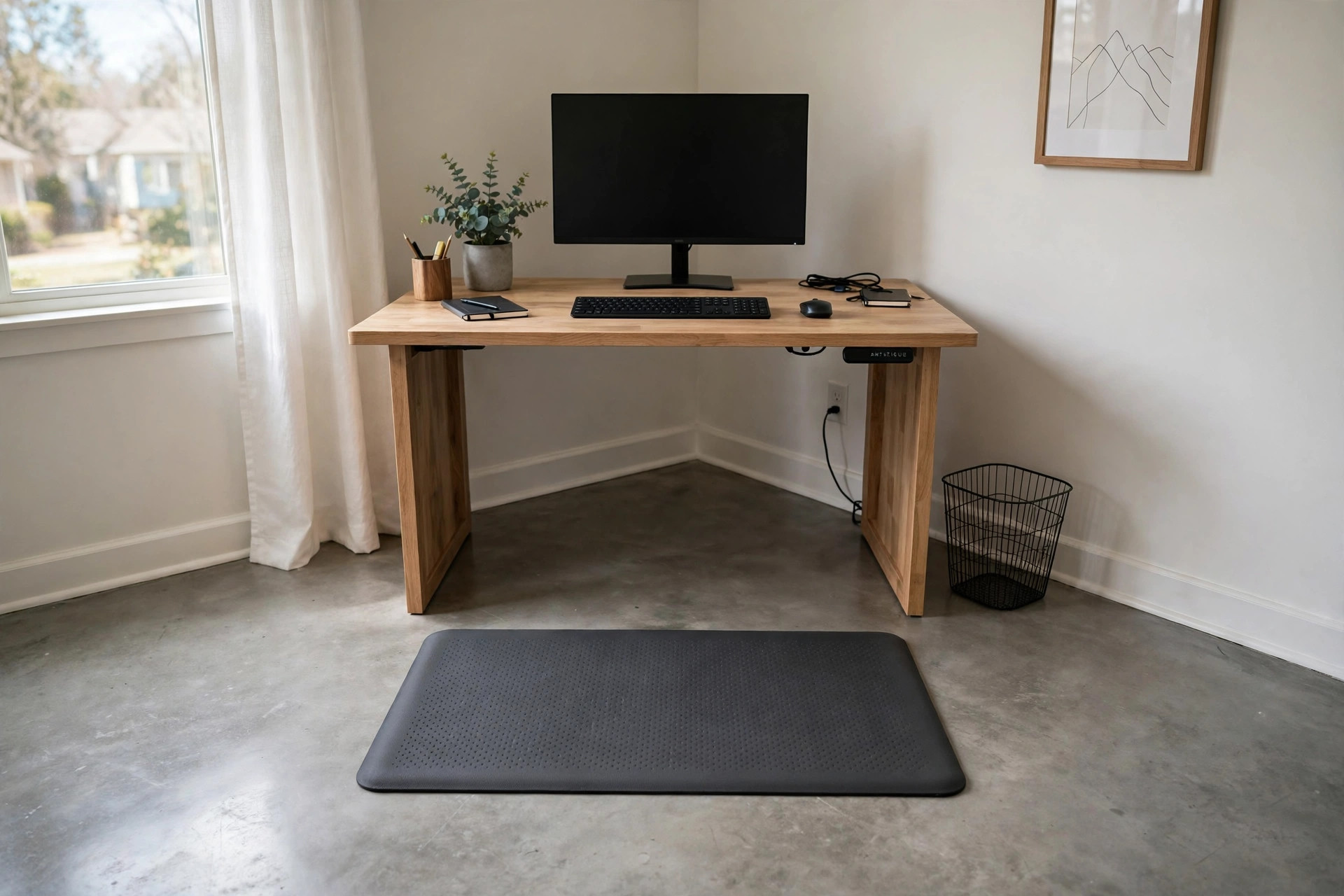

Concrete floors are hard and cold. They do not give. When a person stands on them for hours, the feet, knees, and back feel it. A standing desk helps the body, but it adds hours on the feet. On concrete, that can be painful. The best standing desk mat for concrete floors solves this problem. It adds soft support under the feet. It warms the cold floor. It cuts the shock that travels up the legs.
Many people now work from home. Garages, basements, and warehouses are common office spots. They often have bare concrete. These spaces are cheap to use and easy to find. But the floor is not kind to the human body. A good mat changes that. It lets the worker stand longer, work better, and finish the day without sore legs.
Why a Mat Matters on Concrete
Standing on concrete is different from standing on carpet or wood. Concrete is stiff. It sends every step straight back into the foot. Over an hour, the heels ache. Over a day, the lower back tightens. Over months, joints can suffer. A mat spreads the weight of the body over a wider area. It gives the foot a small amount of bounce. This small bounce matters a great deal.
A good mat also moves the feet. The soft surface lets the person shift weight. Small shifts keep blood moving in the legs. Without a mat, the feet stay locked in one spot on the hard floor. That stillness is what causes pain. The mat breaks the stillness.
Cold is the second problem. Concrete pulls heat from the feet. In winter, a bare slab can feel like ice. A thick mat acts as a barrier. It keeps the warmth of the room on the foot side. The worker feels warmer without turning up the heat.
There is also a link to better posture. When the feet hurt, the body leans. It leans on the desk, on one leg, or on the chair. That leaning bends the spine in odd ways. A mat that feels good under the feet keeps the body upright. The head stays over the shoulders. The back stays straight. If you pair the mat with the best laptop stand for standing desk posture, the screen and keyboard sit at the right height as well. The whole setup works together.
What to Look For in a Mat for Concrete: Best Standing Desk Mat for Concrete Floors
Not every mat handles concrete well. The floor demands more from a mat. Thickness is the first thing to check.
Thickness and Density
On carpet, a thin mat is enough. On concrete, thin mats flatten fast. They offer little support after a few weeks. Look for a mat that is at least three quarters of an inch thick. One inch is better for most people. The mat should push back when pressed. It should not sink straight to the floor.
Density is as important as thickness. A mat can be thick and still be soft and useless. High density foam gives back the push of the body. Low density foam caves in. Polyurethane foam is a strong choice. It holds its shape for years. Rubber is another good option. It is firm and long lasting.
Size and Shape
The mat should cover the full standing area. A mat that is too small makes the feet land half on, half off. That uneven edge is uncomfortable. A standard mat is about twenty inches deep and thirty six inches wide. This fits most single desk setups. For wider desks, look at mats up to forty inches wide. Some mats have beveled edges. The sloped edge keeps the mat flat on the floor. It also stops the foot from tripping on the side. This is a useful detail on concrete, where a curled edge is a real trip hazard.
Surface Texture
The top of the mat should grip the shoe or the bare foot. On concrete, dust gathers fast. A slick mat gets slippery. A light texture on the surface keeps the foot in place. Avoid mats with deep grooves. They trap dirt and are hard to clean. A fine pebbled or dimpled top is best.
The bottom of the mat matters too. It should grip the concrete. A smooth rubber bottom holds well on most slabs. If the mat slides when you shift, it is a problem. Sliding mats cause falls. Test the bottom on your own floor before long use.
Material Choices
Polyurethane is the most common material for quality mats. It is soft, strong, and keeps its shape. It costs more than basic foam. It lasts much longer. Rubber mats are heavier and very tough. They suit workshop floors. They can have a strong smell at first. Air them out for a day or two before use.
PVC foam mats are cheaper. They work on concrete for light use. A person who stands two hours a day may find them fine. A person who stands six hours will wear them flat. Memory foam mats feel soft at first. They often sink too much. The foot hits the hard floor through the mat. This defeats the purpose. Choose firm support over plush softness.
Many standing desk guides, such as those found at The Spruce, stress that firmness beats softness for long shifts. The point holds true on concrete, where the floor gives nothing at all.
Types of Standing Mats
Several types of mats serve concrete floors. Each has its own strengths.
Flat anti-fatigue mats are the most common. They are simple rectangles of foam or rubber. They do the job with no tricks. They cost the least. For most home offices, they are the right answer.
Contoured mats add bumps, rails, and ramps. They invite the feet to move. The user can stretch a calf on a raised bar. They can roll a foot over a ball shape. This movement is good for long days. Contoured mats cost more. They suit people who stand most of the day.
Balance boards and rocker boards pair with a mat or sit on it. They keep the legs active. They are less stable. They are not for everyone. Older users or people with bad knees may skip them.
Standing desk companies such as UPLIFT Desk sell mats made to match their desks. Office furniture makers like Steelcase and Herman Miller also offer ergonomic accessories built for long standing hours. Big retailers such as IKEA and Wayfair carry a wide range of mats at many price points. Review sites like PCMag and Wirecutter test standing desk gear and compare models side by side.
Cost and Price Ranges
Prices vary a good deal. A basic PVC foam mat costs fifteen to thirty dollars. It will serve a light user. It will wear out in a year or two on concrete. Expect to replace it.
Mid range polyurethane mats cost forty to ninety dollars. This is the sweet spot for most buyers. The mat lasts three to five years. It holds its shape. It feels firm and kind.
High end contoured mats run ninety to one hundred fifty dollars. They suit people who stand six to ten hours a day. The extra cost buys shape, rails, and massage features. For a full time home office on concrete, the price is fair.
Think of the mat as office gear, not a rug. A cheap mat that fails in six months costs more in the long run. The body pays the rest of the price in pain. Buy once and buy well.
Care and Upkeep
Concrete dust is fine and sharp. It works into the mat over time. Clean the mat once a week. Shake it out or vacuum the top. Wipe it with a damp cloth and mild soap. Do not soak the mat. Water trapped inside foam breaks it down.
Rotate the mat every month or two. Turn it end to end. This spreads wear across the whole surface. Most people stand in the same spot. That spot caves in first. Rotation adds a year or more to the life of the mat.
Keep the mat away from sharp heat. Do not place it near a space heater. Heat melts foam and warps rubber. Keep it out of direct sun for the same reason. In a garage, park the car away from the mat area. Oil and grease ruin foam.
If the mat curls at the edges, lay it flat overnight with weight on it. Books or a box will do. If the curl stays, the mat is done. A curled edge on concrete is a trip risk. Replace the mat.
For a full standing setup, an adjustable height desk converter for existing table turns a regular table into a sit stand desk. It pairs well with a mat. The user can sit and stand through the day. This mix is easier on the body than standing all day.
Safety on Concrete
Concrete is hard, so falls hurt more. Set up the work area with care.
First, make sure the mat lies flat. No corners should lift. A lifted corner catches the shoe. Tape the mat down if it will not stay flat. Double sided carpet tape works on concrete. Test the tape on a small patch first.
Second, watch for water. Basements and garages get damp. A wet mat on concrete is a slide. Dry the floor before laying the mat. If the slab sweats in summer, add a vapor barrier under the mat or move to a drier spot.
Third, mind the cords. Power cords run across concrete to the desk. Route them along the wall. Tape them flat. A cord under a mat makes a ridge. A ridge trips feet.
Fourth, use a chair with a footrest for breaks. No one should stand eight hours straight. Sit for part of the day. An ergonomic footrest for under desk at home supports the legs while seated. Shift between sitting and standing every hour. The body likes change.
Fifth, wear supportive shoes or go barefoot. Thin socks on a mat can slip. Bare feet grip the mat surface well. If shoes are worn, choose flat soles with good tread. High heels and hard dress shoes defeat the mat.
FAQ
How thick should a standing desk mat be for concrete floors? Three quarters of an inch is the floor of what works. One inch of firm, high density foam is better. On bare concrete, extra thickness and density matter more than on soft floors. The mat must not flatten to the slab under full body weight.
Can I use a yoga mat instead of a standing desk mat? A yoga mat is too thin for concrete. It is made for cushioning on a studio floor during movement. Under a desk, the feet stay in one place. The thin foam flattens at once. The concrete presses through. A real anti-fatigue mat is built for this task. It is much thicker and denser.
Will a mat protect the concrete floor? Yes, in small ways. It stops scuffs from shoes and chair legs in the standing zone. It does not seal or repair the concrete. For a bare garage floor, this is still a gain. The slab under the mat stays cleaner and less marked.
Do standing mats smell? Rubber mats can smell when new. Air them outside or in an open room for one or two days. The smell fades. Polyurethane mats have little smell. If a smell stays after a week, return the mat. A strong chemical odor is a bad sign.
How long does a good mat last on concrete? A quality polyurethane mat lasts three to five years on concrete with daily use. Cheaper foam lasts one to two years. Rotation and weekly cleaning add time. When the mat stays flat and does not bounce back, replace it.
Should the mat be used with shoes or barefoot? Both work. Bare feet get the best feel of the mat texture. Socks can slip on smooth mats. If the mat surface is textured, socks are fine. Shoes with flat soles work well too. Avoid shoes with high heels or hard soles. They press through the mat and harm the foot.
A Short Final Word
The best standing desk mat for concrete floors is thick, dense, flat, and firm. It covers the full standing area. It grips the slab and stays put. It softens the blow of the hard floor and warms the feet. It does not need to be fancy. It needs to be built well.
Concrete floors are a fact of life in garages, basements, and workshops. They do not have to hurt. A good mat, good shoes, and a habit of shifting between sitting and standing will carry the worker through the day. The cost is small. The gain in comfort is large.
References
Herman Miller. (n.d.). Office furniture and ergonomic seating. https://www.hermanmiller.com IKEA. (n.d.). Home furnishings. https://www.ikea.com PCMag. (n.d.). Technology product reviews. https://www.pcmag.com Steelcase. (n.d.). Office furniture and workplace research. https://www.steelcase.com The Spruce. (n.d.). Home and garden advice. https://www.thespruce.com UPLIFT Desk. (n.d.). Standing desks and ergonomic office furniture. https://www.uplift-desk.com Wayfair. (n.d.). Furniture and home goods. https://www.wayfair.com Wirecutter. (n.d.). Product reviews from The New York Times. https://www.nytimes.com/wirecutter
Was this guide helpful?

About Robert Taylor
The My Garden US editorial team writes practical, in-depth home and garden guides for American homeowners — tested advice, no fluff.
You May Also Like

Ergonomic Seat Cushion for Wooden Office Chair: A Plain Guide to Sitting in Comfort
September 19, 2026 0 views
Small L Shaped Desk for Corner Home Office: A Practical Guide
February 6, 2026 0 views
Ergonomic Kneeling Chair for Home Office Desk: A Complete Guide
March 7, 2026 0 views