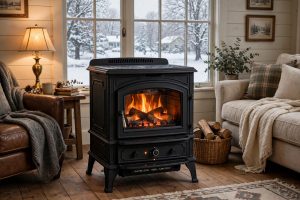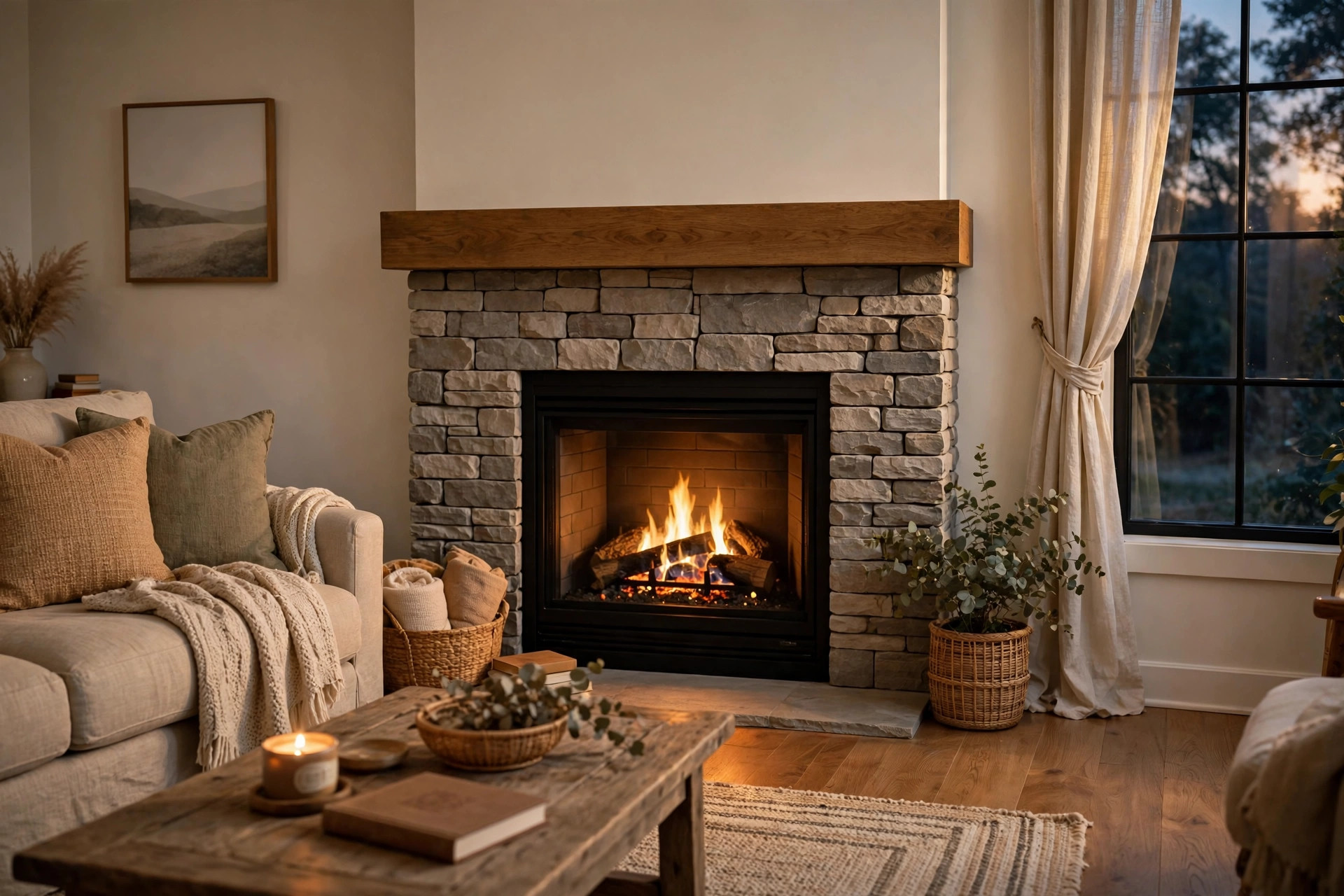

A ventless fireplace gives the look and heat of a real fire without a chimney. A stone surround gives it weight and beauty. This ventless stone fireplace surrounds buying guide will help you pick a surround that fits your room, your budget, and your safety needs.
Ventless fireplaces, also called vent-free fireplaces, burn gas so cleanly that the makers say no chimney is needed. They come in gas and gel fuel models. They put out real heat. They also put moisture into the room air. Because of this, some states and cities limit or ban them. Before you buy, check your local building code. Www.epa.gov offers plain facts on indoor air and heating appliances that every buyer should read first.
Why a Stone Surround Matters
A surround is the frame around the firebox opening. It does three jobs. It protects the wall from heat. It holds the mantel. It sets the style of the room.
Stone is a natural choice for this job. It stands up to heat well. It looks warm and solid. It fits many home styles, from farmhouse to mountain lodge to plain suburban ranch. A stone surround can also raise the value of the home, because buyers notice a good fireplace.
With a ventless unit, the surround matters even more. These units sit close to the wall. The surround hides the metal box and makes it look like a real masonry fireplace. A well-built stone surround turns a simple gas insert into the center of the room.
What to Look for When You Shop: Ventless Stone Fireplace Surrounds Buying Guide
Size and Fit
Measure your firebox first. Write down the width, height, and depth. Then measure the wall where it will sit. A surround that is too small looks cheap. One that is too large swallows the wall.
Most ventless inserts need clear space around them. The maker states the exact numbers in the manual. Common needs are six inches above the unit and twelve inches on each side before stone or trim goes up. Never guess at these numbers. Heat can crack stone and damage wood framing if the space is too tight.
Real Stone or Cast Stone
You have two main choices.
Natural stone is cut from real rock. It costs more. Each piece looks different. It weighs a lot, so the wall may need extra support. Limestone, slate, and fieldstone are common picks.
Cast stone, also called manufactured stone veneer, is made from concrete shaped and colored to look like real rock. It costs less. It weighs less. It is easier to cut and set. A good cast stone looks very close to the real thing from a few feet away. Many buyers pick Buy tile fireplace surrounds online in texas or cast stone to keep costs down.
For a ventless unit, cast stone is often the smarter pick. The lighter weight means simpler framing. The even back makes it easier to get a tight fit around the metal firebox.
Heat Rating
Not every stone veneer is rated for use near a fireplace. Ask the seller if the product is rated for fireplace use. The product sheet should state a heat rating. If it does not, pick another product. Www.thisoldhouse.com has clear guides on fireplace projects and the heat rules that go with them.
Style
Stone comes in many looks:
– Stacked stone: thin strips of stone set in tight rows. Modern and neat. – Fieldstone: round stones of mixed size. Rustic and homey. – Ledgestone: flat pieces with varied depth. Rich texture, works in many rooms. – Brick-look stone: made to look like old brick. Good for farmhouse style. – Ashlar: cut square blocks in even courses. Formal and grand.
Pick a style that matches the rest of your home. A rustic fieldstone surround looks odd in a sleek modern room. A smooth stacked stone looks wrong next to a log cabin wall. If you are unsure, look at photos of rooms like yours before you buy.
Types of Ventless Fireplaces That Take Stone Surrounds
Ventless Gas Fireboxes
These are the most common. They burn natural gas or propane. They come as inserts that slide into an existing opening or as built-in units for new walls. A stone surround frames the metal face and hides the edges.
Ventless Gas Log Sets in Stone Openings
Some buyers build a stone firebox opening and set a ventless log set inside. The logs look like real wood. Check that your gas log set is rated for ventless use and that the opening meets the maker’s size needs.
Gel Fuel Fireplaces
These burn cans of gel fuel. They make less heat than gas. They are easy to place. A small stone surround can frame a gel unit nicely in a bedroom or office. They cost less to run for short use but cost more per hour of heat than gas.
Cost and Price
Prices run wide. Here is a plain look at what buyers in the United States pay.
– Manufactured stone veneer: about $8 to $20 per square foot for the stone alone. – Natural stone veneer: about $15 to $40 per square foot. – Full natural stone and mason labor: $3,000 to $10,000 or more for the whole surround. – Ventless gas insert: $400 to $2,500 depending on size and features. – Mantel beam or shelf: $100 to $800.
A do-it-yourself buyer can frame a modest surround with cast stone for under $1,500 in many cases. A hired mason building a full natural stone surround around a large insert can run past $8,000. Get two or three quotes before you sign.
Do not forget the gas line. If your wall has no gas line, a plumber must run one. That can add $300 to $1,000. A licensed plumber should do this work. Gas is not a do-it-yourself job.
How Installation Works
Many buyers hire a pro. Here is the plain order of work so you know what to expect.
1. Check the code. Call your city or county building office. Ask if ventless fireplaces are allowed. Ask what permits are needed. Some areas ban them outright. California is one state with strict rules. 2. Pick the unit. Choose the ventless insert or log set. Keep the manual. It has the clearance numbers you must follow. 3. Frame the wall. Build or adjust the wall framing to hold the unit and the stone weight. Use non-combustible board, such as cement board, where stone meets the firebox. 4. Run the gas line. A licensed plumber connects the gas. A shutoff valve must be within reach. 5. Set the stone. Masons or skilled do-it-yourselfers set the stone with mortar or adhesive made for veneer. Leave the exact clearances the manual calls for. 6. Add the mantel. Wood mantels must sit high enough to stay cool. The manual gives the safe height. 7. Test. Light the unit. Check for gas smell. Watch that the flame looks right. A pro should do the first test.
If you want a simpler path, some makers sell full surround kits made for their ventless units. The parts fit together and meet the clearance rules by design. Www.lowes.com and Www.homedepot.com both stock ventless inserts, stone veneer, and full surround kits that you can price in one trip.
Care and Upkeep
Stone asks for little care, but it does ask for some.
– Dust often. A soft brush or vacuum keeps dust out of the stone texture. – Seal natural stone. Many natural stones take a sealer once a year. The sealer keeps soot and stains from soaking in. Ask your stone seller which sealer fits your stone. – Clean soot gently. Ventless gas burns clean, but a little soot can still form. Wipe with a damp cloth. Do not use harsh acids on stone. – Check the unit yearly. Have a gas tech look at the burner, the oxygen sensor, and the gas line once a year. Ventless units have an oxygen depletion sensor that shuts the gas off if room oxygen drops. Make sure it works. – Watch the grout and mortar. Cracks let heat reach places it should not. Fix cracks when you see them.
Cast stone needs less care than natural stone. It still likes a yearly look-over for chips and cracks.
Safety Rules You Must Know
Ventless fireplaces are safe when used right, but they have real limits.
– Never sleep with one running. Makers say to turn the unit off when you leave the room or go to bed. – Keep a window cracked. A small fresh air supply helps. Some makers call for it in the manual. – Do not use in small closed rooms. Bedrooms and bathrooms may be off limits. Check the manual and the code. – Keep things away. Curtains, papers, and furniture must stay at least three feet from the front. – Install carbon monoxide alarms. Put one on each floor. Test them monthly. This is the most important safety step in any home with gas heat. – Know your local law. Some cities and states do not allow ventless fireplaces at all. Buying one you cannot legally use is money lost.
The U.S. Consumer Product Safety Commission posts recalls and safety notes on heating products. Check there before you buy any used or discounted unit. Www.familyhandyman.com also covers safe fireplace upkeep in plain terms.
Where to Buy
You can buy surrounds and units in several places.
– Home centers carry inserts, stone veneer, and kits. You can see and touch the stone. – Fireplace specialty shops know the clearance rules and can order the right parts. They often install too. – Online sellers offer wide choice and good prices, but you cannot see the stone color in person. Order a sample first.
Bob Vila and Www.thespruce.com both review fireplace products and explain what good work looks like. Www.napoleon.com and Www.heatilator.com are two well-known makers of gas fireplace units worth a look as you compare.
If your project includes the full hearth, you may also want to read our notes on Top rated electric fireplace mantels for american homes and Fireplace glass doors reviews and buying guide, which cover styles that pair well with stone work.
FAQ
Do ventless fireplaces need a chimney? No. They burn gas cleanly enough that the maker says no chimney is needed. They do add moisture to the room air, and some states limit or ban them. Check your local code first.
Can I put real stone around a ventless fireplace? Yes, if you keep the clearances in the manual. Use cement board behind the stone near the firebox. Never let stone or mortar touch parts of the unit that get hot unless the maker allows it.
Is cast stone as good as natural stone? For most homes, yes. It weighs less, costs less, and is easier to install. Good cast stone looks like real rock. Natural stone wins on feel and on one-of-a-kind looks, but it costs much more to buy and set.
How much heat does a ventless fireplace make? Most units make 20,000 to 40,000 BTUs. That heats one large room or a small open area. It will not heat a whole house in a cold climate. Think of it as zone heat for the room you sit in.
Can I install a ventless stone surround myself? A skilled do-it-yourself buyer can set stone veneer. The gas hookup must be done by a licensed plumber. The first test burn should be checked by a gas tech. If you are unsure at any step, hire a pro.
Do I need a permit? In most places, yes. Gas work and new fireplaces usually need a permit and a check by the city. Call your building office before you buy.
A Short Final Word
A ventless stone fireplace surround brings real warmth and a solid, lasting look to a room. Pick your unit first. Check your local code. Measure twice. Choose stone that fits your home and your budget. Keep the clearances the manual calls for, have a pro handle the gas, and test your carbon monoxide alarms. Done right, your stone hearth will be the spot everyone walks to on a cold night.
Related guides on this site include high efficiency gas log sets for sale, freestanding electric stoves reviews and buying guide, and buy tile fireplace surrounds online in texas.
References
Bob Vila. (n.d.). Home improvement advice. https://www.bobvila.com Buy tile fireplace surrounds online in texas. (n.d.). Home and garden information. https://www.buy-tile-fireplace-surrounds-online-in-texas/ Family Handyman. (n.d.). DIY home repair and maintenance. https://www.familyhandyman.com Heatilator. (n.d.). Fireplaces and fireplace products. https://www.heatilator.com Lowe’s. (n.d.). Home improvement products. https://www.lowes.com Napoleon. (n.d.). Fireplaces, grills, and heating products. https://www.napoleon.com The Home Depot. (n.d.). Home improvement products. https://www.homedepot.com The Spruce. (n.d.). Home and garden advice. https://www.thespruce.com This Old House. (n.d.). Home renovation guidance. https://www.thisoldhouse.com U.S. Consumer Product Safety Commission. (n.d.). Product safety information. https://www.cpsc.gov U.S. Environmental Protection Agency. (n.d.). Protecting human health and the environment. https://www.epa.gov Www. (n.d.). Home and garden information. https://www
Was this guide helpful?

About David Wilson
The My Garden US editorial team writes practical, in-depth home and garden guides for American homeowners — tested advice, no fluff.
You May Also Like
Ventless Propane Patio Heaters With Free Shipping: A Complete Buying Guide
July 1, 2026 0 views
Affordable Infrared Outdoor Heaters Buying Guide
April 3, 2026 0 views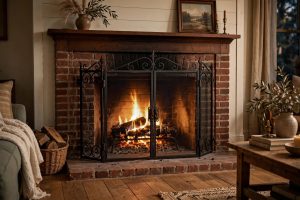
Premium Fireplace Screens With Doors Buying Guide
June 6, 2026 0 views