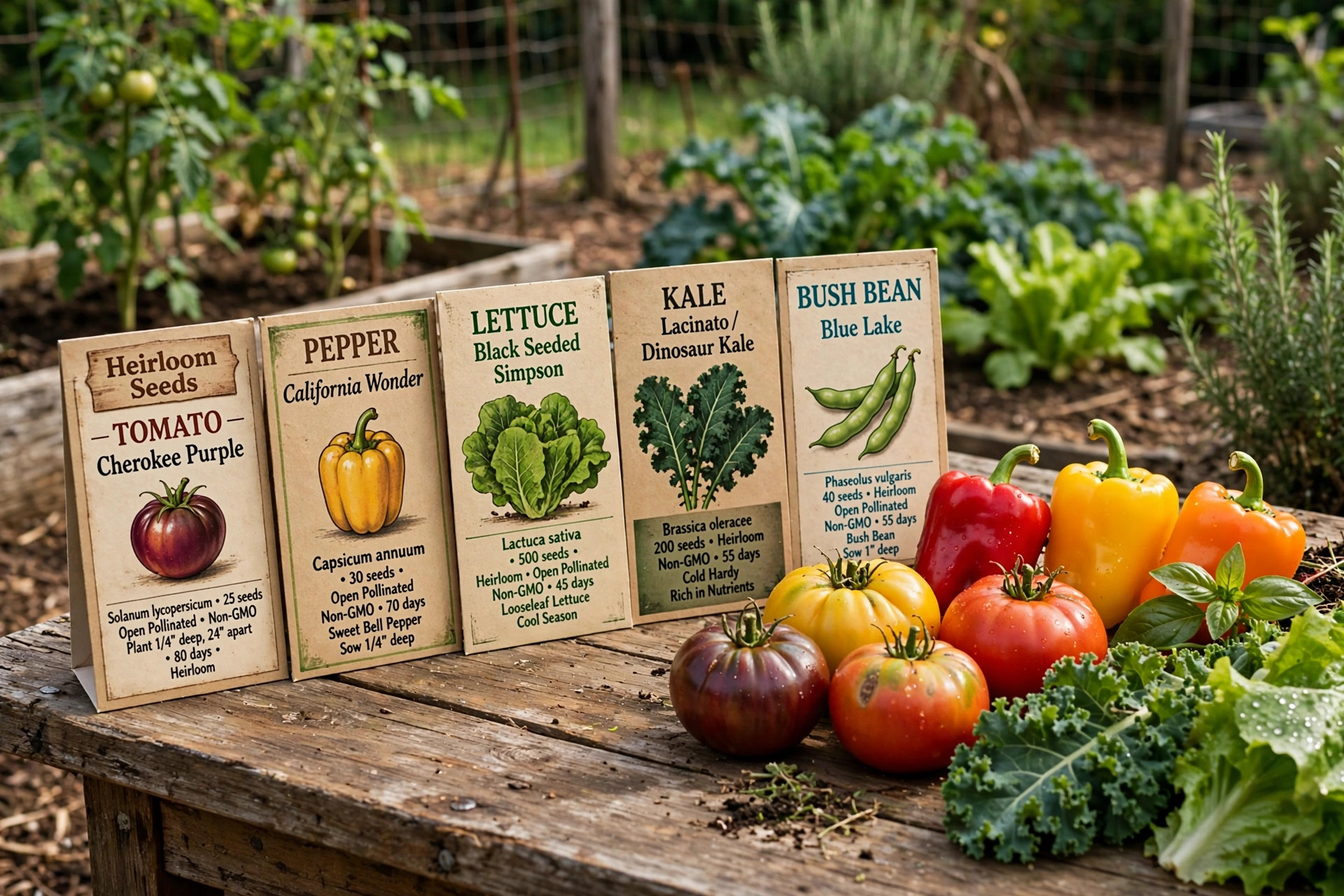

Gardeners in every state are reading seed reviews before they order. They want tomatoes with real flavor. They want beans their grandparents knew. This heirloom vegetable seeds reviews buying guide USA explains how to judge reviews, compare seed companies, and choose seed that will grow well in your own backyard. It covers price, quality, seed saving, and safe buying. Every claim here is simple and plain. You can use it to order with confidence when winter seed catalogs arrive.
Why Heirloom Seeds Matter
An heirloom vegetable is a variety that has been grown for fifty years or more. Many date back a century. Farmers and families saved seed from the best plants each year. The seeds stayed true to type. That means seed saved from an heirloom tomato grows the same tomato again.
Modern hybrids are different. A hybrid is a cross between two parent lines. It often grows fast and even. But seed from a hybrid does not grow true. Each year you must buy new seed. Heirlooms give you freedom. You can save your own seed and never buy that variety again.
Flavor is the main reason gardeners choose heirlooms. Old varieties were bred for taste, not for shipping. A Brandywine tomato tastes different from a supermarket tomato. A Mortgage Lifter or a Cherokee Purple has depth and acid and sweetness in balance. Beans, peppers, squash, and melons show the same difference.
History matters too. Each heirloom carries a story. Amish Paste came from Pennsylvania farms. Black Krim came from the Crimea. These varieties connect a garden to the past. For many growers, that connection is worth the extra care.
Heirlooms are not always easy. Some crack. Some get sick faster than hybrids. But reviews from other gardeners tell you which ones behave well in your region. That is why reading reviews before buying is so useful.
How to Read Seed Reviews and Ratings: Heirloom Vegetable Seeds Reviews Buying Guide Usa
Seed reviews are short reports from buyers. They tell you if seed sprouted fast. They tell you if plants were healthy. They tell you if the flavor matched the catalog promise. Good reviews make buying safer.
What Good Reviews Tell You
Look for reviews that mention germination. A reviewer may say that eight of ten seeds sprouted in a week. That is useful data. Look for reviews that mention the growing region. Seed that does well in Florida may struggle in Maine. Reviews from your own climate zone carry more weight.
Watch for detail about yield and taste. “Great flavor” is vague. “Rich, sweet, few seeds” is better. Watch for notes on disease. Heirloom tomatoes often face blight and wilt. A review that says a variety held up well through a wet summer is worth gold.
Be careful with very short reviews. One star with no words tells you little. Five stars with no words tells you little too. Trust reviews that describe real garden results.
Check how many reviews a product has. Ten reviews give a better picture than one. Also check the date. A company may change its seed lot from year to year. Recent reviews matter most.
What to Look for When You Buy
Buying seed is simple when you know what to check. Start with the germination rate. Good companies test their seed and print the rate on the packet. Eighty percent or higher is fine for most vegetables.
Check the pack date. Seed loses vigor with age. Most vegetable seed lasts two to five years in cool, dry storage. Onion and parsnip seed fade fastest. Bean and cucumber seed hold well. Buy this year’s seed when you can.
Read the variety description with care. It should name days to maturity. It should name plant size and spacing. It should say whether seed is open-pollinated. Open-pollinated seed grows true, so you can save it. Some companies also note resistance to disease. That helps you plan.
Look at seed count. A packet of thirty tomato seeds is plenty for a home garden. A packet of ten seeds for the same price is thin value. Compare price per seed across companies.
Check shipping terms. Seed ships best in cool months. Some companies add handling fees that raise the real price. Order early, before spring rush, for the best choice.
Many growers also read guides on starting seeds indoors. If you plan to start early, our seed starting trays buying guide pairs well with this article. Trays, heat mats, and lights help young plants grow strong before the last frost.
When you are ready to order, seed catalogs from Burpee list germination rates and days to maturity for hundreds of varieties. Park Seed also publishes clear growing guides with each packet. Gurney’s has sold seed to American gardeners for generations and prints honest regional advice.
Types and Options Worth Knowing
Heirloom seed comes in many forms. The most common is the standard open-pollinated packet. You sow it, grow it, and save seed at season’s end. This is the backbone of heirloom gardening.
Some companies sell heirloom collections. A collection may hold six tomato varieties or a full salsa garden kit. Collections cost more per packet but less than buying each one alone. They suit new gardeners who want to try many kinds.
Treated and untreated seed is another split. Most heirloom seed is untreated. Untreated seed fits organic gardens. Treated seed carries a fungicide coat. Read the packet so you know what you are sowing.
Organic heirloom seed is grown without synthetic chemicals. It costs a bit more. Many gardeners prefer it. If you also grow kitchen herbs, see our organic herb seeds buying guide for similar advice on herbs.
Then there are regionally bred heirlooms. A tomato bred in Texas heat will outlast one bred in Vermont. Companies like Territorial Seed Company select varieties for the Pacific Northwest. Fedco Seeds selects for cold northern climates. Johnny’s Selected Seeds runs trial farms and reports real field data. Matching variety to region is one of the smartest moves a gardener can make.
Research from the National Institute of Food and Agriculture supports regional variety trials. State extension services test vegetables in local soil and weather. Their reports are free and honest. Pair them with catalog reviews for a full picture.
Cost and Price
Heirloom seed is one of the cheapest parts of gardening. A packet costs between two and six dollars in most catalogs. Heirloom seed is one of the cheapest parts of gardening. A packet costs between two and six dollars in most catalogs, which shows how competitive the seed market is.
Price varies by company and by seed count. A two-dollar packet with twenty seeds may cost more per seed than a four-dollar packet with a hundred. Do the math before you judge.
Rare varieties cost more. Seed that is hard to grow or slow to multiply carries a higher price. That is normal. Do not pay high prices for common varieties. Brandywine, Cherokee Purple, and Mortgage Lifter seed is easy to find at fair prices.
Shipping adds up. One packet may cost more to ship than it costs to buy. Order all your seed at once. Many companies offer free shipping over a set amount. Plan your whole garden before you click order.
Consider value over years. A four-dollar packet of beans may give you food for three summers if you save seed. No other garden supply pays back like that.
If you are comparing many offers, our guide to heirloom vegetable seeds for sale USA lists current sellers and price ranges side by side.
Starting, Growing, and Saving Seed
Good seed still needs good care. Start most seeds indoors six to eight weeks before the last frost. Use clean trays and fresh mix. Keep the soil warm and moist, not wet.
Plant at the right depth. A rule of thumb: sow seed twice as deep as the seed is wide. Tiny seeds like lettuce sit near the surface. Big seeds like beans go an inch deep.
Give seedlings light. A sunny window is rarely enough. A simple shop light hung two inches above the plants works well. Keep lights on fourteen to sixteen hours a day.
Harden plants off before they move outside. Set them in shade for a few days, then in sun. Rushing this step kills more seedlings than frost does.
Care and Upkeep
Water at the base of the plant. Wet leaves invite disease. Mulch with straw to hold moisture and keep fruit clean. Feed with compost rather than heavy chemical fertilizer.
Watch for pests each week. Pick off hornworms by hand. Use row cover to stop flea beetles on young plants. Healthy soil grows plants that resist trouble.
Save seed from your best plants. Let one or two fruits ripen fully. Scoop out tomato seed and ferment it in water for three days to remove the gel coat. Rinse and dry bean and pepper seed on screens. Store dry seed in paper envelopes in a cool, dark place.
Label everything. Write the variety and the year on each envelope. Memory fades by spring. Good labels turn a good garden into a seed bank.
The Old Farmer’s Almanac publishes planting calendars by zip code. They tell you when to sow and when to transplant in your town. Proven Winners and Monrovia also share care guides that apply to vegetables as well as ornamentals.
Safety and Honest Labeling
Seed buying is safe when you buy from honest sellers. A few rules protect you.
Buy from companies that name the variety fully. “Heirloom tomato mix” is not a variety. Real sellers list the cultivar name, such as “Cherokee Purple.” Vague labels are a warning sign.
Check that the company tests for germination. Trusted sellers print test dates and rates. If a seller hides this data, shop elsewhere.
Read the fine print on “heirloom style” claims. Some sellers use the word heirloom for marketing. True heirlooms are open-pollinated and old. Ask questions when the label is unclear.
Keep seed away from children and pets in storage. Seed itself is not poison, but treated seed can be. Store all seed packets up high and dry.
Watch for invasive claims. A few sellers promise giant yields or miracle growth. No seed does that. Reviews from real gardeners, not ad copy, tell the true story.
Gardening Know How explains how to spot mislabeled seed. Their articles walk through reading packets and testing germination at home.
Frequently Asked Questions
Are heirloom seeds harder to grow than hybrid seeds? They can be. Some heirlooms get sick more easily. They may also grow less evenly. But many are tough and reliable. Reviews from your region tell you which ones to trust.
How long does heirloom vegetable seed last? Most kinds last two to five years in cool, dry storage. Beans, cucumbers, and melons hold longest. Onions and parsnips fade fastest. Test old seed on a damp paper towel before you sow a whole tray.
Can I save seed from any heirloom? Yes, if it is open-pollinated. Save seed only from healthy plants. Keep varieties apart so bees do not cross them. Peppers and tomatoes cross less than squash and corn do.
Do heirloom seeds cost more than hybrid seeds? Often they cost about the same. Some rare heirlooms cost more. But you can save heirloom seed for free, which hybrids do not allow. Over years, heirlooms cost less.
Where can I find honest heirloom seed reviews? Start with buyer reviews on seed company sites. Then check garden forums and state extension reports. Compare several sources before you decide.
Is it legal to save and share heirloom seed? Yes. Old open-pollinated varieties are free to save and share. Some new patented varieties forbid it, but true heirlooms carry no such limits.
A Final Word
Reading reviews takes an hour. It saves a season. Choose seed that fits your climate. Buy from sellers who test and label honestly. Save seed from your best plants. Year by year, your garden will grow more your own. That is the quiet reward of heirloom growing.
References
Burpee. (n.d.). Seeds, plants, and gardening supplies. https://www.burpee.com Fedco Seeds. (n.d.). Cold-hardy seeds for northern growers. https://www.fedcoseeds.com Gardening Know How. (n.d.). Gardening guides and plant care. https://www.gardeningknowhow.com Gurney’s Seed & Nursery Co. (n.d.). Seeds, plants, and garden supplies. https://www.gurneys.com Johnny’s Selected Seeds. (n.d.). Vegetable, herb, and flower seeds. https://www.johnnyseeds.com Monrovia. (n.d.). Plants for home gardens. https://www.monrovia.com National Institute of Food and Agriculture. (n.d.). Agricultural research and extension. https://www.nifa.usda.gov Park Seed. (n.d.). Seeds, plants, and gardening supplies. https://www.parkseed.com Proven Winners. (n.d.). Plants and gardening inspiration. https://www.provenwinners.com Territorial Seed. (n.d.). Vegetable and flower seeds for regional growers. https://www.territorialseed.com The Old Farmer’s Almanac. (n.d.). Gardening calendars and advice. https://www.almanac.com
Was this guide helpful?

About Emily Rodriguez
The My Garden US editorial team writes practical, in-depth home and garden guides for American homeowners — tested advice, no fluff.
You May Also Like
Dahlia Bulbs Bulk Florida Homes USA: A Simple Guide to Planting and Care
January 30, 2026 0 views
Snake Plants Indoor for Sale USA: A Plain Guide to Buying
January 17, 2026 0 views
Snake Plants Indoor Deals Near Me: A Simple Buying Guide
May 23, 2026 0 views