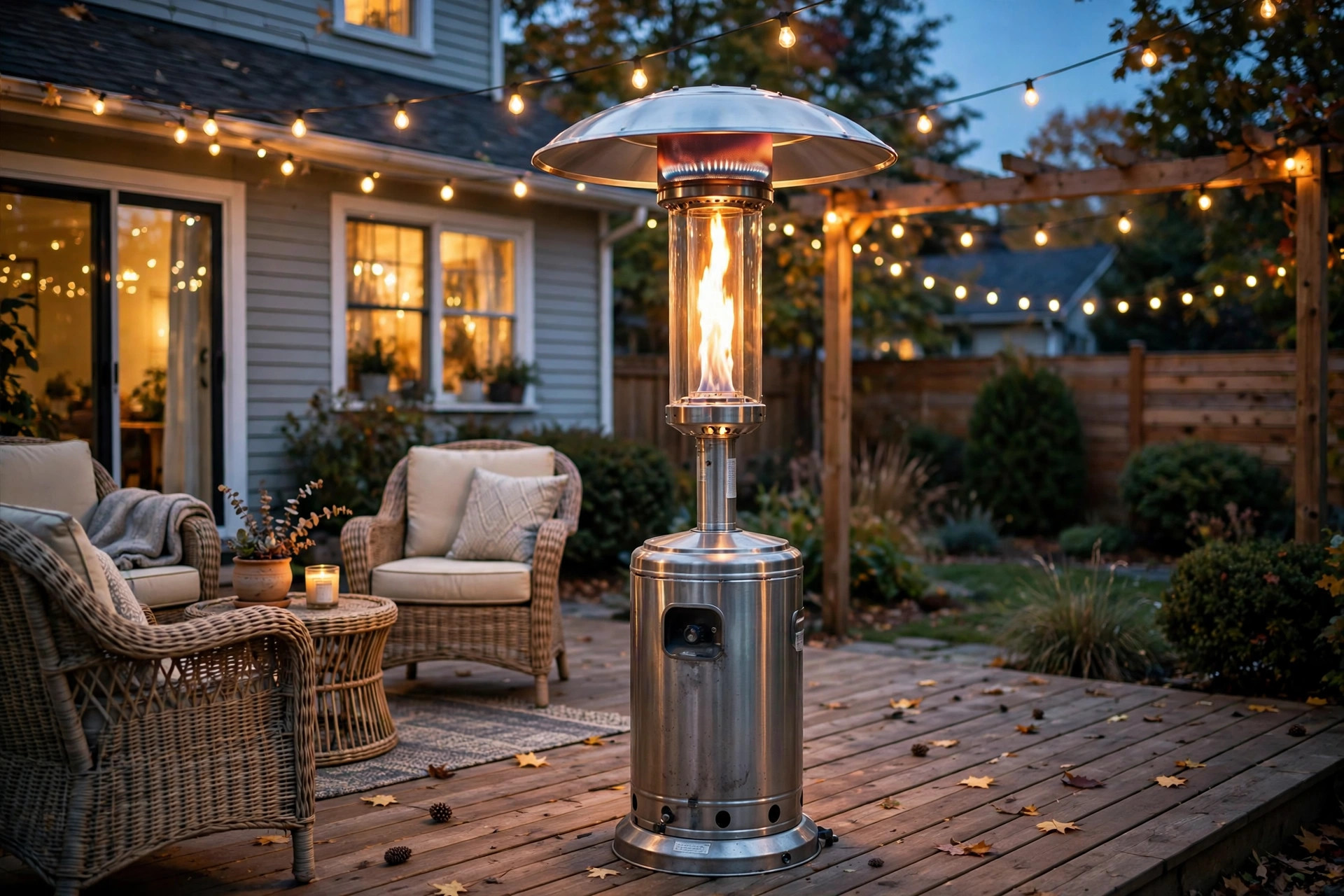

A warm patio in the cold months is a simple joy. A good heater can stretch your outdoor season by weeks or even months. That is why so many home owners search for propane patio heaters reviews and buying guide pages before they buy. A heater is not a small purchase, and the wrong one can leave you cold, frustrated, and out of pocket. This guide lays out what matters, in plain words, so you can choose with confidence.
Propane heaters are the most common kind of patio heater sold in the United States. They are portable, they need no plug, and they throw off strong heat fast. But they come in many shapes and price points. Some last for years. Some fail in a single season. This propane patio heaters reviews and buying guide will help you tell the difference before you spend a dime.
Why a Propane Patio Heater Matters
An outdoor room is only as useful as its comfort. When the sun drops and the air cools, chairs and tables sit empty. A propane patio heater changes that. It gives you back the evening hours. Family dinners move outside again. Friends linger longer. You use the patio you paid for instead of watching it through the glass.
Propane is a practical fuel for this job. A standard 20-pound tank, the same kind used on most gas grills, can run a patio heater for many hours. There is no wire to trip over and no circuit to overload. You can place the heater where you want it, and move it when the party moves. For renters and home owners alike, that freedom matters.
Safety and honesty matter too. A heater burns real fuel and makes real flame. Buyers who read propane patio heaters reviews and buying guide material tend to choose models with proper safety shut-offs and solid reviews. The time you spend reading now pays back every cold night you use it.
How to Choose: What to Look For: Propane Patio Heaters Reviews and Buying Guide
Choosing a patio heater is not hard if you know the key points. Work through this list before you look at a single price tag.
Heat Output
Heat output is rated in BTUs, or British Thermal Units. Most full-size propane patio heaters run between 40,000 and 48,000 BTUs. That is enough to warm a circle of about 15 to 20 feet on a calm night. Smaller tabletop models make 10,000 to 12,000 BTUs. They warm the space right around a table, not a whole patio.
Buy for the space you have. A small model under a big open sky will disappoint. A giant commercial heater on a small balcony is a waste of fuel and a safety risk.
Height and Shape
The classic mushroom-style tower heater stands about seven feet tall. Heat rises from the top and spreads outward. Pyramid-style heaters show off a glass flame tube and put out heat from the middle of the column. Tabletop models sit on a table and warm the seats around it. Wall-mount and hanging models save floor space but need a fixed install point.
Think about wind. Tall heaters lose more heat to wind than short ones. A sheltered patio with a wind screen will get far more value from any model than an open hilltop deck.
Fuel Tank and Run Time
Most tower heaters take a standard 20-pound propane tank that hides in the base. On the high setting, that tank lasts about eight to ten hours. On the low setting, it can last twice as long. Check how easy the tank door is to open and how the tank straps in. A loose tank is a hazard.
Some buyers keep two tanks on hand so one is always full. Others prefer a smaller tank for tabletop models. Whatever you choose, buy from a dealer who will refill or swap tanks near you.
Ignition and Controls
Look for a simple push-button or electronic ignition. A pilot light that must be lit by hand is a poor choice in cold wind. A control knob should turn smoothly and hold its setting. Many newer models add a tip-over shut-off valve that cuts the gas if the unit falls. That is a feature worth having, especially with kids or pets around.
Build Quality and Weather Resistance
Stainless steel and powder-coated steel stand up best to rain and sun. Cheap painted metal will rust in a year or two. Check the weight of the unit, too. A heater that is too light will rock in the wind. Many models include a weighted base or an option to bolt the base down.
Covers matter. A fitted cover adds years to the life of the burner and the finish. Budget for one if it does not come in the box.
Types and Options
This propane patio heaters reviews and buying guide covers four main types. Each has a place.
Tower Heaters
The mushroom-top tower is the standard workhorse. It puts out the most heat and covers the most ground. Prices run from about one hundred fifty dollars for basic models to over five hundred for heavy commercial units. Tower heaters suit open patios and large gatherings.
Pyramid Heaters
Pyramid heaters, with their tall glass tubes and dancing flame, are bought for looks as much as heat. They warm a smaller radius than a tower of the same rating, but they look like a piece of art. Expect to pay more, often three hundred dollars and up. The glass tube needs care and costs real money to replace.
Tabletop Heaters
Tabletop heaters are small, light, and cheap, often under one hundred dollars. They take a one-pound propane canister or a small tank. They suit balconies and small tables. Do not expect them to heat a full patio.
Wall-Mount and Hanging Heaters
These models bolt to a wall or hang from a beam. They free up floor space and cannot tip over. They are best for covered patios with a solid mount point. Install must be done right, with safe clearance from wood and fabric.
Home owners who want more than one kind of outdoor heat sometimes pair a propane heater with a different fixture. If you are also weighing other options, see our guide to ventless chimineas for patios for sale for a smokeless fire look, and our premium chimney inspection services near me piece if you run an indoor flue as well.
Cost and Price
Prices have stayed fairly steady over the last few years. Here is a rough map of the market.
– Tabletop models: 50 to 120 dollars. – Basic tower heaters: 150 to 250 dollars. – Mid-range towers with better steel and safety features: 250 to 400 dollars. – Pyramid and designer models: 300 to 600 dollars. – Commercial-grade stainless units: 500 dollars and up.
Running cost is mostly the propane. A 20-pound tank refill costs about 15 to 25 dollars in most states. That works out to roughly two dollars an hour on high. Heaters that run on the low setting cost half that.
Do not forget the extras. A cover runs 20 to 40 dollars. A second tank runs 40 to 60 dollars. A replacement glass tube for a pyramid heater can cost 60 to 100 dollars. These small costs add up, so check reviews for how often a model needs parts. Many buyers share that kind of detail on thisoldhouse.com forums and on thespruce.com buying guides.
When you are ready to compare models side by side, large retailers like homedepot.com and lowes.com list hundreds of propane heaters with buyer ratings. The reviews there are plain and honest, and they are a fair check on any manufacturer’s claims.
Care and Upkeep
A propane heater needs little care, but what it needs matters.
Clean the burner once a season. Dust, spider webs, and grease block the gas ports and cause weak or uneven flames. A soft brush and a can of compressed air do the job. Check the thermocouple and the pilot assembly for soot. Wipe the reflector hood clean so it throws heat back down instead of trapping it.
Store the heater right. If you will not use it for months, turn off the tank, disconnect it, and cap the valve. Cover the unit or bring it under cover. Propane tanks should be stored upright, outdoors, never inside a house or garage. The team at familyhandyman.com has clear seasonal checklists for outdoor gas gear that are worth a look.
Watch for rust. Touch up paint chips as soon as you see them. Replace a worn gas hose before it cracks. If the flame turns yellow and lazy instead of blue and strong, clean the burner or call a pro.
For indoor fire features, a different kind of care applies. If you have a tiled fireplace indoors, our article on buy tile fireplace surrounds online in texas covers matching surrounds and finishes.
Safety
Propane patio heaters are safe when used right and dangerous when used wrong. Follow these rules every time.
Use the heater outdoors only. Never run a propane heater in a garage, tent, or enclosed porch. Propane burns clean, but it still uses oxygen and can make carbon monoxide in a closed space. The epa.gov site explains indoor air risks from fuel-burning appliances in plain language.
Keep clearance. Most makers call for at least three feet of clear space on all sides and several feet of clearance above the heater. Keep it away from awnings, umbrellas, and dry branches. Set it on flat, level ground where it cannot tip.
Check for leaks. Before first use each season, brush soapy water on the tank connection and the hose. Bubbles mean a leak. Tighten or replace the part before you light the pilot.
Let it cool. The reflector hood and the emitter screen stay hot long after you turn the knob off. Warn guests, and keep children and pets at a distance. Store the cover only after the unit is fully cool.
Buy certified. Look for a CSA or UL mark on the unit and the hose. That mark means an independent lab tested it. It is the single fastest way to spot a safe design, and it is a point raised again and again in the best propane patio heaters reviews and buying guide write-ups.
FAQ
How long does a 20-pound propane tank last on a patio heater?
On the high setting, expect eight to ten hours. On the low setting, expect fifteen to twenty hours. Wind and cold cut that time down, since you will run the heater harder.
Are propane patio heaters safe on a wooden deck?
Yes, if you follow the rules. Set the heater on a stable, level surface, keep the required clearance, and use a heat shield mat under the base if the maker suggests one. Never leave it running unattended.
What is better, propane or electric?
Propane puts out more heat and needs no outlet, so it suits large open patios. Electric heaters cost less to run per hour in many areas and suit small covered spaces with a ready outlet. For a big yard party, propane usually wins.
Can I leave my propane patio heater out in the rain?
A covered heater will survive rain, but standing water and freeze-thaw cycles shorten its life. Use the fitted cover when it is not in use, and bring it under a roof for the deep winter if you can.
Why does my heater keep going out?
The most common causes are a dirty pilot, a weak thermocouple, low gas flow, or wind. Clean the pilot assembly, check the tank level, and shield the unit from gusts. If it still fails, replace the thermocouple, which is a cheap part.
How much heat does a 46,000 BTU heater really cover?
On a calm night, a 20-foot circle around the unit feels warm. Wind cuts that fast. A wind screen or a sheltered corner can double the useful warmth.
A Final Word
A propane patio heater is one of the simplest ways to get more life out of your yard. Choose by heat output first, then by build quality and safety features. Read the reviews, buy from a maker with a real warranty, and care for the unit each season. Do that, and this propane patio heaters reviews and buying guide will have done its job: warm evenings, safe ones, for years to come.
Before you buy, it is worth reading how the pros test these units. consumerreports.org publishes lab results on patio heaters, and napoleon.com and heatilator.com show how serious makers design their heat systems. Pair those with the user ratings you find in stores, and you will land on the right heater for your patio.
References
Consumer Reports. (n.d.). Product reviews and ratings. https://www.consumerreports.org Family Handyman. (n.d.). DIY home repair and maintenance. https://www.familyhandyman.com Heatilator. (n.d.). Fireplaces and fireplace products. https://www.heatilator.com Lowe’s. (n.d.). Home improvement products. https://www.lowes.com Napoleon. (n.d.). Fireplaces, grills, and heating products. https://www.napoleon.com The Home Depot. (n.d.). Home improvement products. https://www.homedepot.com The Spruce. (n.d.). Home and garden advice. https://www.thespruce.com This Old House. (n.d.). Home renovation guidance. https://www.thisoldhouse.com U.S. Environmental Protection Agency. (n.d.). Protecting human health and the environment. https://www.epa.gov
Was this guide helpful?

About Jennifer Lee
The My Garden US editorial team writes practical, in-depth home and garden guides for American homeowners — tested advice, no fluff.
You May Also Like
Best Firewood Storage Racks for California Apartments
April 24, 2026 0 views
Best Fireplace Mantel Shelves for Humid Climates
September 18, 2026 0 views
Top Rated Ethanol Wall Fireplaces for Southern States: A Buying Guide
March 12, 2026 0 views