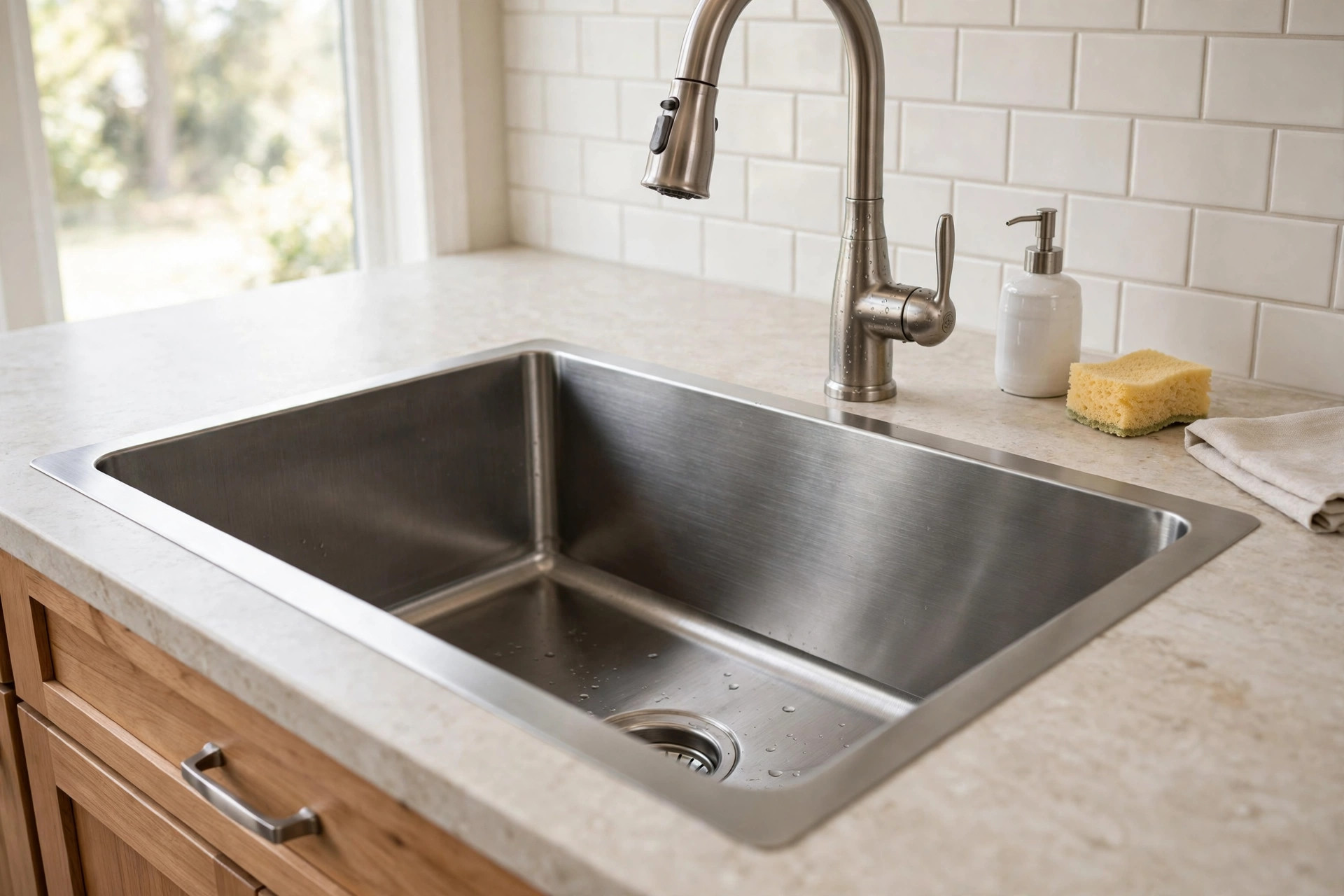

Shopping for a kitchen sink can feel like reading a code. The numbers look strange. One sink says 16 gauge. Another says 22 gauge. This stainless steel sink gauge comparison guide will explain what those numbers mean. You will learn which gauge suits your kitchen and your budget. By the end, the choice will be simple.
Why Sink Gauge Matters
The gauge of a sink tells you how thick the steel is. Gauge is an old measuring system. In this system, a lower number means thicker steel. That rule surprises many buyers. A 16 gauge sink is thick and heavy. A 22 gauge sink is thin and light. The difference matters in daily life. Thicker sinks resist dents and noise. They last longer. Thinner sinks cost less money. They may ring like a bell when water hits them.
Your kitchen sink takes hard use. Pots drop into it. Heavy pans bang against its sides. Hot water and cold water strike it all day. A thin sink will show wear faster. Dents will appear in the bottom. The sound of running water will fill the room. A thick sink handles the same abuse with calm. The extra steel adds strength. It also adds quiet. That is why gauge is worth your attention. It is not just a number on a box. It is a measure of how your sink will feel and sound for years.
How the Gauge Scale Works: Stainless Steel Sink Gauge Comparison Guide
The gauge scale dates back to old metal trades. The numbers were set long ago. They still rule the sink market today. Here are the common gauges in American kitchens.
Common Gauges and Their Thickness
16 gauge is about 1.6 millimeters thick. That is roughly 0.063 inches. This is the thickest sink steel you will find in most stores. It feels solid and strong.
18 gauge is about 1.2 millimeters thick. That is roughly 0.050 inches. This is the most common gauge for kitchen sinks. It offers a good mix of strength and price.
20 gauge is about 0.9 millimeters thick. That is roughly 0.036 inches. This is a budget gauge. It is found in many builder grade sinks.
22 gauge is about 0.8 millimeters thick. That is roughly 0.031 inches. This is the thinnest common gauge. It is used in cheap sinks and small bar sinks.
Some sellers list 14 gauge or 19 gauge. Those are rare. The market centers on the four gauges above. Remember the key rule. Lower number, thicker steel.
16 Gauge Sinks: Thick and Quiet
A 16 gauge sink is the top of the range. The steel is heavy. The sink feels like a solid object. When you drop a pot into it, it makes a soft thud. It does not ring. It does not flex. Dents are rare. These sinks often come with thick sound pads glued to the outside. The pads cut noise even further.
The main drawback is price. A 16 gauge sink costs more than a thin one. Good models run from about 200 dollars to 600 dollars. Installation may need care. The sink is heavy. A deep 16 gauge farmhouse sink can weigh over 40 pounds. Your cabinets must support it. For a busy family kitchen, the cost is fair. The sink will look good for decades. It suits homes where the kitchen is the heart of daily life.
18 Gauge Sinks: The Popular Middle
The 18 gauge sink is the best seller in America. It is thick enough for most homes. It is priced for most budgets. Typical models cost from about 100 dollars to 400 dollars. The steel resists dents well. Noise is low, though not as low as 16 gauge. Many 18 gauge sinks include sound deadening pads and a spray coating on the underside.
For most buyers, 18 gauge is the sweet spot. It handles daily cooking without trouble. It is light enough for easy installation. The price leaves room in the budget for a good faucet. If you cook a lot and want value, start here. Contractors choose 18 gauge for many remodels. It meets high standards without the top price. The Moen and Kohler catalogs both feature strong 18 gauge lines.
20 Gauge Sinks: Budget Friendly
A 20 gauge sink is thin. It suits tight budgets. These sinks often cost from about 60 dollars to 200 dollars. They appear in rental units and builder homes. They work fine for light use. If you rarely cook, a 20 gauge sink may serve you well.
The trade offs are real. Thin steel is noisy. Water sounds loud. Dishes rattle against the sides. Dents form more easily. A heavy pot dropped from height can leave a mark. The finish may show wear sooner. Sound pads help, but they cannot fix thin steel fully. Still, a 20 gauge sink from a trusted brand can last many years. The Home Depot and Lowes stores stock many solid budget models.
22 Gauge Sinks: Thin and Light
The 22 gauge sink is the thinnest choice. It is light and cheap. Prices often fall between 40 dollars and 120 dollars. These sinks suit bar areas, wet bars, and laundry rooms. They are not built for heavy daily use. In a main kitchen, a 22 gauge sink will dent and ring.
That said, there is a place for thin sinks. A small prep sink in a pantry does not need thick steel. A utility sink in a garage does not need quiet. For these light duty jobs, 22 gauge saves money. Just do not expect it to perform like an 18 gauge model. Buy it for the right job and it will be fine.
Gauge Versus Steel Grade
Gauge is only half the story. The grade of the steel matters too. Most good sinks use 304 stainless steel. This grade holds about 18 percent chromium and 10 percent nickel. The chromium fights rust. The nickel adds strength and shine. Sellers may write it as 18/10. That means the same thing.
Avoid 201 grade steel. It costs less. It holds less nickel. It can rust in hard water areas. A thick 201 sink is still worse than a thinner 304 sink. Always check both numbers. Look for 304 steel first. Then pick your gauge. A 304 grade 18 gauge sink beats a 201 grade 16 gauge sink in real life.
The finish matters as well. Most sinks have a brushed satin finish. This finish hides small scratches. A mirror finish looks fine in the store. It shows every mark in your kitchen. Choose brushed for daily use.
Sound and Insulation
Noise is the biggest daily difference between gauges. Thin steel rings. Thick steel thuds. Makers fight noise in two ways. They glue rubber pads to the outside of the bowl. They also spray the whole outside with a thick coating. These add weight and cut sound.
When you shop, check the underside. Look for full coverage pads. Look for a thick spray coat. A 18 gauge sink with great insulation can be quieter than a bare 16 gauge sink. Ask the store for a sound test. Some floor models let you tap the bowl. The duller the sound, the better the sink. The This Old House site and Family Handyman offer good tips on testing sinks in the store.
Cost and Price Ranges
Price follows thickness. Here is a plain view of the market.
16 gauge: about 200 to 600 dollars. Premium models with farmhouse fronts can reach higher.
18 gauge: about 100 to 400 dollars. This range covers most quality kitchen sinks.
20 gauge: about 60 to 200 dollars. Budget brands dominate this space.
22 gauge: about 40 to 120 dollars. Small bar sinks and basic models.
Labor adds to the cost. A drop in sink is easy to install. An undermount sink needs a skilled hand. Farmhouse sinks need cabinet work. Plan your full budget before you buy. A cheap sink with a costly install is no bargain. The Delta Faucet and Aquasana homepages list sink and filtration options that pair well with any gauge.
How to Choose the Right Gauge
Start with your cooking habits. Do you cook every day? Do you wash heavy pots by hand? Then choose 16 or 18 gauge. The extra steel will pay off in quiet and life span. Do you eat out most nights? Then 18 gauge is plenty. It will still feel solid.
Next, weigh your budget. Set the sink budget first. Then buy the thickest gauge in that range. Never buy a thin sink from a weak brand to save a few dollars. A thin sink from a good maker beats a thick sink from a poor one. Check the steel grade. Check the finish. Check the warranty.
Think about the kitchen itself. An open plan kitchen needs a quiet sink. Sound travels. A 16 gauge sink with full insulation is worth the money there. A closed kitchen can live with 18 gauge. A rental unit can live with 20 gauge. Match the sink to the home.
Finally, think about the faucet and the disposal. A heavy faucet suits a thick sink. A garbage disposal adds vibration. Thick steel handles that vibration better. If you plan to keep your old disposal, a thin sink may rattle. For more on home water systems, see our guide on how long water heaters last.
Care and Upkeep by Gauge
Thick or thin, all stainless sinks need the same basic care. Rinse the sink after each use. Dry it with a soft cloth. This stops water spots. Clean it weekly with baking soda and a soft sponge. Rub with the grain of the brushed finish. Never use steel wool. It scratches the surface.
Thick sinks forgive more. A 16 gauge sink can take a dropped knife without a dent. Thin sinks need more care. Do not drop heavy pots into a 20 gauge sink. Use a bottom grid. The grid protects the floor of the sink from dents and scratches. Grids cost little. They save a lot.
Hard water leaves white spots on any gauge. A mix of vinegar and water removes them. Wipe dry after cleaning. Once a month, rub a small amount of mineral oil on the surface. It brings back the shine. These small habits keep any sink looking new. Thin or thick, care adds years of life.
Safety Notes
A sink is safe by nature. Still, a few points matter. Heavy farmhouse sinks need strong cabinets. Check the weight rating of your base cabinet. Add support if needed. A falling sink can cause real harm.
Hot water is the other risk. Stainless steel holds heat. A thin sink heats up fast. Use care with boiling water. Run cold water with it to protect the pipes and your hands. The EPA site has useful facts on safe water temperatures in the home.
Sharp edges appear on cheap sinks. Run your finger along the rim before you buy. A good sink has smooth, rolled edges. If the edge feels sharp, pick another model. This matters most with thin gauge sinks, where the maker may cut corners.
Frequently Asked Questions
What gauge is best for a kitchen sink? For most homes, 18 gauge is the best choice. It balances strength, quiet, and price. Heavy cooks may prefer 16 gauge. Light users can save money with 20 gauge.
Is 16 gauge better than 18 gauge? Yes, in most ways. It is thicker, quieter, and resists dents better. But it costs more and weighs more. For many kitchens, the gain over 18 gauge is small. Both are good choices.
Can you tell gauge by looking? Not with your eyes alone. The difference between 18 and 20 gauge is less than half a millimeter. Lift the sink. The heavier one is usually thicker. Tap the bowl. The duller sound points to thicker steel.
Does gauge affect rust? Gauge does not stop rust. Steel grade does. A 304 grade sink resists rust at any gauge. A 201 grade sink may rust even if it is thick. Always check the grade first.
Is a thicker sink harder to install? Slightly. Thick sinks weigh more. Undermount models need solid support clips. Farmhouse models need cabinet changes. A skilled installer handles this with ease. Plan the labor cost in your budget.
Should I buy a sink with sound pads? Yes. Sound pads and spray coating make a real difference. They matter most on 18 and 20 gauge sinks. Check the underside before you buy. Full coverage is better than small pads.
A Short Final Word
Gauge is a simple idea. Lower number means thicker steel. Thicker steel means more quiet, more strength, and more years of service. For most American kitchens, an 18 gauge 304 stainless sink is the right call. It does the job well at a fair price. If you cook hard every day, step up to 16 gauge. If you need to save, a 20 gauge sink from a good brand will still serve you. For extra peace of mind in a wet basement, consider adding water leak sensors near your plumbing. Choose with care, care for it well, and your sink will serve you for decades.
References
Aquasana. (n.d.). Water filtration systems. https://www.aquasana.com Delta Faucet. (n.d.). Kitchen and bathroom faucets. https://www.deltafaucet.com Family Handyman. (n.d.). DIY home repair and maintenance. https://www.familyhandyman.com Kohler. (n.d.). Bathroom and kitchen fixtures. https://www.kohler.com Lowe’s. (n.d.). Home improvement products. https://www.lowes.com Moen. (n.d.). Faucets and plumbing fixtures. https://www.moen.com The Home Depot. (n.d.). Home improvement products. https://www.homedepot.com This Old House. (n.d.). Home renovation guidance. https://www.thisoldhouse.com U.S. Environmental Protection Agency. (n.d.). Protecting human health and the environment. https://www.epa.gov
Was this guide helpful?

About Emily Rodriguez
The My Garden US editorial team writes practical, in-depth home and garden guides for American homeowners — tested advice, no fluff.
You May Also Like

Best Well Water Filtration System Reviews USA
January 2, 2026 0 views
Backwater Valve Installation Cost for Basement: What Homeowners Pay in 2026
June 17, 2026 0 views
The Best Soaking Tub for a Small Bathroom: A USA Buyer Guide
October 5, 2026 1 views