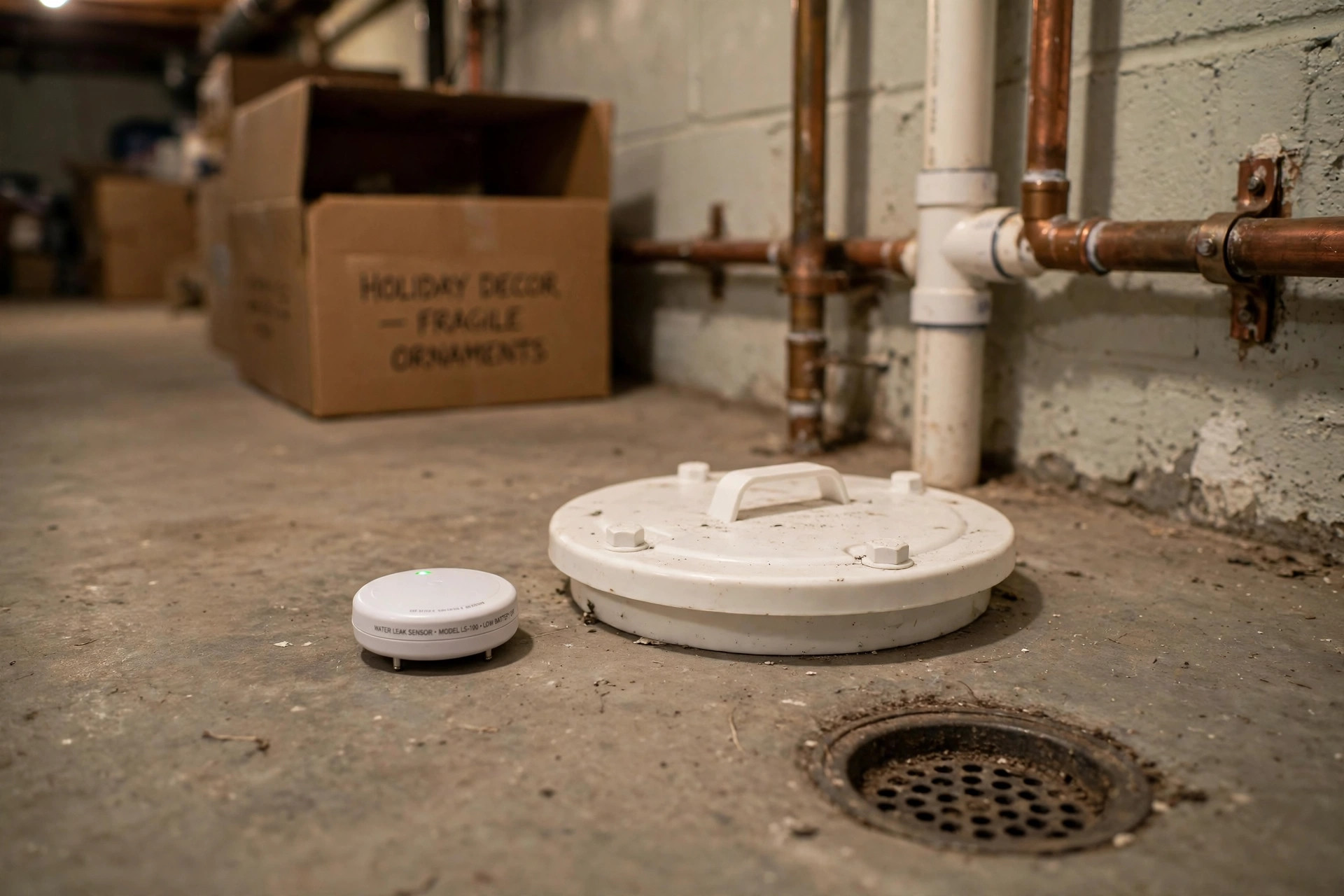

A basement can fill with water in a single night. A pipe bursts. A sump pump fails. A water heater cracks at the seam. The damage runs into thousands of dollars before anyone sees it. The best water leak sensors for basement usa homes solve this problem at the start. They sit on the floor near the danger points. When water touches them, they sound an alarm or send a message to your phone.
This guide explains how these sensors work, which kinds fit different basements, what they cost, and how to keep them working for years.
Why Basements Need Leak Sensors
Water in a basement is hard to see. Most families use the basement for storage, laundry, or a workshop. They do not walk through it each day. A slow leak can run for a week before anyone notices. Mold grows. Drywall soaks. Boxes and furniture rot.
The EPA notes that household leaks waste a large share of water each year. Much of that waste comes from leaks that owners never see. A sensor closes that gap. It watches the floor when you cannot.
Insurance claims for water damage are common across the United States. The Kohler and Delta Faucet product lines often point out that most fixture leaks start small. The same idea applies to basements. Early warning keeps a small leak from becoming a full flood.
How a Water Leak Sensor Works: Best Water Leak Sensors for Basement Usa
The basic design is simple. The sensor has two metal contacts on its base. When water touches both contacts, a circuit closes. That event sets off the response. Stand-alone units play a loud beep. Smart units send an alert over Wi-Fi to a phone app. Some do both.
Power comes from small batteries. Most units use AA or CR2032 coin batteries. A single set of batteries often lasts one to two years. Smart sensors draw more power and may need new batteries once a year.
Range matters for smart models. The sensor must reach your home Wi-Fi router from the basement. Concrete walls and floors weaken the signal. Test the spot with your phone before you buy. If the phone shows a weak signal, look for a sensor with an external probe or a wireless hub.
Types of Leak Sensors for Basements
Not every sensor fits every basement. The shape of your home and the way water enters decide the best type.
Stand-Alone Alarm Sensors
These are the simplest. You place them on the floor. When water touches them, they beep loudly. They cost little and need no phone app. They work well in a basement you visit often, such as a home workshop. The weakness is plain: if no one is home, no one hears the beep. Lowe’s carries several models of this type for under twenty dollars.
Wi-Fi Smart Sensors
A Wi-Fi sensor sends the alert to your phone. You get a text or a push message the moment water is found. Some models also send email. This is the best choice for a basement you rarely enter or for a second home. A wireless water sensor for a sump pit is one common use. The sensor sits next to the pit and tells you if the water level rises above normal. The Moen smart water line shows how this idea has grown into full home systems.
Sensors With Extension Cables
Some sensors use a cable with a probe at the end. The cable can run three or four feet across the floor. This covers a wider area than one small unit. Place the base on a shelf and stretch the cable behind the water heater or along the foundation wall. These models cost more but guard a larger zone.
Combination Sensors
A few units track temperature and humidity along with leaks. Low temperature warns of frozen pipes. High humidity warns of damp air that breeds mold. For a finished basement, this extra data has real value. A basement flood alarm of this kind can protect walls and carpet, not just the concrete.
What to Look for When You Choose
Size and shape matter. A flat, low unit slides under a water heater or a washing machine. A round puck works well on open floor near a floor drain. Think about where water will gather first, then match the sensor to the spot.
Sound level counts for stand-alone units. Look for an alarm of at least 90 decibels. That is loud enough to hear through one closed door. For Wi-Fi models, check the app. The app should send the alert in seconds, not minutes. Read recent reviews to see how fast it works in real homes.
Battery life saves trouble. A sensor that needs new batteries every six months will get ignored. Models that last two years on one set of batteries are the standard to beat.
Durability matters in a basement. Floors are damp and dusty. A sensor with sealed electronics lasts longer. Some units can survive full submersion for a short time. That is worth having if your basement has flooded before.
Check for false alarms. A sensor that goes off when the floor is just damp from humidity will get moved or switched off. The best water leak detector for basement use ignores light moisture and reacts only to real standing water.
Where to Place Sensors in the Basement
Place one sensor next to the sump pump pit. This is the most common source of basement water. When the pump fails or the power goes out, the pit overflows. A sensor at the rim catches it early. A battery backup sump pump reviews 2026 usa guide can help you pair a sensor with the right pump.
Place one behind or beside the water heater. Tanks fail without warning. Most tanks crack along the bottom seam. Water spreads fast across the floor. Our related guide on the best water leak detector for water heater usa covers this spot in detail.
Place one near the washing machine if your laundry is in the basement. Supply hoses burst. Drain hoses slip out. The sensor should sit under the machine or just behind it.
Place one at the low corner of the basement. Water runs downhill. Find the corner where water pools during heavy rain. Set a sensor there.
Place one near any floor drain. A drain that backs up pushes dirty water across the floor. A sensor at the drain rim gives early warning.
Cost and Price
Most stand-alone sensors cost between ten and twenty dollars. A four-pack often costs less per unit. Wi-Fi smart sensors run from thirty to eighty dollars each. A full starter kit with three sensors and a hub can cost one hundred to two hundred dollars.
The Home Depot and Lowe’s websites show the full price spread. Specialty plumbing shops carry the same units at similar prices. Watch for sales in spring, when stores stock flood season items.
The total cost stays low. A set of five sensors for a full basement often costs less than two hundred dollars. Compare that to the cost of one insurance claim. The price of the best sump pump for basement reviews usa runs far higher. Sensors are the cheap part of a dry basement.
Care and Upkeep
Test each sensor twice a year. Touch a wet paper towel to the contacts. The alarm or phone alert should fire at once. If it does not, change the batteries and test again.
Change batteries on a schedule. Mark the date on your calendar. Do this even if the app still shows full power. Dead batteries are the main reason sensors fail. Keep spare batteries in the basement near the sensors.
Clean the contacts once a year. Dust and mineral film build up on the metal. Wipe them with a dry cloth. Do not use steel wool. It scratches the coating and shortens the life of the unit.
Check the app settings for smart sensors. Make sure the alert goes to a phone number you still use. Update the app when a new version arrives. Family Handyman maintenance guides stress this point for all smart home devices.
Replace sensors every five to seven years. Electronics age. A unit that has served well for six years may fail in year seven. The cost of a new sensor is small. Do not stretch old hardware.
Safety Notes
Sensors are not a cure for a bad foundation. If your basement floods often, fix the source. Seal cracks. Grade the soil away from the walls. Keep gutters clean. A sensor warns you. It does not stop water.
Do not place a sensor inside the sump pit unless the maker says it is safe. Some units can sit in water. Others will fail. Read the box before you drop one in the pit.
Battery safety matters. Do not mix old and new batteries. Do not mix battery brands in one unit. Leaked battery acid ruins the contacts. If a battery leaks, clean the unit with a cotton swab and white vinegar, then wipe it dry.
Keep sensors away from furnaces and water heaters that get hot. Heat warps the plastic shell and kills the battery. Place the unit on the floor a foot or two from the appliance.
Aquasana and This Old House both note that water quality issues and leak issues often come from the same aging plumbing. If your pipes are old, a sensor is only one part of the answer. A plumber should inspect the system too.
Frequently Asked Questions
Do I need Wi-Fi for a leak sensor to work?
No. Stand-alone sensors beep on their own. They need no Wi-Fi and no phone. Wi-Fi only matters for smart models that send alerts to your phone. Choose the type that fits your habits.
How many sensors does a basement need?
Most basements need four to six. Cover the sump pit, the water heater, the washing machine, the low corner, and one floor drain. A large basement may need more. Start with the danger points and add units later.
Will a sensor work through a power outage?
Yes. Battery-powered sensors keep working when the power fails. That is when you need them most. Storms knock out power and pumps at the same time. Wi-Fi routers die in an outage, so a smart sensor may not reach your phone. A stand-alone beeper still sounds.
Can one sensor guard a whole basement?
No. Water must touch the sensor to set it off. One unit cannot watch two far corners. Spread units across the floor so water meets one quickly. Extension cable models cover a wider strip of floor than a single puck.
Do leak sensors need any upkeep?
Little. Test them twice a year and change the batteries on schedule. Clean the contacts once a year. That is all most units need.
Are these sensors hard to set up?
Stand-alone units need no setup. Set them down and they are ready. Smart units need a few minutes in a phone app. Follow the app steps and test the alert before you walk away.
A Short Final Word
Water damage starts quiet and ends loud. A twenty-dollar sensor can catch it at the quiet stage. Pick the best water leak sensors for basement usa use that match your home: simple beepers for a workshop you visit daily, Wi-Fi smart models for a basement you rarely see. Place them at the sump pit, the water heater, and the low corner. Test them twice a year. Then get back to your life. The floor will have a watchman.
References
Aquasana. (n.d.). Water filtration systems. https://www.aquasana.com Delta Faucet. (n.d.). Kitchen and bathroom faucets. https://www.deltafaucet.com Family Handyman. (n.d.). DIY home repair and maintenance. https://www.familyhandyman.com Kohler. (n.d.). Bathroom and kitchen fixtures. https://www.kohler.com Lowe’s. (n.d.). Home improvement products. https://www.lowes.com Moen. (n.d.). Faucets and plumbing fixtures. https://www.moen.com The Home Depot. (n.d.). Home improvement products. https://www.homedepot.com This Old House. (n.d.). Home renovation guidance. https://www.thisoldhouse.com U.S. Environmental Protection Agency. (n.d.). Protecting human health and the environment. https://www.epa.gov
Was this guide helpful?

About David Wilson
The My Garden US editorial team writes practical, in-depth home and garden guides for American homeowners — tested advice, no fluff.
You May Also Like
Clogged Main Sewer Line Signs for Homeowners
February 27, 2026 0 views
Rain Barrel With Filter Kit Reviews USA: A Homeowner’s Guide
July 6, 2026 0 views
Sump Pump Installation Cost Near Me: A Plain Guide for Homeowners
March 9, 2026 0 views