
When the pipes in an older home start to fail, one question comes up again and again: pex repipe vs copper repipe pros cons. Homeowners want to know which pipe will last longer, cost less, and keep the water safe. Both choices have real strengths, and both have real weak points. This guide lays out the facts in plain terms so you can make a sound choice for your house and your budget.
Why Repiping Matters
Pipes do not last forever. Galvanized steel pipes common in homes built before 1960 often last 40 to 50 years. Copper pipes can last longer, but even copper wears out. When water pressure drops, rust shows in the tub, or pinhole leaks keep appearing, a full repipe may be the answer. A repipe replaces the supply lines that carry hot and cold water through the house. The drain lines usually stay in place.
A good repipe ends years of repairs. A poor choice of material can cause regret. That is why weighing pex repipe vs copper repipe pros cons before signing a contract matters so much.
What PEX Pipe Is: Pex Repipe vs Copper Repipe Pros Cons
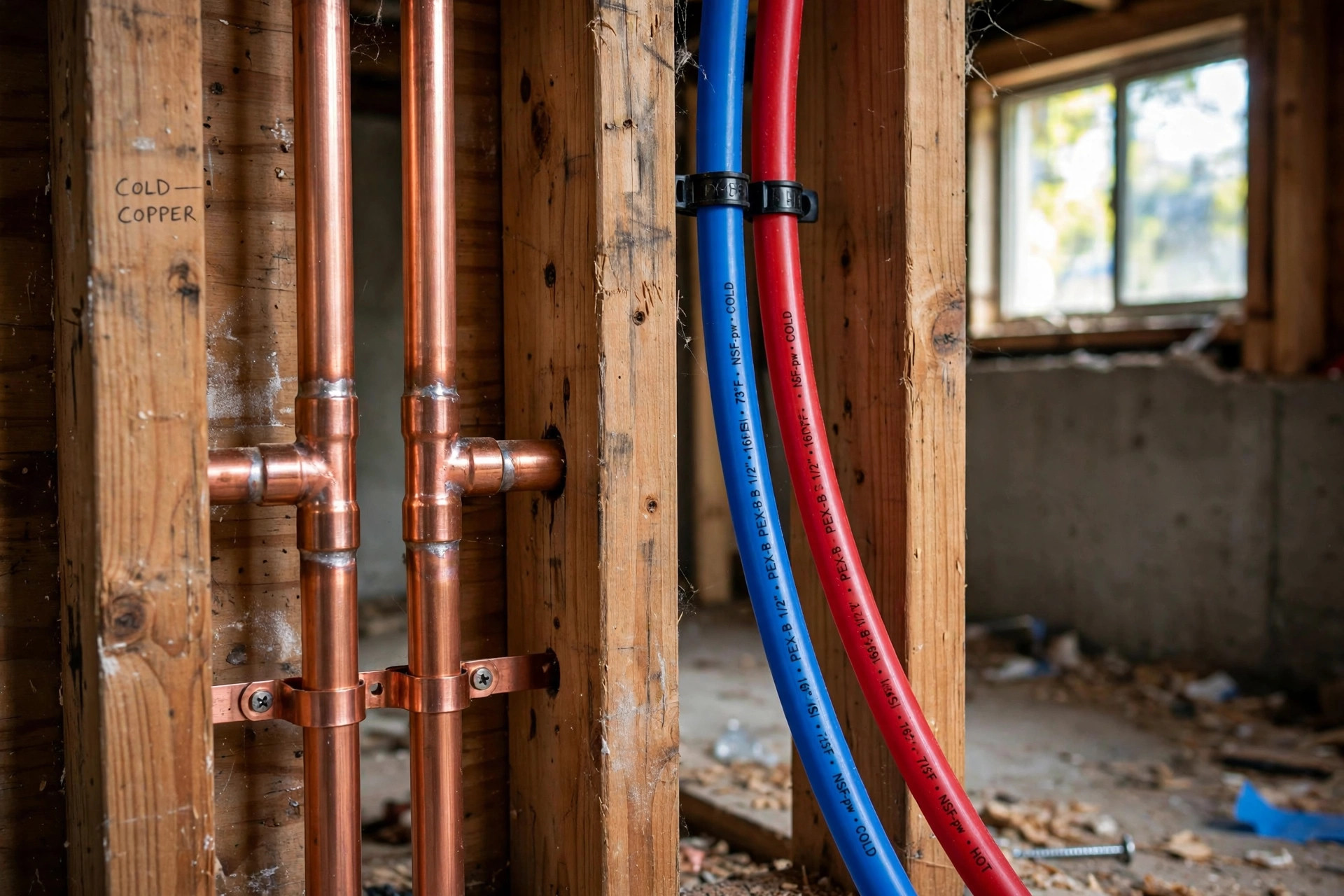
PEX stands for cross-linked polyethylene. It is a flexible plastic tube used for water supply lines. Plumbers feed it through walls much like an electrical cable. It comes in red, blue, and white rolls. Red marks hot water lines. Blue marks cold. White can serve either.
PEX has been used in Europe since the 1970s and in the United States since the 1980s. Millions of homes now have it. Major plumbing codes accept it, and the Environmental Protection Agency offers guidance on safe drinking water materials that cover modern pipe options. You can find PEX supplies at most retailers, such as The Home Depot, which stocks tubing, fittings, and tools.
What Copper Pipe Is
Copper is the old standard of American plumbing. Rigid tubes run through walls and join at soldered fittings. Copper has served homes for nearly a century. It resists corrosion far better than steel, and it handles heat well. Many plumbers still prefer it, and many homeowners trust the sight of bright copper lines. Retailers like Lowe’s carry a full range of copper pipe and fittings for repairs and full repipes.
For detail on faucet and fixture pairings that often go along with a repipe, sites such as Moen and Delta Faucet provide product guides.
Cost Comparison
Cost is where the difference shows first. A PEX repipe usually runs 25 to 40 percent less than a copper repipe for the same house. For a typical two-bath home of about 1,500 square feet, a PEX job often falls between $4,000 and $8,000, while copper may run $8,000 to $15,000 or more. Local labor rates move these figures up or down.
Three facts drive the gap. PEX tubing costs less per foot than copper. PEX needs fewer fittings because long flexible runs replace many joints. PEX installs faster, and labor is the largest part of any repipe bill. If you want to drill into the dollars, see our pex vs copper plumbing cost comparison for a full breakdown, and try our whole house repipe cost calculator to estimate your own project.
Copper costs more in part because the metal itself is dear. The price of copper moves with world markets. Plumbers also spend more time on copper: each joint must be cut, cleaned, fluxed, and soldered. A copper repipe can take a week or more. A PEX repipe often finishes in one to three days.
Installation: Speed and Ease
PEX wins on speed. Its flexible coils snake through walls, ceilings, and crawl spaces with fewer openings cut into drywall. A crew can often repipe a home with the family still living in it, working room by room in a day or two.
Copper demands more labor. Rigid pipe comes in straight sticks, usually 10 feet long. Plumbers must cut and solder at every turn. More drywall comes down. The job takes longer, and the mess is greater. On the other hand, skilled work with copper has a record anyone can inspect: each joint is visible, and a clean solder joint tells its own story.
If your home has had burst lines before, you may also want to read our guide to burst pipe repair cost before you plan the larger project.
Durability and Lifespan
Copper has the longer track record. Well-installed copper supply lines last 50 to 70 years, sometimes longer. Copper resists fire and stands up to sunlight. It does not degrade from the chemicals in most water supplies.
PEX makers rate their pipe at 40 to 50 years. The real world has not yet tested that full span in American homes, since widespread PEX use here dates only to the 1980s. What is known is good: PEX does not corrode, and it tolerates freezing better than copper. Where a hard freeze can burst a rigid copper line, PEX can swell and shrink back into shape. Guides at This Old House and Family Handyman both note this freeze tolerance as a genuine plus.
Water Quality
Both materials deliver safe drinking water when installed to code. But they behave differently.
Copper can leach small amounts of copper into the water, mainly in the first years of a new system or where water sits still in the lines. The levels stay within federal limits for nearly all homes. In rare cases with very acidic water, copper corrosion can be a concern.
PEX can give water a faint plastic taste in the first weeks after install. Most homeowners say the taste fades with use. Some people remain wary of any plastic contact with drinking water, even though PEX meets national safety standards. Running the taps for a few days after a repipe helps clear the taste.
Neither pipe adds lead. Both replaced the old lead and galvanized lines that caused the worst water quality problems of the past century.
Noise and Performance
Copper pipe can be noisy. Water hammer — the bang when a tap shuts — travels loudly through rigid copper. PEX absorbs shock better and runs quieter. Homes with PEX often notice fewer knocks and ticks as pipes expand with hot water.
Water flow is strong in both. PEX uses slightly smaller inside diameters at the same nominal size, but its smoother walls and fewer fittings keep flow high. In practice, most homeowners notice no difference in pressure.
Resistance to Damage
Copper stands up to rodents better than PEX. In rare cases, mice and rats have chewed through PEX tubing. Copper also resists ultraviolet light, so it can run outdoors in sunlight. PEX must never sit in sunlight for long; UV breaks it down.
PEX handles scale better. Hard water leaves mineral crust inside copper over decades, slowly narrowing the pipe. PEX resists scale buildup, so flow stays strong longer in hard-water regions.
Copper can suffer pinhole leaks in areas with aggressive water chemistry. PEX never gets pinhole leaks because there is no metal to pit.
Fire and Safety Notes
Copper does not burn and does not give off smoke in a fire. PEX will melt in high heat. Building codes set rules for PEX near heat sources such as water heaters and furnaces. A licensed plumber knows these clearances and follows them.
For water treatment concerns that sometimes pair with a repipe, see the filtration resources at Aquasana, and for fixture maker guidance, Kohler maintains planning tools for bath and kitchen projects.
Resale Value and Buyer Perception
Some buyers still ask for copper. In older or high-end homes, copper can feel like the premium choice, and real estate agents say it photographs well in listing talk. PEX is now so common that most buyers accept it without question, but a few remain loyal to copper.
There is no hard proof that a copper repipe raises a home’s sale price more than a PEX repipe. Appraisers treat both as sound plumbing. The larger value comes from new pipes of any kind replacing failing ones.
When PEX Is the Better Choice
PEX fits best when budget matters most, when the job must finish fast, or when the home sits in a cold climate where freeze tolerance counts. It also suits homes with hard water, since scale is less of a threat. Many whole-house repipes in tract homes and ranches use PEX for these reasons.
When Copper Is the Better Choice
Copper fits best when the homeowner plans to stay for decades and wants the longest proven record. It suits homes where rodents are a problem, where pipe runs see sunlight, or where the owner simply trusts metal over plastic. It is also the choice for visible plumbing, such as exposed lines in a basement or garage, where copper looks far better.
Working With a Plumber
Get at least three written bids. Ask each plumber which material they suggest and why. Ask how long the job will take, how many wall openings they expect, and what patching they include. Check that they are licensed and insured in your state. A good plumber will discuss pex repipe vs copper repipe pros cons with you openly instead of pushing one material for every job.
Care and Upkeep
New pipes of either type need little care. Keep water pressure between 40 and 80 psi with a pressure regulator if your street pressure runs high. High pressure shortens the life of every pipe and fitting. Insulate exposed pipes in unheated spaces. If you have a water softener, keep it working; soft water treats both materials kindly.
Once a year, walk the house and look under sinks and around the water heater for damp spots. A small leak caught early costs little. Left alone, it rots wood and feeds mold.
Frequently Asked Questions
How long does a PEX repipe last?
Makers rate PEX at 40 to 50 years. The pipe resists corrosion and scale, which are the two main killers of older pipes. Keep it out of sunlight and away from high heat, and it should serve for decades.
How long does a copper repipe last?
Copper supply lines often last 50 to 70 years or more. Copper has the longest proven record of any common residential pipe material. Water chemistry matters: neutral water treats copper best.
Is PEX safe for drinking water?
Yes. PEX meets national drinking water standards. Some new PEX lines give water a slight taste for the first weeks. Flushing the taps for a few days clears it.
Can I mix PEX and copper in one home?
Yes. Many repipes use copper at the water heater and PEX for the long runs. Special brass fittings join the two materials safely. Mixing lets homeowners blend the strengths of both.
Which repipe adds more home value?
Neither adds a clear premium over the other. What raises value is replacing failing pipes with new ones. Tell buyers and appraisers the age and material of the new system.
Does PEX freeze less than copper?
PEX tolerates freezing better because it can expand and contract. It is not freeze-proof. Pipes in unheated walls can still freeze in a deep cold snap, so insulation and heat still matter.
Final Word
The pex repipe vs copper repipe pros cons debate has no single winner. PEX costs less, installs faster, and handles freezes and hard water well. Copper offers the longest proven life, resists rodents and sunlight, and still carries a premium name. Match the material to your budget, your climate, and how long you plan to stay. Either way, new supply lines end the drip of repairs and protect the home for decades.
References
Aquasana. (n.d.). Water filtration systems. https://www.aquasana.com Delta Faucet. (n.d.). Kitchen and bathroom faucets. https://www.deltafaucet.com Family Handyman. (n.d.). DIY home repair and maintenance. https://www.familyhandyman.com Kohler. (n.d.). Bathroom and kitchen fixtures. https://www.kohler.com Lowe’s. (n.d.). Home improvement products. https://www.lowes.com Moen. (n.d.). Faucets and plumbing fixtures. https://www.moen.com The Home Depot. (n.d.). Home improvement products. https://www.homedepot.com This Old House. (n.d.). Home renovation guidance. https://www.thisoldhouse.com U.S. Environmental Protection Agency. (n.d.). Protecting human health and the environment. https://www.epa.gov
Was this guide helpful?

About David Wilson
The My Garden US editorial team writes practical, in-depth home and garden guides for American homeowners — tested advice, no fluff.
You May Also Like

Best High Efficiency Toilet Reviews 2026
April 24, 2026 0 views
What Does a Septic Inspection Cost When Buying a Home in the USA?
February 18, 2026 0 views
Frozen Pipe Prevention Tips for USA Homes
March 12, 2026 0 views