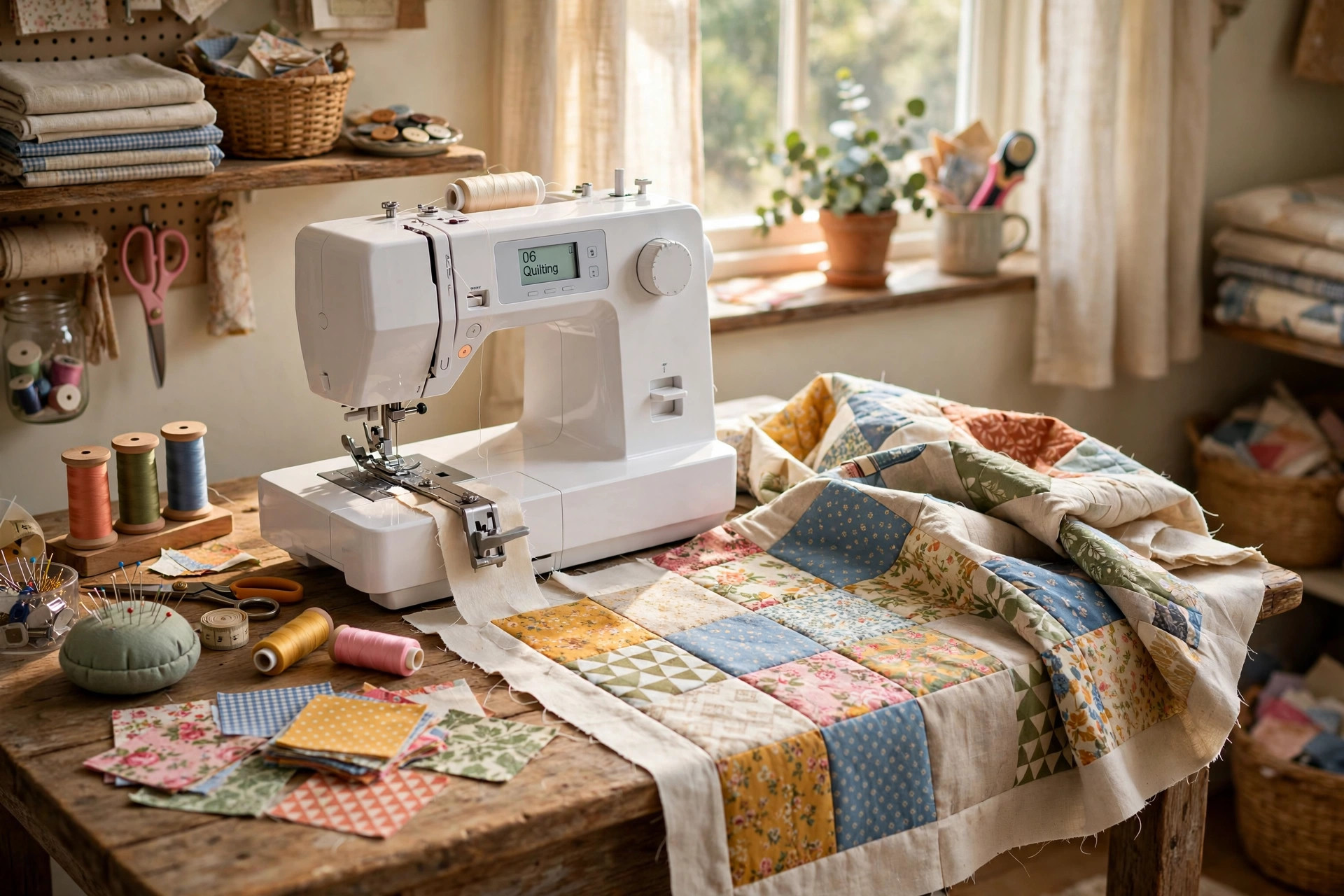

Many people want to find the best sewing machine for quilting at home. Quilting is a craft that turns small pieces of cloth into warm, lasting blankets and wall hangings. The right machine makes the work smooth and pleasant. The wrong machine can make the work hard and slow. This guide explains what matters, what to look for, how much to pay, and how to keep the machine in good shape. It is written in plain words so any reader can follow it.
Why a Good Quilting Machine Matters
Quilting asks more from a machine than simple sewing does. A quilt is made of three layers: the top, the soft middle batting, and the back cloth. Sewing through all three layers at once is heavy work. A basic machine made only for light mending may stall or skip stitches when the layers grow thick.
A machine built with quilting in mind has a stronger motor and a steady feed system. The feed dogs, which are the small teeth under the presser foot, must move thick layers evenly so the top and bottom cloth do not shift. When the layers shift, the seams pucker and the quilt looks uneven.
Good stitch quality also matters. Quilts are washed many times over the years. A clean, even stitch holds up in the wash. A loose or skipped stitch can open and spoil the quilt. Many quilters also add decorative stitches to the quilt top. A machine with a fair set of built in stitches gives more room for this art. Craft shops such as Michaels and JOANN carry the quilting fabric and thread you need to practice these stitches on sample squares.
Time matters too. Quilts take many hours to finish. A machine that runs well hour after hour saves time and keeps the work joyful. A machine that jams often can turn a happy hobby into a chore. That is why choosing with care is worth the effort.
What to Look For When You Choose: Best Sewing Machine for Quilting At Home
Buying the best sewing machine for quilting at home starts with knowing which features truly help a quilter. Not every feature on the box matters. Some are made for garment sewing and add little to quilting. The list below covers the points that matter most.
Throat Space
Throat space is the flat area to the right of the needle. It is the space where the rolled quilt rests while you sew. Most basic machines give about six inches. That is fine for small wall hangings and baby quilts. For bed size quilts, look for seven to eleven inches if you can. More space means less bunching and easier turning of the big quilt roll. Home workshop guides from Family Handyman and This Old House remind readers to plan the table and chair around the true size of their largest project.
Stitch Quality and Feed System
Test how the machine feeds thick cloth. An even feed system moves all layers at the same speed. Some machines offer a walking foot or an even feed foot in the box. A walking foot grips the top layer and moves it with the bottom layer. This is one of the most useful tools for quilting. If the machine does not include one, check that it can be added later.
Look for a needle down position as well. This feature keeps the needle in the cloth when you stop. It lets you turn the quilt around the needle with no shift. It is a small detail that quilters use all the time.
Speed Control and Stitch Length
A speed control slider lets you set a slow, safe pace for curved quilting lines. Beginners in particular benefit from slow speed. The machine should also allow easy change of stitch length. Longer stitches suit basting, which is the temporary sewing that holds layers in place. Shorter, dense stitches suit fine piecing of small patches.
Built In Stitches and Extras
You do not need hundreds of stitches. A good straight stitch, a zigzag, and a few decorative stitches will cover most quilting needs. More useful extras include a free arm for small round work, an automatic needle threader for tired eyes, a start and stop button that frees your foot, and a clear open toe foot so you can see the quilting line. A large extension table is another fine extra. It gives the heavy quilt more support so the weight does not drag the seams.
Readers who like to plan a whole craft room can also find useful ideas in guides like best craft storage organizer for small rooms, which helps keep fabric, thread, and tools within easy reach of the machine.
Types of Sewing Machines for Home Quilting
Machines fall into three broad groups. Each group suits a different kind of quilter and a different budget.
Mechanical Machines
Mechanical machines use knobs and dials. They have few parts that can break and they cost the least. Many are strong and simple to service. They suit a quilter who does straight line piecing and basic quilting. They do not offer the needle down position or the large stitch libraries of electronic models. For simple patchwork quilts, however, a sturdy mechanical machine can serve for many years.
Computerized Machines
Computerized machines use buttons and small screens. They offer needle down position, speed control, automatic thread cutting, and many stitches. They also tend to have more throat space than the smallest mechanical models. Most home quilters who want the best sewing machine for quilting at home land in this group. The price is higher than for mechanical models, but the added control shows in the finished quilt. Keep in mind that electronic parts need skilled service if they fail, so buy from a shop that offers repair. Well known makers such as Singer, Brother, and Bernina publish full feature lists and manuals on their home pages, which makes side by side comparison easy.
Long Arm and Sit Down Machines
Long arm machines are built only for quilting. The quilter moves the machine head over a quilt that is stretched on a frame. They give huge throat space and are made for big bed quilts. They also take up a whole room and cost far more than regular machines. A sit down long arm has a smaller frame and a shorter arm but still gives more space than a standard machine. These are for serious quilters with room to spare. For most homes, a good computerized machine with a fair throat is the wiser choice.
Shoppers who enjoy comparing craft tools may also like the cricut machine buying guide for crafters usa, which covers another popular tool for fabric cutting and design work.
Cost and Price
Prices for home quilting machines span a wide range. A basic mechanical machine can cost under two hundred dollars. A mid range computerized machine with a needle down position and a walking foot often costs between four hundred and nine hundred dollars. Top home models with eleven inches of throat space and full stitch libraries can pass one thousand dollars.
A fair rule is to buy the best machine your budget allows in the group you truly need. A beginner who plans to make lap quilts and baby quilts does not need the top model. An experienced quilter who makes king size quilts every year will feel the lack of throat space in a cheap machine.
Watch for the cost of extras. A walking foot, a free motion quilting foot, extra bobbins, and a large extension table add to the bill. Some shops sell kits that bundle these at a lower price. Large stores such as The Home Depot and art suppliers like Blick also carry tools and room supplies that help set up a steady sewing corner at home. Also ask about lessons. Many sewing shops give free classes with a new machine. A short lesson on free motion quilting is worth more than an extra box of stitches you will never use.
If you are thinking of turning your hobby into small paid work, the embroidery machine for home business beginners guide may be useful reading alongside this one.
Care and Upkeep
A sewing machine is a fine tool and needs regular care. Clean the bobbin area after each big project. Lint from cotton fabric builds up fast under the throat plate. Use the small brush that came with the machine. Never blow into the machine with your mouth. Moisture from your breath can reach the metal parts and cause rust.
Oil only where the manual says to oil. Many new machines are sealed and need no oil from the owner. Oiling the wrong spot can stain fabric and gum up the works. Change the needle often. A dull or bent needle causes skipped stitches and can snag good fabric. For quilting, many makers suggest a new needle for each large project, or at least after eight hours of sewing.
Keep the machine covered when not in use. Dust settles in the tension discs and the feed dogs. A simple cloth cover or the hard case that came with the machine is enough. Store it in a dry room. Damp basements can harm the electronics and rust the steel parts.
Have the machine serviced by a trained repair shop once a year if you sew often. A service visit cleans the inside, checks the timing, and oils the parts you cannot reach. The cost is small next to the cost of a new machine. Keep the manual in a drawer near the machine so you can check thread paths and settings without a long search.
Thread quality matters too. Cheap thread breaks more and leaves more lint. A good all purpose cotton or cotton wrapped polyester thread made for quilting will run smoother and keep the machine cleaner.
Safety
A sewing machine is safe when used with care, but it has a fast moving needle. Keep fingers at least an inch from the needle while sewing. Use the presser foot and the seam guide to steer the cloth, not your fingertips. Turn the machine off or unplug it when you change the needle, the presser foot, or the throat plate. Many small injuries happen during these changes when a hand slips onto the foot pedal.
Sit with good posture. The chair height should let your arms rest easy on the table. Take a short break each hour to rest your eyes and shoulders. Keep the floor around the machine clear of cloth scraps and cords so you do not trip. Keep the machine away from small children unless an adult is guiding them closely. Store spare needles in a pincushion or a closed box, never loose in a drawer where a hand may reach in blindly. Home setup guides from Bob Vila offer more tips on lighting, chair height, and safe placement of a sewing table.
Frequently Asked Questions
Do I need a special machine to start quilting? No. You can start with a plain sewing machine that makes a good straight stitch. Many quilters finish their first quilts on basic machines. A special quilting machine makes big quilts easier, but it is not a must for your first project.
What is the most useful feature for a quilting machine? A walking foot is often named first. It keeps the quilt layers from shifting. Close behind are a needle down position and a fair amount of throat space. These three together make machine quilting far more pleasant.
How much throat space is enough? Six inches handles small quilts and practice pieces. Seven to nine inches suits most bed quilts in a home setting. Eleven inches or more is a luxury that serious quilters love. More space is always nicer, but skill and patience matter more than inches.
Can a regular machine quilt through thick batting? Yes, if the machine has a strong motor and you use a walking foot. Go slowly, use a fresh needle made for quilting, and loosen the presser foot pressure if your machine allows it. Very thick craft batting may still need a heavier machine.
Should a beginner buy a computerized or a mechanical machine? A mechanical machine costs less and is simple to learn. A computerized machine offers speed control and a needle down position, which help beginners a lot. If the budget allows, many teachers suggest a basic computerized model as the best first machine for quilting.
How often should I service my quilting machine? For steady use, once a year is a good rule. For light use, every two years is fine. Clean the bobbin area yourself between visits. If the machine starts to make odd sounds or the stitches turn uneven, take it in sooner rather than later.
A Short Final Word
The best sewing machine for quilting at home is the one that fits your hands, your budget, and the size of the quilts you love to make. Focus on strong feeding, fair throat space, and stitches that hold up in the wash. Keep the machine clean and serviced, and it will serve you through many warm quilts. Start simple, learn the craft, and let your skills grow with your machine.
References
Bernina. (n.d.). Sewing and quilting machines. https://www.bernina.com Blick Art Materials. (n.d.). Art and craft supplies. https://www.dickblick.com Bob Vila. (n.d.). Home improvement advice. https://www.bobvila.com Brother. (n.d.). Sewing and embroidery machines. https://www.brother-usa.com Family Handyman. (n.d.). DIY home repair and maintenance. https://www.familyhandyman.com JOANN. (n.d.). Fabric and craft supplies. https://www.joann.com Michaels. (n.d.). Arts and crafts supplies. https://www.michaels.com Singer. (n.d.). Sewing machines and accessories. https://www.singer.com The Home Depot. (n.d.). Home improvement products. https://www.homedepot.com This Old House. (n.d.). Home renovation guidance. https://www.thisoldhouse.com
Was this guide helpful?

About David Wilson
The My Garden US editorial team writes practical, in-depth home and garden guides for American homeowners — tested advice, no fluff.
You May Also Like
Best Heat Press Machine for Home T Shirts: A Complete Buyer’s Guide
February 28, 2026 0 views
The Best Ribbon Set for Gift Wrapping and Crafts
May 6, 2026 0 views
Best Jewelry Making Kit for Beginners Adults: A Guide to Choosing Your First Kit
September 13, 2026 0 views