
The Price of Going Off the Sewer Line
A septic system is a private waste treatment plant in your own yard. It takes everything that leaves your drains and toilets and treats it under the ground. For many homes outside city sewer lines, it is the only option. When you build a three-bedroom house or replace an old system, the first question is always the same: what is the septic system installation cost for 3 bedroom homes?
The short answer is that most three-bedroom installations fall between $7,000 and $15,000. Some cost less. Some cost far more. The price depends on the soil, the type of system, local permits, and the crew you hire. This guide walks through every part of that cost so you can plan with confidence.
Why the Cost Matters: Septic System Installation Cost for 3 Bedroom
A septic system is not a purchase you make twice. Most systems last 25 to 40 years. It sits under your lawn and works every day without a sound. Because it is buried, you cannot see it, and because you cannot see it, many buyers think little of it. That is a mistake.
First, the system protects your health. A poor or failing system can send untreated waste into your yard, your well, or your neighbor’s land. The United States Environmental Protection Agency notes that more than 60 million people in this country depend on septic systems for their wastewater treatment, and a failed system is a real public health risk.
Second, the system protects your property value. Home inspectors check septic systems before a sale. A buyer who finds a failing system will ask you to replace it or lower the price. A sound system with records of care is a selling point, not a worry.
Third, the installation itself is disruptive. Heavy machines dig up your yard. Pipes run deep under the soil. Once the work is done, the land must be graded and reseeded. The price you pay covers not just the tank and pipes, but the labor, the machines, the permits, and the restoration of the ground. Knowing the septic system installation cost for 3 bedroom homes in advance keeps you from surprise bills in the middle of the project.
How to Choose a System
Choosing a system starts with the soil, not with a catalog. A soil test, often called a perc test, tells you how fast water moves through the ground. Sandy soil drains fast. Clay soil drains slow. Rocky soil may not drain at all in some spots. The county health department usually requires this test before it grants a permit, and the result decides which type of system you may install.
Next, consider the size of the home. Septic systems are sized by bedrooms, not by the number of people who live in the house. A three-bedroom home is assumed to produce a set daily flow of wastewater. That standard flow decides the size of the tank, usually 1,000 gallons for a three-bedroom house, and the size of the drain field. If you plan to add a bedroom later, size the system for the future home, not the present one. Upgrading later costs far more than sizing correctly now.
Then look at local rules. Counties set their own standards for setbacks, which say how far the tank and drain field must sit from wells, property lines, streams, and the house itself. Some counties require an engineer to design the system. Others allow a licensed installer to design it. The rules add to the cost, but they exist to keep your water supply safe.
Finally, hire a licensed installer with a record of good work. Ask for references from recent jobs. Ask how many systems they install each year. A good installer knows the local soil, the local inspectors, and the common problems in your area. Sites like This Old House and Family Handyman offer guides on working with contractors and checking their work.
Types of Septic Systems
There are two main families of septic systems: conventional and aerobic. The soil and the local code decide which you may use.
Conventional Systems
A conventional system is the simplest kind. Wastewater flows from the house into a septic tank. Heavy solids sink to the bottom. Lighter scum floats to the top. The liquid in the middle flows out to the drain field, where it seeps through gravel and soil. Bacteria in the soil treat the water as it moves down.
Conventional systems cost the least to install, often $7,000 to $12,000 for a three-bedroom home. They have no electric parts. They need little upkeep beyond regular pumping. If your soil passes the perc test and the lot is large enough, a conventional system is usually the best value.
Aerobic and Engineered Systems
An aerobic system adds air to the treatment process. A pump mixes air into the tank, which helps bacteria break down waste faster. The treated water then flows to a smaller drain field or to a disinfection unit. These systems are used where the soil drains poorly, where the lot is small, or where the code demands extra treatment near lakes and streams.
Aerobic systems cost more: often $12,000 to $25,000 for a three-bedroom home. They also use electricity and need service visits once or twice a year. For a full discussion of the price gap, see our guide to conventional vs aerobic septic system cost. You can also read more about septic tank replacement cost if your old system is beyond repair.
Mound and Drip Systems
On some lots, the water table sits high or the bedrock lies near the surface. There, installers build a mound system, which places the drain field in a raised bed of sand above the natural ground. Drip systems use thin tubing to spread treated water across a wide area. Both are engineered systems and cost in the same range as aerobic units, sometimes higher.
Septic System Installation Cost for 3 Bedroom Homes: The Numbers
Here is how the septic system installation cost for 3 bedroom homes breaks down, part by part.
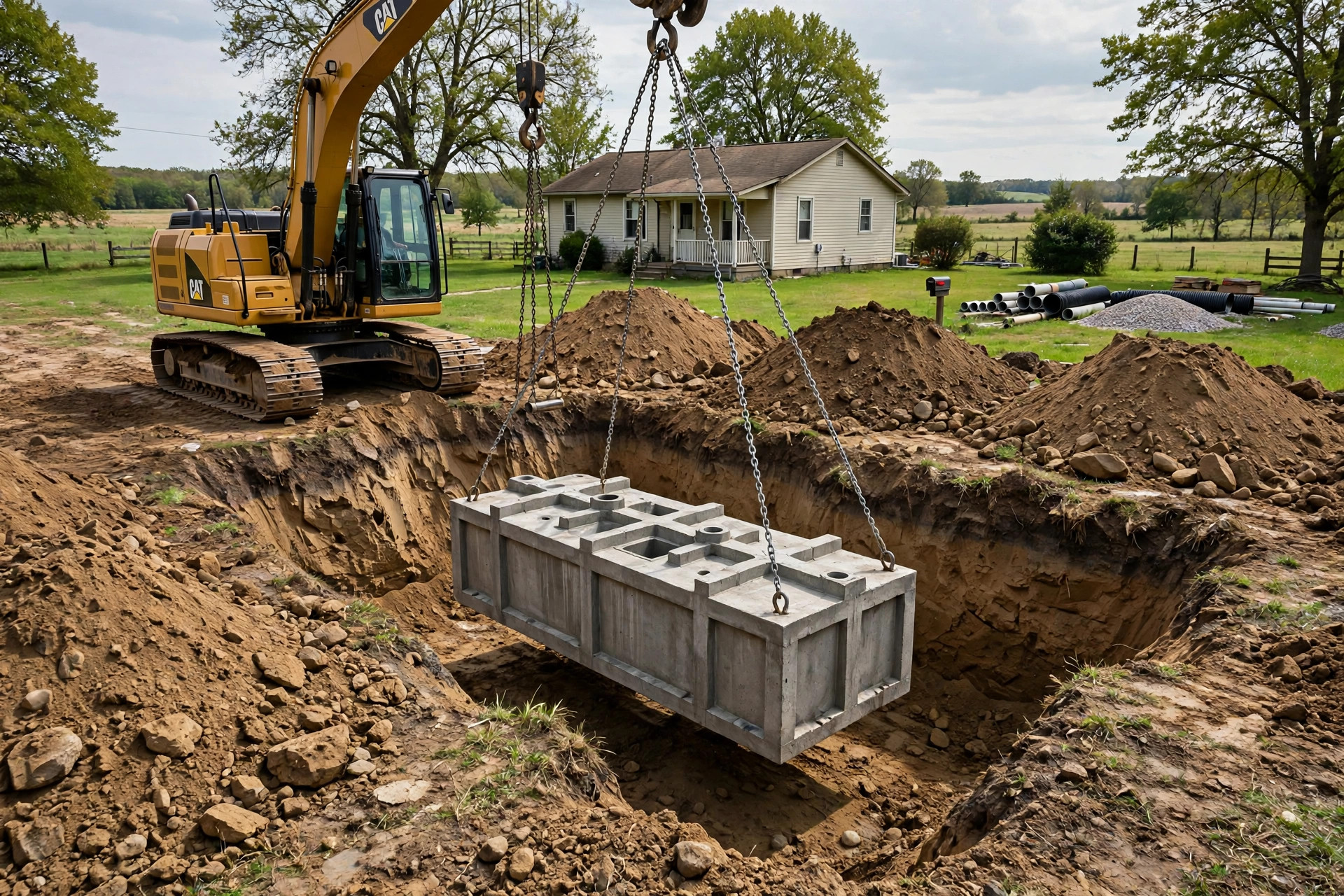
The tank. A 1,000-gallon concrete tank is the standard choice and costs about $1,200 to $2,500, including delivery. Plastic and fiberglass tanks weigh less and cost a bit less, but they need careful backfill to keep them from shifting. Concrete tanks last longer in most soils.
The drain field. This is the largest part of the cost. Gravel trenches, pipe, and labor run $4,000 to $8,000 for a three-bedroom system. If the lot needs a mound or an engineered field, the price climbs higher.
Excavation and labor. Digging the tank hole, the trenches, and the house-to-tank line takes machines and a skilled crew. Expect $2,000 to $5,000, depending on the depth of the dig, the rock in the ground, and the distance the water must travel.
Permits and tests. A soil test costs $200 to $500. A county permit runs $100 to $500 in most areas. Some counties require an engineer design, which adds $500 to $1,500.
Total. For a standard three-bedroom home on good soil with a conventional system, the full septic system installation cost for 3 bedroom homes runs $7,000 to $15,000. On poor soil or with an aerobic system, $15,000 to $25,000 is common. Very hard sites can pass $30,000.
Prices also move with the region. Rural areas with low labor rates cost less than suburbs near big cities. Ask your county health department what recent installations have cost in your area. When you plan the whole bathroom too, fixtures from makers like Kohler and Moen can be found at Home Depot and Lowe’s.
Care and Upkeep
A septic system asks little, but what it asks is not optional. Pump the tank every three to five years. A family of four in a three-bedroom home should stay closer to three years. Regular pumping keeps solids from washing into the drain field, which is the main cause of early system failure. Our guide on how often to pump septic tank explains the schedule in detail.
Watch what goes down the drains. Grease, coffee grounds, wet wipes, and harsh chemicals harm the bacteria that do the treating. Use a garbage disposal with care, or not at all. Spread laundry loads across the week so the system is not flooded in one day.
Keep the drain field clear. Do not park cars on it. Do not plant trees near it, because roots seek out the pipes. Keep rain gutters and sump pumps from dumping water onto the field. Grass is the best cover for a drain field: it holds the soil and takes up water.
Fix leaks fast. A dripping faucet or a running toilet sends gallons of extra water into the tank each day. That extra water can push solids into the drain field and shorten its life. When you upgrade bath fixtures, Delta Faucet and other brands sold at major retailers offer water-saving models that ease the load on the tank.
Safety
A septic system is safe when it is built right and kept up. The dangers come from neglect and from bad habits.
Never climb into a septic tank. The gases inside can kill in seconds, and the liquid waste carries disease. Leave all tank work to a licensed pumper with the right gear.
Keep the tank covers in good repair. A cracked or missing cover is a fall hazard, most of all for children. Modern covers are heavy and lock in place. Check them once a year.
Protect your drinking water. Keep the system the required distance from any well, and test well water once a year for bacteria and nitrates. If your home uses a well, a treatment option like the systems from Aquasana can add a layer of protection for your drinking water.
Follow the local code for everything. Setbacks, permits, and inspections are not paperwork for its own sake. They keep your system from harming your neighbors and your land.
Frequently Asked Questions
How long does installation take?
Most three-bedroom installations take three to five working days. The soil test and permit come first and can take two to six weeks. The dig itself is fast. Rain and rock can slow it down. Plan the whole project, from first call to final grass seed, at eight to twelve weeks.
Does the cost include the permit?
It depends on the quote. Some installers roll the permit fee into their price. Others ask you to pay the county directly. Always ask for an itemized quote so you see what is covered: tank, field, excavation, permit, soil test, and final grading.
Can I install a septic system myself?
Most counties will not allow it. The work needs a licensed installer, and the inspector must sign off on the open trenches before they are covered. Doing it yourself can void the permit and cause legal trouble when you sell the home.
How do I know my system is failing?
Watch for slow drains in many fixtures at once, sewage odors in the yard, wet or spongy spots over the drain field, and grass that grows far greener over the field than elsewhere. Any of these signs means you should call a pumper or installer right away. Early action often saves the drain field.
Will a septic system hurt my home value?
A working, well-kept system does not hurt your value. Most buyers in rural areas expect one. A failing system will hurt it badly, because the buyer will price in a full replacement. Keep your pumping records and inspection reports in a file for the day you sell.
What if my soil fails the perc test?
A failed perc test does not end the project. It means you cannot use a conventional system. Your options are an aerobic system, a mound system, or a drip system. Each costs more, but each is a proven answer for poor soil. An engineer or the county health department can guide you to the right type.
A Short Final Word
The septic system installation cost for 3 bedroom homes is a large bill, but it buys a system that will serve you for decades. Get the soil tested, hire a licensed installer, size the system for the home you plan to have, and keep up with pumping. Do those four things and your system will be a quiet, faithful part of your home for a very long time.
References
Aquasana. (n.d.). Water filtration systems. https://www.aquasana.com Delta Faucet. (n.d.). Kitchen and bathroom faucets. https://www.deltafaucet.com Family Handyman. (n.d.). DIY home repair and maintenance. https://www.familyhandyman.com Kohler. (n.d.). Bathroom and kitchen fixtures. https://www.kohler.com Lowe’s. (n.d.). Home improvement products. https://www.lowes.com Moen. (n.d.). Faucets and plumbing fixtures. https://www.moen.com The Home Depot. (n.d.). Home improvement products. https://www.homedepot.com This Old House. (n.d.). Home renovation guidance. https://www.thisoldhouse.com
Was this guide helpful?

About Sarah Mitchell
The My Garden US editorial team writes practical, in-depth home and garden guides for American homeowners — tested advice, no fluff.
You May Also Like
Best Under Sink Water Filter 2026 USA: A Plain Guide to Cleaner Tap Water
June 26, 2026 0 views
Best Septic Tank Treatment Reviews USA
June 29, 2026 0 views
French Drain Installation Cost Per Foot in the USA
April 18, 2026 0 views