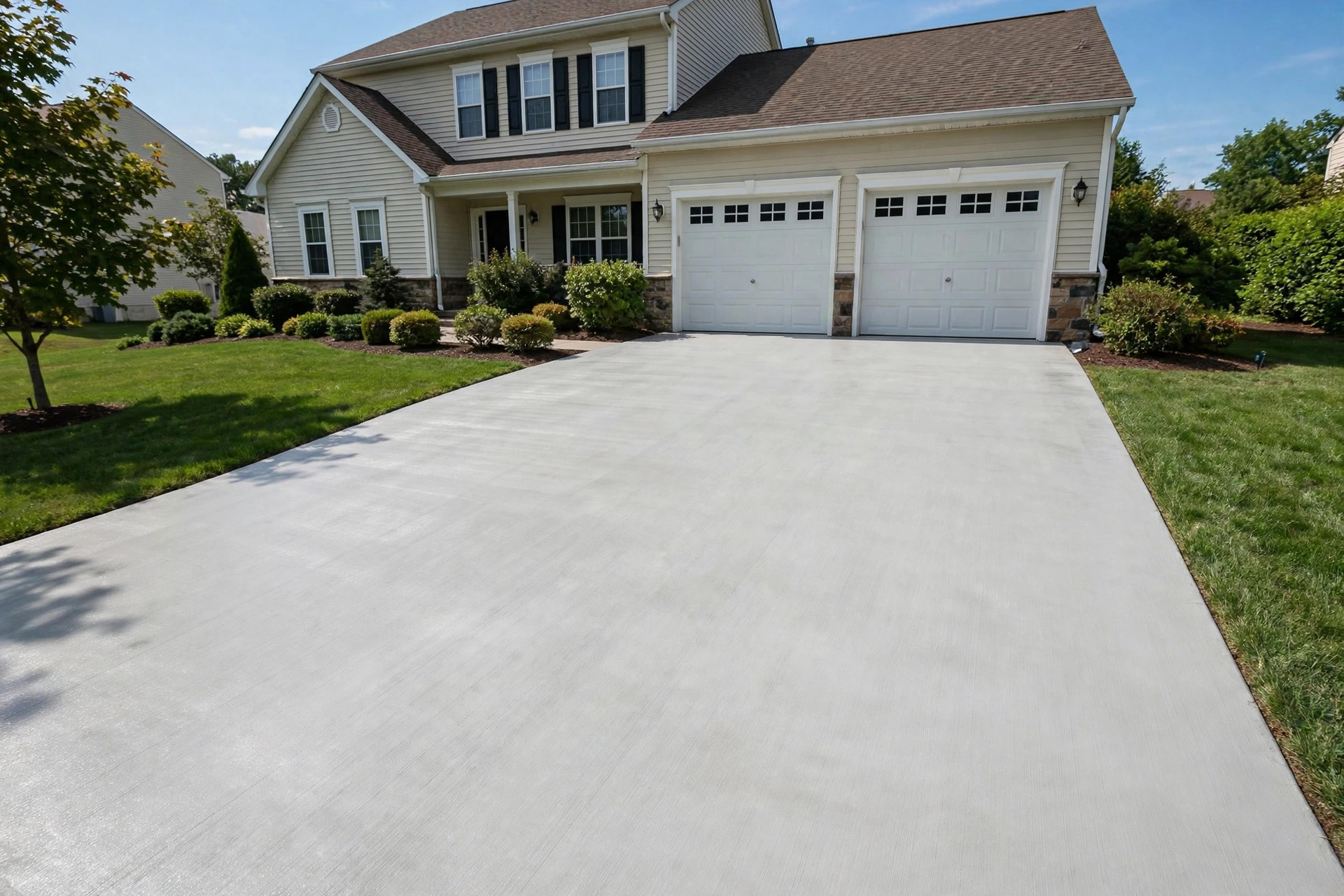

An old concrete driveway can do more than look worn. On hot summer days it stores heat, pushes warm air toward the house, and makes the air conditioner work harder. Energy efficient concrete driveway resurfacing for homeowners solves both problems at once. It gives the driveway a fresh new skin, and that skin reflects sunlight instead of soaking it up.
Resurfacing means spreading a thin new layer of concrete mix, overlay, or reflective coating over the old slab. The slab stays in place. No jackhammers, no new pour of six inches of concrete, and no weeks of torn-up yard. When the new layer is light in color and made to bounce heat back, the driveway runs cooler. That is the whole idea, and it works.
This guide walks through why it matters, what to look for, the types of products on the market, the cost, and how to keep the new surface in good shape. It also answers common questions at the end.
Why It Matters
A dark gray or black driveway can reach well over 130 degrees in strong sun. A light gray or white surface can run 20 to 40 degrees cooler. That is not a small gap. On a 95-degree day the difference is the kind you feel through your shoes.
The heat does not stay on the driveway. It radiates into the air near the home. Garages get hotter. The walls facing the drive get hotter. The air conditioner cycles on more often, and the power bill climbs. In neighborhoods where many driveways and streets are dark, the whole block stays warmer after sunset. City planners call this the heat island effect. Homeowners feel it as higher bills and stuffy rooms.
Energy efficient concrete driveway resurfacing for homeowners attacks the problem at its source. A reflective overlay or cool pavement coating cuts the heat at the surface. Less heat reaches the house. The lawn along the drive suffers less stress. Even bare feet on the driveway hurt less in July.
There is also plain curb appeal. A resurfaced drive looks like a new drive. Hairline cracks vanish under the new layer. Stains from oil and rust fade. Buyers notice a fresh driveway when they pull up to a house. Sellers notice the price it takes to fix one.
What to Look for When You Choose a System: Energy Efficient Concrete Driveway Resurfacing for Homeowners
Check the Old Slab First
Resurfacing only works if the base is sound. Walk the driveway and look for these signs:
– Wide cracks, more than a quarter inch across, that run in long lines – Sections that have lifted or dropped by more than half an inch – Areas that rock or bounce when stepped on – Big soft spots where the concrete crumbles under a screwdriver
Small surface cracks and light flaking are fine. A resurfacer will cover them. Deep damage is not. If the slab moves, the new layer will crack with it. In that case the slab needs repair first, or in rare cases, full replacement. An honest contractor will tell you when a drive is beyond saving. If you want a second opinion, look at best concrete driveway resurfacing near me and read how local pros judge a slab.
Pick Products Made to Reflect Heat
The “energy efficient” part comes from color and material. Look for products that say one of these things on the label:
– Solar reflective or cool pavement – High albedo or high SRI (solar reflectance index) – Light tint, such as white, cream, or pale gray – Permeable, which lets water pass through and cools by evaporation
An overlay tinted pale gray can reflect more than twice as much sun as plain dark concrete. Some acrylic reflective coatings go further still. Ask the maker or the contractor for the SRI number. Higher is better. Anything above 29 is a decent cool surface. Above 50 is very good.
Match the Product to Your Climate
Heat is the main target, but every region has a second enemy. In the snow belt, look for products rated for freeze and thaw. They must handle ice melters and plows. In wet coastal areas, pick a system that resists mold and algae. In dry desert areas, the main job is raw heat reflection, and almost any pale surface does well.
Climate also shapes the installer search. An asphalt driveway sealing cost guide usa shows how much region changes price and method, and the same lesson holds for concrete. What works in Florida may fail in Minnesota.
Types of Energy Efficient Resurfacing
Concrete Overlay with Light Tint
A concrete overlay is a new skin of polymer-modified concrete, usually a quarter to a half inch thick. It bonds to the old slab and can be stamped, brushed, or left smooth. When tinted light, it becomes a reflective surface by default. A contractor grinds the old concrete, fixes cracks, spreads the mix, textures it, and seals it. It lasts 10 to 15 years with care.
The energy gain is real but modest. A pale overlay runs noticeably cooler than old gray concrete. It is also the toughest option. It stands up to cars, trucks, and snow blades. The Family Handyman site has step-by-step guides on overlay prep that show how much the bond matters.
Reflective Acrylic Coating
A reflective coating is a thick paint-like layer, often called a cool pavement coating. It goes on with a roller or sprayer in two coats. It is thinner and cheaper than an overlay, and it reflects more sun. Some coatings cut surface temperature by 20 degrees or more compared to plain concrete.
The trade is life span. A coating lasts 3 to 7 years before it needs a fresh coat. It is a good choice when the budget is tight or when you want to test the cool-surface idea before spending more. The Spruce home section explains how reflective finishes work on outdoor surfaces.
Permeable Pavers Laid Over the Slab
A permeable system lets rainwater drain through instead of running off. Some homeowners lay thin permeable pavers over a sound slab with the right setting bed. Water passes through, and evaporation cools the surface. On a summer evening after a brief storm, a permeable drive can feel cool while a solid drive still radiates heat.
The catch is height. Pavers add two or more inches. The drive will sit higher at the curb and the garage. Check clearances first. A cool pavement driveway coating is a cheaper first step if height is a worry, though that link focuses on asphalt rather than concrete.
White Cement and Light Pigment Wash
The simplest choice is a thin white cement wash or light mineral pigment. It soaks into the surface and turns it pale. It is the cheapest option and the easiest for a do-it-yourselfer. It reflects well at first. It wears fast under tires, so plan to recoat every two to four years. It suits decorative drives with light car traffic more than a working family drive with two daily drivers.
Cost and Price
Money is where most owners start. Here is what the market looks like in the United States in plain numbers:
– Concrete overlay: 3 to 7 dollars per square foot for labor and material. A 600-square-foot drive costs about 1,800 to 4,200 dollars. – Reflective coating: 1 to 3 dollars per square foot when a pro applies it, or under a dollar per square foot for do-it-yourself kits. A 600-square-foot drive costs about 600 to 1,800 dollars by a contractor. – Permeable pavers over slab: 8 to 15 dollars per square foot installed, the priciest choice. – White cement wash: under 50 cents per square foot for do-it-yourself material.
Size rules the total. Most two-car drives run 400 to 800 square feet. Repairs to the old slab add cost before the new layer goes on. Crack stitching, grinding, and leveling can add 300 to 1,000 dollars.
Energy savings are harder to pin down, and no honest contractor will promise an exact number. In hot climates, a cooler driveway and a cooler garage can shave a few percent off summer cooling bills. The U.S. Department of Energy publishes material on cool surfaces and home energy use that backs the basic physics: lighter surfaces absorb less heat. Over ten years the cooling savings add up, but the main payback is the new surface itself and the resale value of a fresh drive.
Get three written quotes. Ask each bidder the same questions: What SRI does the product reach? What prep is included? What is the warranty, and what voids it? Compare on paper, not on promises.
Care and Upkeep
A resurfaced drive is easy to care for, but it is not carefree. A little work each year adds years of life.
Clean it twice a year. A garden hose and a stiff broom handle most dirt. A pressure washer works too, but keep it at low to medium pressure and hold the tip back at least a foot. Blasting at close range can cut into overlays and strip coatings.
Reseal on schedule. Overlays need a clear sealer every two to three years. Reflective coatings need a fresh coat when they start to look dull, often every three to five years. Watch for tire tracks that stop bouncing light. That is the sign.
Handle winter with care. Use calcium chloride or magnesium chloride instead of rock salt if the product guide allows. Metal snow shovels can gouge soft coatings, so use a plastic blade or rubber edge. Lift the plow blade slightly on the first pass.
Fix small damage fast. A hairline crack in an overlay can be filled with a concrete crack sealant before water gets in. A peeled spot in a coating can be sanded and touched up in an afternoon. Small fixes now stop big failures later. The Home Depot and Lowe’s sites both carry concrete repair lines and publish simple how-to guides for patching.
Safety
Driveway work is safer than most home projects, but it still has rules.
– Wear a dust mask and goggles when grinding or power washing old concrete. Silica dust is bad for the lungs. – Keep kids and pets off the drive until the product cures fully. Most products need 24 to 72 hours. – Do not work in extreme heat. Concrete products set too fast above 90 degrees and bond poorly. – Wet resurfaced drives can be slick. Add a non-slip grit or texture, and never use smooth glassy sealers on a slope. – Store coatings and sealers away from heat and out of reach of children. Read every label.
The Consumer Product Safety Commission and the Consumer Reports buying guides both stress reading labels and wearing basic protective gear on any chemical home product. It is dull advice and it saves eyes and lungs.
Frequently Asked Questions
How long does energy efficient concrete driveway resurfacing last?
A polymer-modified overlay lasts 10 to 15 years with resealing. A reflective acrylic coating lasts 3 to 7 years before it needs a fresh coat. A white cement wash lasts 2 to 4 years under car tires. Life depends on traffic, sun, winter salt, and how well the surface was prepped.
Will it really lower my cooling bill?
It can, a little. A cooler driveway sends less heat into the garage and the nearby walls, so the air conditioner runs less. In hot southern states the effect is bigger. In cool northern states the energy gain is small, but the new surface and longer slab life still pay for the job.
Can I do it myself or do I need a contractor?
DIY kits exist for reflective coatings and cement washes, and many owners handle them on a weekend. Overlays are harder. The prep, mixing, and trowel work take skill, and a bad bond peels within a year. For overlays, hire a pro. For coatings, DIY is fine if you follow the label to the letter.
Does it work on driveways with cracks?
Hairline cracks, yes. The resurfacer bridges them. Wide cracks, settled slabs, or moving sections, no. Fix those first. A new layer over a broken base just cracks again. When in doubt, pay a contractor for an honest inspection before you buy material.
What color should I choose for the best energy savings?
White reflects the most. Light gray, cream, and pale tan are close behind and look better on most homes. Dark stains and bright white can look stark, so many owners pick a soft light gray. It reflects well and hides dirt.
Is resurfacing better than replacing the driveway?
For a sound slab, yes. Resurfacing costs a third to a half of full replacement, finishes in days instead of weeks, and wastes no concrete. Replacement wins only when the slab is broken beyond repair. Bob Vila and This Old House both frame it the same way: resurface when the base is good, replace when it is not.
A Short Final Word
Energy efficient concrete driveway resurfacing for homeowners is one of those rare projects that fixes looks and function at once. The drive gets a clean new face. The house gets less heat. The yard gets less runoff stress. Pick a product with a real SRI rating, prep the slab right, and keep up with sealing. Do that, and the driveway will pay you back every hot summer for years to come. For product lists and price checks, the catalogs at James Hardie and CertainTeed cover the broader exterior market that driveway work belongs to.
References
Bob Vila. (n.d.). Home improvement advice. https://www.bobvila.com CertainTeed. (n.d.). Building materials and exterior products. https://www.certainteed.com Consumer Reports. (n.d.). Product reviews and ratings. https://www.consumerreports.org Family Handyman. (n.d.). DIY home repair and maintenance. https://www.familyhandyman.com James Hardie. (n.d.). Fiber cement siding and exterior products. https://www.jameshardie.com Lowe’s. (n.d.). Home improvement products. https://www.lowes.com The Home Depot. (n.d.). Home improvement products. https://www.homedepot.com The Spruce. (n.d.). Home and garden advice. https://www.thespruce.com This Old House. (n.d.). Home renovation guidance. https://www.thisoldhouse.com U.S. Consumer Product Safety Commission. (n.d.). Product safety information. https://www.cpsc.gov U.S. Department of Energy. (n.d.). Energy efficiency and renewable energy. https://www.energy.gov
Was this guide helpful?

About James Carter
The My Garden US editorial team writes practical, in-depth home and garden guides for American homeowners — tested advice, no fluff.
You May Also Like

Budget Friendly Fiber Cement Siding Panels Buying Guide
August 22, 2026 0 views
How to Buy Motion Sensor Flood Lights Online in Colorado
August 5, 2026 0 views
Top Rated Retaining Wall Builders Reviews: A Homeowner Guide
March 6, 2026 0 views