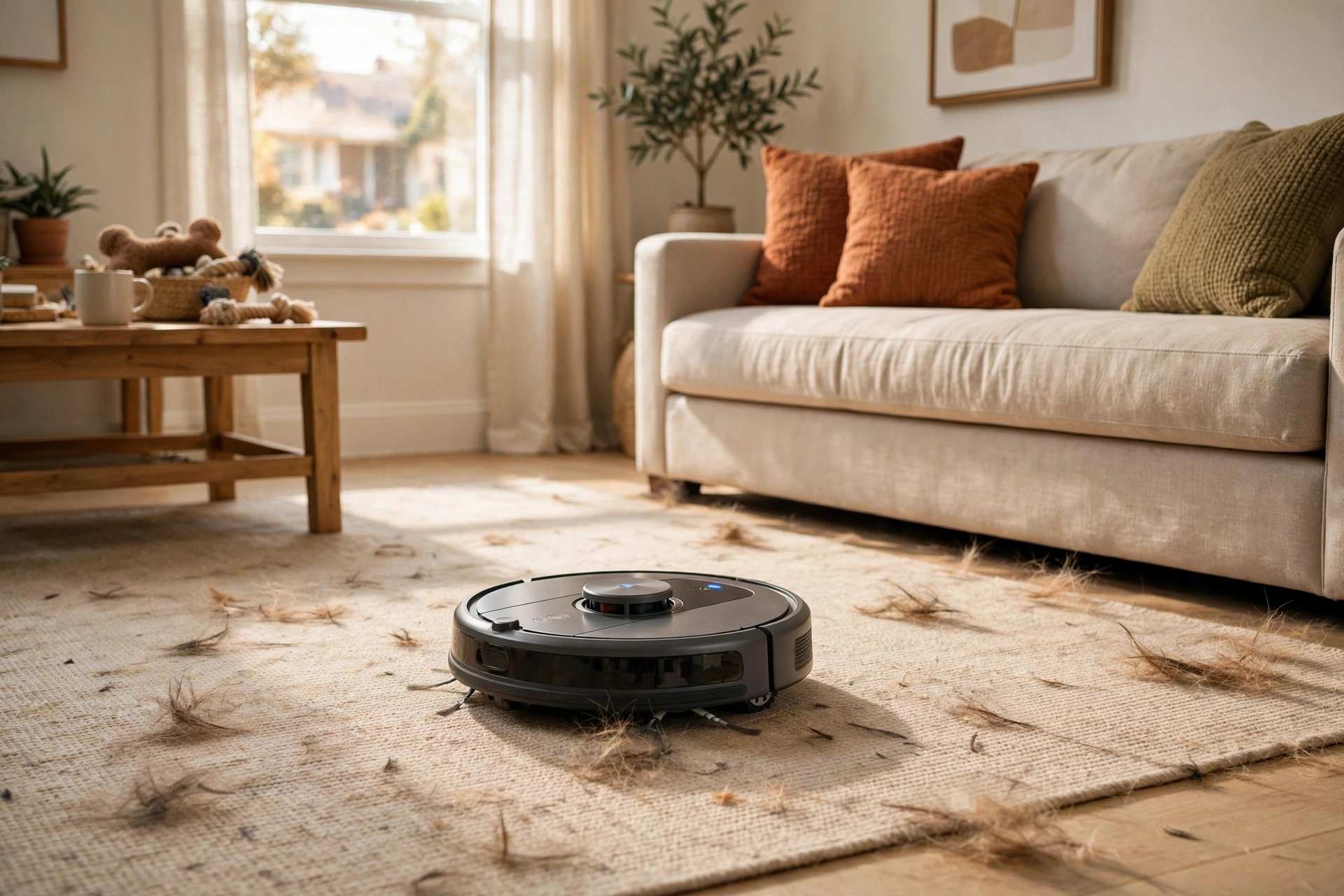

Pet hair never stops falling. Dog fur lands on the rug each morning. Cat hair drifts under the sofa each night. Many owners sweep and vacuum by hand for years. This guide explains how to find the best robot vacuum for pet hair 2026 USA shoppers can buy with confidence. It covers why pet hair is a special challenge, what features matter most, the types on the market, the prices you can expect, and how to keep the machine running well. By the end, you will know exactly what to look for before you spend a dollar.
Why Pet Hair Is a Special Cleaning Job
Ordinary dust is light and easy to lift. Pet hair is different. It is long, springy, and full of static. It wraps around brush rollers. It mats into carpet fibers. It sticks to upholstery and rugs. It also carries dander, which is the tiny skin flakes that make people sneeze. A machine that cleans dust well can still fail with a house full of dogs or cats.
This is why pet owners should not buy just any robot vacuum. The best robot vacuum for pet hair 2026 USA models share one trait. They are built for the daily grind of fur, not the light duty of a childless apartment. Their brushes resist tangles. Their filters trap small particles. Their bins hold more waste. When you shop, keep pet hair at the center of every choice.
There is also the matter of time. A pet owner who waits two weeks between cleanings will find hair packed into corners. A robot that runs every day keeps the problem small. Small daily loads are easier on the motor, the battery, and your lungs. Daily cleaning is the whole point of the purchase.
What to Look for When You Choose One: Best Robot Vacuum for Pet Hair 2026 Usa
The market is full of claims. Suction numbers, smart maps, and voice control all sound good. For pet hair, some of these matter more than others. The list below puts them in order of real value.
Suction Power and Brush Design
Suction lifts hair from carpet pile. Brush design keeps that hair from jamming the machine. Pet hair wraps around a standard bristle brush like thread on a spool. Look for rollers made of rubber or silicone fins. These shed wrapped hair more easily than dense bristles. Many owners also like a self-cleaning brush tool for quick weekly care.
Independent lab testing can help you compare claims. Review organizations that run controlled suction tests give you numbers you can trust, which is more useful than a brand brochure. When two models look alike, the one with stronger measured pickup on carpet is the better pet pick.
Filtration That Traps Dander
Pet hair is the visible problem. Dander is the hidden one. A machine without a real filter blows fine dander back into the room. Look for a high-efficiency filter that seals inside the dustbin. Wash or replace it on the schedule the maker prints. A clogged filter cuts suction fast. It also makes the motor work harder and wear out sooner.
If anyone in the house has allergies, filtration moves near the top of the list. A sealed system with a good filter can make daily robot runs a real part of allergy control. It will not replace a full-size vacuum for deep cleaning, but it keeps the daily load of fur and dander low.
Navigation and Mapping
Cheap robots bounce around a room at random. They miss spots and hit the same chair leg six times. Better models build a map of your home. They clean in straight lines. They remember where the pet beds and feeding bowls sit. Some let you draw no-go zones in the app. This keeps the robot out of the water bowl and the litter area.
Mapping matters more in homes with pets. Toys, bowls, and beds create obstacles that change daily. A mapped robot adapts. It also returns to its dock when the battery runs low and resumes where it stopped. Random-path robots simply cannot do this.
Battery Life and Bin Size
Pet hair fills a small bin fast. A robot with a tiny bin will stop mid-run and wait for you to empty it. That defeats the point of automatic cleaning. Look for a bin of at least 400 milliliters. Models with a self emptying base solve this problem for weeks at a time.
Battery life should cover your floor plan in one charge. Most mid-range models run 90 to 120 minutes. Large homes may need a model that recharges and resumes. Check the runtime on the hard floor and carpet settings you will actually use. Turbo modes drain the battery faster.
Smart Features That Help With Pets
Voice control is handy when your hands are full of leash and treats. App scheduling lets the robot run while you walk the dog. Room-by-room control lets you send the robot to the living room rug after the cat naps there all day. These features are worth more to pet owners than to most buyers because the cleaning need changes with the pet.
Homes today hold many connected devices at once. It is common to run a robot vacuum alongside video doorbells, cameras, and monitored home security or self-installed alarm systems that all share one phone app or voice assistant. A vacuum that fits your existing smart home gear gets used more.
Types and Options on the Market
Robot vacuums for pet hair fall into four groups. Each group suits a different home and budget.
Basic bump robots. These are the cheapest models. They move in random patterns and clean until the battery dies. They work in small apartments with one short-haired pet. They struggle in larger homes with thick carpet.
Mapping robots. These build a floor map and clean in orderly rows. They cost more than basic models. For most pet owners, this is the sweet spot. They cover the whole floor, avoid bowls and cords, and can be told to clean one room twice.
Self-emptying robots. These dock into a base station that sucks the dirt from the robot bin into a large bag. You empty the bag every month or two instead of the bin every day. Pet owners who run the robot daily often call this the single best upgrade. Our guide to self emptying models explains how the bases work and what they cost.
Vacuum and mop combos. These add a water tank and a mopping pad. They vacuum first and mop after. They help with muddy paw prints on hard floors. The best robot mop combo models lift their pads over carpet so they do not wet the rugs. If your dog tracks mud through the kitchen, a combo can save a lot of hand mopping.
Cost and Price in 2026
Prices run in clear bands. Basic models cost 150 to 300 dollars. Mid-range mapping models cost 300 to 600 dollars. Self-emptying models cost 500 to 1,000 dollars. High-end combos with advanced mopping and obstacle cameras can pass 1,000 dollars.
For pet hair, the middle band usually gives the best value. You get mapping, a decent brush, and enough suction for daily fur. The premium bands add comfort. A self-emptying base is worth the money if you hate emptying a dusty bin every day. It is a luxury, not a need.
Watch for sales around holidays. Big shopping weekends can cut 100 to 200 dollars from mid-range models. Also check what comes in the box. Extra filters, side brushes, and mop pads cost real money when bought alone. A bundle with a year of supplies can beat a slightly cheaper bare model.
Replacement costs matter over time. Filters need changing every two to six months. Side brushes wear out. Batteries last two to four years. Before you buy, look up the price of these parts. A cheap robot with costly parts can be more expensive in the long run than a pricier model with cheap parts.
Care and Upkeep
A robot vacuum is a hard worker, and hard workers need care. Ten minutes a week keeps it running for years.
Empty the dustbin after each run, or let the self-emptying base do it. Pull wrapped hair from the main brush each week. A simple seam ripper or the cleaning tool in the box works well. Check the side brushes for bent bristles. Wipe the cliff sensors and the camera lens with a dry cloth. Dirty sensors make the robot lost or blind.
Wash washable filters and let them dry fully before you put them back. A damp filter grows mold and blocks air. Replace the filter when washing stops restoring airflow. Keep the charging contacts clean on both the robot and the dock. Dusty contacts cause failed charging.
For homes with long-haired dogs, do a deeper clean once a month. Flip the robot over. Remove the brush and cut away hair from the axle ends. Hair at the ends causes more wear than hair on the roller. Check the wheels for wrapped thread. This small routine can add a year or more to the machine.
Safety
Robot vacuums are safe in most homes, but a few rules keep pets and machines out of trouble.
Set no-go zones around pet water bowls and feeding areas. A robot that drags through spilled water can damage itself and spread the mess. Keep charging cables and phone cords off the floor. Robots eat cords, and a chewed cord can shock a curious dog.
Watch how your pet reacts at first. Most dogs and cats learn to ignore the robot in a few days. A nervous pet may need a slow start with short runs. Never leave a very anxious animal alone with a running robot until you are sure it is calm. The federal agency that tracks product recalls and safety reports is a good place to check whether a model you are eyeing has had a safety notice.
Small items are a hazard for the machine. Pick up socks, toys, and chew bones before a run. These jam brushes and can break drive belts. If you have a puppy in the chewing phase, run the robot only when the floor is clear.
Frequently Asked Questions
Will a robot vacuum really handle heavy shedding? Yes, if you buy the right type and run it daily. Heavy shedding beats weekly cleaning. Daily runs keep each load small. Choose a mapping model with strong suction and a tangle-resistant brush. Empty the bin often. For homes with several large dogs, a self-emptying base makes daily runs easy.
Do robot vacuums work on carpet and hard floors? Most do both. They adjust suction when they roll from hard floor to carpet. Thick, high-pile carpet is the weak spot. Pet hair mats deep into plush pile, and no small robot pulls it all out. Low and medium pile carpet cleans well. Hard floors are the easiest surface of all.
Can a robot vacuum replace my full-size vacuum? Not fully. Think of the robot as daily maintenance and the full-size vacuum as weekly deep cleaning. The robot keeps hair from building up. The upright or canister digs out what the robot leaves behind. Together they keep a pet home cleaner than either one alone.
How long do these machines last? Three to five years is common with basic care. The battery is usually the first part to fade. Brushes, filters, and wheels are replaceable. A well-kept mid-range model often outlives a neglected premium one. Follow the care routine above and buy replacement parts from the maker or a trusted seller.
Are robot vacuums loud enough to scare pets? They are quieter than full-size vacuums but still noticeable. Most pets adjust within a week. Run the robot while you are home at first so you can watch. If a pet hides every time, switch to scheduled runs when the pet is in another room or out for a walk.
What is the best robot vacuum for pet hair 2026 usa shoppers on a budget? Look for last year’s mapping model on sale. Older flagship models often drop into the mid-range price band and still beat new budget models. Focus on suction, brush design, and bin size. Skip fancy extras like room cameras if money is tight. Daily runs with a solid basic mapper beat weekly runs with a premium machine you cannot afford to run.
A Short Final Word
The best robot vacuum for pet hair 2026 USA pet owners can buy is the one that fits their home, their pets, and their habits. Strong suction, a tangle-free brush, a sealed filter, and smart mapping are the four pillars. Self-emptying bases and mopping add comfort. Daily runs beat heroic weekly sessions every time.
Start with your floor plan and your pets. A small apartment with one cat needs far less machine than a big house with three retrievers. Set your budget, compare two or three models side by side, and read hands-on reviews from tech reviewers, gadget magazines, and smart home writers, plus testing labs, before you decide. If you want a head-to-head on the two biggest brands, our Roborock versus iRobot comparison walks through the differences. Buy the machine, set the schedule, and let it do the daily work while you enjoy your pets.
References
ADT. (n.d.). Home security and automation. https://www.adt.com CNET. (n.d.). Technology news and reviews. https://www.cnet.com Consumer Reports. (n.d.). Product reviews and ratings. https://www.consumerreports.org Google Store. (n.d.). Smart home devices. https://store.google.com PCMag. (n.d.). Technology product reviews. https://www.pcmag.com Ring. (n.d.). Smart home security devices. https://www.ring.com SimpliSafe. (n.d.). Home security systems. https://www.simplisafe.com The Verge. (n.d.). Technology news and reviews. https://www.theverge.com U.S. Consumer Product Safety Commission. (n.d.). Product safety information. https://www.cpsc.gov
Was this guide helpful?

About Lisa Anderson
The My Garden US editorial team writes practical, in-depth home and garden guides for American homeowners — tested advice, no fluff.
You May Also Like

Best Door Reinforcement Kit Reviews USA: What Makes a Door Strong
March 22, 2026 0 views
Best Nanny Cam Hidden Camera Reviews USA: A Plain Guide for Parents
July 25, 2026 0 views
Smart Outdoor Lighting Timer Reviews USA
March 24, 2026 0 views