
Introduction
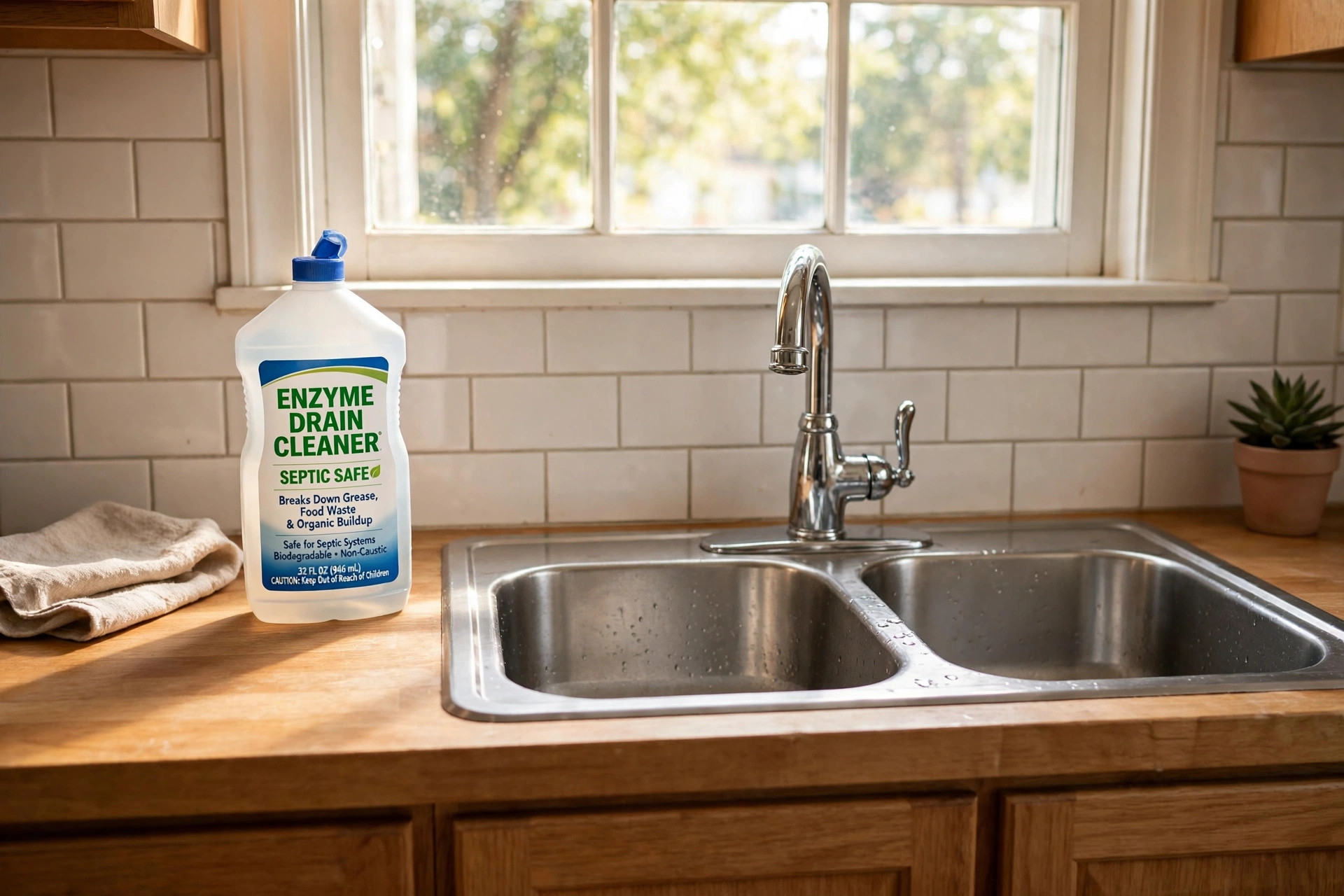
Enzyme drain cleaner reviews for septic USA systems matter to millions of homeowners. Roughly one in five American homes uses a septic tank instead of a city sewer line. That tank holds living bacteria. Harsh chemical cleaners can kill those bacteria and lead to costly failure. Enzyme drain cleaners work in a different way. They use natural enzymes and bacteria to break down grease, soap scum, and food waste. They do not burn the pipe or poison the tank.
This guide reviews what buyers report, explains how enzyme cleaners work, and helps you choose a septic-safe drain cleaner for your home. We looked at common products sold in the United States, read hundreds of user reviews, and checked guidance from plumbing and environmental sources. The result is a plain guide with no sales talk.
Why Septic-Safe Drain Care Matters: Enzyme Drain Cleaner Reviews for Septic Usa
A septic system is a small, private treatment plant in your yard. Waste flows into a buried tank. Good bacteria digest the solids. Clean water flows out into the drain field. The system needs those bacteria to stay alive and active. When you pour bleach, caustic soda, or acid drain cleaner down the drain, you send poison straight to that living colony. A weak colony means solids build up faster. A failed system can cost thousands of dollars to repair or replace.
Enzyme drain cleaners avoid this problem. They contain enzymes that break food, grease, hair, and soap into smaller parts. Many also contain live bacteria that feed on waste inside the pipe and the tank. In reviews, septic owners praise these products because they clear slow drains without fear of damage. The Environmental Protection Agency explains how septic systems work and why protecting them matters. Their guidance stresses that harsh chemicals belong in a special waste stream, not in your drains.
How Enzyme Drain Cleaners Work
Enzymes are proteins that speed up chemical change. Each enzyme fits a certain kind of waste. Lipase breaks down grease. Protease breaks down protein. Amylase breaks down starch. When you pour an enzyme cleaner into a drain, the enzymes start to work on the film of waste coating the pipe wall. Over several hours, the film softens and loosens. Water then flushes it away.
Enzyme cleaners are slow. That is their main trade-off. A chemical cleaner can open a clog in fifteen minutes. An enzyme cleaner may need eight hours or a full night. It also works best as a preventive step. It keeps a slow drain from becoming a stopped drain. For a fully blocked pipe with standing water, most reviewers agree that an enzyme cleaner is not the right tool. In that case, a plunger or a drain snake usually works better.
Most enzyme cleaners are powders or liquid concentrates. You mix them with warm water or pour them straight into the drain. Warm water helps wake the enzymes. Hot water can kill them, so read the label. Many users run a small amount of warm water before and after treatment. The best results come from weekly or monthly use, not one-time emergency use.
Enzyme Drain Cleaner Reviews for Septic USA: Top Product Types
Liquid Enzyme Concentrates
Liquid concentrates are the most reviewed type in the United States. They ship in a bottle. You pour a measured dose into the drain each week. Reviews say they work well on slow bathroom sinks and tubs coated with soap and hair. They are easy to use, and the cost per dose is low. The main complaint is that they act too slowly for kitchen grease traps that are already badly blocked.
Powder Enzyme Formulas
Powder formulas rank high in enzyme drain cleaner reviews for septic USA homeowners with older tanks. You stir a scoop into warm water and pour it down the drain. Powders keep for a long time on the shelf. Many reviewers with septic systems say powders feel like the most natural choice. The enzymes and bacteria in powder form stay stable for months. The main drawback is the mixing step, which some buyers find fussy.
Single-Dose Pods and Packets
Pods and packets give a pre-measured dose. You drop one into the drain with warm water. They are the simplest to use. Reviews note that pods cost more per treatment than bottles or powders. They suit people who want a set-and-forget routine. A few reviewers noted that pods can stick inside a dry pipe if water flow is too low, so flush well after use.
Septic Tank Treatment Additives
A fourth category sits near the enzyme cleaner shelf: whole-system septic additives. These pour into a toilet or septic cleanout and feed the tank itself. They are not drain cleaners in the strict sense, but many reviewers buy them together. They aim to keep the tank colony strong. Experts note that a healthy household septic tank usually needs no additives, but reviewers report good results when used as the maker directs. For practical upkeep tips, plumbing guides cover how drains and tanks interact.
What to Look For When You Buy
Read the label before you buy. The best enzyme drain cleaner for a septic system states “septic safe” in clear print. Look for products that list live bacteria cultures as well as enzymes. Products with only enzymes can work, but the added bacteria help keep the pipe and tank colony fed.
Check what the product is made to clear. Some formulas target grease. Others target soap scum and hair. A kitchen drain needs a grease formula. A bathroom drain needs a soap and hair formula. Buying the wrong type is the most common reason for bad reviews.
Avoid any product that also contains bleach, lye, or acid. Some products claim to be enzyme-based but still list caustic agents. These can harm your septic system. Also avoid strong scents. Heavy perfume can signal added solvents that the tank does not need.
Price runs from about five dollars for a small powder box to about thirty dollars for a large liquid concentrate. The cost per treatment matters more than the bottle price. A cheap bottle that needs three doses a week costs more than a pricey bottle that needs one.
Check the shelf life. Live bacteria lose strength with age and heat. Do not store enzyme cleaners in a hot garage. Keep them in a cool, dry cabinet. Check the use-by date on the package.
Cost and Price Breakdown
Enzyme drain cleaners cost more per use than a jug of chemical cleaner, but less than a plumber visit. Here is a simple view of typical prices in the United States.
| Product type | Typical price | Treatments per package | Cost per use | |—|—|—|—| | Liquid concentrate | $12–$25 | 8–24 doses | $0.75–$2.00 | | Powder formula | $8–$20 | 12–30 doses | $0.35–$1.25 | | Single-dose pods | $15–$30 | 6–12 pods | $1.25–$4.00 |
A single plumber call for a clogged drain can cost $150 to $300, and drain cleaning cost per line reviews show prices climb higher for main lines. Many reviewers note that a monthly enzyme routine costs under $20 a year and keeps the plumber away. If you compare with the best drain cleaner for kitchen sink usa guides, enzyme products win on safety but lose on speed.
For full blockages, hydro jetting cost for sewer line usa articles show that professional pressure washing runs several hundred dollars. Enzyme cleaners cannot replace that service. They prevent the small clogs that grow into big ones.
How to Use Enzyme Drain Cleaner Safely
Use the product as a treatment, not a rescue. Pick a drain that runs slowly. Use it at night or before a long stretch with no water use, such as overnight or during the workday. Low water flow lets the enzymes sit on the waste film.
Steps most makers recommend:
1. Run warm tap water for one minute to wet the pipe. 2. Pour the dose into the drain. For powders, mix with warm water first. 3. Let the drain rest for six to eight hours. Overnight is best. 4. Flush with warm water in the morning. 5. Repeat weekly for a month on slow drains, then monthly for upkeep.
Keep the product away from children and pets. Enzyme cleaners are far less toxic than chemical cleaners, but they are not food. Store them in a locked cabinet. Never mix an enzyme cleaner with bleach or acid in the same drain. If you just used a chemical cleaner, flush the pipe well with water and wait a day before adding enzymes.
Care and Upkeep for Septic Systems
Enzyme cleaners are one part of septic care. The rest is simple habit. Spread laundry loads across the week. Do not pour cooking grease down the drain. Use a sink strainer to catch food. Scrape plates into the trash before rinsing. Pump the tank every three to five years, as most county health offices advise.
Watch what enters the tank. Coffee grounds, kitty litter, diapers, and “flushable” wipes do not break down well. They fill the tank with solids that bacteria cannot digest. Enzyme additives cannot fix a tank that is full of things that should never have been flushed.
Keep the drain field dry and clear. Do not park cars on it. Keep roof drains and sump pumps away from it. A wet field cannot absorb water from the tank. If you notice slow drains in every fixture at once, a sewage smell, or green grass over the drain field, call a septic professional. These are signs of system trouble, not a job for a bottle.
What Reviews Say: The Honest Summary
Across hundreds of reviews, a clear pattern appears. Buyers who use enzyme cleaners weekly for a month give four and five stars. They report faster drains, less odor, and peace of mind about the septic tank. Buyers who expect a one-shot fix for a stopped pipe give one and two stars. They say the product “did nothing.” The product did not fail; the buyer picked the wrong tool for the job.
The most praised traits are septic safety, low odor, and long-term prevention. The most common complaints are slow action, price per dose for pods, and mixed results on heavy grease. Reviewers with kitchen grease problems often get better results when they also cut grease at the source with a strainer and grease can.
No enzyme cleaner can clear a pipe blocked by a solid object, a root, or a collapsed line. If plunging and enzyme treatment both fail, the blockage may be deeper than the product can reach. A camera inspection or a plumber call is the next step. Guidance from home repair experts agrees that mechanical clearing beats chemicals for hard clogs.
Buying Checklist
– The label says “safe for septic systems.” – The label lists enzymes and live bacteria cultures. – The formula matches your clog type: grease for kitchen, soap and hair for bath. – No bleach, lye, or acid in the ingredients. – The cost per dose fits your monthly routine. – The package has a clear use-by date and storage instructions. – The brand has steady reviews over several years, not a sudden burst.
Major retailers carry septic-safe enzyme cleaners in store and online, and product pages often show long review histories that help you judge quality.
Frequently Asked Questions
Are enzyme drain cleaners truly safe for septic tanks? Yes. Enzyme and bacteria cleaners are the drain products most recommended for septic homes. They add helpful microbes instead of killing them. They do not contain the caustic agents that damage tank colonies.
How long does an enzyme drain cleaner take to work? Plan on six to eight hours, or overnight. Enzymes digest waste slowly. They work best when water use is low, so night treatment is standard.
Can enzyme cleaners open a fully clogged drain? Usually not. They clear slow drains and prevent clogs. A pipe with standing water needs a plunger, a drain snake, or a plumber. Enzyme cleaners work on the waste film inside the pipe, not on a hard plug.
How often should I use enzyme drain cleaner on a septic system? Monthly use is the common rule. For a drain that runs slow, use it weekly for the first month, then shift to monthly. Follow the product label.
Do enzyme cleaners work on kitchen grease? Yes, when the grease build-up is light to moderate. Use a lipase-based formula made for grease. Heavy grease plugs still need mechanical clearing. Wipe grease into a can before it reaches the drain.
Can I use enzyme cleaner in a garbage disposal? Most makers say yes. Run the disposal with cold water first to clear food, then add the enzyme dose with warm water and let it rest. Check the label for your product.
A Short Final Word
Enzyme drain cleaner reviews for septic USA homes point to one clear lesson. These products are not miracle cures. They are steady helpers. Used each month, they keep drains open, protect the tank colony, and cut the need for harsh chemicals and costly plumber visits. Pick a septic-safe formula, use it overnight, and give it time. Your pipes and your septic system will thank you for it.
For related reading, see our guides on the best drain cleaner for kitchen sink usa, hydro jetting cost for sewer line usa, and drain cleaning cost per line near me.
Useful sources: EPA septic guidance, septic tank care, faucet and fixture maker Delta, faucet and fixture maker Kohler, faucet and fixture maker Moen, and Consumer fixtures at Lowe’s.
References
Aquasana. (n.d.). Water filtration systems. https://www.aquasana.com Delta Faucet. (n.d.). Kitchen and bathroom faucets. https://www.deltafaucet.com Family Handyman. (n.d.). DIY home repair and maintenance. https://www.familyhandyman.com Kohler. (n.d.). Bathroom and kitchen fixtures. https://www.kohler.com Lowe’s. (n.d.). Home improvement products. https://www.lowes.com Moen. (n.d.). Faucets and plumbing fixtures. https://www.moen.com The Home Depot. (n.d.). Home improvement products. https://www.homedepot.com This Old House. (n.d.). Home renovation guidance. https://www.thisoldhouse.com U.S. Environmental Protection Agency. (n.d.). Protecting human health and the environment. https://www.epa.gov
Was this guide helpful?

About Lisa Anderson
The My Garden US editorial team writes practical, in-depth home and garden guides for American homeowners — tested advice, no fluff.
You May Also Like
Electric Tankless Water Heater Reviews USA: What Buyers Should Know
January 21, 2026 0 views
The Best Toilet for Low Water Pressure USA: A Plain Guide
February 27, 2026 0 views
Pipe Bursting vs Pipe Lining Cost Comparison for Homeowners
May 2, 2026 0 views