
A slow drain is a small warning. If it is left alone, it can turn into a backup that ruins floors and walls. When homeowners search for drain cleaning cost per line near me, they want a clear answer before they call a plumber. This guide gives that answer in plain terms. It explains what a “line” is, what plumbers charge for one line in 2026, and what moves the price up or down. It also shows how to pick a fair service and how to keep drains clear after the work is done.
Why Drain Cleaning Matters
Every drain in a house leads to the same place. Kitchen, bath, laundry, and toilet lines all join the main sewer line. When one line clogs, it is a nuisance. When the main line clogs, the whole house backs up. Sewage can rise through tubs and floor drains. The cleanup cost can reach thousands of dollars. A professional drain cleaning service keeps small clogs from turning into big disasters.
Regular cleaning also protects the pipes. Grease, soap, hair, and scale build up on pipe walls. Over time they narrow the pipe and raise pressure on joints. A clean pipe lasts longer. Many plumbers say a home with clean drains has fewer emergency calls each year.
What “Per Line” Means in Drain Cleaning: Drain Cleaning Cost Per Line near Me
The phrase “per line” confuses many people. A “line” is one run of drain pipe. Your kitchen sink has its own line. The bathtub has its own line. The main sewer line that leaves your house is another line. Each one is cleaned as a separate job with its own setup.
Plumbers price this way because each line takes its own time. The technician must find the access point, feed the cable or hose down the pipe, and test the flow. Cleaning two lines takes nearly twice the work of cleaning one. Some companies charge a flat fee for the first line and a lower rate for each extra line in the same visit.
Average Drain Cleaning Cost Per Line
In 2026, most American homeowners pay between $100 and $300 per drain line for a standard cleaning with a drain snake or auger. Simple clogs in a sink or tub line often land at the low end, near $100 to $175. Tougher clogs in a main sewer line often cost $175 to $300.
Prices by Line Type
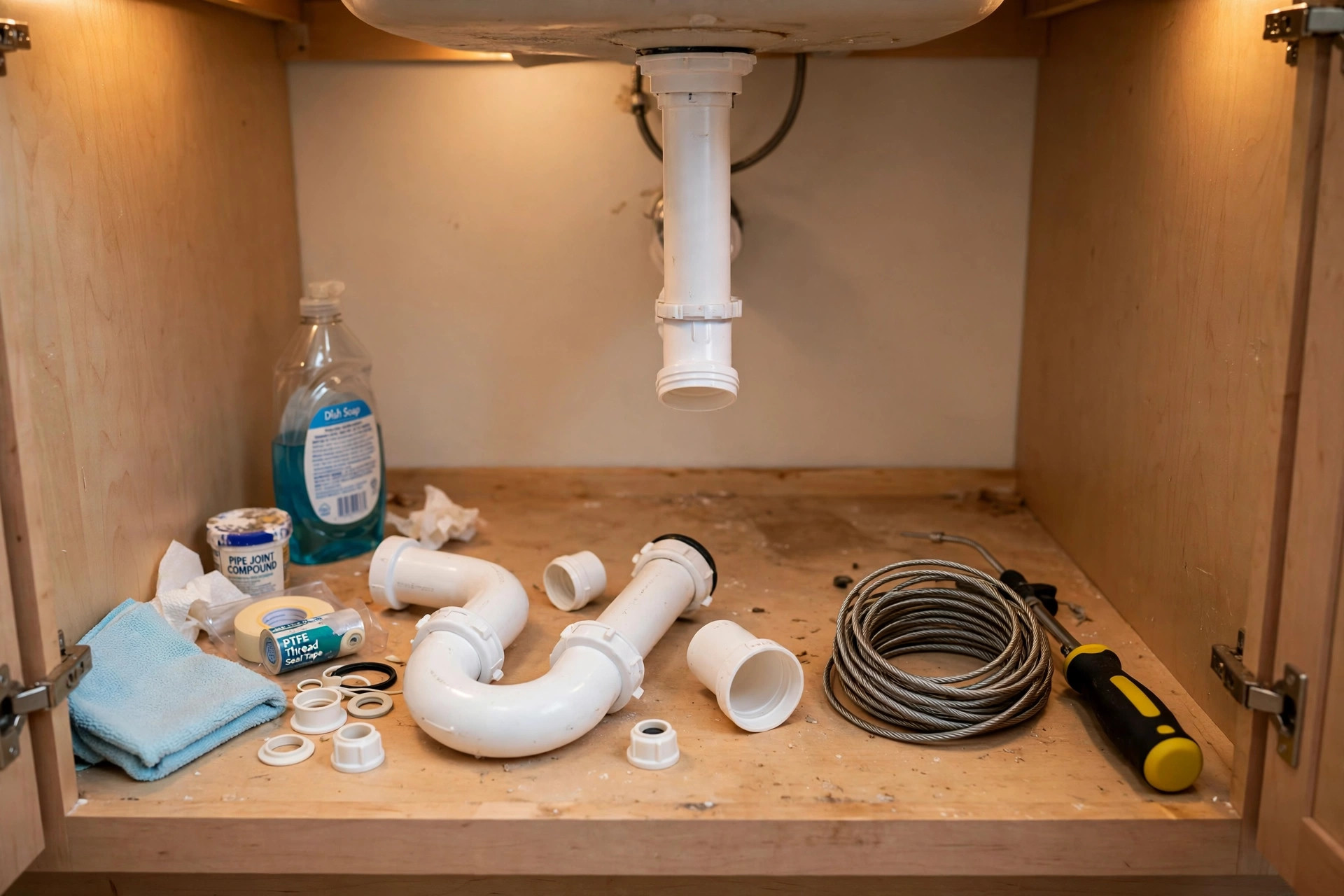
– Sink or tub line: $100 to $200. These are short runs and easy to reach. A hand snake or small power auger usually clears them in under an hour. – Toilet line: $125 to $225. A toilet auger is made for this job. The plumber removes the toilet only if the clog sits past the fixture. – Main sewer line: $175 to $400. This line is longer and wider. It may need a large machine and a sewer camera inspection to find the clog. – Hydro jetting: $300 to $800 per line. High-pressure water scours the pipe clean. It costs more but clears grease and roots that a snake cannot. For more detail on this method, see our guide to hydro jetting service prices.
These are national averages. Prices in large cities run higher. Rural areas often run lower. A flat fee per visit sometimes looks cheaper. Look closely before you accept it. A flat fee may cover only one line and only the simplest clog. If the plumber finds a second clogged line, the price jumps. Ask what the flat fee includes and what triggers extra charges. The per-line model is fairer because it matches the work.
Get two or three quotes for big jobs. Prices for main line work vary widely. One company may quote $200 per line while another quotes $400 for the same street. Ask each company the same questions so the quotes can be compared side by side.
Season matters too. Plumbers stay busy in winter when frozen pipes crack and in spring when roots grow fast. Booking a cleaning in a slow month can save money. Some companies run off-season discounts.
Getting a Written Estimate
Always ask for the estimate in writing. It should list the price per line, the method to be used, and any fees for service calls, cameras, or parts. A written estimate keeps both sides honest. If the plumber finds a bigger problem mid-job, they should stop and get your approval before the price changes. Never sign a blank work order.
What Drives the Price
Several factors move the final bill up or down. Knowing them helps you judge a quote.
Severity and Type of Clog
A soft clog of hair and soap is quick work. A hard clog of tree roots or a collapsed pipe takes much longer. Roots can grow through joints in older clay or cast-iron pipes. The technician may need special cutting heads. Harder jobs cost more.
Access to the Line
If your home has a cleanout, the plumber can feed tools straight into the line. That saves time. If there is no cleanout, the plumber may need to pull a toilet or open a wall. That adds labor and cost. Installing a cleanout costs money up front but lowers the price of every future cleaning.
Method Used
A basic auger is the cheapest tool. Hydro jetting costs more because it needs special equipment and training. Camera inspection adds $100 to $250 but shows exactly what is wrong. Some homeowners bundle cleaning and inspection in one visit for a better total price.
Time and Location
Night and weekend calls carry extra fees. Emergency plumber rates can be double the normal rate. Prices also vary by region. Coastal cities and high-cost states charge more per line than small towns.
Types of Drain Cleaning Methods
Plumbers use three main methods. Each suits a different kind of clog.
Snaking or Augering
A metal cable with a cutting head feeds into the pipe. It breaks up clogs and scrapes the walls. This is the most common method. It works well for hair, paper, and small roots. Most plumbers start here. Handbooks for homeowners at The Home Depot describe the basic tools.
Hydro Jetting
A hose blasts water at up to 4,000 pounds per square inch. It washes away grease, scale, and roots. The pipe looks almost new inside. Hydro jetting is the best choice for restaurant-style grease clogs and heavy root growth. It is not safe for very old or damaged pipes, so a camera check often comes first.
Enzyme and Chemical Treatments
Enzyme cleaners use bacteria to eat organic buildup. They are gentle and safe for all pipes. They work slowly and are best for maintenance, not emergencies. Caustic chemical cleaners work faster but can harm pipes, septic systems, and the person pouring them. The U.S. Environmental Protection Agency warns against pouring harsh chemicals down drains. For product options, retailers like Lowe’s carry enzyme treatments.
How to Choose a Drain Cleaning Service
A good service is clear about price and honest about the problem. Use these steps.
What to Ask Before You Hire
– What is the price per line, and does it include the camera check? – Is there a service call fee on top of the cleaning price? – Do you guarantee the work for a set number of days? – Will you show me the camera footage before and after? – Is hydro jetting needed, or will a snake do the job?
Write down the answers. A written quote protects you if the price changes on the job.
Red Flags to Watch For
Beware of a company that refuses to give a per-line price. Beware of quotes given without seeing the drain. Beware of high-pressure talk about full pipe replacement when a cleaning may be enough. Real pros explain options. A guide from This Old House covers how to judge a plumbing contractor.
Brand-name fixture makers such as Kohler, Delta Faucet, and Moen publish care guides that help you protect your fixtures between cleanings. Water quality also matters; Aquasana offers home water filtration that can cut the mineral scale that narrows pipes.
What Happens During a Service Visit
A typical visit follows a set order. The technician asks where the problem is and when it started. Then they check the fixtures and run water to see how bad the backup is. Next they open the cleanout or pull the toilet for access. They feed the snake or jetting hose down the line and work it back and forth. When flow returns, they flush water to test the line. On a good visit, they show you camera footage to prove the pipe is clear. The whole job takes less than two hours for most homes.
Care and Upkeep After a Cleaning
A cleaned drain stays clear longer with a few habits. Never pour cooking grease down the sink. Wipe pans with a paper towel first. Pour leftover oil into a jar and throw it in the trash. Use drain strainers in showers and tubs to catch hair. Clean the strainers each week so they do not block flow themselves. Run hot water after each kitchen use to move soap and oil along.
Flush only toilet paper and waste. Wipes labeled “flushable” still clog lines in many homes. They do not break down like paper. Coffee grounds, rice, and pasta also swell and stick in pipes. They belong in the trash, not the drain.
Once a month, pour an enzyme cleaner down slow drains at night. It works while the pipe sits still. Have the main line checked with a camera every two to three years if your house has old pipes or large trees near the sewer run. In fall, check outdoor drains for leaves. A blocked yard drain can send water toward the house.
Safety
Drain work has real risks. Chemical cleaners can burn skin and eyes. Never mix bleach and ammonia products. The fumes can injure the lungs. If sewage backs up, keep people and pets away. Sewage carries germs. Wear gloves and boots during cleanup.
Do not try to open a main sewer cleanout if the line is backed up. Pressure can push sewage out with force. Leave high-pressure jetting to trained workers. A jetting hose at full power can cut skin and damage pipes in the wrong hands. Call a licensed plumber for any job beyond a simple plunger or hand snake.
Frequently Asked Questions
How much does drain cleaning cost per line in 2026?
Most homeowners pay $100 to $300 per line for standard snaking. Sink and tub lines cost less. Main sewer lines cost more. Hydro jetting runs $300 to $800 per line.
Why do plumbers charge per line instead of per hour?
Each line is a separate job. It needs its own setup, access point, and testing. Per-line pricing tells the homeowner exactly what each drain costs. It is clearer than an hourly rate with an unknown total.
Can I clean a drain line myself?
Yes, for small clogs. A plunger or hand snake handles many sink and tub clogs. Enzyme cleaners help with light buildup. Call a plumber if the clog returns, if more than one drain is slow, or if sewage backs up. Those signs point to a main line problem.
How long does a drain cleaning take?
A simple line takes 30 minutes to an hour. A main sewer line with roots can take two to three hours. Hydro jetting adds setup time. Most single-line jobs finish in one visit.
How often should drains be cleaned?
Kitchen and bath lines often need cleaning once a year or when they slow down. Main sewer lines do well with a check every two to three years. Homes with large trees or older clay pipes may need more frequent service.
Does homeowners insurance cover drain cleaning?
Usually not. Insurance covers sudden damage, like a burst pipe, but not routine maintenance or clogs. Some policies offer an add-on for sewer line backup. Check your policy or ask your agent.
A Short Final Word
The cost of drain cleaning per line is fair when you know what to expect. Ask for the per-line price up front. Ask about the method and the guarantee. Keep your drains clean between visits with strainers, enzyme treatments, and good habits. A little care now keeps the big bills away later.
References
Aquasana. (n.d.). Water filtration systems. https://www.aquasana.com Delta Faucet. (n.d.). Kitchen and bathroom faucets. https://www.deltafaucet.com Family Handyman. (n.d.). DIY home repair and maintenance. https://www.familyhandyman.com Kohler. (n.d.). Bathroom and kitchen fixtures. https://www.kohler.com Lowe’s. (n.d.). Home improvement products. https://www.lowes.com Moen. (n.d.). Faucets and plumbing fixtures. https://www.moen.com The Home Depot. (n.d.). Home improvement products. https://www.homedepot.com This Old House. (n.d.). Home renovation guidance. https://www.thisoldhouse.com U.S. Environmental Protection Agency. (n.d.). Protecting human health and the environment. https://www.epa.gov
Was this guide helpful?

About Jennifer Lee
The My Garden US editorial team writes practical, in-depth home and garden guides for American homeowners — tested advice, no fluff.
You May Also Like
Tankless vs Tank Water Heater Cost Comparison: What You Will Really Pay
May 28, 2026 0 views
Best Touchless Kitchen Faucet Reviews USA
August 20, 2026 0 views
Submersible Well Pump Reviews for Deep Wells
September 27, 2026 0 views