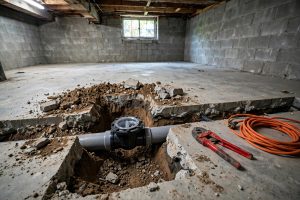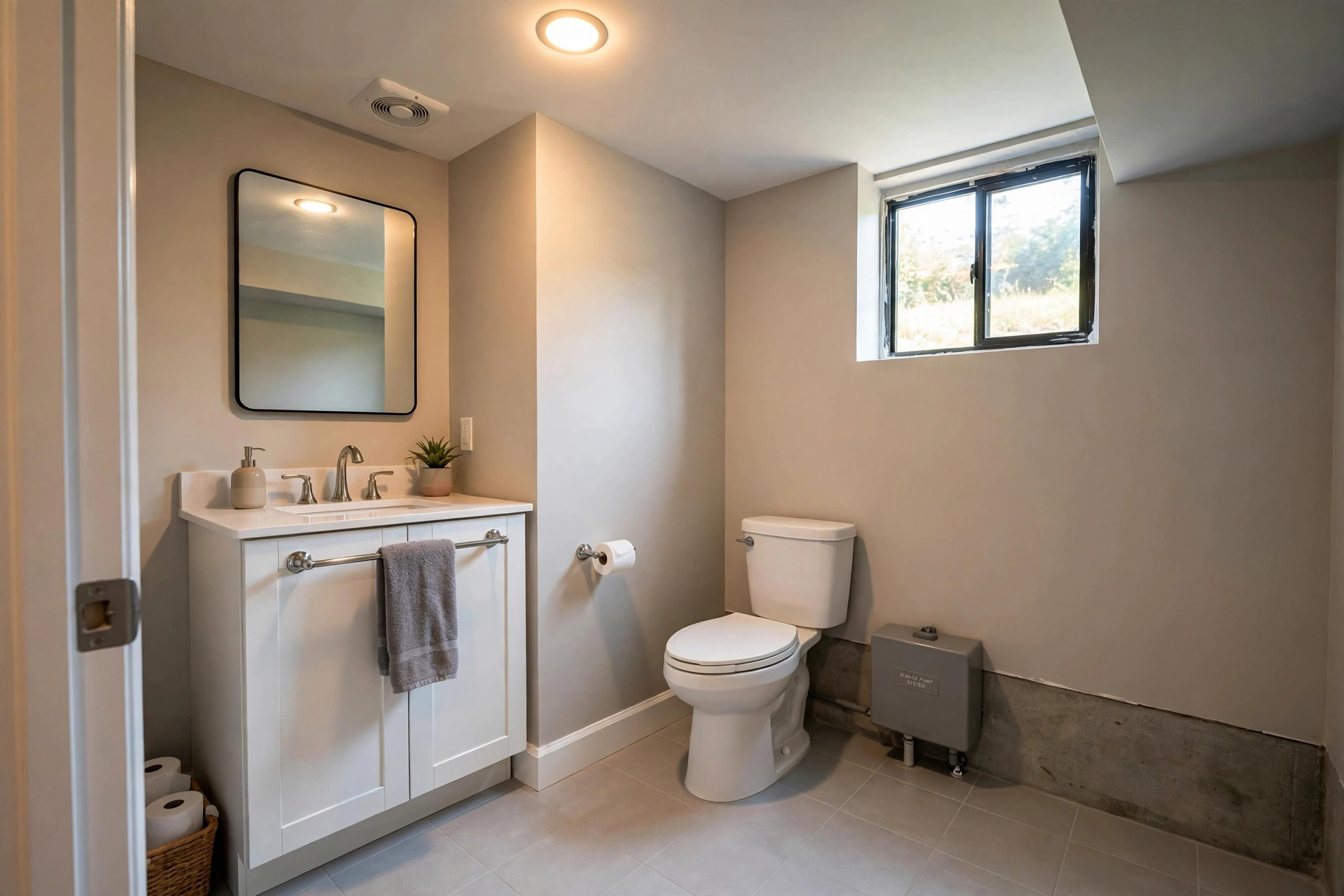

Adding a bathroom to a basement is a common wish. Many American homes have finished basements with bedrooms, game rooms, or home offices. But the toilet drains in a basement often sit below the sewer line. Water cannot flow uphill on its own. This is where upflush toilet system reviews for basement projects become worth reading. An upflush toilet uses a small electric pump to move waste up and out through a narrow pipe. It can be installed without cutting through concrete. For a homeowner planning a basement bathroom, it is one of the most practical options available.
Why an Upflush Toilet Makes Sense in a Basement
A standard toilet drains by gravity. Waste drops through a large pipe into the main drain, which runs below the floor. In most homes, the main drain exits the house at a point that is higher than the basement floor. A toilet installed in the basement would drain below that line, so gravity alone cannot move the waste out.
The usual fix is to break open the concrete floor, dig a pit, install a holding tank with a sewage ejector pump, and then pour new concrete. This work is messy, loud, and costly. The price for a sewage ejector pump installation in the United States often runs into the thousands, and the concrete work adds to it. A good overview of this option can be found in any guide to sewage ejector pump installation cost usa.
An upflush toilet avoids all of that. It is sometimes called a macerating toilet. The system has a pump unit, usually hidden behind the toilet or in a small box beside it. When the toilet is flushed, blades in the pump grind the waste into a fine slurry. The pump then pushes the slurry through a small discharge pipe, often one inch in diameter, up to the sewer or septic line. The pipe can run through walls and ceilings to reach the main drain. No jackhammer is needed.
How the System Works: Upflush Toilet System Reviews for Basement
The parts are simple. There is the toilet bowl itself, a macerating pump, and the discharge line. The pump runs on a standard 120-volt outlet with a ground fault circuit interrupter, the type required in bathrooms. The whole unit is sealed, so odor stays inside.
A typical cycle takes a few seconds. You flush the toilet in the normal way. Waste and water enter the pump chamber. Steel blades turn on at once and cut everything into small pieces. Then the pump switches to discharge mode and forces the slurry up the pipe. Most residential upflush systems can lift waste up to twelve or fifteen feet and push it horizontally for up to one hundred and fifty feet. Those numbers vary by brand, so the product manual should be checked before you plan the pipe run.
Some systems accept more than a toilet. Many pump units have extra inlets for a sink and a shower. With one pump, a full basement bathroom can be served. This makes the upflush system a popular choice for basement apartments, mother-in-law suites, and guest quarters.
What to Look for When You Choose
Upflush toilet systems are sold by several manufacturers, and they are sold in different shapes. The pump may be built into the back of the toilet, or it may be a separate box that sits on the floor behind a standard rear-outlet toilet. Built-in units look cleaner. Separate units make repairs easier, since the pump can be reached without removing the bowl.
Noise is the most common complaint. The macerating blades and the pump make a distinct sound during each flush, louder than a standard toilet. Some brands are quieter than others, and reviews from owners often note the noise level. If the bathroom is near a bedroom, this matters.
Flow rate and head lift tell you how hard the pump can work. Head lift is the vertical distance the pump can push waste. For a basement, measure the distance from the pump to the point where the discharge pipe meets the main drain. Add some margin. Horizontal run length also counts, and long runs need a slight upward slope in places to keep the slurry moving.
Flush type matters too. Some systems use a rear-discharge toilet with a water tank like a normal toilet. Others use a pressure-assisted flush. Gravity tank models are the most common in homes. They look familiar and are easy to service.
Check the inlet options. If you plan to add a sink or a shower later, buy a pump with extra inlets even if you do not use them at first. Adding a second pump later costs more than buying the right one now.
Finally, look at warranty and parts. A macerating toilet has moving parts that wear. Blades, seals, and pressure switches may need service after years of use. Choose a brand with parts sold in the United States and a clear warranty of at least two years.
Types and Options on the Market
The market has three broad groups. Full systems bundle the toilet bowl and the pump together. These are the easiest choice for a new basement bathroom because everything is matched. The buyer knows the bowl and pump work together.
Pump-only units are for those who want to use their own toilet. These boxes accept waste from a rear-outlet toilet plus a sink and a shower. They suit a remodel where the owner wants a specific bowl style.
Grinder pump stations are the heavy-duty option. They are closer to a backwater valve installation cost for basement project in scale. They handle a full bathroom or even a small apartment, but they are larger and cost more.
For most homeowners, a full system from a known maker is the safe path. The best-known brands have sold macerating toilets for decades. Saniflo, the company that introduced the idea to homes, sells several models for full bathrooms. Liberty Pumps and Zoeller, both American pump makers, offer units aimed at the home market. Reviews on sites like Consumer Reports and This Old House often discuss pump reliability in general terms, and plumbing guides at Family Handyman explain how these systems fit into a home.
When reading upflush toilet system reviews for basement use, pay attention to who is writing. A review from a contractor who has installed many units carries more weight than a review from a buyer who has owned one for a month. Look for patterns across many reviews: repeated mentions of clogging, repeated praise for quiet operation, or repeated complaints about a slow drain.
Cost and Price
Prices vary. A full upflush toilet system in the United States usually costs between six hundred and twelve hundred dollars for the unit alone. Pump-only boxes run from three hundred to eight hundred dollars. Well-known brands sit at the higher end.
Installation adds to that. If the plumbing and the outlet are in place, a plumber may charge five hundred to one thousand dollars for the hookup. If new electrical work is needed, or if the discharge pipe must run a long way through finished walls, the labor cost rises. A rough total for a complete upflush toilet installation is often between fifteen hundred and twenty-five hundred dollars.
Compare that with the alternative. Breaking concrete, digging a pit, and installing a sewage ejector can cost three thousand to seven thousand dollars before the bathroom fixtures are even bought. The upflush system is usually the cheaper route. It is also faster. A plumber can often finish the job in one day.
Running costs are small. The pump uses power only during the flush cycle, a few seconds at a time. Water use is similar to a standard low-flow toilet. Spare parts, such as a new blade assembly or a pressure switch, cost tens to low hundreds of dollars. Budget for a service visit every several years.
For comparison, other basement water problems carry their own costs. A best sump pump for basement reviews usa guide shows how a sump system protects against flooding, which is a different job from waste removal. Both systems may belong in the same basement.
Installation Basics
A handy homeowner can install some systems, but most buyers hire a plumber. The steps are the same either way. First, set the toilet and pump in place. The pump must sit on a solid, level surface. It must be reachable for service, so do not box it in behind drywall without an access panel.
Next, connect the discharge pipe. Small-diameter PVC or CPVC pipe is the norm. The pipe must rise vertically from the pump before it turns horizontal. Check valves keep waste from falling back into the pump. The pipe needs to be vented to the outdoors, like any drain. Local plumbing codes apply, and permits may be required. The EPA publishes general guidance on household plumbing and wastewater, and your city or county building office can confirm local rules.
Electrical work comes next. The pump plugs into a grounded outlet on its own circuit or a shared bathroom circuit with ground fault protection. Do not use an extension cord. Some models have an alarm that sounds if the pump fails. That alarm needs power too.
Finally, test the system. Run several flushes. Check every joint for leaks. Make sure the pump shuts off cleanly after each cycle. A good plumber will do this before leaving.
One caution: these systems dislike certain items. Do not flush wipes, sanitary products, cotton, or dental floss, even products labeled flushable. The blades can handle toilet paper and human waste. Anything else invites a clog. Many service calls come down to this one rule.
Care and Upkeep
Day-to-day care is easy. Clean the bowl with normal bathroom cleaners. Do not pour strong acids or lye-based drain openers into the system. They can damage the seals and the pump. Use cleaners made for macerating toilets if you want to be safe.
Descaling matters in hard-water areas. Mineral buildup on the blades and the pressure switch can shorten the life of the pump. Run a descaling solution through the system once or twice a year, following the maker instructions. Retailers like Home Depot and Lowe’s stock these cleaners, and fixture makers such as Kohler and Moen note water-quality care in their product guides.
Listen to the pump. A change in sound can mean a partial blockage or a worn part. Most pumps have a removable top for inspection. Power off the unit before opening it.
If the power fails, the system will not pump. Keep this in mind in areas with frequent outages. A backup power plan, even a small generator for the circuit, keeps the basement bathroom working. Faucet makers like Delta Faucet sell fixtures that need no power, but the macerating pump is the heart of this system and it needs electricity.
Safety
An upflush toilet is safe when installed to code. The pump is sealed. The discharge line is under pressure only during the flush. The check valve stops backflow. But there are points to respect.
Electricity and water sit close together in this product. The outlet must be grounded and ground fault protected. Keep the area around the pump dry.
Do not let children play with the flush mechanism more than needed. Repeated short flushes can confuse the pump and cause overflow.
If the pump alarm sounds, stop using the toilet and call a plumber. Continued use can flood the pump chamber and push waste back toward the bowl.
Vent the discharge line to the outside air. Without a vent, pressure can build and seals can fail. This is a code matter in most states.
FAQ
Do upflush toilets smell? No. The pump chamber is sealed, and the discharge line is sealed. When installed right, an upflush toilet smells no different from a standard toilet. Odor problems usually mean a bad seal or a vent issue.
Can I put an upflush toilet on a septic system? Yes. The pump sends the waste slurry to the septic line just as a gravity drain would. The slurry breaks down in the tank the same way. Check with your septic installer if your system has a very small tank.
How loud is an upflush toilet? Louder than a normal flush. The macerating cycle lasts a few seconds and sounds like a small garbage disposal or a strong blender. Newer models are quieter. If noise is a worry, read owner reviews and, if possible, hear one in a showroom.
How long does an upflush toilet last? With normal use and yearly descaling, most systems last ten to fifteen years. The pump may need a new blade set or seal during that time. Heavy use shortens the life.
Can I install one myself? Some homeowners do, and kits come with clear instructions. But local codes may require a licensed plumber, and mistakes with the vent or the discharge line cause real damage. Most experts suggest hiring a pro. Water filtration specialists such as Aquasana and fixture brands all stress professional installation for any pressurized plumbing.
What happens during a power outage? The pump will not run. The bowl can still be flushed once or twice, but waste will sit in the pump chamber until power returns. Avoid heavy use during an outage.
A Short Final Word
Upflush toilet system reviews for basement projects keep coming back to the same point. For a basement below the sewer line, a macerating toilet is the least disruptive way to add a real bathroom. It costs less than breaking concrete. It installs in a day. It handles a full bathroom when sized right.
The trade-offs are real. It needs power. It makes noise. It demands care about what goes down the drain. But for thousands of homeowners, those are small prices for a basement that finally has its own bathroom. Read the reviews, measure your space, check your local code, and choose a system with a solid warranty and parts you can buy.
References
Aquasana. (n.d.). Water filtration systems. https://www.aquasana.com Consumer Reports. (n.d.). Product reviews and ratings. https://www.consumerreports.org Delta Faucet. (n.d.). Kitchen and bathroom faucets. https://www.deltafaucet.com Family Handyman. (n.d.). DIY home repair and maintenance. https://www.familyhandyman.com Kohler. (n.d.). Bathroom and kitchen fixtures. https://www.kohler.com Lowe’s. (n.d.). Home improvement products. https://www.lowes.com Moen. (n.d.). Faucets and plumbing fixtures. https://www.moen.com The Home Depot. (n.d.). Home improvement products. https://www.homedepot.com This Old House. (n.d.). Home renovation guidance. https://www.thisoldhouse.com U.S. Environmental Protection Agency. (n.d.). Protecting human health and the environment. https://www.epa.gov
Was this guide helpful?

About Lisa Anderson
The My Garden US editorial team writes practical, in-depth home and garden guides for American homeowners — tested advice, no fluff.
You May Also Like
Submersible Well Pump Reviews for Deep Wells
September 27, 2026 0 views
WaterSense Toilet Rebates Near Me 2026
October 2, 2026 0 views
RV Water Filtration System Reviews 2026 USA: What Real Owners Say
May 21, 2026 0 views