
Introduction
Summer in Arizona is not a joke. In Phoenix and Tucson, daytime highs sit above 105 degrees for weeks at a time. That kind of heat does more than test your air conditioner. It works on your floors too. Wood shrinks and gaps appear. Glue melts under cheap vinyl. Dark carpet holds heat like a blanket. So when homeowners ask for the best flooring for arizona heat reviews usa, they want answers backed by real desert experience, not sales talk.
This guide walks through the top choices for Arizona homes. It covers tile, luxury vinyl plank, engineered hardwood, concrete, and natural stone. It gives price ranges, care tips, and safety notes. It also shows which floors to avoid in the desert. Every option is judged on one simple question: how does it hold up when the thermometer will not drop?
Why Flooring Choice Matters in Arizona: Best Flooring for Arizona Heat Reviews Usa
The Desert Test
Heat changes floors in ways that surprise new residents. Solid hardwood loses moisture in dry air. Boards shrink, and gaps open between them. Laminate can swell if a swamp cooler leaks. Cheap sheet vinyl bubbles where sun hits the slab. Carpet traps heat and feels warm under bare feet even when the room is cool.
Arizona homes also face dust. Desert dust is fine and sharp. It scratches soft floors over time. A floor that hides dust and stands up to grit will look better for longer. The best flooring for hot climates balances three things: heat tolerance, dry air tolerance, and easy cleaning.
Energy and Comfort
Floor temperature affects the whole house. Tile feels cool underfoot, which is a blessing in August. That coolness also helps the air conditioner work less. Hard surfaces reflect heat rather than absorb it. In a Tucson ranch house, switching from carpet to tile cut one homeowner’s summer electric bill by a noticeable share. Results vary, but the logic is sound. Cool floors mean a cooler home.
What to Look for When Choosing Desert Flooring
Heat and Sun Resistance
Direct sun pours through Arizona windows all year. UV rays fade wood and some vinyl. Heat breaks down weak adhesives. Look for floors rated for high temperatures. Porcelain tile handles heat without complaint. Quality luxury vinyl plank now carries heat ratings up to 140 degrees. Cheap peel-and-stick tile does not.
Low Expansion and Contraction
Dry air is the silent enemy. Humidity in Phoenix can fall below 10 percent. Wood moves with moisture changes. In that air, solid hardwood moves a lot. Engineered hardwood moves less because its layers balance each other. Tile and concrete barely move at all. For desert homes, stable floors last longer.
Hardness and Scratch Resistance
Desert grit is like sandpaper. Dogs track it in. Kids drop toys on it. Look for a hard wear layer. Porcelain tile ranks high on the Mohs hardness scale. Luxury vinyl plank comes in 20-mil wear layers for heavy use. A thick wear layer is worth the extra cost in a desert home. Pet owners should also check guides to pet friendly flooring options before they decide.
Light Colors
Light floors reflect heat and hide dust. A pale travertine or light oak-look vinyl keeps rooms bright and cool. Dark floors show every speck of desert dust and feel hotter underfoot. This is one of the simplest rules in the best flooring for arizona heat reviews usa readers share online.
Types of Flooring Reviewed for Arizona Heat
Porcelain and Ceramic Tile
Tile is the desert champion. It has been used in hot climates for centuries. Porcelain tile resists heat, sun, moisture, and scratches. It stays cool underfoot. It does not fade. It does not off-gas in heat. Glazed porcelain wipes clean with a mop.
There are trade-offs. Tile is hard. Dropped dishes break. Standing on it for long kitchen sessions tires the feet, so a good mat helps. Installation costs more than floating floors because of the labor. Grout needs sealing, and cracked tiles are a project to replace. Still, in review after review, tile sits at the top for Arizona. Large format tiles with narrow grout lines look modern and cut cleaning time. For bath areas, shoppers often compare large format tiles for a seamless look.
Best tile picks for Arizona: – Glazed porcelain in light stone looks for living areas – Saltillo-style porcelain for a Santa Fe feel with easy care – Wood-look porcelain for the warmth of wood with none of the risk
Luxury Vinyl Plank (LVP)
Luxury vinyl plank is the rising star in desert reviews. It clicks together and floats over the slab. No glue means no melting adhesive. Good brands handle slab heat well. The latest luxury vinyl plank reviews show 20-mil and 28-mil wear layers that resist desert grit. LVP feels softer and warmer than tile, which some families prefer.
Watch the details. Buy rigid core SPC, not thin flexible vinyl. Check the temperature rating on the box. Keep dark LVP out of direct sun rooms, since heat plus UV can fade it. Quality LVP from makers like Mohawk and Shaw performs well in Phoenix test homes. For full 2026 rankings, see our roundup of luxury vinyl plank flooring reviews.
Engineered Hardwood
Solid hardwood and Arizona do not mix well. Engineered hardwood is the safer wood option. Its plywood core resists the shrinking that cracks solid boards. It looks like real wood because the top layer is real wood. It feels warm underfoot in winter, when desert nights turn cold.
Engineered wood still needs care in dry air. A whole-house humidifier helps. Keep indoor humidity near 35 percent if you can. Choose a thick wear layer, 3 millimeters or more, so the floor can be refinished once down the road. Wide planks in light oak tones suit desert homes best. Price guides for engineered hardwood cost per square foot help set the budget.
Polished Concrete
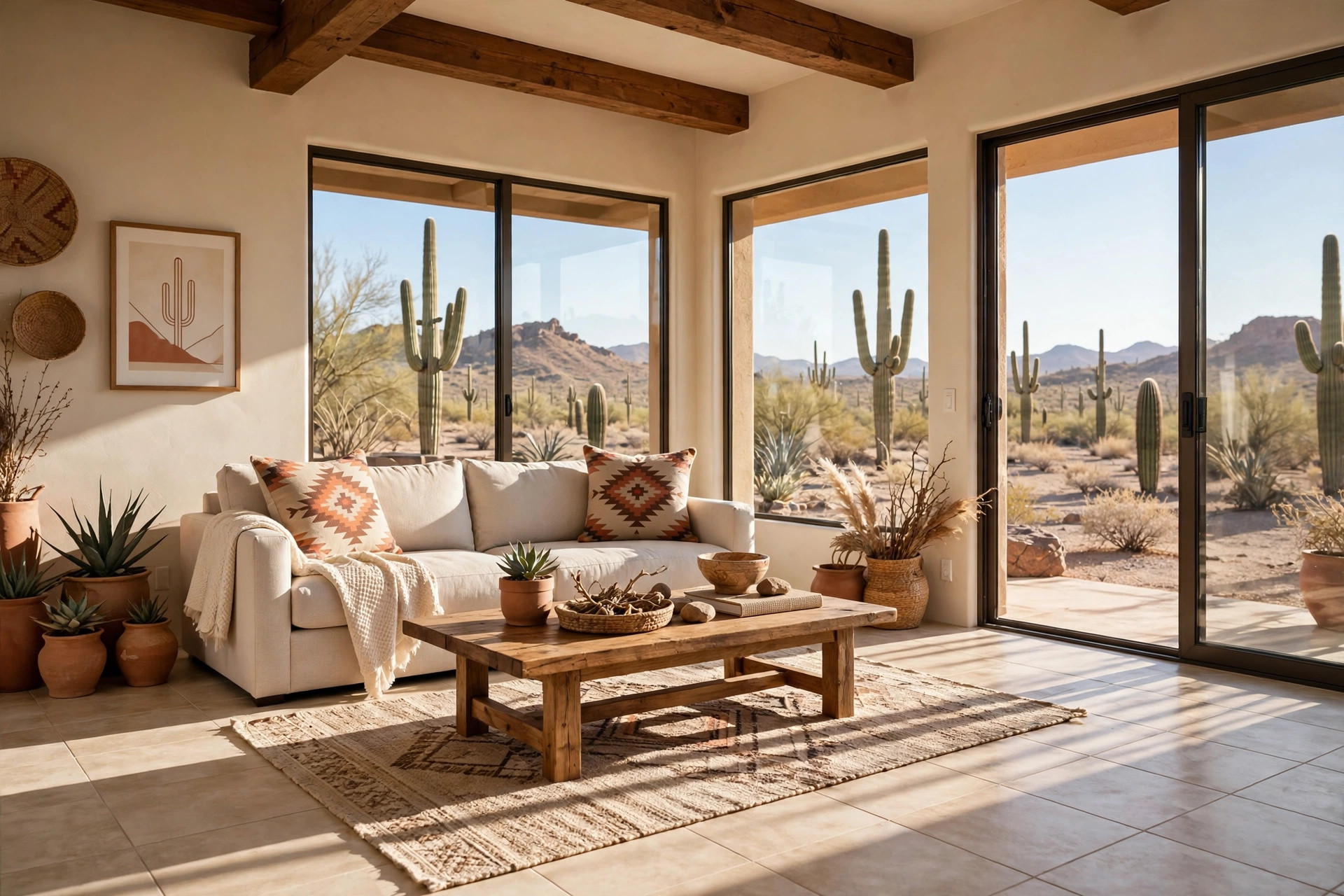
Many new Arizona builds sit on concrete slabs. Polishing that slab turns it into a floor. Concrete is the most heat-proof option there is. It stays cool, never fades, and shrugs off dust. Stained concrete in warm tones looks sharp with desert style homes.
The downsides are comfort and hardness. Concrete is unforgiving on feet and dropped items. Area rugs fix the comfort issue. Cracks can appear as the slab settles, though control joints limit the damage. For a modern or industrial look, polished concrete is hard to beat on value.
Natural Stone
Travertine, slate, and sandstone fit the Southwest style. Stone stays cool and lasts for decades. Travertine in particular is an Arizona classic. It hides dust well and feels right in adobe-style homes.
Stone needs sealing. Unsealed travertine stains from spills. It is softer than porcelain, so it can scratch and etch. Prices run higher than tile. But for buyers who want the real desert look, stone delivers. Daltile and Lowe’s both carry stone lines worth a look.
What to Avoid
Carpet ranks last for Arizona heat. It holds warmth, traps dust, and fades in sun. Solid hardwood ranks next to last because of shrinking and gapping. Cheap laminate swells at the first leak. Bamboo can work, but only strand-woven types with strong heat ratings. Standard sheet vinyl bubbles on hot slabs.
Cost and Price Guide
Prices vary by city and installer, but these ranges cover most Arizona projects in 2026:
– Porcelain tile installed: $8 to $15 per square foot – Luxury vinyl plank installed: $4 to $9 per square foot – Engineered hardwood installed: $9 to $16 per square foot – Polished concrete: $3 to $8 per square foot – Natural stone installed: $12 to $22 per square foot
LVP wins on budget. Tile wins on lifespan. Polished concrete wins on pure value if you already own the slab. Get three quotes before you sign. Ask each installer about desert experience. A crew that works in Phoenix year round knows how slab moisture and heat affect the job. Homeowners comparing materials can browse current pricing at Home Depot for a baseline before quotes arrive.
Care and Upkeep in the Desert
Desert floors need a simple routine. Sweep or dry mop often. Fine dust is the main enemy, and a microfiber mop picks it up fast. Damp mop tile and LVP weekly with a neutral cleaner. Skip steam mops on LVP and engineered wood. The heat and moisture can damage them.
Reseal grout every one to two years. Reseal natural stone on the same schedule. Use felt pads under furniture. Keep entry mats at every door to catch grit. For homes with pools, note that wet feet and chlorine track across floors. Rinse feet at the door and choose slip-resistant tile near pool entries. Families dealing with below-grade rooms should read up on waterproof flooring for basements as well.
Sun control matters too. UV window film cuts fading on wood and vinyl. It also lowers the room temperature, which helps every floor last longer.
Safety Notes
Tile gets slippery when wet. Choose a tile with a COF rating of 0.42 or higher for wet areas. Textured finishes grip better. Rugs on tile should have non-slip pads.
Some vinyl floors gave off strong odors in heat in older generations. Modern LVP from major brands carries FloorScore certification for low emissions. Look for that label on the box. It matters in a sealed, air-conditioned house.
Dust control is a health issue in the desert. Valley fever comes from desert soil dust. Hard floors that mop clean reduce dust buildup compared to carpet. This is a real, if quiet, reason many Arizona doctors prefer hard floors. Guidance from The Spruce on dust control pairs well with a hard-floor plan.
Installation safety counts as well. Old Arizona homes may have asbestos in vinyl tile from before the 1980s. Test before you tear out. Hire pros for removal if the test is positive. Step-by-step remodel advice at This Old House covers safe tear-out practices.
FAQ
What is the absolute best flooring for Arizona heat?
Porcelain tile takes the crown in most reviews. It ignores heat, sun, and dry air. Luxury vinyl plank is the best runner-up for buyers who want a softer feel and lower cost.
Does luxury vinyl plank melt in Arizona heat?
Quality rigid-core LVP does not melt in normal indoor heat. It is rated for temperatures well above what a house reaches. Problems come from cheap thin vinyl or floors installed in enclosed sunrooms that bake past 140 degrees. Buy SPC core, check the rating, and control the sun.
Can I install hardwood floors in Phoenix?
Engineered hardwood, yes, with a humidifier and care. Solid hardwood, no, not wisely. The dry air will open gaps. Most Phoenix installers will tell you the same.
Is tile too cold in winter?
Desert winters are mild, but tile can feel cool on January mornings. Area rugs and slippers solve it. Some owners add radiant heat under bathroom tile. For most of the year, the coolness is a feature, not a flaw.
How do I keep floors from fading in Arizona sun?
Choose fade-resistant materials like porcelain tile or concrete. For wood or vinyl, add UV window film and use blinds during peak sun. Rotate rugs so fading stays even.
What flooring adds the most value to an Arizona home?
Tile and engineered hardwood add the most resale value in the Phoenix and Tucson markets. Buyers expect tile in desert homes. LVP is accepted too, especially in rentals and family homes.
Final Word
The best flooring for arizona heat reviews usa all point the same way. Tile leads. Luxury vinyl plank follows close behind. Engineered hardwood works with care. Concrete and stone suit the right home. Match the floor to your budget, your feet, and your style, and the desert heat becomes a detail, not a threat.
References
Daltile. (n.d.). Ceramic and porcelain tile. https://www.daltile.com LL Flooring. (n.d.). Hardwood, vinyl, and tile flooring. https://www.llflooring.com Lowe’s. (n.d.). Home improvement products. https://www.lowes.com Mohawk Flooring. (n.d.). Flooring products. https://www.mohawkflooring.com Shaw Floors. (n.d.). Flooring products. https://www.shawfloors.com The Home Depot. (n.d.). Home improvement products. https://www.homedepot.com The Spruce. (n.d.). Home and garden advice. https://www.thespruce.com This Old House. (n.d.). Home renovation guidance. https://www.thisoldhouse.com
Was this guide helpful?

About Sarah Mitchell
The My Garden US editorial team writes practical, in-depth home and garden guides for American homeowners — tested advice, no fluff.
You May Also Like
Wet Saw vs Snap Cutter for Tile USA: How to Choose the Right Tool
April 20, 2026 0 views
Vintage Style Area Rugs for Sale USA: A Plain Guide to Buying Them
January 26, 2026 0 views
Rubber Flooring for Home Gym Reviews USA: A Buyer’s Guide
August 25, 2026 0 views