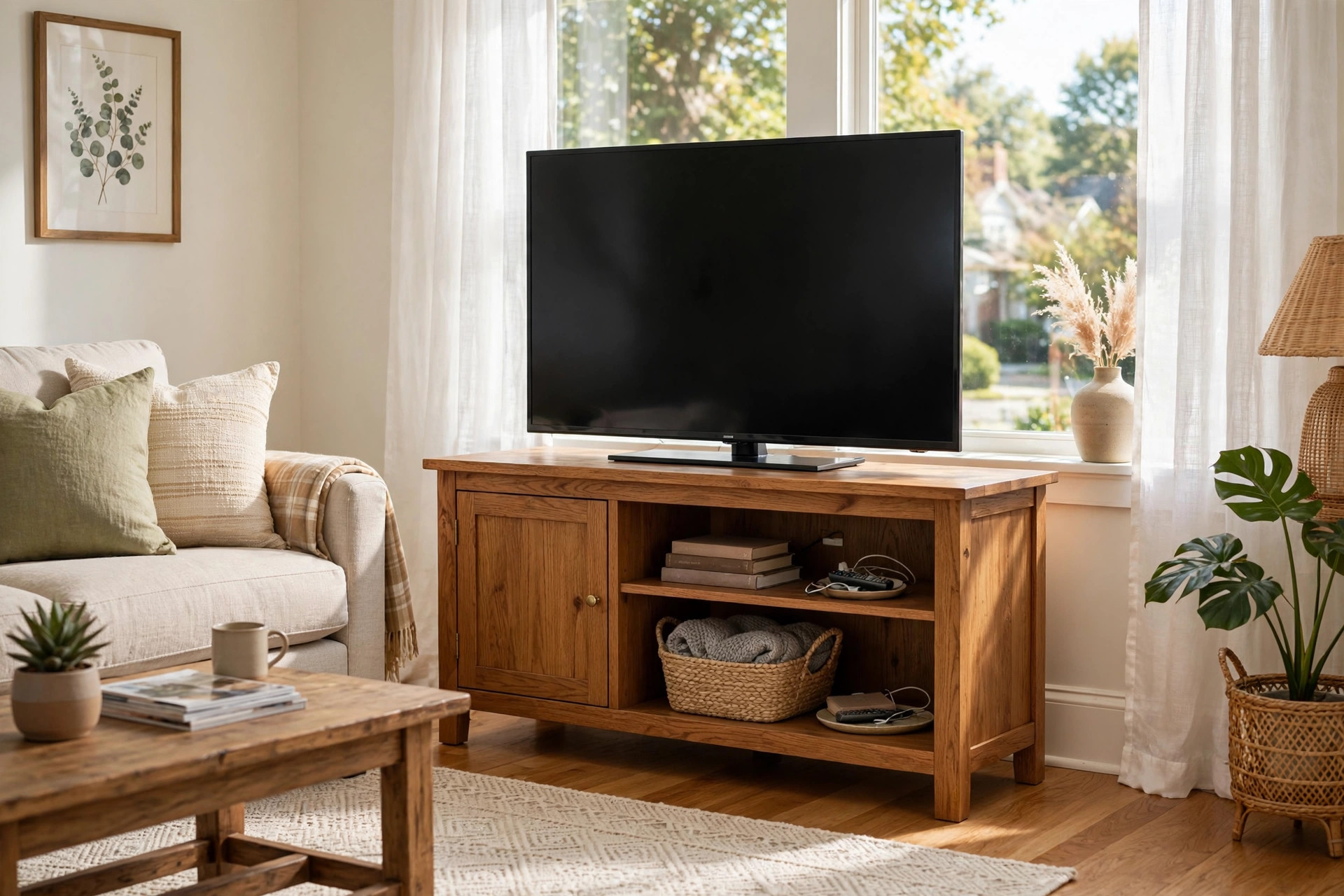

The question of living room tv stands where to buy usa comes up in homes all over the country. A family buys a new television. The old table is too small. The cords hang down like weeds. The room needs a proper stand, and the buyer wants to know which stores to trust.
Choice is wide. American shoppers can pick from big national chains, online only sellers, and small local shops. Some offer low prices. Some offer fine craft. Some let you see the piece in person. This guide covers the best places to buy, what to look for, and how to pick a stand that fits your room and budget. For a deeper look at styles, read our living room TV stands buying guide.
Why a Good TV Stand Matters
A TV stand does more than hold a screen. It sets the tone of the living room. Guests see it the moment they walk in. A clean, sturdy stand makes the whole room look planned. A weak or messy stand drags the room down.
Storage is the next reason. Modern televisions come with cable boxes, game consoles, sound bars, and streaming sticks. Each item needs a shelf. Each cord needs a path. A good stand hides the clutter and keeps the front of the room calm.
Safety matters most of all. Televisions have grown large and thin. A 65 inch screen can weigh more than 50 pounds. It needs a base that will not wobble, lean, or tip. A proper stand spreads the weight and holds the screen firm. Cheap folding tables and old dressers often fail this test.
What to Look for When You Shop: Living Room Tv Stands Where to Buy Usa
A TV stand is a piece of furniture you will keep for years. A little care at the store saves regret later. The points below cover the facts that matter most.
Size and Fit
Measure the television first. Write down its width in inches. The stand should be at least two or three inches wider than the screen on each side. A stand that is narrower than the TV looks unbalanced. It also leaves the edges of the screen with no support.
Measure the wall space next. Leave room for side tables and lamps. A paper outline taped to the wall shows the true size before you buy.
Height matters too. Sit on your couch and ask a friend to hold a tape at eye level. The top shelf of the stand should place the screen center close to that line. Most living room stands fall between 20 and 28 inches tall. Taller stands suit rooms where people watch from bar stools or high chairs.
Style and Finish
The finish should match the room. Warm wood tones like oak, walnut, and cherry suit classic rooms. Black, white, and gray finishes suit modern rooms. Glass tops suit small rooms because they let light pass through and look light.
Look at the legs and handles. Small details set the style. Tapered wood legs suggest mid century design. Sleek metal legs suggest a modern look. Knobs and pulls can be changed later, so do not let an ugly handle stop a good buy.
The stand should speak to the coffee table and the bookcase. The woods need not match exactly, but they should share a tone. If your room already has sofa console tables, pick a stand in a like finish.
Storage and Cables
Open the doors and drawers in the store, or check the photos online. Shelves should adjust to fit tall game consoles. Closed cabinets hide the mess of cords and discs. Glass doors show off pretty items while keeping dust away.
Check for cord cutouts in the back panel. Without them, cords snake around the sides and look poor. Good stands have round or square holes behind each shelf. Some stands add cord channels that guide wires down to the outlet.
Ventilation counts for game consoles and cable boxes, which run hot. A closed cabinet without vent holes can cook the gear inside. Look for slatted doors, mesh panels, or back gaps. Guides at The Spruce explain how heat builds up inside tight cabinets.
Types of Living Room TV Stands
Not every stand fits every room. The main types cover most needs. Pick the shape that matches your floor plan and your habits.
Open Console Stands
Open consoles have exposed shelves and no doors. They suit gear that needs a remote signal or good air flow, like game consoles and sound bars. The look is casual and modern. The trade off is dust, so this type suits tidy owners.
Closed Cabinet Stands
Closed cabinets have doors or drawers across the front. They hide cords, discs, and controllers. They suit living rooms that double as play rooms or guest rooms. The front stays clean even when the shelves are full. Pick doors with soft close hinges if children slam them. Slatted or glass fronts let remote signals pass through, which fixes the one weakness of solid doors. Room tours at HGTV show how closed cabinets keep a living room calm.
Corner Stands
Corner stands fit into room corners and free up long walls for sofas and art. They suit small living rooms. The triangular shelves give less storage than a straight stand of the same width. Measure the corner angle first, since odd angles may need a custom piece.
Floating and Wall Mounted Stands
Floating stands bolt to the wall and leave the floor clear. They need strong wall studs to hold the weight, and renters should check the lease before drilling. Design sites like Houzz show how they pair with wall mounted screens for a clean modern wall.
Where to Buy Living Room TV Stands in the USA
This is the heart of the matter. The stores below serve shoppers across the country. Each has a different strength, so match the store to your need.
IKEA suits tight budgets. The chain has large stores in most metro areas, plus a full online catalog. Its TV benches come in many sizes and cost less than most rivals. The pieces arrive flat packed and need assembly, and the simple lines fit modern rooms.
Wayfair suits shoppers who want huge choice. The site lists thousands of TV stands from many brands. Filters sort by width, height, color, price, and style. Buyer reviews with photos help judge real quality. Prices run from budget to high end, and frequent sales reward patient buyers.
Article suits modern taste at a fair price. The company designs its own pieces and ships direct. Its TV stands lean mid century and Scandinavian. Build quality runs above the price point. Article has no physical showrooms, so buyers trust the photos and reviews. The photos are honest and the measurements are exact.
West Elm suits design lovers. The chain sells in stores and online. Its TV stands use solid wood and clean lines. Many pieces mix wood with metal or stone. Prices sit in the middle to upper range. West Elm often carries limited runs, so a favorite piece may sell out.
Crate & Barrel suits buyers who want pieces that last decades. The wood is solid, the joints are tight, and the finishes hold up. TV stands here cost more, but they age well. The chain has stores in many states and a full site.
CB2 suits bold modern rooms. As the younger sibling of Crate & Barrel, it sells sharp, city style furniture. Its TV stands use black metal, smoked glass, and rich wood. Prices sit in the middle range. The look is strong, so measure twice and make sure the piece fits your room.
Local furniture shops deserve a look too. Many towns have a family owned store with floor models you can touch. Delivery may be free within the town, and prices can match the big chains once delivery is counted.
Secondhand shops can hide gems. Solid wood stands from past decades sell for a fraction of new prices. Check the joints, the doors, and the back panel before you pay. A solid old stand often beats a flimsy new one. Deep guides at Apartment Therapy show how to spot quality wood furniture in thrift stores.
Compare prices across two or three stores, bring the TV measurements, and take room photos along. A little prep turns a confusing hunt into a quick win.
Cost and Price
TV stand prices in the USA fall into three bands. Budget stands cost 100 to 300 dollars. They use particle board with a printed finish. They work well for small screens and short term use. Check the weight rating before you trust a budget stand with a large TV.
Mid range stands cost 300 to 700 dollars. They mix solid wood with strong engineered panels. Doors fit well. Finishes resist scratches. This band holds the best value for most families. A mid range stand can serve for ten years or more.
High end stands cost 700 dollars and up. They use solid hardwood, dovetail drawers, and fine hardware. They suit large screens and formal rooms. They also hold resale value. Buyers who plan to keep the piece for decades should look here.
Watch for extra costs. Delivery can add 50 to 150 dollars for heavy pieces, and assembly services cost extra at some stores. Holiday sales in November and January often cut prices by 20 to 40 percent.
Care and Upkeep
A TV stand lasts longer with simple care. Dust the top and shelves once a week with a soft dry cloth. A damp cloth works for sticky spots, but dry the surface right after. Water left on wood leaves marks.
Use coasters under drinks and pads under hot boxes. A cheap felt pad stops heat rings and cup marks.
Keep the stand out of direct sun, which fades wood and dries out glue joints. Move it away from heat vents, since dry heat cracks wood over time.
Tighten screws and bolts once a year, since wood shifts with the seasons. Oil the hinges if doors start to squeak.
Pair the stand with good living room floor lamps placed to the side rather than on top of the stand. Lamps on the stand crowd the screen and risk a fall. Side placement gives better light for reading and keeps the top clear.
Safety
Tip over accidents hurt thousands of people each year. A television that falls from a stand can cause grave harm, mostly to small children. Anchor the stand to the wall with the kit that comes in the box. If the kit is missing, buy one. The job takes ten minutes and a drill.
Respect the weight rating. The rating counts the TV plus every item on the shelves. Game consoles, sound bars, and book stacks add up fast. A stand rated for 100 pounds should not carry 130.
Keep cords behind the stand and out of reach. Tugging cords pull screens down. Cord covers cost little and stick to the wall. They also make the room look neat.
Place the stand on a flat, hard floor. On thick carpet, pick a wide, low design with a broad base. Keep the heaviest items on the lowest shelves.
Leave a few inches between the TV vents and the wall or shelf above, so heat has a path out.
Frequently Asked Questions
How wide should a TV stand be for my television?
The stand should be at least as wide as the screen, plus two to three inches on each side. For a 55 inch TV, about 48 inches wide, pick a stand at least 52 inches wide. A stand narrower than the screen invites a tip over.
Can a TV stand hold a 65 inch TV?
Yes, if the rating allows it. Many stands list a max screen size and a max weight. Check both numbers. A 65 inch TV can weigh 50 to 70 pounds. Include the sound bar and consoles in the total. When in doubt, pick a stronger stand.
Should the TV sit on the stand or mount on the wall above it?
Both work. A screen on the stand is easy to set up and move. A wall mounted screen above the stand frees the top shelf for decor. If you mount the screen, hide the cords in a wall channel. Either choice needs the stand anchored to the wall.
Are glass TV stands safe for large screens?
Tempered glass stands can hold large screens if the rating fits. Check that the glass is tempered, not plain. Tempered glass breaks into dull chunks instead of sharp shards, but it shows dust and needs more cleaning.
What is the best height for a TV stand?
The best height puts the center of the screen at your eye level when seated. For most sofas, that means a stand between 20 and 28 inches tall. Measure your own couch to be sure.
How do I hide cords behind a TV stand?
Use the cord cutouts in the back panel and bundle cords with velcro ties. Run the bundle down inside a cord cover that matches the wall.
A Short Final Word
The search for living room tv stands where to buy usa ends with a simple plan. Measure the TV and the wall, pick a style that fits the room, and choose a store that fits the budget. Then anchor the piece to the wall. A careful buy gives the family a safe, handsome home for the screen for many years.
References
Apartment Therapy. (n.d.). Home design ideas and inspiration. https://www.apartmenttherapy.com Article. (n.d.). Modern furniture. https://www.article.com CB2. (n.d.). Modern furniture and decor. https://www.cb2.com Crate and Barrel. (n.d.). Furniture and home decor. https://www.crateandbarrel.com HGTV. (n.d.). Home and garden ideas. https://www.hgtv.com Houzz. (n.d.). Home design and remodeling. https://www.houzz.com IKEA. (n.d.). Home furnishings. https://www.ikea.com The Spruce. (n.d.). Home and garden advice. https://www.thespruce.com Wayfair. (n.d.). Furniture and home goods. https://www.wayfair.com West Elm. (n.d.). Modern furniture and home decor. https://www.westelm.com
Was this guide helpful?

About Robert Taylor
The My Garden US editorial team writes practical, in-depth home and garden guides for American homeowners — tested advice, no fluff.
You May Also Like

Living Room Floor Lamps for Texas Homes in the USA
January 5, 2026 0 views
Living Room Ottomans for Sale USA: A Simple Buyer’s Guide
July 9, 2026 0 views
Living Room TV Stands Texas Homes USA: A Complete Buying Guide
January 19, 2026 0 views